
lovethailand home >North Travel Attractions >Chiang Mai Travel Attractions >Mae Taeng >Thakhin > Wat Inthakhil
TL;DR: Wat Inthakhil is located at Village No. 11, Inthakhil Subdistrict, Mae Taeng District, Chiang Mai Province, open Daily, hours 08.00 – 17.00.
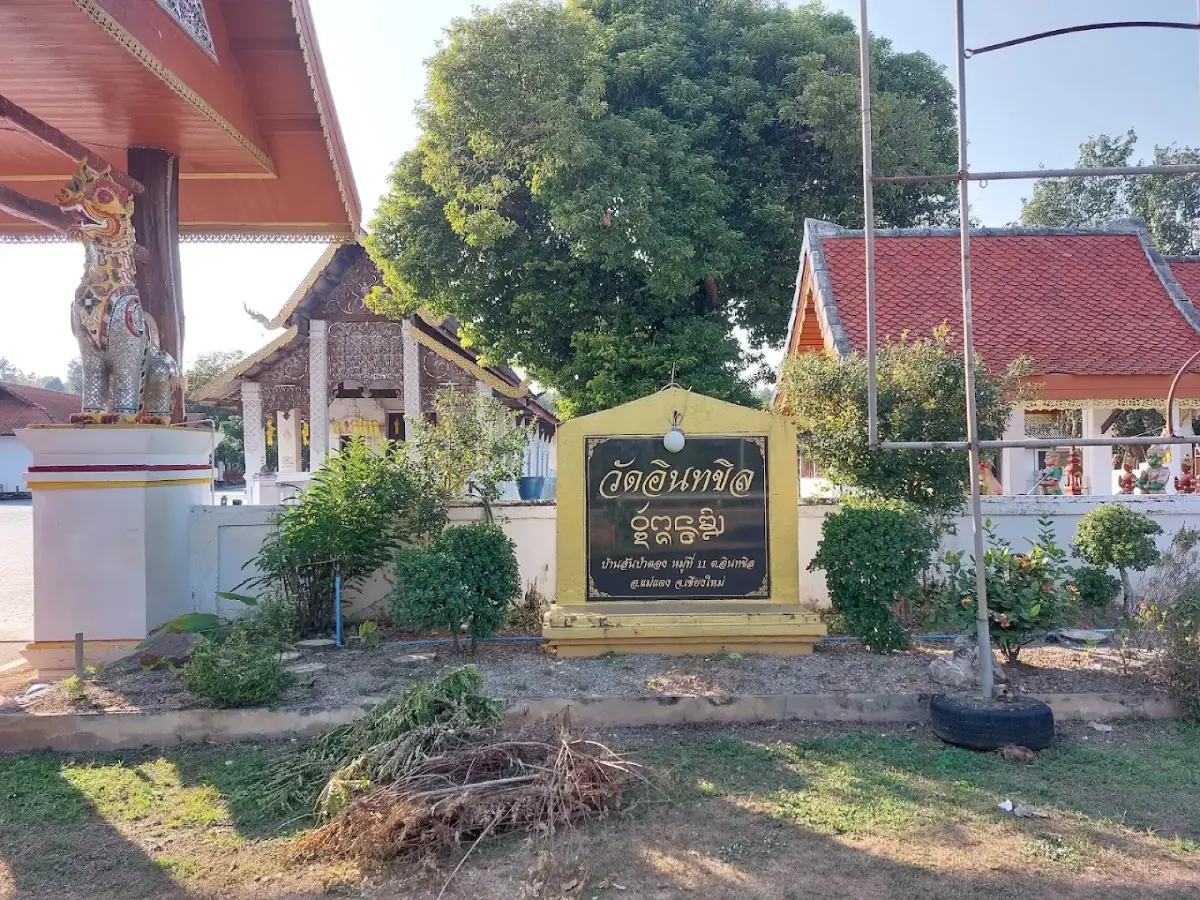
Wat Inthakhil
Open Days: Daily
Opening Hours: 08.00 – 17.00
Wat Inthakhil is located in Village No. 11, Inthakhil Subdistrict, Mae Taeng District, Chiang Mai Province. It is a private Buddhist temple under the Mahanikaya order and an important spiritual landmark for the Ban San Pa Tong community and the wider Muang Kaen area. The temple was officially established in 1938 and received its royal consecrated boundary in 1973, giving it a clear religious status within the Thai Sangha system. For travelers, Wat Inthakhil offers a quiet, community-rooted temple experience rather than a crowded tourist attraction.
The importance of Wat Inthakhil lies not only in its role as a local temple but also in the meaning of the name “Inthakhil.” In Lanna cultural belief, Inthakhil is associated with the idea of a city pillar or a spiritual foundation that anchors a community. This gives the temple a deeper cultural meaning. It is a place where Buddhist practice, local identity, village memory, and community faith meet in one setting.
For visitors looking for a meaningful temple in Mae Taeng, Wat Inthakhil is suitable for paying respect, learning about local history, and exploring the cultural landscape of Inthakhil Subdistrict. The temple can easily be included in a route with nearby attractions such as Wat Den Sali Sri Muang Kaen, the Inthakhil Muang Kaen kiln site, Wat Aranyawiwake, Mae Ngat Somboon Chon Dam, and Bo Kaeo Pine Tree Garden. This makes the area suitable for a half-day or full-day cultural trip combining temples, local history, village life, and nature.
The history of Wat Inthakhil reflects the strong role of local faith in temple restoration. Historical accounts related to Wat Inthakhil Mai mention 1938 as a key year when the people of Ban San Pa Tong in Inthakhil Subdistrict invited Khruba Thammachai Dhammachayo to help restore and develop the temple, which had become old and deteriorated. This story shows that the temple grew not only through buildings but also through cooperation between villagers, elders, local leaders, and monks who helped sustain Buddhist life in the community.
Khruba Thammachai was a respected northern monk known for temple development and Buddhist teaching. During his time connected with Wat Inthakhil, he helped improve the monastic facilities, strengthen the temple community, and train monks and novices. What had once been described as a small monastery or monastic residence gradually became a more established temple serving the surrounding village. This period remains an important chapter in the temple’s development and in the religious memory of the local community.
The setting of Ban San Pa Tong and Inthakhil Subdistrict adds further meaning to the temple. Inthakhil is part of Mae Taeng’s rural Lanna landscape, shaped by farming communities, local temples, village networks, and seasonal Buddhist events. Wat Inthakhil serves as a place for merit-making, listening to sermons, Kathin ceremonies, robe-offering events, bathing the sacred relic, and other Buddhist activities. Its role is inseparable from village life.
Within the temple grounds are important religious spaces typical of a Lanna community temple, including the ordination hall, viharn, sermon hall, monks’ residences, and areas used for Buddhist ceremonies. The temple is also associated with a sacred relic area connected to the annual relic-bathing tradition. These elements make Wat Inthakhil a complete local religious space used for ordination, communal merit-making, seasonal ceremonies, and village gatherings.
What visitors should appreciate most at Wat Inthakhil is its calm local atmosphere. The temple is not designed primarily as a large-scale sightseeing destination. Its charm comes from the authenticity of a working village temple, the open temple courtyard, the religious buildings, and the surrounding community setting. Travelers who enjoy slow cultural visits will find the temple meaningful because it shows how Buddhist faith continues to function in everyday rural Lanna life.
Another interesting aspect of Wat Inthakhil is its connection with Ban San Pa Tong and the Muang Kaen area. Local records identify the temple in relation to San Pa Tong, showing that it should be understood as part of a wider local landscape rather than as an isolated temple. The temple is tied to village names, nearby temples, local roads, and historical sites. Visitors interested in Lanna culture should therefore view Wat Inthakhil within the broader context of Inthakhil Subdistrict.
Wat Inthakhil is also connected with the relic-bathing tradition, an important merit-making event in northern Thai temple culture. In the Lanna tradition, bathing a sacred relic is both an act of devotion and a community gathering. Local people come to make merit, offer flowers and candles, join ceremonies, and pay respect to the sacred objects of the temple. Traditions like this keep local culture alive and reinforce the temple’s role as a living religious space.
As with many community temples in northern Thailand, Wat Inthakhil also plays a role in seasonal Buddhist activities such as Kathin, robe-offering ceremonies, Buddhist holy days, and village merit-making events. These occasions bring together older residents, families, children, and younger generations returning to help with community activities. This continuity is one of the most valuable aspects of a rural Lanna temple.
Wat Inthakhil is suitable for travelers who prefer quiet temple visits over crowded attractions. Visitors should spend time respectfully walking through the temple grounds, paying respect to the Buddha images and sacred spaces, and observing the relationship between the temple and the surrounding village. Morning or late afternoon is especially pleasant for visiting. Travelers should dress modestly, keep noise to a minimum, and respect areas used by monks and local residents for religious practice.
Getting There from Chiang Mai city is straightforward by following Highway 107, the Chiang Mai–Fang route, toward Mae Taeng District. From there, continue into Inthakhil Subdistrict and Ban San Pa Tong. The route is best suited to a private car, rental car, or hired local transport, especially if travelers plan to visit nearby attractions on the same trip. Public transport within the subdistrict is limited, so arranging transport in advance is recommended.
A practical travel route can begin with Wat Inthakhil, followed by Wat Den Sali Sri Muang Kaen, one of the most impressive temple complexes in Inthakhil Subdistrict. Travelers can then continue to the Inthakhil Muang Kaen kiln site to learn about local historical traces before heading toward Mae Ngat Somboon Chon Dam or Bo Kaeo Pine Tree Garden in the afternoon. This route works well for travelers who want to experience temples, history, community life, and nature in one day.
Culturally, Wat Inthakhil helps tell the story of Muang Kaen and Inthakhil Subdistrict in a more intimate way than large tourist temples. The temple shows how a Buddhist site can connect past and present through its name, its official establishment, its association with respected monks, its annual ceremonies, and the devotion of local villagers. Travelers who take time to understand places like this will gain a deeper view of Mae Taeng beyond scenic stops and photo locations.
For those interested in Lanna religious heritage, Wat Inthakhil is best visited together with Wat Den Sali Sri Muang Kaen, Wat Aranyawiwake, and Wat Ban Pong. Each temple reflects a different aspect of faith in Inthakhil Subdistrict. Wat Den is known for its large and ornate Lanna-style architecture, Wat Aranyawiwake is associated with forest meditation and quiet practice, and Wat Inthakhil stands out for its community role, restoration history, and cultural meaning as a local spiritual anchor.
Overall, Wat Inthakhil is a destination for travelers who want to understand a living community temple in northern Thailand. It has a clear historical foundation as a Mahanikaya private temple, officially established in 1938, and a meaningful story linked with Khruba Thammachai and the faith of Ban San Pa Tong villagers. A visit here offers quiet merit-making, local history, Lanna cultural context, and an easy connection to other important attractions in Mae Taeng District.
| Name | Wat Inthakhil |
| Location | Village No. 11, Inthakhil Subdistrict, Mae Taeng District, Chiang Mai Province |
| Address | Village No. 11, Inthakhil Subdistrict, Mae Taeng District, Chiang Mai Province 50150, Thailand |
| Highlights | A local Lanna community temple in Inthakhil Subdistrict, officially established in 1938 and closely connected with Ban San Pa Tong, Muang Kaen, and the cultural idea of Inthakhil |
| History | Officially established as a temple in 1938 and granted a royal consecrated boundary in 1973; its development is linked with Khruba Thammachai and the faith of Ban San Pa Tong villagers |
| Name Origin | The name Inthakhil is associated with the idea of a city pillar or spiritual foundation, symbolizing stability and the heart of the community |
| Distinctive Features | A peaceful local temple atmosphere connected with Lanna village life and the religious activities of Ban San Pa Tong |
| Travel Information | From Chiang Mai city, follow Highway 107 toward Mae Taeng District, then continue into Inthakhil Subdistrict and Ban San Pa Tong. A private car, rental car, or hired local transport is the most convenient option. |
| Current Status | An active community temple open for worship and respectful visits |
| Open Days | Daily |
| Opening Hours | 08.00 – 17.00 |
| Facilities | Temple courtyard, religious activity areas, and merit-making spaces within the temple grounds |
| Main Areas / Zones | Ordination hall, viharn, sermon hall, monks’ residences, sacred relic area, and temple courtyard |
| Traditions / Merit-Making Events | Sacred relic bathing tradition, Kathin, robe-offering ceremonies, and Buddhist merit-making events of the local community |
| Nearby Tourist Attractions | 1. Inthakhil Muang Kaen Kiln Site, about 1 km 2. Wat Den Sali Sri Muang Kaen, about 4 km 3. King Sam Fang Kaen Monument, about 5 km 4. Wat Aranyawiwake, about 7 km 5. Mae Ngat Somboon Chon Dam, about 12 km 6. Bo Kaeo Pine Tree Garden, about 15 km |
| Nearby Restaurants | 1. Hom-nuan Cafe, about 1 km 2. Sri Kaew Restaurant @ Mae Taeng, about 6 km, Tel. 082-574-7870 3. Ran Kao, about 7 km, Tel. 097-017-4849 4. Horwiman Coffee Home, about 8 km 5. Mae Taeng House, about 9 km, Tel. 083-146-6453, 095-496-3235 |
| Nearby Accommodations | 1. Sabaidee Resort, about 8 km, Tel. 090-276-9984 2. Grand Hostel Maetang, about 8 km, Tel. 099-987-9432 3. Na Non Baan Na, about 8 km, Tel. 098-824-9928 4. Hello Countryside, about 13 km, Tel. 090-674-4796 5. Mae Malai Mansion, about 12 km, Tel. 053-842-620, 095-610-6489 |
Frequently Asked Questions (FAQ)
Q: Where is Wat Inthakhil located?
A: Wat Inthakhil is located in Village No. 11, Inthakhil Subdistrict, Mae Taeng District, Chiang Mai Province.
Q: What are the opening days and hours of Wat Inthakhil?
A: Wat Inthakhil is open daily from 08.00 to 17.00.
Q: Why is Wat Inthakhil important to the local community?
A: It is a Mahanikaya community temple that serves as a spiritual center for Ban San Pa Tong and Inthakhil Subdistrict, supporting local Buddhist ceremonies and village merit-making traditions.
Q: When was Wat Inthakhil officially established?
A: Wat Inthakhil was officially established as a temple in 1938 and received its royal consecrated boundary in 1973.
Q: What should visitors see at Wat Inthakhil?
A: Visitors should appreciate the peaceful Lanna community temple atmosphere, the ordination hall, viharn, sermon hall, sacred relic area, and temple courtyard used for local Buddhist activities.
Q: What tradition is Wat Inthakhil associated with?
A: The temple is associated with the sacred relic bathing tradition, as well as Kathin, robe-offering ceremonies, and Buddhist merit-making events in the local community.
Q: How can travelers get to Wat Inthakhil from Chiang Mai city?
A: Travelers can follow Highway 107 from Chiang Mai city toward Mae Taeng District, then continue into Inthakhil Subdistrict and Ban San Pa Tong. A private car, rental car, or hired local transport is the most convenient choice.
Q: What nearby attractions can be visited with Wat Inthakhil?
A: Wat Inthakhil can be visited together with the Inthakhil Muang Kaen kiln site, Wat Den Sali Sri Muang Kaen, Wat Aranyawiwake, Mae Ngat Somboon Chon Dam, and Bo Kaeo Pine Tree Garden.
 Category: ●Places of Worship
 Group: ●Temple
Last Update : 2 DayAgo
 Last Update : 2 DayAgo
 Click to Access the Navigation Map GPS
 Muang Chiang Mai(121)Chom Thong(47)Mae Chaem(25)Chiang Dao(33)Doi Saket(68)Mae Taeng(85)Mae Rim(69)Samoeng(29)Fang(71)Mae Ai(62)Phrao(70)San Pa Tong(105)San Kamphaeng(66)San Sai(73)Hang Dong(74)Hot(32)Doi Tao(22)Omkoi(11)Saraphi(74)Wiang Haeng(15)Chai Prakan(28)Mae Wang(32)Mae On(22)Doi Lo(34)Galyani Vadhana(1)


