
lovethailand home >North Travel Attractions >Chiang Mai Travel Attractions >Mae Taeng >San Mahaphon > Wat Pak Thang
TL;DR: Wat Pak Thang is located at Ban Pak Thang, Moo 7, San Mahaphon Subdistrict, Mae Taeng District, Chiang Mai Province, open Daily, hours 08.00 – 17.00.
Wat Pak Thang
Open Days: Daily
Opening Hours: 08.00 – 17.00
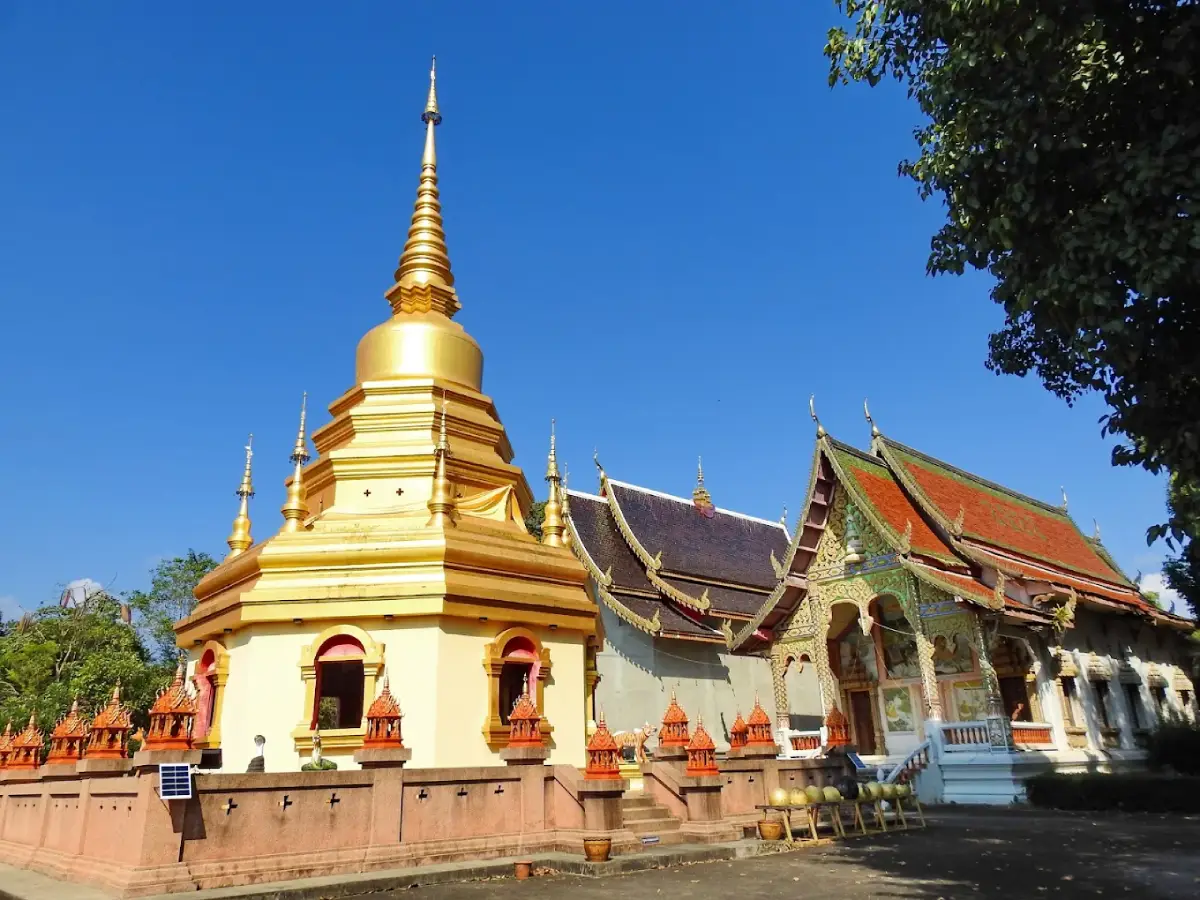
Wat Pak Thang is an old community temple in Ban Pak Thang, Moo 7, San Mahaphon Subdistrict, Mae Taeng District, Chiang Mai Province. The temple is located at 360 Moo 7, Ban Pak Thang, San Mahaphon, Mae Taeng, Chiang Mai 50150. It covers 2 rai, 3 ngan, and 12 square wah, and was officially permitted as a Buddhist temple in 1938. Wat Pak Thang is important as a village temple, a temple within San Mahaphon Municipality, and a place connected with an old trade and transport route once used by ox carts moving between villages in Mae Taeng.
Wat Pak Thang is suitable for travelers who want to visit a quiet community temple in Mae Taeng and learn about the local history of Ban Pak Thang. The temple is not known for large-scale tourism or crowded sightseeing. Its value lies in its connection with village life, Buddhist practice, local movement, trade routes, and the memory of a community that once served as an important passageway between nearby settlements.
The history of Wat Pak Thang is closely tied to Ban Pak Kong, an older local name associated with the area. In the past, this place was a route for ox carts used by villagers to transport goods, conduct trade, travel between villages, and rest along the way. People from nearby communities such as Ban Bong, Ban Den, and Ban Thung Luang passed through this route regularly. Because of that role, the area became known as Ban Pak Thang, meaning a gateway or entrance route.
The name Ban Pak Thang is therefore not only a village name. It records the geography of movement. The area functioned as a point of passage and connection for villages in Mae Taeng. Understanding this name helps visitors see Wat Pak Thang as a temple rooted in a historic travel corridor rather than simply a temple located in a village.
In the past, Wat Pak Thang was a Shan or Tai Yai temple. Details of the earliest construction period are not clearly preserved, but this Shan connection is important because Mae Taeng and San Mahaphon have long reflected cultural diversity. Lanna communities, Shan-descended Buddhists, traders, and travelers all contributed to the area’s social and religious landscape. Wat Pak Thang is one of the places where that layered history can still be understood.
The temple became more developed during the time of Phra Duangchan as abbot. During that period, several important monastic buildings and facilities were constructed, including the viharn, sermon hall, monks’ residences, toilets, kitchen, and temple wall. These structures allowed the temple to support Buddhist ceremonies, resident monks, merit-making activities, and larger community gatherings. They also show how the temple gradually developed from a local place of faith into a more complete community religious center.
Wat Pak Thang was officially permitted as a temple in 1938 and received its royal boundary in 2013. The official establishment date confirms its status as a recognized Buddhist temple, while the granting of the royal boundary reflects the temple’s readiness for formal monastic functions under Buddhist discipline. Together, these dates show the temple’s development across both historical and institutional dimensions.
Ban Pak Thang is Moo 7 of San Mahaphon Subdistrict. The same village area is also home to other religious sites, including Wat Pa Ajarn Tue, Wat San That, and Suriyaraṅsi Church. This concentration of religious sites shows the social and spiritual importance of Ban Pak Thang. Wat Pak Thang is therefore one of the key local landmarks within a village that has strong religious and community identity.
San Mahaphon Subdistrict contains several Buddhist temples, including Wat Mae Taeng, Wat Nong Lom, Wat Pak Thang, Wat Chom Khiri, Wat Tiyasathan, Wat Santi Phonaram, Wat Santi Bat, Wat Siri Thammamongkhon, Wat Pa Ajarn Tue, and Wat San That. These temples form a network of religious life across the municipality. Wat Pak Thang should therefore be understood as part of a wider temple landscape rather than as an isolated attraction.
The role of Wat Pak Thang in the community is visible through merit-making, Buddhist practice, sermons, ceremonies, and annual activities. The temple is a spiritual center for Ban Pak Thang residents. It supports Buddhist holy days, ordination-related activities, funerals, Kathin offerings, robe-offering ceremonies, and community gatherings. Like many northern Thai village temples, it is woven into the lives of children, adults, elders, monks, and laypeople.
Confirmed annual activities at Wat Pak Thang include an annual meditation practice from 10 to 20 February, with about 30 to 50 participants, and a Buddha image bathing activity from 13 to 14 April, with about 100 to 200 participants. These activities show that Wat Pak Thang remains a living temple where local people gather for religious practice and seasonal merit-making.
The Buddha image bathing activity is closely connected with Pi Mai Mueang, the northern Thai New Year. During this period, people make merit, bathe Buddha images, pay respect to elders, and begin the new year with blessings. At Wat Pak Thang, the April bathing ceremony connects family, community, and Buddhist devotion in a way that reflects living Lanna culture.
Other important traditions in San Mahaphon include Yi Peng, Poi Luang, the offering of Buddhist Lent candles and bathing cloths, and Poi Sang Long. These traditions show the cultural diversity of Mae Taeng, combining Lanna Buddhist practice with Shan cultural identity. Yi Peng is associated with lanterns, devotional lights, and floating offerings. Poi Luang is a major community merit-making event. Buddhist Lent offerings support monks during the rainy season. Poi Sang Long reflects Shan novice ordination culture.
The main travel value of Wat Pak Thang is the chance to see a real community temple with a story rooted in old cart routes and Shan heritage. Visitors can pay respect, observe the viharn, sermon hall, monks’ residences, temple courtyard, kitchen, and temple wall, and understand how these spaces support Buddhist life. The temple is best suited for travelers who appreciate local history and village culture rather than only decorative architecture.
The viharn is one of the temple’s central religious spaces. It supports worship, chanting, sermons, and temple ceremonies. The sermon hall serves gatherings and community activities. The monks’ residences support monastic life. The kitchen, toilets, and temple wall reflect practical development that allows the temple to serve the community during festivals and merit-making events. Together, these structures show the temple as a working religious center.
The temple courtyard is also important. In northern Thai village temples, courtyards are more than open space. They are used for Buddhist holy days, ceremony preparation, community gatherings, and welcoming laypeople. At Wat Pak Thang, the courtyard helps reveal how the temple remains part of everyday community life in Ban Pak Thang.
Phra Maha Winai Dhammavijayo is identified in temple history information as the abbot of Wat Pak Thang. The abbot plays an important role in maintaining the temple, organizing religious activities, and supporting the temple’s function as a community center. The presence of an identified abbot also confirms the temple’s continuing role as an active Buddhist institution.
Wat Pak Thang is especially useful for travelers who want to understand Mae Taeng beyond nature attractions and cafes. Mae Taeng is widely known for elephants, reservoirs, mountain routes, and the road toward Pai, but its community temples reveal another layer of the district. Wat Pak Thang tells the story of village routes, ox carts, Shan heritage, trade, and Buddhist faith in a local setting.
A meaningful visit to Wat Pak Thang can be combined with nearby temples in San Mahaphon, such as Wat Pa Ajarn Tue, Wat San That, Wat Mae Taeng, Wat Nong Lom, Wat Chom Khiri, and Wat Tiyasathan. This route allows travelers to see different types of local religious spaces, including village temples, forest tradition sites, Shan-related temples, and temples connected with community traditions.
Wat Pa Ajarn Tue and Wat San That are especially relevant because they are also in Ban Pak Thang, Moo 7. Visiting them together with Wat Pak Thang gives a clearer picture of the religious landscape of this village. Wat Mae Taeng, Wat Nong Lom, and Wat Chom Khiri extend the route into the broader temple network of San Mahaphon. Wat Tiyasathan adds a stronger Shan cultural dimension to the trip.
San Mahaphon is located along an important route in Mae Taeng District and connects with Highway 107, the Chiang Mai–Fang road. From Chiang Mai city, travelers can drive north toward Mae Taeng and enter Ban Pak Thang in San Mahaphon Subdistrict. The temple is located within the local community and is convenient as a cultural stop during a Mae Taeng day trip.
Getting There from Chiang Mai city is straightforward by private car, rental car, or motorbike. Take the Chiang Mai–Fang road, Highway 107, toward Mae Taeng District. Once in San Mahaphon, follow navigation to Ban Pak Thang, Moo 7. Public transport requires local transfer planning because the temple is located inside a village area rather than directly on a major tourist route.
A half-day route can begin at Wat Pak Thang in the morning. Visitors can pay respect, observe the community temple atmosphere, then continue to Wat Pa Ajarn Tue or Wat San That in Ban Pak Thang. After that, lunch can be planned in Mae Taeng, followed by Wat Mae Taeng, Wat Nong Lom, or a local cafe. This kind of route is calm, practical, and culturally focused.
A full-day route can connect Wat Pak Thang with other Mae Taeng attractions, including local cafes, San Mahaphon temples, the Mae Taeng pine seed production area, or the Mae Ngat Somboon Chon Reservoir route. This gives visitors a balanced experience of religion, local community, nature, and food in Mae Taeng.
Visitors should dress respectfully and behave quietly because Wat Pak Thang is still a working temple used by monks and local residents. Avoid loud behavior, do not disturb ceremonies, and ask permission before photographing people or religious activities. A community temple should be visited with attention to respect, not only for sightseeing.
Wat Pak Thang is valuable as a site of community memory. The name Ban Pak Thang preserves the history of old routes. The ox-cart story preserves the local economy of movement and trade. The Shan temple background reflects cultural diversity. The monastic buildings show how the temple developed over generations. Seen this way, Wat Pak Thang is not just a small temple in Mae Taeng but a living record of Ban Pak Thang and San Mahaphon.
In summary, Wat Pak Thang is an old community temple in Ban Pak Thang, San Mahaphon Subdistrict, Mae Taeng District, Chiang Mai Province. It was officially established in 1938, covers 2 rai, 3 ngan, and 12 square wah, and has a history connected with ox-cart routes and Shan Buddhist heritage. Important temple areas include the viharn, sermon hall, monks’ residences, temple courtyard, toilets, kitchen, and temple wall. The temple is suitable for travelers who want to make merit, learn local history, and explore the temple network of Mae Taeng in a meaningful way.
| Name | Wat Pak Thang |
| Location | Ban Pak Thang, Moo 7, San Mahaphon Subdistrict, Mae Taeng District, Chiang Mai Province |
| Address | 360 Moo 7, Ban Pak Thang, San Mahaphon Subdistrict, Mae Taeng District, Chiang Mai 50150, Thailand |
| Highlights | Old community temple in Ban Pak Thang with history connected to ox-cart routes and Shan Buddhist heritage |
| History | Officially permitted as a temple in 1938 and granted its royal boundary in 2013 |
| Temple Area | 2 rai, 3 ngan, and 12 square wah |
| Name Origin | The village name comes from its old role as a passageway or gateway route used by several nearby communities |
| Distinctive Features | Mahanikaya community temple with a history as a Shan temple and a spiritual center of Ban Pak Thang |
| Travel Information | From Chiang Mai city, take Highway 107 toward Mae Taeng District, then enter Ban Pak Thang, Moo 7, San Mahaphon Subdistrict |
| Current Status | Active community Buddhist temple in San Mahaphon, Mae Taeng, Chiang Mai |
| Open Days | Daily |
| Opening Hours | 08.00 – 17.00 |
| Main Areas / Zones | Viharn, sermon hall, monks’ residences, temple courtyard, toilets, kitchen, and temple wall |
| Abbot / Caretaker | Phra Maha Winai Dhammavijayo |
| Important Traditions / Activities | Annual meditation practice from 10–20 February, Buddha image bathing from 13–14 April, Kathin, robe-offering ceremonies, Pi Mai Mueang, Yi Peng, and Buddhist Lent activities |
| Nearby Tourist Attractions | 1. Wat Pa Ajarn Tue, about 1 km 2. Wat San That, about 1 km 3. Wat Mae Taeng, about 3 km 4. Wat Nong Lom, about 3 km 5. Wat Chom Khiri, about 4 km 6. Wat Tiyasathan, about 4 km |
| Nearby Restaurants | 1. Nan Daeng Yentafo Mae Taeng, about 4 km, Tel. 093-306-2627 2. Mont Raming Mae Taeng, about 5 km, Tel. 089-956-3674 3. Moca Coffee, about 5 km 4. Sawana Chiang Mai, about 6 km 5. Lae Phu Doo Na Cafe, about 14 km, Tel. 093-275-3888 |
| Nearby Accommodations | 1. i AM i farm stay, about 3 km, Tel. 084-117-8179 2. Maetang Phuphing Resort, about 4 km 3. Phutawanpundao, about 6 km 4. Phusanfah Resort, about 11 km, Tel. 087-702-9888 5. Butsaba Garden Resort, about 13 km |
Frequently Asked Questions (FAQ)
Q: Where is Wat Pak Thang located?
A: Wat Pak Thang is located at 360 Moo 7, Ban Pak Thang, San Mahaphon Subdistrict, Mae Taeng District, Chiang Mai 50150, Thailand.
Q: What is the history of Wat Pak Thang?
A: Wat Pak Thang was officially permitted as a temple in 1938. Its local history is connected with old ox-cart routes and a Shan Buddhist community in Ban Pak Thang.
Q: Why is the village called Ban Pak Thang?
A: The area was once a passageway used by villagers traveling between communities such as Ban Bong, Ban Den, and Ban Thung Luang, so it became known as Ban Pak Thang, meaning a gateway route.
Q: What important structures are found at Wat Pak Thang?
A: Confirmed important structures include the viharn, sermon hall, monks’ residences, toilets, kitchen, and temple wall.
Q: What are the opening hours of Wat Pak Thang?
A: Wat Pak Thang is open daily from 08.00 to 17.00.
Q: Who is the abbot of Wat Pak Thang?
A: Temple history information identifies Phra Maha Winai Dhammavijayo as the abbot of Wat Pak Thang.
Q: What annual activities are held at Wat Pak Thang?
A: Confirmed activities include annual meditation practice from 10–20 February and Buddha image bathing from 13–14 April, along with regular community merit-making traditions.
Q: What nearby temples can be visited with Wat Pak Thang?
A: Nearby temples include Wat Pa Ajarn Tue, Wat San That, Wat Mae Taeng, Wat Nong Lom, Wat Chom Khiri, and Wat Tiyasathan.
 Category: ●Places of Worship
 Group: ●Temple
Last Update : 24 HourAgo
 Last Update : 24 HourAgo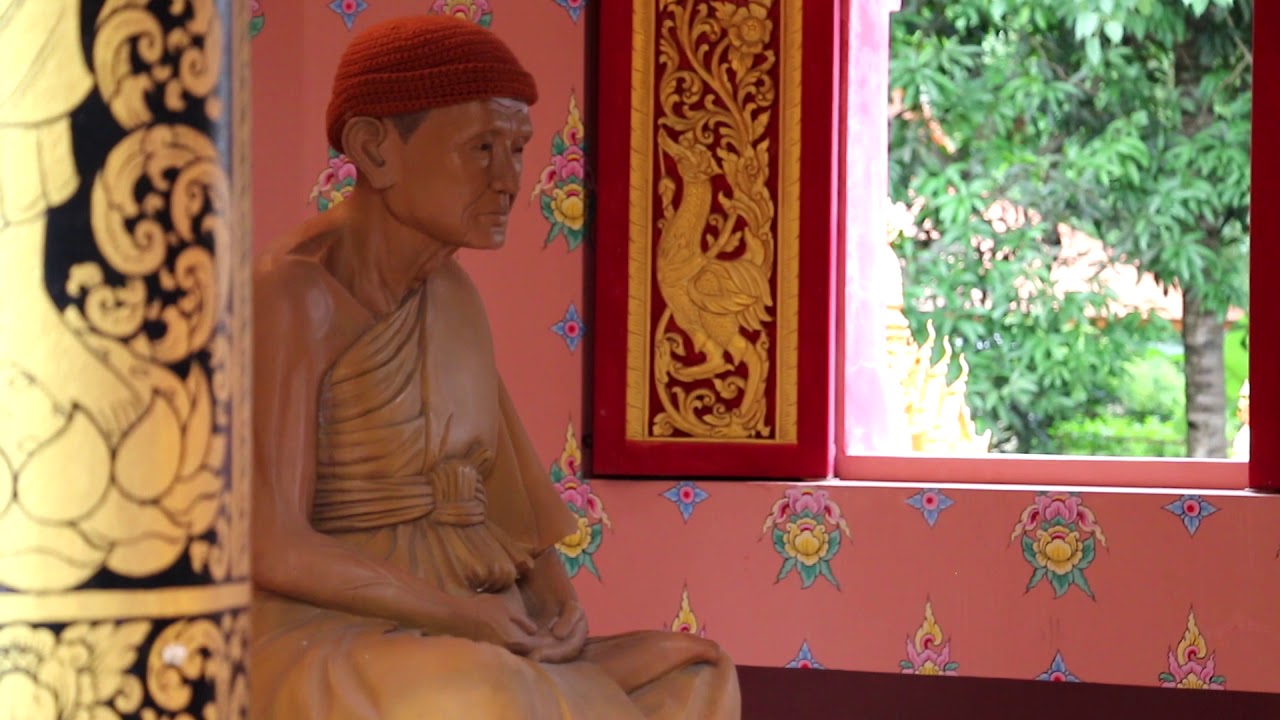
 Click to Access the Navigation Map GPS
Wat Pak Thang Map
Recommend

 Muang Chiang Mai(121)Chom Thong(47)Mae Chaem(25)Chiang Dao(33)Doi Saket(68)Mae Taeng(85)Mae Rim(69)Samoeng(29)Fang(71)Mae Ai(62)Phrao(70)San Pa Tong(105)San Kamphaeng(66)San Sai(73)Hang Dong(74)Hot(32)Doi Tao(22)Omkoi(11)Saraphi(74)Wiang Haeng(15)Chai Prakan(28)Mae Wang(32)Mae On(22)Doi Lo(34)Galyani Vadhana(1)


