
lovethailand home >North Travel Attractions >Chiang Mai Travel Attractions >Mae Taeng >San Pa Yang > Wat Nong Kai
TL;DR: Wat Nong Kai is located at Ban Nong Kai, Moo 4, San Pa Yang Subdistrict, Mae Taeng District, Chiang Mai Province.
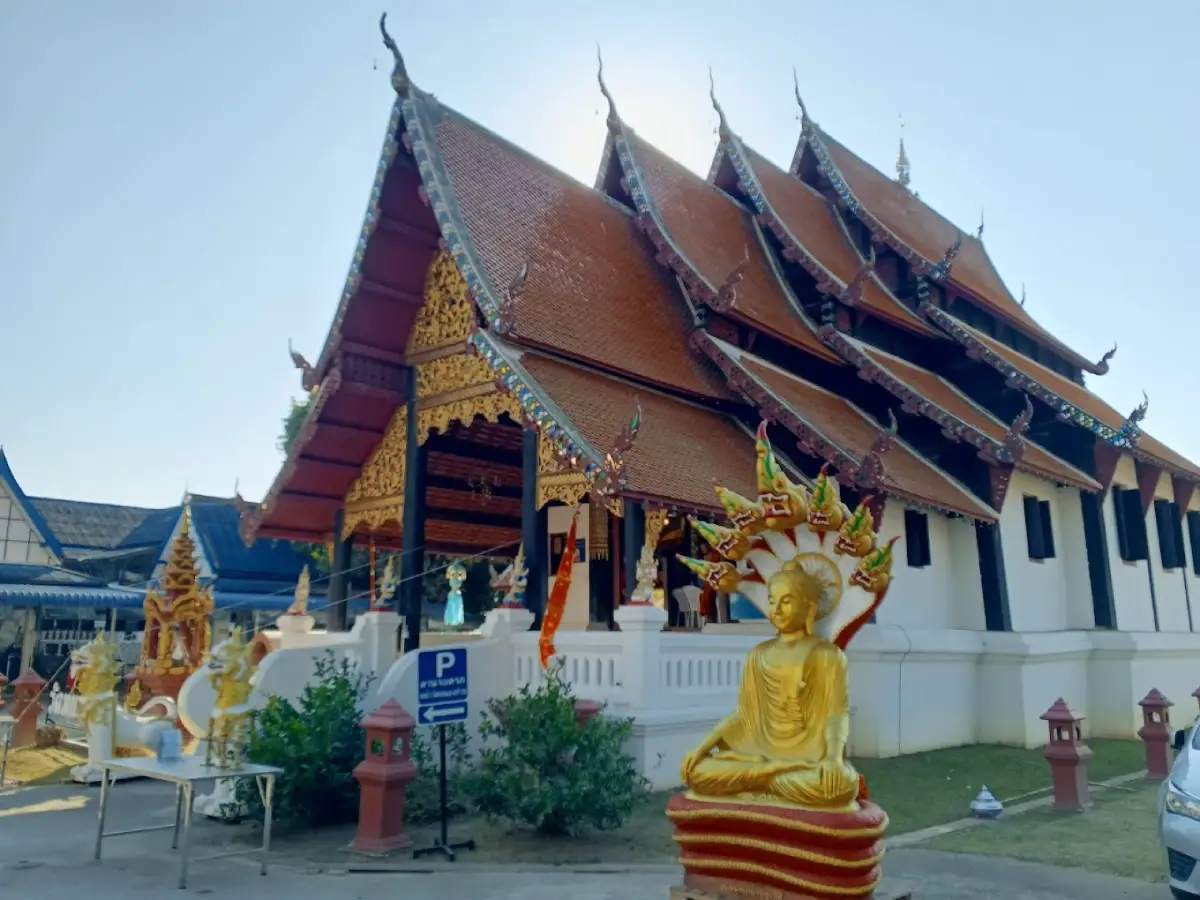
Wat Nong Kai
Operating day: Daily
Operating time: 08.00 - 17.00
Wat Nong Kai is a local Buddhist temple under the Mahanikaya order, located at 99 Moo 4, Ban Nong Kai, San Pa Yang Subdistrict, Mae Taeng District, Chiang Mai Province 50330. The temple was officially established in 1754 and is currently associated with Phra Palat Prasert Chotidhammo as abbot. It is one of the important community temples on the merit-making route toward Wat Phra Phutthabat Si Roi. Its most important sacred image is Luang Pho Yai Chai Mongkhon, the principal Buddha image housed inside the Lanna-style viharn.
Wat Nong Kai is suitable for travelers who want to make merit, pay respect, and learn about a Lanna village temple with deep local history. It is not a large commercial tourist temple. Its value lies in its long community history, the old Lanna-style viharn, traditional wooden construction, the story of Luang Pho Yai Chai Mongkhon, and the temple’s connection with Khruba Chao Siwichai and the pilgrimage route to Wat Phra Phutthabat Si Roi.
Ban Nong Kai is located in San Pa Yang Subdistrict, Mae Taeng District. The area is part of northern Chiang Mai’s rural landscape, where village temples, agricultural communities, local roads, and merit-making routes remain closely connected. The name “Nong Kai” reflects local place identity. “Nong” refers to a pond or wetland area, while “Kai” preserves the specific name of the community. A temple carrying the same name as the village becomes both a sacred site and a marker of local memory.
San Pa Yang Subdistrict is connected with several old village temples, local communities, and the route toward Wat Phra Phutthabat Si Roi. Wat Nong Kai stands within a living village environment rather than as an isolated heritage site. Visitors can experience the relationship between temple, village, agriculture, local roads, and Buddhist devotion in a way that gives Mae Taeng more depth than a simple sightseeing route.
The official establishment of Wat Nong Kai in 1754 gives the temple strong historical importance. A village temple of this age reflects long-standing Buddhist faith, settlement continuity, and community cooperation. In northern Thai rural society, temples were not only places for monks. They were shared spaces for worship, Dhamma listening, merit-making, ordination-related ceremonies, funerals, memorial events, and annual religious festivals.
Luang Pho Yai Chai Mongkhon is the main sacred focus of Wat Nong Kai. The Buddha image is highly respected by villagers and visiting Buddhists, and it is enshrined as the principal image inside the viharn. The image is also connected with the temple’s relocation history. It was moved several times together with the temple community before being enshrined at the present temple site in Ban Nong Kai.
The history of Wat Nong Kai includes several changes of location. The older temple site was in a low-lying area that suffered from repeated flooding. The principal Buddha image was later moved to another site, now associated with a meditation area, but that area had no nearby village settlement and eventually became quiet. Villagers then brought Luang Pho Yai Chai Mongkhon to the present village location, allowing the temple to once again become a living spiritual center for the community.
This relocation history is important because it shows how a community temple follows the life of the people. The temple is not only a fixed building. It is a living sacred institution shaped by water, settlement, village movement, and devotion. Luang Pho Yai Chai Mongkhon became the spiritual anchor that allowed the community to maintain continuity even as the temple’s physical location changed.
The Lanna-style viharn is one of the most important features of Wat Nong Kai. The viharn was restored and extended with the involvement of Khruba Chao Siwichai, villagers, and local craftsmen. Around 1937, traditional craftsmen supervised work on the structure. The building reflects northern Thai carpentry knowledge, especially in its wooden framework, proportions, roof form, and timber-joining system.
The viharn’s most distinctive architectural feature is its wooden structure. The building was constructed without relying on nails or metal fasteners as the main structural method. Craftsmen created holes, grooves, and channels in the wood, then inserted and locked timber pieces into one another. This technique requires deep understanding of weight, pressure, proportion, and material behavior. When executed correctly, the result is both stable and durable.
The wooden structure is more than a construction method. It is a record of Lanna craftsmanship. Each timber element functions as part of a larger structural system. The cutting, fitting, inserting, and locking of timber pieces reflect careful manual skill and long practical experience. Visitors interested in traditional architecture, vernacular building, and northern Thai craftsmanship should spend time observing the viharn’s details with respect and care.
Wat Nong Kai is also connected with Khruba Chao Siwichai, the revered monk widely known as the saint of Lanna. Before the road to Wat Phra Phutthabat Si Roi was built, monks and devotees had to walk through forested mountain routes. Wat Nong Kai served as a resting point and gathering place for those traveling toward the sacred footprints. Khruba Chao Siwichai used the temple area as a resting point and as a place to gather construction materials before they were carried up to the sacred site.
The monument to Khruba Chao Siwichai in front of the temple reminds visitors of this merit-making route. A visit to Wat Nong Kai therefore gains deeper meaning when understood as part of the route to Wat Phra Phutthabat Si Roi. The temple connects village devotion, Lanna craftsmanship, and the history of Buddhist pilgrimage in northern Thailand.
Wat Nong Kai continues to develop its religious facilities. One of the important ongoing projects is the construction of an ubosot inspired by the Bodh Gaya stupa form. This project shows the temple’s continuing role as an active Buddhist center. When seen together with the old Lanna viharn, Luang Pho Yai Chai Mongkhon, the meditation areas, and the Khruba Chao Siwichai monument, Wat Nong Kai contains both historical memory and contemporary religious activity.
The temple also supports meditation and Buddhist practice. Visitors and devotees come to make merit, pray, chant, meditate, and participate in religious activities. The temple provides contact channels for those who want to ask about activities, merit-making, donations, and travel to the temple. This confirms that Wat Nong Kai remains a living temple, not only an old historical site.
As a Mahanikaya community temple, Wat Nong Kai supports everyday Buddhist life at the village level. Local residents use the temple for worship, merit-making, Dhamma listening, offerings, Buddhist holy days, family ceremonies, memorial activities, ordination-related events, forest robe offerings, and Kathin offerings after Buddhist Lent. The temple is both a sacred space and a social anchor for Ban Nong Kai.
Religious activities at Wat Nong Kai follow the Buddhist calendar and Lanna village traditions. These include Buddhist holy days, Makha Bucha, Visakha Bucha, Asalha Bucha, Buddhist Lent, the end of Buddhist Lent, forest robe offerings, and Kathin offerings. These occasions help maintain the temple, support monks, and strengthen the relationship between the temple and local residents.
Wat Nong Kai is suitable for several types of travelers. Devotional visitors should pay respect to Luang Pho Yai Chai Mongkhon. Cultural travelers should study the temple’s connection with Khruba Chao Siwichai and Wat Phra Phutthabat Si Roi. Architecture-focused visitors should observe the Lanna-style viharn and its wooden joinery. Community-focused travelers should notice how the temple continues to connect Ban Nong Kai with religious practice, meditation, and merit-making activities.
The main things to appreciate at Wat Nong Kai are the Lanna-style viharn, Luang Pho Yai Chai Mongkhon, the Khruba Chao Siwichai monument, the Bodh Gaya-inspired ubosot construction area, the meditation areas, and the calm village-temple atmosphere. Visitors should walk slowly, observe respectfully, and avoid touching or leaning on old wooden structures.
San Pa Yang Subdistrict and nearby areas offer several related stops, including Wat San Pa Yang, Wat San Pa Tueng, Wat Phra Chao Ton Luang, and Wat Phra Phutthabat Si Roi. Wat Nong Kai can therefore be included in a Mae Taeng merit-making route. Travelers can begin at Wat Nong Kai, continue toward Wat Phra Phutthabat Si Roi, and also stop for local food, cafes, and accommodation in the San Pa Yang and Mae Taeng areas.
Getting There is easiest by private car or rental car. From Chiang Mai city, take Highway 107 north toward Mae Rim and Mae Taeng, then enter the route toward Wat Phra Phutthabat Si Roi in San Pa Yang Subdistrict. Continue to Ban Nong Kai in Moo 4. The temple is located along the route to Wat Phra Phutthabat Si Roi, so visitors should drive carefully, especially during rain or on narrow local roads.
A half-day itinerary can begin at Wat Nong Kai for worship, merit-making, and a closer look at the Lanna-style viharn. Visitors can then stop at a local cafe or community market in San Pa Yang before continuing to Wat Phra Phutthabat Si Roi. A full-day route can include Wat San Pa Yang, Wat San Pa Tueng, Wat Phra Chao Ton Luang, and accommodation in Mae Taeng.
Visitors should dress modestly, speak quietly, respect monks’ areas, and avoid disturbing any religious activity. The old wooden viharn should be treated with care. Touching, scratching, climbing, or leaning against wooden components may damage heritage materials. A meaningful visit to Wat Nong Kai is one that respects both the sacred atmosphere and the craftsmanship preserved by the community.
Overall, Wat Nong Kai is a meaningful Mahanikaya community temple in Ban Nong Kai, Moo 4, San Pa Yang Subdistrict, Mae Taeng District, Chiang Mai. Established in 1754, it preserves the story of Luang Pho Yai Chai Mongkhon, a Lanna-style wooden viharn, traditional nail-free timber joinery, the memory of temple relocation, and the connection with Khruba Chao Siwichai and the route to Wat Phra Phutthabat Si Roi. It is one of Mae Taeng’s valuable cultural stops for understanding Lanna faith, craftsmanship, community history, and Buddhist pilgrimage.
| Name | Wat Nong Kai |
| Location | Ban Nong Kai, Moo 4, San Pa Yang Subdistrict, Mae Taeng District, Chiang Mai Province |
| Address | 99 Moo 4, San Pa Yang Subdistrict, Mae Taeng District, Chiang Mai 50330, Thailand |
| Coordinates | 19.0303, 98.8653 |
| Open Days | Daily |
| Opening Hours | 08.00 – 17.00 |
| Temple Type | Community Buddhist Temple Under The Mahanikaya Order |
| History | Officially Established As A Temple In 1754 |
| Main Buddha Image | Luang Pho Yai Chai Mongkhon, the principal Buddha image enshrined inside the viharn and highly respected by local residents and Buddhist visitors |
| Important Structures | Lanna-Style Viharn, Khruba Chao Siwichai Monument, Meditation Areas, And Bodh Gaya-Inspired Ubosot Construction Area |
| Highlights | Lanna-Style Wooden Viharn With Traditional Timber Joinery, Luang Pho Yai Chai Mongkhon, And The Temple’s Role As A Resting Point On The Route To Wat Phra Phutthabat Si Roi |
| Local Context | Ban Nong Kai Is Located In San Pa Yang Subdistrict, Mae Taeng District, Along The Merit-Making Route Toward Wat Phra Phutthabat Si Roi |
| Abbot / Caretaker | Phra Palat Prasert Chotidhammo |
| Contact Number | 053-374-095-6, 053-374-311 |
| Contact Channel | LINE Official: @watnonggai |
| Main Zones | Luang Pho Yai Chai Mongkhon Viharn, Khruba Chao Siwichai Monument Area, Meditation Areas, Bodh Gaya-Inspired Ubosot Construction Area, And Visitor / Practitioner Support Area |
| Related Traditions | Buddhist Holy Day Merit-Making, Buddhist Festivals, Meditation Practice, Forest Robe Offerings, Kathin Offerings, And Merit-Making Activities Linked With The Wat Phra Phutthabat Si Roi Route |
| Travel Information | From Chiang Mai city, take Highway 107 toward Mae Rim and Mae Taeng, then enter the route to Wat Phra Phutthabat Si Roi in San Pa Yang Subdistrict and continue to Ban Nong Kai. Private car or rental car is the most convenient option. |
| Current Status | Active Mahanikaya Community Temple Of Ban Nong Kai, San Pa Yang Subdistrict, Mae Taeng District, Chiang Mai, With Ongoing Merit-Making And Ubosot Construction Activities |
| Nearby Tourist Attractions | 1. Wat Phra Phutthabat Si Roi, about 14 km 2. Wat San Pa Yang, about 6 km 3. Wat San Pa Tueng, about 7 km 4. Wat Phra Chao Ton Luang, about 7 km 5. Ban San Pa Yang Community Market, about 6 km |
| Nearby Restaurants / Cafes | 1. Him Huai Cafe, about 1 km, Tel. 094-696-6199 2. AunJai Cafe, about 6 km, Tel. 095-691-1888 3. Ban San Pa Yang Community Market, about 6 km 4. Phusanfah Residence, about 18 km 5. Mon Raming Mae Taeng, about 20 km |
| Nearby Accommodations | 1. Butsaba Garden Resort, about 5 km, Tel. 061-959-3694 2. Joy Villa (Mon Saen Suk), about 6 km 3. Maetang Phuphing Resort, about 13 km, Tel. 062-264-5277 4. Royal Ping Garden & Resort, about 16 km, Tel. 081-980-2525 5. Phusanfah Resort, about 18 km, Tel. 087-702-9888 |
Frequently Asked Questions (FAQ)
Q: Where is Wat Nong Kai located?
A: Wat Nong Kai is located at 99 Moo 4, Ban Nong Kai, San Pa Yang Subdistrict, Mae Taeng District, Chiang Mai Province 50330.
Q: What type of temple is Wat Nong Kai?
A: Wat Nong Kai is a community Buddhist temple under the Mahanikaya order and was officially established in 1754.
Q: What is the main Buddha image at Wat Nong Kai?
A: The main Buddha image is Luang Pho Yai Chai Mongkhon, the principal image enshrined inside the viharn and highly respected by local residents.
Q: What is special about the viharn at Wat Nong Kai?
A: The viharn is a Lanna-style wooden structure built with traditional timber joinery, using grooves and fitted wooden pieces instead of relying on nails or metal fasteners as the main structural method.
Q: How is Wat Nong Kai connected with Khruba Chao Siwichai?
A: Wat Nong Kai was a resting point and construction-material gathering place on the route to Wat Phra Phutthabat Si Roi during the period associated with Khruba Chao Siwichai’s merit-making work.
Q: What kind of travelers is Wat Nong Kai suitable for?
A: It is suitable for travelers interested in merit-making, sacred Buddha images, Lanna architecture, traditional timber craftsmanship, and the route to Wat Phra Phutthabat Si Roi.
Q: What nearby places can be visited with Wat Nong Kai?
A: Nearby places include Wat Phra Phutthabat Si Roi, Wat San Pa Yang, Wat San Pa Tueng, Wat Phra Chao Ton Luang, and local stops in San Pa Yang.
Q: How do travelers get to Wat Nong Kai from Chiang Mai city?
A: Take Highway 107 toward Mae Rim and Mae Taeng, then enter the route to Wat Phra Phutthabat Si Roi in San Pa Yang Subdistrict and continue to Ban Nong Kai in Moo 4.
 Category: ●Places of Worship
 Group: ●Temple
Last Update : 18 HourAgo
 Last Update : 18 HourAgo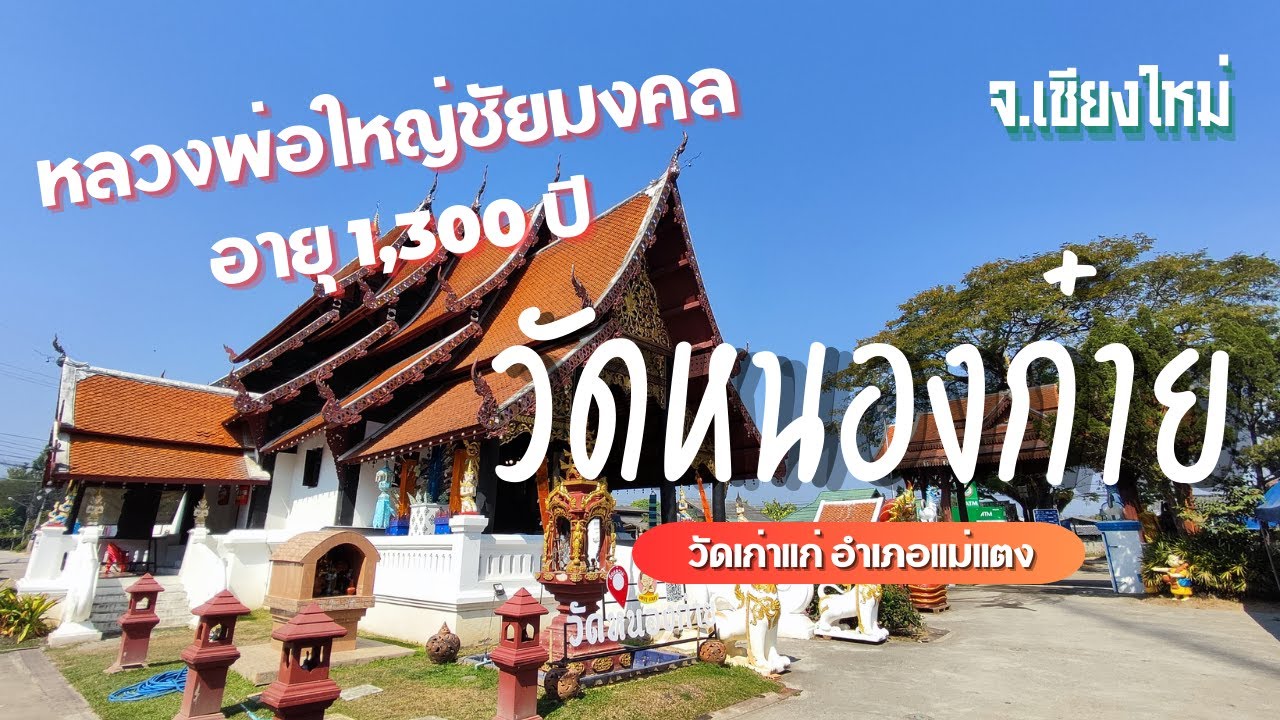
 Click to Access the Navigation Map GPS
Wat Nong Kai Map
Recommend

 Muang Chiang Mai(121)Chom Thong(47)Mae Chaem(25)Chiang Dao(33)Doi Saket(68)Mae Taeng(85)Mae Rim(69)Samoeng(29)Fang(71)Mae Ai(62)Phrao(70)San Pa Tong(105)San Kamphaeng(66)San Sai(73)Hang Dong(74)Hot(32)Doi Tao(22)Omkoi(11)Saraphi(74)Wiang Haeng(15)Chai Prakan(28)Mae Wang(32)Mae On(22)Doi Lo(34)Galyani Vadhana(1)


