
lovethailand home >North Travel Attractions >Chiang Mai Travel Attractions >Mae Taeng >Sop Poeng > Wat Pang Hang Dab Phai Chai Mongkhon
TL;DR: Wat Pang Hang Dab Phai Chai Mongkhon is located at Ban Pang Hang, Moo 1, Sop Poeng Subdistrict, Mae Taeng District, Chiang Mai Province.
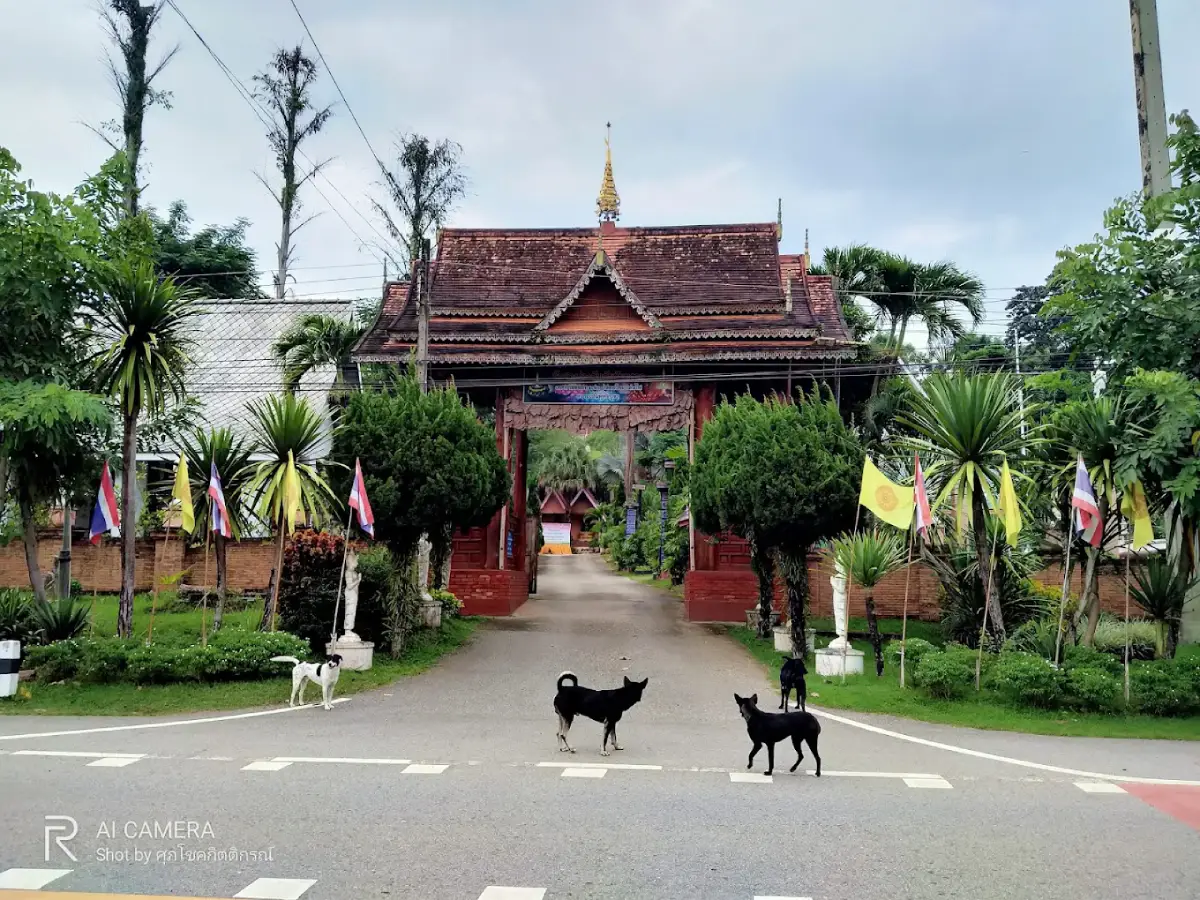
Wat Pang Hang Dab Phai Chai Mongkhon
Operating day: Daily
Operating time: 08.00 - 17.00
Wat Pang Hang, also known locally as Wat Pang Hang Dab Phai Chai Mongkhon, is a local Buddhist temple under the Mahanikaya order in Ban Pang Hang, Moo 1, Sop Poeng Subdistrict, Mae Taeng District, Chiang Mai Province 50150. The temple is listed under temple code 350060606 and serves as a spiritual center for Ban Pang Hang. It belongs to the village temple network of Sop Poeng, together with Wat Don Chiang, Wat Doi Takaeng, Wat Tha Kham, Wat Sop Poeng, Wat Nong Bua Luang, and Wat Sahakon Thung Mai.
Wat Pang Hang is suitable for travelers who want to make merit, pay respect, and experience a quiet Lanna village temple along the Mae Taeng-Pai route. It is not a large commercial tourist temple. Its value lies in its role as a living community temple connected with Ban Pang Hang, local agriculture, Mae Hao stream, village roads, Highway 1095, and the wider cultural landscape of Sop Poeng.
Ban Pang Hang is Moo 1 of Sop Poeng Subdistrict and one of the key communities in the area. The name “Pang Hang” carries a northern Thai place-name character. “Pang” often suggests a settlement, resting place, or area connected with forests, hills, and travel routes, while “Hang” gives the village its local identity. A temple carrying the same name as the village becomes both a sacred site and a marker of community memory.
Sop Poeng Subdistrict is an important rural area of Mae Taeng District. It lies about 10 kilometers from Mae Taeng District center along the Mae Malai-Pai route, with Highway 1095 running through the subdistrict from west to east. The landscape includes mountain terrain, Doi Pang Yang, Doi Pa Sak, Mae Hao stream, agricultural villages, and mixed deciduous forest. Wat Pang Hang therefore belongs to a landscape shaped by Buddhism, village life, farming, water systems, forests, and local travel routes.
The importance of Wat Pang Hang lies in its role as a village temple. A temple of this kind supports everyday Buddhist life at the community level. Villagers use the temple for worship, merit-making, Dhamma listening, offerings, family ceremonies, Buddhist holy days, memorial activities, ordination-related events, and annual festivals. It is not only a place for monks; it is a shared spiritual and social space for the village.
The abbot of Wat Pang Hang is Phra Khru Sathit Thammawut. In a community temple, the abbot guides religious practice, maintains the temple grounds, coordinates with local devotees, and preserves the relationship between the temple and the village. This role is essential for a temple that continues to support local Buddhist life.
As a Mahanikaya community temple, Wat Pang Hang supports the religious life of local residents. It serves as a place for Buddhist holy days, major Buddhist festivals, merit-making, family ceremonies, memorial events, forest robe offerings, and Kathin offerings after Buddhist Lent. These activities help maintain the temple, support monastic life, and strengthen community ties.
Ban Pang Hang also includes important community elements such as Ban Pang Hang School and the Mae Rim Watershed Conservation and Management Unit. This setting shows that Ban Pang Hang is not merely a roadside village. It is a community where Buddhism, education, natural-resource management, agriculture, and local life exist together.
The main things to appreciate at Wat Pang Hang are the quiet temple atmosphere, the worship area, the temple courtyard, and the relationship between the temple and the surrounding village. Its appeal comes from simplicity, continuity, and the close relationship between temple and community rather than from large-scale tourism facilities.
The area around Wat Pang Hang shows another side of Mae Taeng. Instead of the busier activity-based tourism zones, Sop Poeng has the atmosphere of a working rural community with homes, village roads, agricultural land, water systems, forest areas, and routes leading toward natural attractions. A visit to Wat Pang Hang is best understood as a slow cultural stop rather than a quick sightseeing point.
Wat Pang Hang is part of the cultural route of Sop Poeng. The subdistrict has several community temples spread across its villages, including Wat Don Chiang, Wat Doi Takaeng, Wat Tha Kham, Wat Sop Poeng, Wat Nong Bua Luang, and Wat Sahakon Thung Mai. Together, these temples show how Buddhism remains closely embedded in village life throughout the subdistrict.
The extended name Wat Pang Hang Dab Phai Chai Mongkhon adds a meaningful layer to the temple’s identity. The words suggest protection, auspiciousness, and spiritual reassurance. For travelers using the Mae Taeng-Pai route, the temple can be a quiet place to make merit and prepare the mind before continuing through mountain roads and rural communities.
Wat Pang Hang functions as a spiritual center for Ban Pang Hang. Local residents use the temple for Buddhist holy days, major festivals, family merit-making, ordination-related activities, funerals, memorial ceremonies, and village events. A village temple in northern Thailand often does more than provide a place for worship; it sustains relationships among generations and gives the community a shared spiritual anchor.
Religious activities at Wat Pang Hang follow the Buddhist calendar and Lanna village traditions. These include Buddhist holy days, Makha Bucha, Visakha Bucha, Asalha Bucha, Buddhist Lent, the end of Buddhist Lent, forest robe offerings, and Kathin offerings after Buddhist Lent. These events help maintain the temple, support monks, and strengthen the relationship between the temple and local residents.
Kathin and forest robe offerings are especially meaningful for village temples. These events allow villagers, relatives, and supporters to contribute to temple upkeep and support monastic life. For Wat Pang Hang, such merit-making occasions also reinforce community unity and the long-standing bond between the temple and Ban Pang Hang.
Wat Pang Hang can be combined with a broader Mae Taeng cultural route. Travelers interested in village temples can continue to Wat Doi Takaeng, Wat Don Chiang, Wat Tha Kham, Wat Sop Poeng, and Wat Nong Bua Luang. Travelers who want to add nature and activities can continue toward Mok Fa Waterfall, elephant conservation areas, and accommodation zones around Sop Poeng and Kuet Chang. This makes it possible to combine temples, village life, nature, food, and accommodation in one trip.
Wat Don Chiang is another meaningful nearby stop because of its old Lanna-style viharn and local craftsmanship. Combining Wat Pang Hang with Wat Don Chiang, Wat Doi Takaeng, Wat Tha Kham, and Wat Sop Poeng gives travelers a deeper cultural view of Sop Poeng, beyond the more familiar natural attractions and adventure tourism of Mae Taeng.
Wat Pang Hang is also connected with Mok Fa Waterfall, a key natural attraction in Sop Poeng. The waterfall area is associated with Doi Suthep-Pui National Park’s local protection unit and can be included in the same travel route. Starting with a temple visit at Wat Pang Hang before continuing to a waterfall or nature stop creates a balanced journey of culture and nature.
Getting There is easiest by private car or rental car. From Chiang Mai city, take Chotana Road or Highway 107 toward Mae Taeng, then continue onto Highway 1095 on the Mae Malai-Pai route. From there, enter Sop Poeng Subdistrict and Ban Pang Hang in Moo 1 via local roads. The route is connected to a main highway, but drivers should still be cautious in rainy weather, on wet roads, and on narrower village roads.
A half-day itinerary can begin at Wat Pang Hang for merit-making and a quiet temple visit, then continue to Wat Doi Takaeng, Wat Don Chiang, or Wat Tha Kham before stopping for a meal in the Sop Poeng area. A full-day route can include Mok Fa Waterfall, accommodation areas in Mae Taeng, or nature-based attractions along the Mae Malai-Pai route. This creates a balanced route of Buddhism, village culture, nature, and local food.
Wat Pang Hang is best suited to travelers interested in community temples, local Buddhist practice, Lanna village culture, and less crowded cultural routes. It may not be one of Chiang Mai’s most famous tourist temples, but it has strong local importance. Its Mahanikaya status, village setting, abbot, and relationship with Ban Pang Hang make it meaningful within the religious geography of Mae Taeng.
Visitors should dress modestly, speak quietly, respect monks’ areas, and avoid disturbing any religious activity. If a ceremony or merit-making event is taking place, follow the guidance of monks or local residents. Proper etiquette helps preserve the calm atmosphere of Wat Pang Hang and shows respect for the community that continues to use the temple.
Overall, Wat Pang Hang is a meaningful Mahanikaya community temple in Ban Pang Hang, Moo 1, Sop Poeng Subdistrict, Mae Taeng District, Chiang Mai. It remains a valuable cultural stop for travelers who want to understand village-based Buddhist life, Lanna community identity, Mae Hao stream communities, Highway 1095, and the cultural route of Mae Taeng beyond mainstream nature tourism.
| Name | Wat Pang Hang |
| Alternative Name | Wat Pang Hang Dab Phai Chai Mongkhon |
| Location | Ban Pang Hang, Moo 1, Sop Poeng Subdistrict, Mae Taeng District, Chiang Mai Province |
| Address | Ban Pang Hang, Moo 1, Sop Poeng Subdistrict, Mae Taeng District, Chiang Mai 50150, Thailand |
| Map Code | 4Q5X+W8R, Sop Poeng Subdistrict, Mae Taeng District, Chiang Mai |
| Temple Type | Community Buddhist Temple Under The Mahanikaya Order |
| Temple Code | 350060606 |
| Highlights | Community temple of Ban Pang Hang, suitable for merit-making and learning about village-based Buddhist life along the Mae Taeng-Pai route |
| Local Context | Ban Pang Hang is Moo 1 of Sop Poeng Subdistrict, an area connected with mountain terrain, Mae Hao stream, agricultural villages, Highway 1095, and the Mae Malai-Pai route |
| Distinctive Features | A village temple connected with Ban Pang Hang, Sop Poeng community life, Mae Hao stream, Highway 1095, Ban Pang Hang School, and Mae Taeng’s cultural temple network |
| Abbot / Caretaker | Phra Khru Sathit Thammawut |
| Resident Monks | 5 Monks |
| Related Traditions | Buddhist holy day merit-making, Buddhist festivals, forest robe offerings, and Kathin offerings after Buddhist Lent |
| Travel Information | From Chiang Mai city, take Chotana Road or Highway 107 toward Mae Taeng, then continue onto Highway 1095 on the Mae Malai-Pai route and enter Ban Pang Hang in Sop Poeng Subdistrict. Private car or rental car is the most convenient option. |
| Current Status | Community Buddhist Temple Of Ban Pang Hang, Sop Poeng Subdistrict, Mae Taeng District, Chiang Mai |
| Nearby Tourist Attractions | 1. Mok Fa Waterfall, about 5 km 2. Wat Doi Takaeng, about 5 km 3. Wat Don Chiang, about 6 km 4. Wat Tha Kham, about 7 km 5. Wat Sop Poeng, about 8 km |
| Nearby Restaurants / Cafes | 1. Pa Loi Restaurant, about 6 km, Tel. 080-673-5211 2. Green Food Coffee, about 8 km, Tel. 089-998-9906 3. Baan Rai Lanna Resort Restaurant, about 8 km, Tel. 053-995-470 4. Veni Vana Valley Maetang, about 10 km, Tel. 080-031-2242 5. Sibsan Cuisine, about 23 km, Tel. 081-980-9070 |
| Nearby Accommodations | 1. Baan Rai Lanna Resort, about 8 km, Tel. 053-995-470 2. Veni Vana Valley Maetang, about 10 km, Tel. 080-031-2242 3. Na Sompor Baan Din, about 11 km, Tel. 02-430-4464 4. Absolute Thai Hillside Villa Resort, about 12 km, Tel. 089-103-8322 5. Sibsan Resort & Spa Maetaeng, about 23 km, Tel. 081-980-9070 |
Frequently Asked Questions (FAQ)
Q: Where is Wat Pang Hang located?
A: Wat Pang Hang is located in Ban Pang Hang, Moo 1, Sop Poeng Subdistrict, Mae Taeng District, Chiang Mai Province.
Q: What type of temple is Wat Pang Hang?
A: Wat Pang Hang is a community Buddhist temple under the Mahanikaya order, listed under temple code 350060606.
Q: Does Wat Pang Hang have another name?
A: Wat Pang Hang is also known as Wat Pang Hang Dab Phai Chai Mongkhon.
Q: Who is the abbot of Wat Pang Hang?
A: The abbot of Wat Pang Hang is Phra Khru Sathit Thammawut.
Q: What is the main highlight of Wat Pang Hang?
A: Its main highlight is its role as a village temple connected with Ban Pang Hang, Sop Poeng community life, Mae Hao stream, and the Mae Taeng-Pai travel route.
Q: What kind of travelers is Wat Pang Hang suitable for?
A: It is suitable for travelers interested in merit-making, quiet community temples, Lanna village culture, and less crowded cultural routes in Mae Taeng.
Q: What nearby places can be visited with Wat Pang Hang?
A: Nearby places include Mok Fa Waterfall, Wat Doi Takaeng, Wat Don Chiang, Wat Tha Kham, Wat Sop Poeng, and other attractions along the Mae Taeng-Pai route.
Q: How do travelers get to Wat Pang Hang from Chiang Mai city?
A: Take Chotana Road or Highway 107 toward Mae Taeng, continue onto Highway 1095 on the Mae Malai-Pai route, then enter Ban Pang Hang in Sop Poeng Subdistrict. Private car or rental car is the most convenient option.
 Category: ●Places of Worship
 Group: ●Temple
Last Update : 2 HourAgo
 Last Update : 2 HourAgo
 Click to Access the Navigation Map GPS
Wat Pang Hang Dab Phai Chai Mongkhon Map
Recommend

 Muang Chiang Mai(121)Chom Thong(47)Mae Chaem(25)Chiang Dao(33)Doi Saket(68)Mae Taeng(85)Mae Rim(69)Samoeng(29)Fang(71)Mae Ai(62)Phrao(70)San Pa Tong(105)San Kamphaeng(66)San Sai(73)Hang Dong(74)Hot(32)Doi Tao(22)Omkoi(11)Saraphi(74)Wiang Haeng(15)Chai Prakan(28)Mae Wang(32)Mae On(22)Doi Lo(34)Galyani Vadhana(1)


