
lovethailand home >North Travel Attractions >Chiang Mai Travel Attractions >Mae Taeng >Mae Ho Phra > Wat Hua Fai (Mae Ho Phra)
TL;DR: Wat Hua Fai (Mae Ho Phra) is located at Moo 2, Ban Hua Fai, Mae Ho Phra Subdistrict, Mae Taeng District, Chiang Mai Province. Highlights include Long-standing village temple of Ban Hua Fai, officially established in 1866 and granted Wisungkhamsima in 1976.

Wat Hua Fai (Mae Ho Phra)
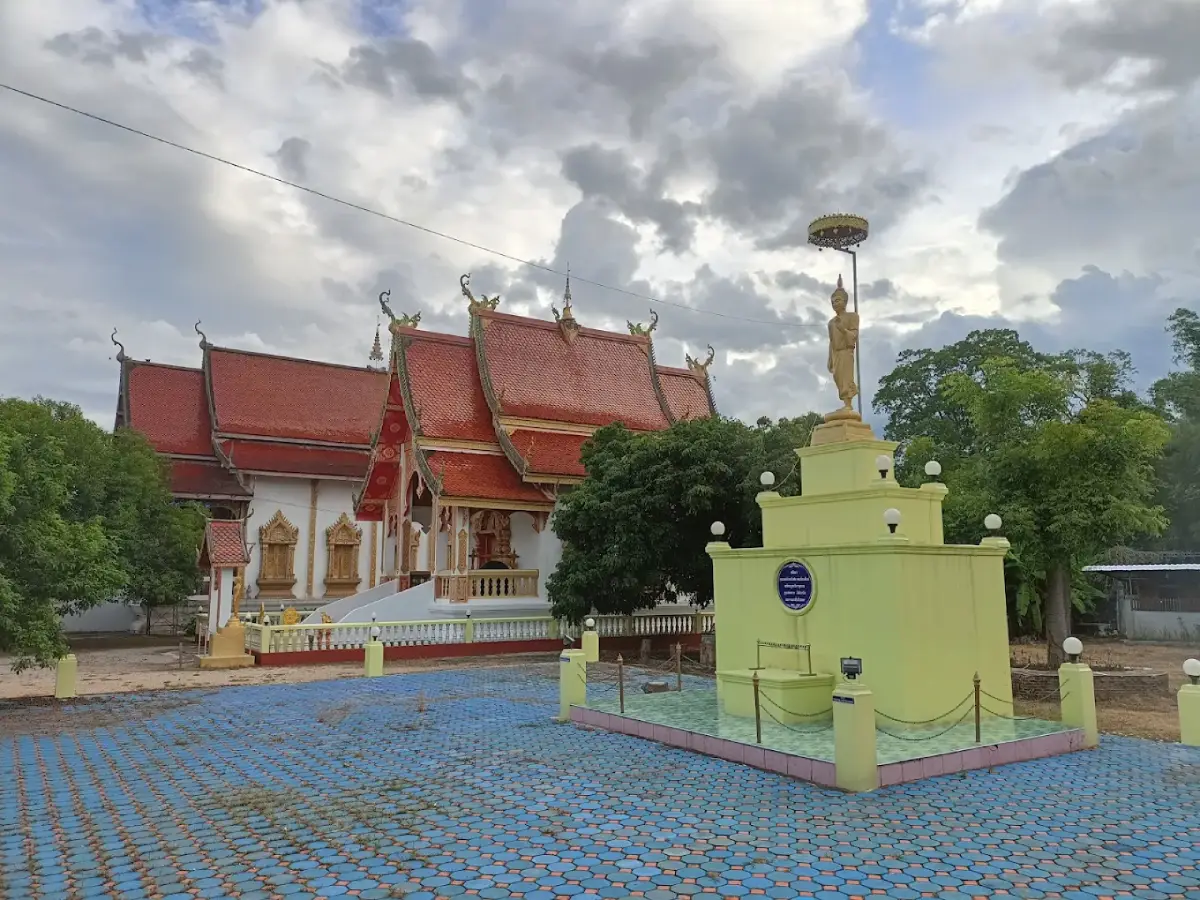
Operating day: Daily
Operating time: 08.00 - 17.00
Wat Hua Fai (Mae Ho Phra) is a local Buddhist temple in Moo 2, Ban Hua Fai, Mae Ho Phra Subdistrict, Mae Taeng District, Chiang Mai Province 50150. It is a community temple under the Mahanikaya order and serves as a spiritual center for Ban Hua Fai. The temple was officially established in 1866 and received its Wisungkhamsima in 1976, giving it strong historical and religious importance within the Mae Ho Phra area.
Wat Hua Fai is suitable for travelers who want to make merit, pay respect, and experience a quiet Lanna village temple in Mae Taeng. It is not a major commercial tourist attraction. Its value lies in its long history, its relationship with Ban Hua Fai, and its continuing role as a living community temple where local residents gather for Buddhist observances, merit-making, family ceremonies, and annual religious events.
The name “Hua Fai” reflects the village’s relationship with water management and agriculture. In northern Thai rural life, a “fai” or irrigation weir is more than a water-control structure. It represents cooperation, shared water use, farming, and the relationship between people and the land. A temple carrying the same name as the village therefore preserves not only a place-name, but also the memory of local water, agriculture, and community life.
Mae Ho Phra Subdistrict is an important area of Mae Taeng District. It includes rural villages, agricultural land, local roads, community temples, schools, and natural attractions such as Bua Tong Waterfall and the Seven-Color Spring. Wat Hua Fai therefore belongs to a landscape shaped by Buddhism, village life, agriculture, local travel routes, and nature.
The official establishment of Wat Hua Fai in 1866 gives the temple exceptional historical value among community temples in the area. In northern Thai village life, temples were not built only as sacred places. They also served as social centers for worship, Dhamma listening, ordination-related activities, funerals, family merit-making, and annual village gatherings. Wat Hua Fai continues this long-standing role for the Ban Hua Fai community.
The granting of Wisungkhamsima in 1976 marks another important stage in the temple’s history. Wisungkhamsima refers to a formally granted monastic boundary used for Buddhist Sangha acts according to monastic discipline. This status reflects the continuing development of the temple from its earlier establishment into a recognized religious institution serving the local community.
The abbot of Wat Hua Fai is Phra Opaso. In a community temple, the abbot has an important role in guiding religious practice, maintaining the temple grounds, coordinating with local devotees, and preserving the relationship between the temple and the village. This role is essential for a temple that continues to support local Buddhist life.
As a Mahanikaya community temple, Wat Hua Fai supports the everyday Buddhist life of local residents. It serves as a place for worship, merit-making, Dhamma listening, offerings, family ceremonies, ordination-related activities, funerals, and community events. It is both a sacred place and a social anchor for Ban Hua Fai.
The main things to appreciate at Wat Hua Fai are the quiet temple atmosphere, the worship area, the temple courtyard, and the way the temple remains connected with the surrounding village. Its appeal comes from continuity, simplicity, and the close relationship between temple and community rather than from large-scale tourism facilities.
The area around Wat Hua Fai shows another side of Mae Taeng. Instead of the busier activity-based tourism zones, Ban Hua Fai has the atmosphere of a working rural community with homes, village roads, agricultural surroundings, and routes leading toward natural attractions. A visit to Wat Hua Fai is best understood as a slow cultural stop rather than a quick sightseeing point.
Wat Hua Fai’s long history makes it especially meaningful for cultural travel. With origins dating back to 1866, the temple offers a stronger historical layer than many ordinary village stops. It allows travelers to understand how Buddhism, farming communities, water management, and local identity have been tied together in Mae Ho Phra for generations.
Religious activities at Wat Hua Fai follow the Buddhist calendar and Lanna village traditions. These include Buddhist holy days, Makha Bucha, Visakha Bucha, Asalha Bucha, Buddhist Lent, the end of Buddhist Lent, forest robe offerings, and Kathin offerings after Buddhist Lent. These events help maintain the temple, support monks, and strengthen the relationship between the temple and local residents.
Kathin and forest robe offerings are especially meaningful for village temples. These events allow villagers, relatives, and supporters to contribute to temple upkeep and support monastic life. For Wat Hua Fai, such merit-making occasions also reinforce community unity and the long-standing bond between the temple and Ban Hua Fai.
Mae Ho Phra Subdistrict has several community temples spread across its villages, including Wat Mae Ho Phra, Wat Ban Phueng, Wat Mae Na Pak, Wat San Na Meng, Wat Phra That Sunantha, Wat Pa Lao, Wat Phu Din, Wat Lao Kong, and Wat Thep Nimit Nantharam. Wat Hua Fai is part of this local temple network, showing how Buddhism remains closely embedded in village life throughout the subdistrict.
Wat Hua Fai can be combined with Bua Tong Waterfall and the Seven-Color Spring, the most notable natural attraction in Mae Ho Phra. Bua Tong is a limestone waterfall with a grippy mineral surface that allows visitors to climb the waterfall carefully, while the Seven-Color Spring is a clear cool spring that feeds the waterfall system and shows rainbow-like colors when sunlight hits the water. Combining the temple with these natural attractions creates a balanced route of culture, village life, and nature.
A useful travel route begins at Wat Hua Fai for merit-making and a quiet temple visit, then continues to Wat Mae Ho Phra, Wat Phra That Sunantha, Wat Ban Phueng, Wat Mae Na Pak, Wat San Na Meng, or Wat Pa Lao. Travelers can then continue to Bua Tong Waterfall and the Seven-Color Spring. This route is suitable for a half-day or full-day trip, especially for visitors who want both local Buddhist culture and Mae Taeng’s natural scenery in one journey.
Getting There is easiest by private car or rental car. From Chiang Mai city, take Chotana Road or Highway 107 toward Mae Taeng, then continue toward the Chiang Mai-Phrao route through Mae Ho Phra Subdistrict and Ban Hua Fai. The route is generally more accessible than deep mountain routes, but careful driving is still recommended in rainy weather or on wet roads.
Travelers planning a half-day route can begin at Wat Hua Fai, visit nearby community temples, and finish at Bua Tong Waterfall and the Seven-Color Spring. A full-day route can include a local meal, cafe stop, or overnight stay around Mae Ho Phra, such as Baannai Homestay & Flower Tea or Bua Tong Resort. This makes the trip more relaxed and gives visitors more time to appreciate the area rather than treating it only as a waterfall stop.
Wat Hua Fai is best suited to travelers interested in community temples, local Buddhist practice, Lanna village culture, and less crowded cultural routes. It may not be one of Chiang Mai’s most famous tourist temples, but it has strong local importance. Its 1866 establishment, Mahanikaya status, Wisungkhamsima, and relationship with Ban Hua Fai make it meaningful within the religious geography of Mae Taeng.
Visitors should dress modestly, speak quietly, avoid disturbing monks’ residential areas, and respect any ongoing religious activity. If a ceremony or merit-making event is taking place, follow the guidance of monks or local residents. Proper etiquette helps preserve the calm atmosphere of Wat Hua Fai and shows respect for the community that continues to use the temple.
Overall, Wat Hua Fai is a meaningful community temple in Ban Hua Fai, Mae Ho Phra Subdistrict, Mae Taeng District. With its official establishment in 1866, its Wisungkhamsima in 1976, its status as a Mahanikaya local temple, its role under Phra Opaso, and its relationship with village life, agriculture, water management, and the route toward Bua Tong Waterfall, the temple is a valuable cultural stop for travelers who want to understand the deeper village-based Buddhist life of Mae Taeng.
| Name | Wat Hua Fai (Mae Ho Phra) |
| Location | Moo 2, Ban Hua Fai, Mae Ho Phra Subdistrict, Mae Taeng District, Chiang Mai Province |
| Address | Moo 2, Ban Hua Fai, Mae Ho Phra Subdistrict, Mae Taeng District, Chiang Mai 50150, Thailand |
| Open Days | Daily |
| Opening Hours | 08.00 – 17.00 |
| Temple Type | Community Buddhist Temple Under The Mahanikaya Order |
| Temple Code | 350060509 |
| Highlights | Long-standing village temple of Ban Hua Fai, officially established in 1866 and granted Wisungkhamsima in 1976 |
| History | Officially Established As A Temple In 1866 |
| Wisungkhamsima | Granted In 1976 |
| Local Context | Ban Hua Fai is Moo 2 of Mae Ho Phra Subdistrict, with a place-name connected to water management, irrigation weirs, and agricultural village life |
| Distinctive Features | A historic village temple connected with Lanna community life, the Chiang Mai-Phrao route, and Mae Taeng’s natural attractions |
| Abbot / Caretaker | Phra Opaso |
| Related Traditions | Buddhist holy day merit-making, Buddhist festivals, forest robe offerings, and Kathin offerings after Buddhist Lent |
| Travel Information | From Chiang Mai city, take Chotana Road or Highway 107 toward Mae Taeng, then continue toward the Chiang Mai-Phrao route through Mae Ho Phra Subdistrict and Ban Hua Fai. Private car or rental car is the most convenient option. |
| Current Status | Community Buddhist Temple Of Ban Hua Fai, Mae Ho Phra Subdistrict, Mae Taeng District, Chiang Mai |
| Nearby Tourist Attractions | 1. Wat Mae Ho Phra, about 4 km 2. Wat Phra That Sunantha, about 5 km 3. Wat Ban Phueng, about 6 km 4. Wat Mae Na Pak, about 7 km 5. Bua Tong Waterfall And Seven-Color Spring, about 12 km |
| Nearby Restaurants / Cafes | 1. Baannai Homestay & Flower Tea, about 10 km, Tel. 099-654-5659 2. Local Food Shops In Mae Ho Phra Area, about 4 km 3. Food Shops Around Bua Tong Waterfall Area, about 12 km 4. Local Food Shops In Mae Malai Area, about 16 km 5. Cafes And Food Stops Along The Mae Taeng-Phrao Route, about 10 km |
| Nearby Accommodations | 1. Baannai Homestay & Flower Tea, about 10 km, Tel. 099-654-5659 2. Bua Tong Resort, about 13 km, Tel. 081-952-3259 3. Mae Malai Hotel, about 16 km, Tel. 053-842-620, 095-610-6489 4. Doona Resort, about 25 km, Tel. 093-275-3888 5. Lochi Chiangmai, about 28 km |
Frequently Asked Questions (FAQ)
Q: Where is Wat Hua Fai located?
A: Wat Hua Fai is located in Moo 2, Ban Hua Fai, Mae Ho Phra Subdistrict, Mae Taeng District, Chiang Mai Province 50150.
Q: What type of temple is Wat Hua Fai?
A: Wat Hua Fai is a community Buddhist temple under the Mahanikaya order.
Q: Why is Wat Hua Fai historically important?
A: Wat Hua Fai was officially established in 1866 and received Wisungkhamsima in 1976, making it one of the historically significant community temples of Mae Ho Phra.
Q: Who is the abbot of Wat Hua Fai?
A: The abbot of Wat Hua Fai is Phra Opaso.
Q: What is the main highlight of Wat Hua Fai?
A: Its main highlight is its long village-temple history and its connection with the Ban Hua Fai place-name, water management, agriculture, and Lanna community life.
Q: What kind of travelers is Wat Hua Fai suitable for?
A: It is suitable for travelers interested in merit-making, quiet community temples, Lanna village culture, and a Mae Ho Phra route that combines temple life with nature.
Q: What nearby places can be visited with Wat Hua Fai?
A: Nearby places include Wat Mae Ho Phra, Wat Phra That Sunantha, Wat Ban Phueng, Wat Mae Na Pak, Bua Tong Waterfall, and the Seven-Color Spring.
Q: How do travelers get to Wat Hua Fai from Chiang Mai city?
A: Take Chotana Road or Highway 107 toward Mae Taeng, then continue toward the Chiang Mai-Phrao route through Mae Ho Phra Subdistrict and Ban Hua Fai. Private car or rental car is the most convenient option.
 Category: ●Places of Worship
 Group: ●Temple
Last Update : 2 WeekAgo
 Last Update : 2 WeekAgo
 Click to Access the Navigation Map GPS
Wat Hua Fai (Mae Ho Phra) Map
Recommend

 Muang Chiang Mai(121)Chom Thong(47)Mae Chaem(25)Chiang Dao(33)Doi Saket(68)Mae Taeng(85)Mae Rim(69)Samoeng(29)Fang(71)Mae Ai(59)Phrao(70)San Pa Tong(103)San Kamphaeng(66)San Sai(73)Hang Dong(73)Hot(32)Doi Tao(22)Omkoi(11)Saraphi(74)Wiang Haeng(15)Chai Prakan(28)Mae Wang(32)Mae On(22)Doi Lo(33)Galyani Vadhana(1)


