
lovethailand home >North Travel Attractions >Chiang Mai Travel Attractions >Mae Taeng >Muang Kai > Wat Ban Op
TL;DR: Wat Ban Op is located at Moo 3, Ban Op, Mueang Kai Subdistrict, Mae Taeng District, Chiang Mai Province. Highlights include Long-standing community temple of Ban Op, suitable for merit-making and learning about local village-based Buddhist life in Mueang Kai.
Wat Ban Op
Operating day: Daily
Operating time: 08.00 - 17.00
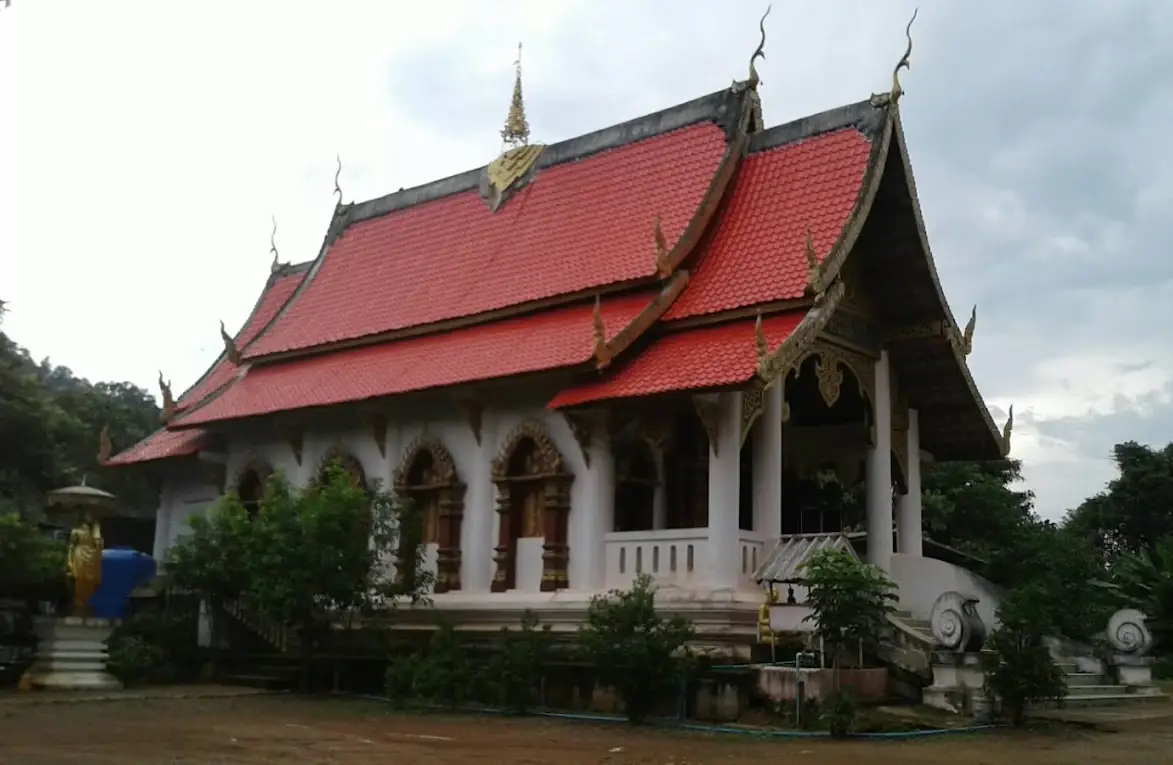
Wat Ban Op is a local Buddhist temple in Moo 3, Ban Op, Mueang Kai Subdistrict, Mae Taeng District, Chiang Mai Province 50150. It is a community temple under the Mahanikaya order and serves as a spiritual center for Ban Op. The temple was officially established in 1917 and remains listed in Mae Taeng temple records under temple code 350061003.
Wat Ban Op is suitable for travelers who want to make merit, pay respect, and experience a quiet village temple in Mae Taeng. It is not a major commercial tourist attraction. Its value lies in its role as a living community temple where local residents gather for Buddhist observances, merit-making, family ceremonies, annual religious events, and community activities.
Ban Op is Moo 3 of Mueang Kai Subdistrict. The village has a distinctive local character, with streams, natural water sources, forests, tea, coffee, fruit, handicrafts, basketry, livestock-based food resources, local dishes, and traditional village architecture. Wat Ban Op therefore stands within a community setting where Buddhism, nature, agriculture, craft traditions, and local food culture are closely connected.
Mueang Kai Subdistrict is located in Mae Taeng District in northern Chiang Mai. The area is associated with mountain landscapes, forested zones, agricultural land, Mae Kai stream, and the route toward Mon Ngo. Doi Mon Ngo is one of the important natural landmarks of the subdistrict, while Mae Kai stream is a key local waterway. Wat Ban Op therefore belongs to a cultural landscape shaped by Buddhism, agriculture, streams, forests, and village life.
The official establishment of Wat Ban Op in 1917 makes it one of the long-standing community temples of Mueang Kai. In northern Thai village life, temples are built not only as sacred places, but also as social centers for worship, Dhamma listening, ordination-related events, funerals, family merit-making, and annual village gatherings. Wat Ban Op continues this role for the local community.
The name “Ban Op” preserves the identity of the village within a religious and cultural context. A temple carrying the same name as its village is not only a place for worship; it is also a marker of community memory, local identity, and the long relationship between villagers and Buddhism in Mueang Kai.
The abbot of Wat Ban Op is Phra Khru Suphatthanakhet Suwatthano. In a community temple, the abbot has an important role in guiding religious practice, maintaining the temple grounds, coordinating with local devotees, and preserving the relationship between the temple and the village. This role is essential for a local temple that continues to support community religious life.
As a Mahanikaya community temple, Wat Ban Op supports the everyday Buddhist life of local residents. It serves as a place for worship, merit-making, ceremonies, and community gatherings throughout the year. Visitors should approach the temple as a sacred community space rather than as a commercial attraction.
The main appeal of Wat Ban Op is its quiet village atmosphere. Visitors can pay respect, make merit, and observe the relationship between the temple and Ban Op community life. The temple gives travelers a deeper view of Mueang Kai beyond Mon Ngo viewpoints and highland tourism.
Ban Op has strong natural and cultural potential. Streams, natural drinking water, forests, tea, coffee, fruit, craft groups, basketry, livestock resources, local food, and village architecture all shape the identity of the community. Wat Ban Op is a meaningful starting point for understanding this village because the temple connects people, Buddhism, nature, and local knowledge in one place.
Wat Ban Op serves as a religious center for Ban Op. Villagers use the temple for Buddhist holy days, major Buddhist festivals, family merit-making, ordination-related activities, funerals, memorial ceremonies, and village events. The temple is therefore both a sacred space and a social anchor for the community.
Religious activities at Wat Ban Op follow the Buddhist calendar and Lanna village traditions. These include Buddhist holy days, Makha Bucha, Visakha Bucha, Asalha Bucha, Buddhist Lent, the end of Buddhist Lent, forest robe offerings, and Kathin offerings after Buddhist Lent. A 2024 Kathin listing recorded 5 resident monks at the temple and a Kathin ceremony on October 31, 2024, at 13.00.
Mueang Kai has a network of community temples, including Wat Kai Noi, Wat Mueang Kai, Wat Ban Op, Wat Ban Lao, Wat Sop Kai, and Wat Kanlayanawatthanaram. These temples show how each village community maintains its own religious center. Visiting Wat Ban Op can therefore be part of a broader cultural route through Mueang Kai’s village temple network.
Mueang Kai is also connected with Doi Mon Ngo and the Mon Ngo Royal Project Development Center. The Mon Ngo area is known for mountain scenery, sea of mist, cool weather, highland agriculture, tea, coffee, and local community-based tourism. A visit to Wat Ban Op can therefore be combined with a broader understanding of Mueang Kai’s village, agricultural, and highland development landscape.
Wat Ban Op can be included in a broader Mueang Kai travel route. Nearby places include Wat Mueang Kai, Wat Kai Noi, Wat Ban Lao, Wat Sop Kai, the Mon Ngo Royal Project Development Center, Doi Mon Ngo, Lung Dech Tea Farm, and homestays around Mon Ngo. Adding the temple to a travel route gives visitors a more complete view of Mae Taeng by combining Buddhism, village life, agriculture, viewpoints, accommodation, and mountain scenery.
Getting to Wat Ban Op is easiest by private car or rental car. From Chiang Mai city, take Chotana Road or Highway 107 toward Mae Taeng District, then continue into Mueang Kai Subdistrict and Ban Op using local roads. Travelers who want to continue to Mon Ngo can drive onward toward the mountain community route. Some sections toward Mon Ngo are mountainous and winding, so careful driving is recommended, especially in the rainy season or when mist is present.
A practical itinerary is to begin at Wat Ban Op for a quiet temple visit and merit-making. Travelers can then continue to Wat Mueang Kai, Wat Kai Noi, or Wat Ban Lao to understand the local temple network of Mueang Kai. For nature and highland scenery, the route can continue to the Mon Ngo Royal Project Development Center, Doi Mon Ngo, or Lung Dech Tea Farm, with overnight stays at homestays around Mon Ngo for morning mist views.
Wat Ban Op is best suited to travelers interested in community temples, village culture, local Buddhist practice, and less crowded cultural routes. It may not be one of Chiang Mai’s most famous tourist temples, but it has strong local importance. Its establishment year, Mahanikaya status, resident monks, current abbot, and continuing relationship with Ban Op make it meaningful within the religious geography of Mae Taeng.
Visitors should dress modestly, speak quietly, avoid disturbing monks’ residential areas, and respect any ongoing religious activity. If a ceremony or merit-making event is taking place, follow the guidance of monks or local residents. Proper etiquette helps preserve the calm atmosphere of Wat Ban Op and shows respect for the community that continues to use the temple.
Overall, Wat Ban Op is a meaningful community temple in Ban Op, Mueang Kai Subdistrict, Mae Taeng District. With its official establishment in 1917, its status as a long-standing Mahanikaya local temple, its role under Phra Khru Suphatthanakhet Suwatthano, and its relationship with Ban Op’s natural and cultural landscape, the temple is a valuable cultural stop for travelers who want to understand the deeper village-based Buddhist life of Mae Taeng and the route toward Mon Ngo.
| Name | Wat Ban Op |
| Location | Moo 3, Ban Op, Mueang Kai Subdistrict, Mae Taeng District, Chiang Mai Province |
| Address | Moo 3, Ban Op, Mueang Kai Subdistrict, Mae Taeng District, Chiang Mai 50150, Thailand |
| Temple Type | Community Buddhist Temple Under The Mahanikaya Order |
| Temple Code | 350061003 |
| Highlights | Long-standing community temple of Ban Op, suitable for merit-making and learning about local village-based Buddhist life in Mueang Kai Subdistrict |
| History | Officially established as a temple in 1917 |
| Local Context | Ban Op is Moo 3 of Mueang Kai Subdistrict, a village with streams, forests, natural water sources, tea, coffee, fruit, craft traditions, local food, and a route toward Mon Ngo |
| Distinctive Features | A village temple connected with Ban Op, Mueang Kai, Mae Kai stream, local agriculture, craft traditions, and the cultural route toward Mon Ngo |
| Abbot / Caretaker | Phra Khru Suphatthanakhet Suwatthano |
| Resident Monks | 5 Monks |
| Related Traditions | Buddhist holy day merit-making, Buddhist festivals, forest robe offerings, and Kathin offerings after Buddhist Lent |
| Travel Information | From Chiang Mai city, take Chotana Road or Highway 107 toward Mae Taeng, then continue into Mueang Kai Subdistrict and Ban Op. Private car or rental car is the most convenient option. |
| Current Status | Active community Buddhist temple listed in Mae Taeng temple records |
| Nearby Tourist Attractions | 1. Wat Mueang Kai, about 3 km 2. Wat Kai Noi, about 5 km 3. Wat Ban Lao, about 6 km 4. Mon Ngo Royal Project Development Center, about 18 km 5. Doi Mon Ngo, about 20 km |
| Nearby Restaurants / Cafes | 1. Local Food Shops In Mueang Kai Area, about 3 km 2. Local Food Shops Around Ban Op And Nearby Villages, about 2 km 3. Local Food Shops In Ban Lao Area, about 6 km 4. Food Area Around Mon Ngo Royal Project, about 18 km 5. Cafes And Food Shops Around Mon Ngo Homestays, about 20 km |
| Nearby Accommodations | 1. Mok Far Mont Ngo Resort, about 10 km, Tel. 081-671-3006 2. Mon Ngo View Mok, about 20 km, Tel. 092-342-6726 3. Longlai Homestay Mon Ngo, about 20 km, Tel. 088-408-0449 4. Mon Ngo Lan View Homestay, about 20 km 5. Kao Pua Homestay Mon Ngo, about 21 km |
Frequently Asked Questions (FAQ)
Q: Where is Wat Ban Op located?
A: Wat Ban Op is located in Moo 3, Ban Op, Mueang Kai Subdistrict, Mae Taeng District, Chiang Mai Province 50150.
Q: What type of temple is Wat Ban Op?
A: Wat Ban Op is a community Buddhist temple under the Mahanikaya order.
Q: Why is Wat Ban Op historically important?
A: Wat Ban Op was officially established in 1917, making it one of the long-standing community temples of Mueang Kai Subdistrict.
Q: Who is the abbot of Wat Ban Op?
A: The abbot of Wat Ban Op is Phra Khru Suphatthanakhet Suwatthano.
Q: What is the main highlight of Wat Ban Op?
A: Its main highlight is its role as a village temple connected with Ban Op, streams, forests, tea, coffee, craft traditions, local food, and the route toward Mon Ngo.
Q: What kind of travelers is Wat Ban Op suitable for?
A: It is suitable for travelers interested in merit-making, quiet village temples, local Buddhist culture, and the Mueang Kai-Mon Ngo travel route.
Q: What nearby places can be visited with Wat Ban Op?
A: Nearby places include Wat Mueang Kai, Wat Kai Noi, Wat Ban Lao, the Mon Ngo Royal Project Development Center, and Doi Mon Ngo.
Q: How do travelers get to Wat Ban Op from Chiang Mai city?
A: Take Chotana Road or Highway 107 toward Mae Taeng, then continue into Mueang Kai Subdistrict and Ban Op. Private car or rental car is the most convenient option.
 Category: ●Places of Worship
 Group: ●Temple
Last Update : 2 WeekAgo
 Last Update : 2 WeekAgo
 Click to Access the Navigation Map GPS
 Muang Chiang Mai(121)Chom Thong(47)Mae Chaem(25)Chiang Dao(33)Doi Saket(68)Mae Taeng(85)Mae Rim(69)Samoeng(29)Fang(71)Mae Ai(59)Phrao(70)San Pa Tong(103)San Kamphaeng(66)San Sai(73)Hang Dong(73)Hot(32)Doi Tao(22)Omkoi(11)Saraphi(74)Wiang Haeng(15)Chai Prakan(28)Mae Wang(32)Mae On(22)Doi Lo(34)Galyani Vadhana(1)


