
lovethailand home >North Travel Attractions >Chiang Mai Travel Attractions >Mae Taeng >Pa Pae > Wat Pang Ma Kluai
TL;DR: Wat Pang Ma Kluai is located at Moo 2, Ban Pang Ma Kluai, Pa Pae Subdistrict, Mae Taeng District, Chiang Mai Province.
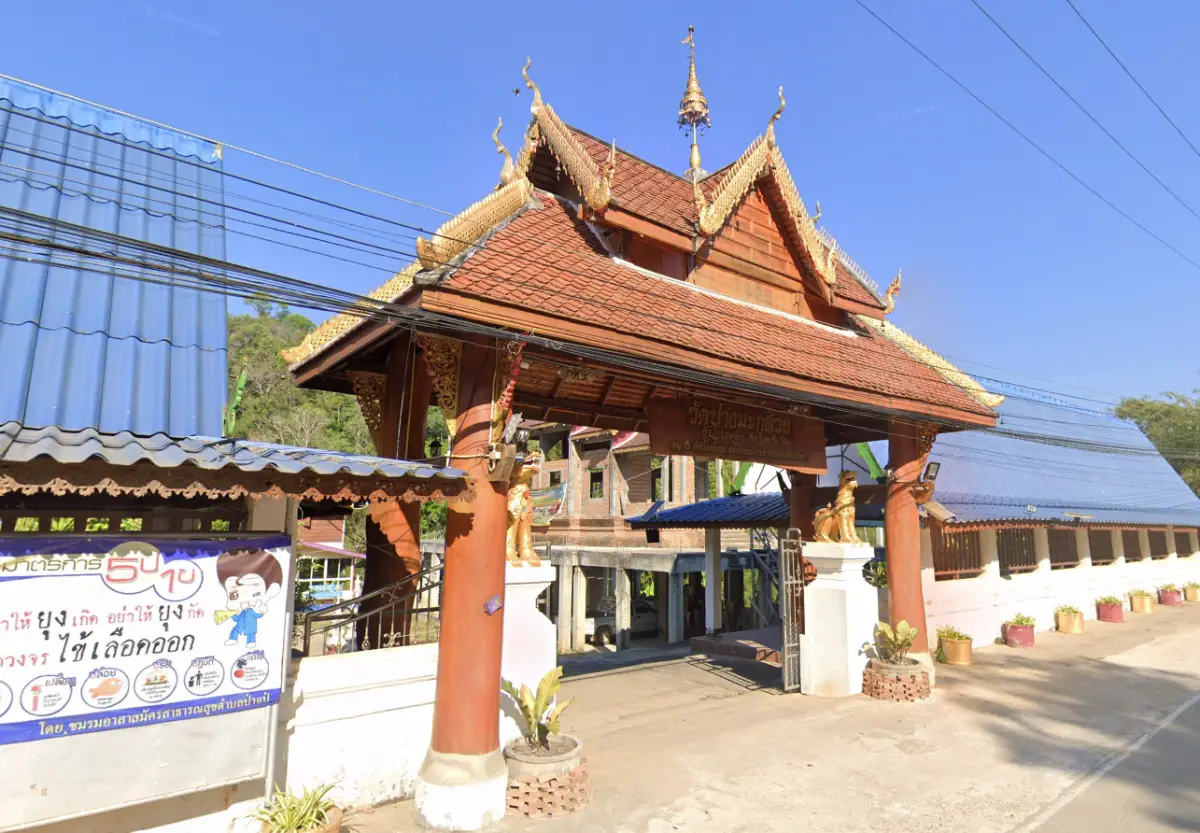
Wat Pang Ma Kluai
Operating day: Daily
Operating time: 08.00 - 17.00
Wat Pang Ma Kluai is a local Buddhist temple in Moo 2, Ban Pang Ma Kluai, Pa Pae Subdistrict, Mae Taeng District, Chiang Mai Province 50150. It is a community temple under the Mahanikaya order and serves as a spiritual center for Ban Pang Ma Kluai, a highland village in Pa Pae. The temple was officially established in 1935 and received Wisungkhamsima in 1969, giving it formal status for Buddhist monastic rites within its consecrated boundary.
Wat Pang Ma Kluai is suitable for travelers who want to make merit, pay respect, and experience a quiet village temple in the highland area of Mae Taeng. It is not a major commercial tourist attraction. Its value lies in its role as a living community temple where local residents gather for Buddhist observances, merit-making, family ceremonies, annual religious events, and community activities.
Ban Pang Ma Kluai is Moo 2 of Pa Pae Subdistrict. The village is part of a highland community area along the Mae Taeng-Pai route. It is known for forest-tea culture, Assam tea, coffee, mountain agriculture, watershed forest, and community-based resource management. Wat Pang Ma Kluai therefore reflects the relationship between Buddhism, village life, highland agriculture, and forest-based culture in northern Chiang Mai.
Pa Pae Subdistrict is a highland area of Mae Taeng District, generally located at about 700-1,200 meters above sea level. The wider Pa Pae area includes 13 villages, including Ban Pa Yang Nat, Ban Pang Ma Kluai, Ban Pha Deng, Ban Pa Pae, Ban Mae Lao, Ban Pang Lan, Ban Mae Khrai, Ban Mae Sae, Ban Mae Maem, Ban Mae Nam Khaem, Ban Tha Pha, Ban Kio Thuai-Pang Ma O, and Ban Khun Huai Phra Chao. Wat Pang Ma Kluai is one of the Buddhist temples connected with this highland village network.
The official establishment of Wat Pang Ma Kluai in 1935 shows that Ban Pang Ma Kluai had a stable community and a clear need for its own Buddhist temple. In northern Thai village life, temples are built not only as sacred places, but also as social centers for worship, Dhamma listening, ordination-related events, funerals, family merit-making, and annual village gatherings.
The granting of Wisungkhamsima in 1969 is another important point in the temple’s history. Wisungkhamsima is the consecrated boundary granted for formal monastic acts, such as ordination and other Buddhist rites that must be performed within a proper boundary. This status shows that Wat Pang Ma Kluai has long functioned as a recognized Buddhist temple for monastic and community religious activities.
The name “Pang Ma Kluai” reflects local geography and memory. In northern Thai usage, “pang” can refer to a settlement, resting place, or local dwelling area along a route. The name also evokes the village’s natural environment and plant-based landscape. A temple carrying the same name as its village helps preserve the identity of Ban Pang Ma Kluai within a religious and cultural context.
Recent temple and Kathin records list the current abbot as Phra Khru Palat Supachokkitti Siriwatthano and record 5 resident monks in the 2025 Kathin information. This confirms that the temple remains an active Buddhist site with monks in residence and ongoing religious activities. Wat Pang Ma Kluai is therefore not an abandoned temple or a site known only through old records.
In 2026, Chiang Mai Provincial Office of Buddhism participated in a site visit at Wat Pang Ma Kluai as part of the process related to establishing a provincial meditation practice center. This gives the temple an additional contemporary role beyond ordinary village worship, connecting it with Dhamma practice, meditation, and the development of a peaceful highland temple environment.
Public architectural information about individual buildings at Wat Pang Ma Kluai is limited, but its function as an active Mahanikaya community temple is clear. Visitors should approach the temple as a sacred community space rather than as a commercial attraction. A meaningful visit begins with paying respect, making merit, and observing the temple grounds respectfully.
The main appeal of Wat Pang Ma Kluai is its quiet highland village atmosphere. The temple is located within a community known for forest-tea culture, coffee, mountain agriculture, and a close relationship with natural resources. Visiting the temple gives travelers a deeper view of Pa Pae beyond cafes, resorts, and the road to Pai.
Wat Pang Ma Kluai serves as a religious center for Ban Pang Ma Kluai. Villagers use the temple for Buddhist holy days, major Buddhist festivals, family merit-making, ordination-related activities, funerals, memorial ceremonies, and village events. The temple is therefore both a sacred space and a social anchor for the community.
Religious activities at Wat Pang Ma Kluai follow the Buddhist calendar and Lanna village traditions. These include Buddhist holy days, Makha Bucha, Visakha Bucha, Asalha Bucha, Buddhist Lent, the end of Buddhist Lent, forest robe offerings, and Kathin offerings after Buddhist Lent. A 2025 Kathin listing recorded a Kathin ceremony at the temple on October 26, 2025, at 09.00.
Ban Pang Ma Kluai has a strong environmental and agricultural identity. The community is associated with forest-tea cultivation, especially Assam tea grown under the shade of large trees. This form of agriculture reflects a close relationship between villagers and forest ecosystems. A visit to Wat Pang Ma Kluai can therefore be connected with learning about forest-tea culture, highland agriculture, and community-based conservation.
The community has also been recognized in relation to forest management and the added value of local resources. Its work includes conserving forest-tea areas, managing local resources with public and private-sector cooperation, and building income from traditional plant resources. Within this context, the temple remains an important spiritual center amid social, agricultural, and environmental change.
Wat Pang Ma Kluai can be included in a broader Pa Pae travel route. Nearby places include iMONASTERY in Ban Pang Ma Kluai, the Pa Pae Highland Development Project area, 32 Coffee Hill & Resort, iRETREAT Jungle Bliss Pa Pae, Harvest Moon Valley, and Pong Dueat Hot Spring. Adding the temple to a travel route gives visitors a more balanced view of Mae Taeng by combining Buddhism, village life, coffee, forest-tea culture, and mountain scenery.
Getting to Wat Pang Ma Kluai is easiest by private car or rental car. From Chiang Mai city, take Chotana Road or Highway 107 toward Mae Taeng District, then continue onto Highway 1095, the Mae Taeng-Pai road. From there, continue into Pa Pae Subdistrict and Ban Pang Ma Kluai using local roads. The route includes mountain and winding sections, so careful driving is recommended, especially in the rainy season or when mist is present.
A practical itinerary is to begin at Wat Pang Ma Kluai for a quiet temple visit and merit-making. Travelers can then continue to Ban Pang Ma Kluai community areas, the Pa Pae highland development area, 32 Coffee Hill, iRETREAT Jungle Bliss, or Harvest Moon Valley. Those with more time can continue toward Pong Dueat Hot Spring or Huai Nam Dang National Park. This route combines faith, village culture, highland agriculture, coffee, and mountain scenery in one trip.
Wat Pang Ma Kluai is best suited to travelers interested in community temples, highland villages, local Buddhist culture, and less crowded cultural routes. It may not be one of Chiang Mai’s most famous tourist temples, but it has strong local importance. Its establishment year, Wisungkhamsima, current abbot, resident monks, and continuing relationship with Ban Pang Ma Kluai make it meaningful within the religious geography of Mae Taeng.
Visitors should dress modestly, speak quietly, avoid disturbing monks’ residential areas, and respect any ongoing religious activity. If a ceremony or merit-making event is taking place, follow the guidance of monks or local residents. Proper etiquette helps preserve the calm atmosphere of Wat Pang Ma Kluai and shows respect for the community that continues to use the temple.
Overall, Wat Pang Ma Kluai is a meaningful community temple in Ban Pang Ma Kluai, Pa Pae Subdistrict, Mae Taeng District. With its official establishment in 1935, Wisungkhamsima granted in 1969, its role under the Mahanikaya order, and its connection with a highland forest-tea community, the temple is a valuable cultural stop for travelers who want to understand the deeper village-based Buddhist life of Mae Taeng and the Pa Pae highlands.
| Name | Wat Pang Ma Kluai |
| Location | Moo 2, Ban Pang Ma Kluai, Pa Pae Subdistrict, Mae Taeng District, Chiang Mai Province |
| Address | Moo 2, Ban Pang Ma Kluai, Pa Pae Subdistrict, Mae Taeng District, Chiang Mai 50150, Thailand |
| Temple Type | Community Buddhist Temple Under The Mahanikaya Order |
| Highlights | Community temple of Ban Pang Ma Kluai, connected with highland Buddhist life, forest-tea culture, Assam tea, coffee, and Pa Pae village traditions |
| History | Officially established as a temple in 1935 and granted Wisungkhamsima in 1969 |
| Local Context | Ban Pang Ma Kluai is Moo 2 of Pa Pae Subdistrict, a highland community area of Mae Taeng with mountain scenery, forest-tea culture, and local agricultural life |
| Distinctive Features | A village temple connected with Ban Pang Ma Kluai and a highland community known for forest-tea conservation and community-based resource management |
| Abbot / Caretaker | Phra Khru Palat Supachokkitti Siriwatthano |
| Current Role | Active community temple with resident monks and a recent official site visit related to the process of establishing a provincial meditation practice center |
| Related Traditions | Buddhist holy day merit-making, Buddhist festivals, forest robe offerings, and Kathin offerings after Buddhist Lent |
| Travel Information | From Chiang Mai city, take Chotana Road or Highway 107 toward Mae Taeng, then continue onto Highway 1095 toward Pa Pae and Ban Pang Ma Kluai. Private car or rental car is the most convenient option. |
| Current Status | Active community Buddhist temple listed in Mae Taeng temple records |
| Nearby Tourist Attractions | 1. iMONASTERY Ban Pang Ma Kluai, about 2 km 2. Pa Pae Highland Development Project Area, about 6 km 3. 32 Coffee Hill & Resort, about 8 km 4. Harvest Moon Valley, about 12 km 5. Pong Dueat Hot Spring, about 28 km |
| Nearby Restaurants / Cafes | 1. 32 Coffee Hill, about 8 km, Tel. 053-047-581 2. iRETREAT Jungle Bliss, Pa Pae, about 6 km, Tel. 082-411-2255 3. Harvest Moon Valley, about 12 km, Tel. 093-536-5392 4. Rai Phusaitran - Hostel Restaurant Area, about 20 km 5. Local Food Shops In Ban Pa Pae Area, about 6 km |
| Nearby Accommodations | 1. iRETREAT Jungle Bliss, Pa Pae, about 6 km, Tel. 082-411-2255 2. 32 Coffee Hill & Resort, about 8 km, Tel. 053-047-581 3. Lochi Chiangmai, about 9 km, Tel. 085-824-2149 4. Harvest Moon Valley, about 12 km, Tel. 093-536-5392 5. Rai Phusaitran - Hostel, about 20 km |
Frequently Asked Questions (FAQ)
Q: Where is Wat Pang Ma Kluai located?
A: Wat Pang Ma Kluai is located in Moo 2, Ban Pang Ma Kluai, Pa Pae Subdistrict, Mae Taeng District, Chiang Mai Province 50150.
Q: What type of temple is Wat Pang Ma Kluai?
A: Wat Pang Ma Kluai is a community Buddhist temple under the Mahanikaya order.
Q: Why is Wat Pang Ma Kluai historically important?
A: Wat Pang Ma Kluai was officially established in 1935 and received Wisungkhamsima in 1969.
Q: Who is the current abbot of Wat Pang Ma Kluai?
A: Recent temple and Kathin records list Phra Khru Palat Supachokkitti Siriwatthano as the abbot.
Q: What is the main highlight of Wat Pang Ma Kluai?
A: Its main highlight is its role as a highland community temple connected with Ban Pang Ma Kluai, forest-tea culture, Assam tea, coffee, and Pa Pae village life.
Q: What kind of travelers is Wat Pang Ma Kluai suitable for?
A: It is suitable for travelers interested in merit-making, quiet village temples, highland communities, local Buddhist culture, and the Pa Pae travel route.
Q: What nearby places can be visited with Wat Pang Ma Kluai?
A: Nearby places include iMONASTERY, the Pa Pae Highland Development Project area, 32 Coffee Hill & Resort, Harvest Moon Valley, and Pong Dueat Hot Spring.
Q: How do travelers get to Wat Pang Ma Kluai from Chiang Mai city?
A: Take Chotana Road or Highway 107 toward Mae Taeng, then continue onto Highway 1095 toward Pa Pae and Ban Pang Ma Kluai. Private car or rental car is the most convenient option.
 Category: ●Places of Worship
 Group: ●Temple
Last Update : 3 WeekAgo
 Last Update : 3 WeekAgo
 Click to Access the Navigation Map GPS
 Muang Chiang Mai(121)Chom Thong(47)Mae Chaem(25)Chiang Dao(33)Doi Saket(68)Mae Taeng(85)Mae Rim(69)Samoeng(29)Fang(71)Mae Ai(59)Phrao(70)San Pa Tong(103)San Kamphaeng(66)San Sai(73)Hang Dong(73)Hot(32)Doi Tao(22)Omkoi(11)Saraphi(74)Wiang Haeng(15)Chai Prakan(28)Mae Wang(32)Mae On(22)Doi Lo(33)Galyani Vadhana(1)


