
lovethailand home >North Travel Attractions >Chiang Mai Travel Attractions >Mae Taeng >Cho Lae > Wat Cho Lae Phra Ngam
TL;DR: Wat Cho Lae Phra Ngam is located at Cho Lae Subdistrict, Mae Taeng District, Chiang Mai Province, open Daily, hours 08.00 - 17.00.
Wat Cho Lae Phra Ngam
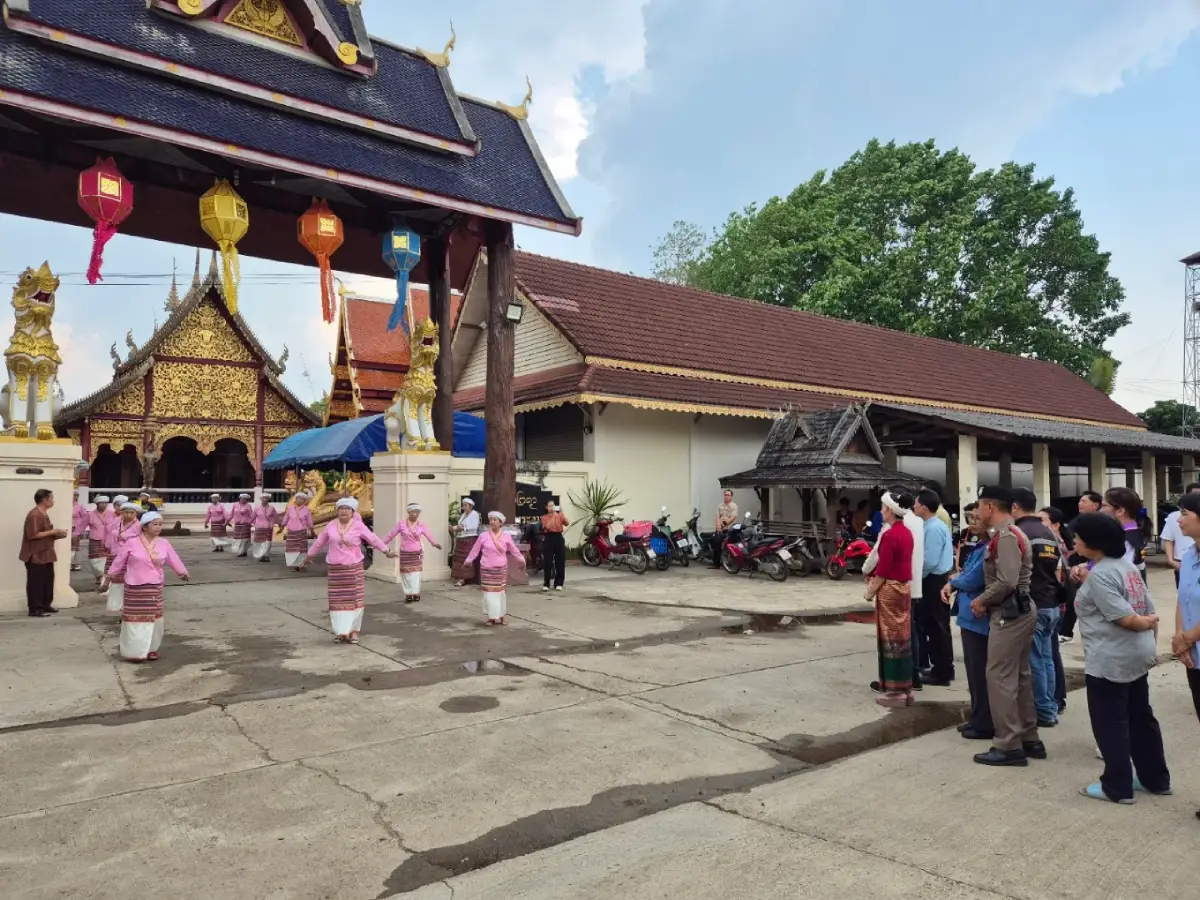
Open Days: Daily
Opening Hours: 08.00 - 17.00
Wat Cho Lae Phra Ngam is a historic community Buddhist temple in Cho Lae Subdistrict, Mae Taeng District, Chiang Mai Province. It is a local temple under the Mahanikaya order and has long served as a spiritual center for Ban Cho Lae. The temple is important not only as a place for worship and merit-making, but also as a cultural landmark connected with Lanna history, Tai Khuen heritage, local Buddhist traditions, and the community identity of northern Chiang Mai.
The temple is especially suitable for travelers who want to visit a quiet local temple, pay respect to an old sacred pagoda, and understand the cultural depth of Mae Taeng beyond its nature attractions and cafes. Wat Cho Lae Phra Ngam is known for its long history dating back to 1832, its sacred Phra That Cho Lae Phra Ngam built in a blend of Lanna and Burmese-influenced craftsmanship, and its continuing role in community ceremonies and Buddhist activities.
Wat Cho Lae Phra Ngam was founded in 1832, based on temple records and palm-leaf manuscript evidence preserved by the temple. It received Wisungkhamsima on February 10, 1868, allowing formal Buddhist monastic rites to be performed within the consecrated boundary. Historical records also mention that the temple was formerly known as Wat Mueang Kaen and was locally called Wat Ban Cho Lae before becoming widely known as Wat Cho Lae Phra Ngam. The name “Phra Ngam,” meaning “beautiful Buddha,” is linked with local stories about sacred Buddha images and revered objects admired for their unusual beauty.
The broader setting of Ban Cho Lae gives the temple strong cultural meaning. Cho Lae is an old community in Mae Taeng District, connected with the history of Mueang Kaen, the Ping River, the Mae Ngat River, and the settlement of different ethnic and cultural groups, including Lanna people, Tai Khuen, Tai Lue, and other local communities. This makes the temple part of a wider cultural landscape that includes traditional rituals, local music, nail dance, Buddhist merit-making, village ceremonies, handicrafts, and community tourism.
In local history, Wat Cho Lae Phra Ngam represents the collective faith of the village. Temples in northern Thai communities have traditionally served many functions at once. They are places of worship, centers of learning, venues for merit-making, and gathering points for ceremonies that bring residents together. Wat Cho Lae Phra Ngam continues to perform this role today. It remains an active religious site with resident monks and community participation, rather than a temple preserved only as a historical monument.
The most important highlight of the temple is Phra That Cho Lae Phra Ngam, a sacred pagoda built around 1902 during the period when Khru Ba Maha Wan served as abbot. It was built by Burmese craftsmen together with the faith and labor of the local Cho Lae community. Its design combines Lanna and Burmese artistic influences, giving the pagoda a distinctive appearance. For local residents and Buddhist devotees, the pagoda is a major object of worship and a symbol of shared faith.
Phra That Cho Lae Phra Ngam should be appreciated not only as a sacred structure, but also as evidence of cultural exchange in northern Thailand. Lanna temple art has long interacted with artistic traditions from neighboring regions, especially Burmese and Shan-influenced craftsmanship. The pagoda’s mixed style reflects this cultural contact. Visitors who take time to observe the structure can see how faith, local identity, and craftsmanship come together in one sacred monument.
Important areas within the temple include the chedi, ordination hall, sermon hall, monks’ residences, alms pavilion, Prateeptham Singharat Memorial Building, scripture hall, multi-purpose hall, and royal commemorative dining hall. These areas support both monastic life and community religious activities. The ordination hall is used for formal monastic rites, the chedi and sacred pagoda serve as places of worship, the sermon hall supports Dhamma teaching and communal merit-making, and the scripture hall reflects the importance of Buddhist texts and learning in Lanna temple culture.
Historical temple records describe the ordination hall as a Thai-Lanna style structure and mention several important sacred objects, including brick-and-plaster Buddha images, bronze Buddha images, and green, white, and red crystal-like Buddha images. These objects show that Wat Cho Lae Phra Ngam has long been a place of devotion and religious heritage. Visitors should view these sacred images respectfully, as they are part of the living faith of the community.
Local community records also refer to “Phra Rod Cho Lae” and “Phra Phet Ngam Wat Cho Lae.” Phra Rod Cho Lae is described as a small sacred Buddha image associated with local discoveries, while Phra Phet Ngam is connected with a story about a translucent Buddha image whose upper area shone like a diamond. These stories add a local layer of meaning to the temple’s name and explain why Wat Cho Lae Phra Ngam is remembered not only for its buildings, but also for sacred objects that shaped community memory.
The temple’s abbot lineage shows continuity in religious leadership. Historical records mention former abbots such as Khru Ba In, Khru Ba Panya, Khru Ba Inthachak, Khru Ba Maha Wan, Phra Khru Sing Khunarawiso, Phra Thongkham Aggakawanno, Phra Athikan Duangchan Kittisethi, and Chao Athikan Wichian Thipathammo. The current abbot is Phra Khru Sophit Phatthanachot, Dr. Suphan Chotidhammo, who also serves as the ecclesiastical chief of Cho Lae Subdistrict. His role connects the temple with Buddhist administration and local religious activities in the wider area.
Wat Cho Lae Phra Ngam has also played a role in Buddhist education. Historical records mention that the temple opened a Dhamma section of a Buddhist scripture school in 1952 and a Sunday Buddhist Study Center in 1984. This shows that the temple has supported not only ceremonies, but also Buddhist learning and moral education. Such functions are central to the role of local temples in northern Thai communities.
The temple is associated with regular Buddhist activities, including Buddhist holy days, important Buddhist festivals, annual merit-making, and Kathin offerings after the Buddhist Lent. A 2025 Kathin project listing recorded Wat Cho Lae Phra Ngam as an active temple with 6 resident monks and a Kathin ceremony scheduled on November 5, 2025. Although that date has passed, the record reflects the temple’s continuing role as a living Buddhist site supported by local faith and merit-making networks.
The temple is closely tied to Lanna and Tai Khuen cultural life in Ban Cho Lae. The community is known for traditions such as life-prolonging ceremonies, local music, nail dance, decorative Lanna paper banners, ritual candles, Yi Peng practices, and other village-based cultural activities. Wat Cho Lae Phra Ngam provides the religious and cultural context in which many of these traditions continue to make sense. The temple therefore helps preserve community identity across generations.
For visitors, the main points of interest are Phra That Cho Lae Phra Ngam, the Lanna-style ordination hall, the chedi, the scripture hall, and the sacred Buddha images. A respectful visit should begin with paying homage to the main Buddha image and the pagoda before walking around the temple grounds quietly. This is an active place of worship, so visitors should dress modestly, speak softly, avoid disturbing monks’ residential areas, and follow local temple etiquette.
The atmosphere of Wat Cho Lae Phra Ngam is calm, local, and authentic. It is not a heavily commercialized attraction. Its value lies in its history, the beauty of its sacred pagoda, and its relationship with Ban Cho Lae. Travelers who are interested in local culture, northern Thai Buddhist life, and meaningful temple visits will find the temple especially worthwhile.
Getting to Wat Cho Lae Phra Ngam is easiest by private car or rental car. From Chiang Mai city, take Chotana Road or Highway 107 north toward Mae Taeng District, pass the Mae Malai area, and continue into Cho Lae Subdistrict. The drive usually takes about 1 hour to 1 hour 30 minutes depending on traffic. The route is suitable for a day trip from Chiang Mai and can be combined with nearby attractions in Mae Taeng.
A practical travel route is to begin at Wat Cho Lae Phra Ngam for merit-making and a quiet cultural visit, then continue to Wat Den Sali Sri Mueang Kaen for its large and elaborate Lanna-style architecture. Travelers can then go to Mae Ngat Somboon Chon Dam for lakeside scenery or visit the Tai Khuen community tourism group in Ban Cho Lae to learn about local food, crafts, and culture. With more time, Dantewada can be added as a nature-and-cafe stop in Mae Taeng.
What makes Wat Cho Lae Phra Ngam worth including in a Mae Taeng itinerary is its complete story. The temple has a foundation history from 1832, a consecrated boundary granted in 1868, a sacred pagoda with Lanna and Burmese artistic influences, local stories of sacred Buddha images, and an ongoing role in a living village community. It helps travelers understand that Mae Taeng is not only a destination for nature and adventure, but also a district with deep religious and cultural roots.
| Name | Wat Cho Lae Phra Ngam |
| Location | Cho Lae Subdistrict, Mae Taeng District, Chiang Mai Province |
| Address | 388 Moo 1, Cho Lae Subdistrict, Mae Taeng District, Chiang Mai 50150, Thailand |
| Coordinates | 18.7903, 98.9817 |
| Temple Type | Community Buddhist Temple Under The Mahanikaya Order |
| Highlights | Historic community temple, Phra That Cho Lae Phra Ngam, Lanna and Burmese-influenced craftsmanship, and a calm local temple atmosphere |
| History | Founded in 1832, granted Wisungkhamsima on February 10, 1868, and associated with the construction of Phra That Cho Lae Phra Ngam around 1902 |
| Name Origin | The name “Phra Ngam” is linked with local stories about beautiful sacred Buddha images and revered objects, including the story of Phra Phet Ngam Wat Cho Lae |
| Distinctive Features | An old temple of Cho Lae community with a sacred pagoda blending Lanna and Burmese artistic elements |
| Main Areas / Zones | Chedi, ordination hall, sermon hall, monks’ residences, alms pavilion, Prateeptham Singharat Memorial Building, scripture hall, multi-purpose hall, and royal commemorative dining hall |
| Sacred Objects | Phra That Cho Lae Phra Ngam, brick-and-plaster Buddha images, bronze Buddha images, and green, white, and red crystal-like Buddha images |
| Abbot / Caretaker | Phra Khru Sophit Phatthanachot, Dr. Suphan Chotidhammo, Ecclesiastical Chief of Cho Lae Subdistrict |
| Related Traditions | Buddhist holy day merit-making, Buddhist festivals, annual ceremonies, and Kathin offerings after Buddhist Lent |
| Travel Information | From Chiang Mai city, take Chotana Road or Highway 107 toward Mae Taeng, pass Mae Malai, and continue to Cho Lae Subdistrict. A private car or rental car is the most convenient option. |
| Current Status | Active community Buddhist temple used for regular religious activities |
| Open Days | Daily |
| Opening Hours | 08.00 - 17.00 |
| Main Contact Number | 053-479-138 |
| Nearby Tourist Attractions | 1. Tai Khuen Ban Cho Lae Community Tourism Group, about 1 km 2. Mae Ngat Somboon Chon Dam, about 5 km 3. Wat Den Sali Sri Mueang Kaen, about 11 km 4. Dantewada, about 20 km 5. Bua Tong Waterfall-Nam Phu Chet Si, about 32 km |
| Nearby Restaurants | 1. Banana Coffee Khun Roj Cho Lae, about 1 km 2. Miang Kham Khun Yai, about 1 km, Tel. 095-696-5953 3. Kramfeine, about 4 km 4. Ban Suan Khun Ya Restaurant, about 4 km 5. Jay Tai Zheng Cho Lae, about 5 km |
| Nearby Accommodations | 1. Ban Phraya Lanna Rimnam Homestay, about 4 km, Tel. 098-789-2995, 090-319-6635 2. Santitham Homestay, about 2 km, Tel. 096-550-4446 3. Kang Tong Homestay, about 5 km, Tel. 099-134-5322 4. Long Mong Doi Pool Villa, about 6 km, Tel. 084-374-3310 5. Huean Mai Him Nam, about 3 km, Tel. 086-430-2435 |
Frequently Asked Questions (FAQ)
Q: Where is Wat Cho Lae Phra Ngam located?
A: Wat Cho Lae Phra Ngam is located in Cho Lae Subdistrict, Mae Taeng District, Chiang Mai Province.
Q: What are the opening days and hours of Wat Cho Lae Phra Ngam?
A: The temple is open daily from 08.00 to 17.00.
Q: Why is Wat Cho Lae Phra Ngam historically important?
A: The temple was founded in 1832 and received Wisungkhamsima on February 10, 1868. It is one of the old community temples of Cho Lae in Mae Taeng District.
Q: What is special about Phra That Cho Lae Phra Ngam?
A: The sacred pagoda was built with the help of Burmese craftsmen and local Cho Lae devotees. Its design blends Lanna and Burmese artistic influences.
Q: What can visitors see inside Wat Cho Lae Phra Ngam?
A: Visitors can see the chedi, ordination hall, sermon hall, scripture hall, alms pavilion, memorial building, royal commemorative dining hall, and important Buddha images.
Q: Who is the abbot of Wat Cho Lae Phra Ngam?
A: The current abbot is Phra Khru Sophit Phatthanachot, Dr. Suphan Chotidhammo, who also serves as Ecclesiastical Chief of Cho Lae Subdistrict.
Q: What kind of travelers is Wat Cho Lae Phra Ngam suitable for?
A: It is suitable for travelers interested in temple visits, Buddhist culture, local Lanna history, and a Mae Taeng cultural route.
Q: How do travelers get to Wat Cho Lae Phra Ngam from Chiang Mai city?
A: Travelers can take Chotana Road or Highway 107 north toward Mae Taeng, pass Mae Malai, and continue into Cho Lae Subdistrict. Private car or rental car is the most convenient option.
 Category: ●Places of Worship
 Group: ●Temple
Last Update : 2 DayAgo
 Last Update : 2 DayAgo
 Click to Access the Navigation Map GPS
Wat Cho Lae Phra Ngam Map
Recommend

 Muang Chiang Mai(121)Chom Thong(47)Mae Chaem(25)Chiang Dao(33)Doi Saket(68)Mae Taeng(85)Mae Rim(69)Samoeng(29)Fang(71)Mae Ai(62)Phrao(70)San Pa Tong(105)San Kamphaeng(66)San Sai(73)Hang Dong(74)Hot(32)Doi Tao(22)Omkoi(11)Saraphi(74)Wiang Haeng(15)Chai Prakan(28)Mae Wang(32)Mae On(22)Doi Lo(34)Galyani Vadhana(1)


