
lovethailand home >North Travel Attractions >Chiang Mai Travel Attractions >Mae Chaem >Mae Suek > Wat Song Yot
TL;DR: Wat Song Yot is located at Ban Mae Suek, Moo 6, Mae Suek Subdistrict, Mae Chaem District, Chiang Mai Province, open Daily, hours 08.00 - 17.00.
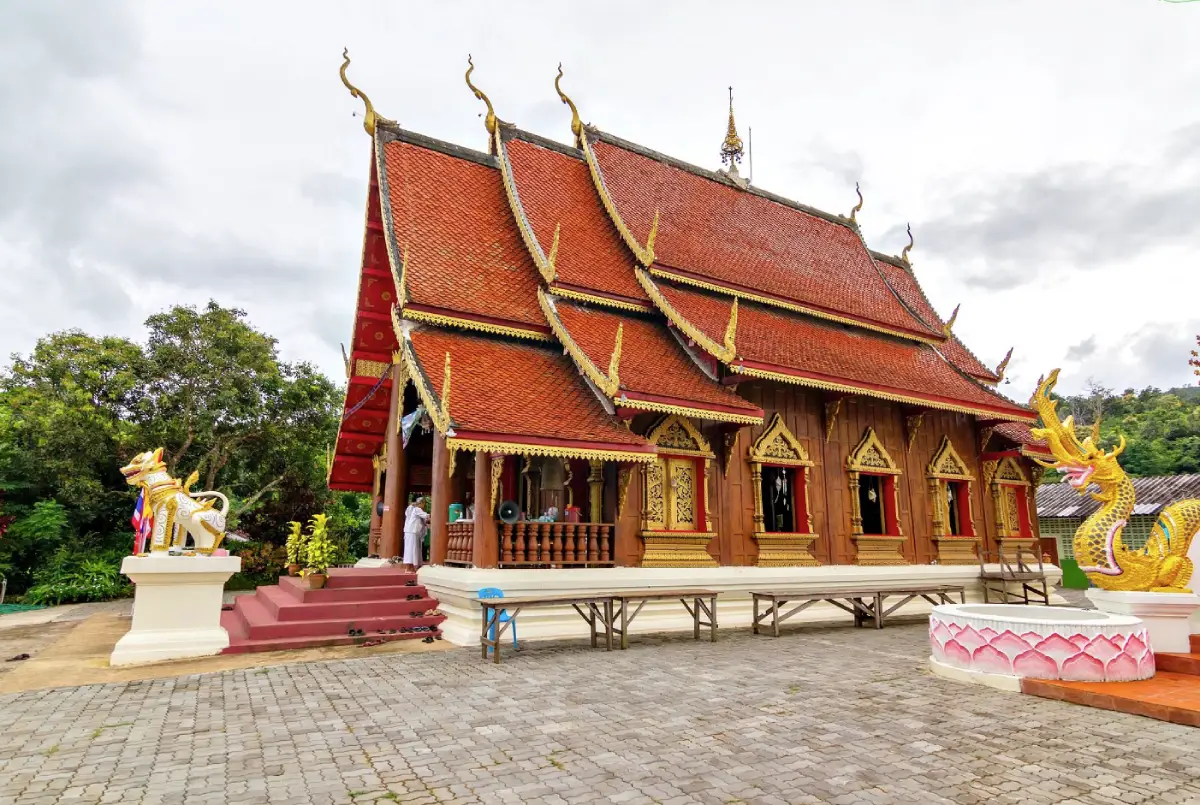
Wat Song Yot
Open Days: Daily
Opening Hours: 08.00 - 17.00
Wat Song Yot is located at 37 Ban Mae Suek, Moo 6, Mae Suek Subdistrict, Mae Chaem District, Chiang Mai Province. It is a local Buddhist temple under the Mahanikaya order and one of the historic temples of Mae Suek Subdistrict. The temple was founded around 1815 - 1817 and received its royal monastic boundary in 1995. Wat Song Yot is best known for its twin-spired chedi, old teakwood viharn, large teak pillars, and carved wooden gable, making it one of the most culturally valuable village temples in northern Mae Chaem.
Wat Song Yot has served the Ban Mae Suek community for generations. Mae Suek Subdistrict is located in the northern part of Mae Chaem District and includes mountain terrain, highland villages, farming areas, forests, streams, and local roads connecting communities such as Ban Na Hong, Ban Kong Kan, Ban Mae Yot, and other villages. The temple stands within this rural cultural landscape, where Buddhism, village life, agriculture, and local memory remain closely connected.
The name “Song Yot” means “two spires” and comes from the twin-spired chedi associated with the temple site. Before the temple was established, the area already contained the remains of an old two-spired chedi. This distinctive feature became the origin of the temple’s name. After the original chedi later collapsed, the community built a new chedi in the same two-spired form to preserve the meaning and memory of the old sacred structure.
Cultural mapping records state that the temple was built in 1815 under the leadership of Khun Phian Kamchatphai, also known as Natika, while the source material provided for this article states that the temple was built in 1817. The difference most likely reflects different ways of recording the beginning of construction and the period when the temple became complete as a functioning monastery. In either case, Wat Song Yot is a temple with more than 200 years of history.
The age of Wat Song Yot gives the temple importance beyond ordinary village worship. It reflects the settlement history of the Mae Suek community, the continuity of Buddhist faith, and the effort of local people to maintain a temple over many generations. In the past, village temples functioned as places for religious ceremonies, sermons, merit-making, community gatherings, and local education. Wat Song Yot continues to carry this historical role through its architecture and traditions.
The old viharn of Wat Song Yot is one of its most important features. The building is made entirely of teakwood. Its pillars are large whole teak trunks, with only the bark removed. This detail shows the strength of local craftsmanship and the historical availability of teakwood in northern Thailand. The teak pillars are not only structural elements; they are evidence of community faith, local skill, and traditional Lanna construction methods.
The carved wooden gable of the viharn is another highlight. In Lanna architecture, the gable is one of the most visible places for artistic expression. The carved teak gable of Wat Song Yot reflects the work of skilled local craftsmen and gives the viharn a strong cultural identity. Visitors interested in Lanna woodworking should take time to observe the proportions, carving details, and aged texture of the teakwood.
The twin-spired chedi is the central sacred feature of the temple. In Lanna Buddhist belief, a chedi is a focus of devotion, merit-making, and community identity. The chedi at Wat Song Yot is especially meaningful because it preserves the form and name of the old two-spired structure that once stood on the site. It is both a religious monument and a symbol of collective memory.
Contemporary local records mention the annual cultural project for the bathing ceremony of Phra That Song Yot at Ban Mae Suek, Moo 6, held in April. This confirms that the chedi tradition remains meaningful to the community today. The bathing of a chedi is a common northern Thai Buddhist tradition, especially during the Songkran and Thai New Year period, when people seek blessings and renew their connection with sacred places.
The bathing ceremony of Phra That Song Yot keeps the temple culturally active. Wat Song Yot is not only an old temple with beautiful architecture. It is also a place where villagers continue to gather, make merit, preserve tradition, and express devotion to the chedi that gives the temple its name. This living tradition is one of the strongest reasons to include Wat Song Yot in a cultural itinerary through Mae Chaem.
Another important feature of Wat Song Yot is Phra Chao Saen Tong, described in local sources as one of the revered Buddha images of Mae Chaem. Its presence gives the temple additional religious significance. Visitors who come to Wat Song Yot can therefore pay respect to both the twin-spired chedi and an important Buddha image connected with local faith.
Wat Song Yot is suitable for travelers interested in old temples, teakwood architecture, Lanna craftsmanship, and village traditions. Its beauty is not based on scale or grandeur, but on aged materials, local craftsmanship, and a long history of faith. Visitors should take time to pay respect, observe the teakwood viharn, study the carved gable, and understand the meaning of the twin-spired chedi.
Wat Song Yot can be combined with other temples and communities in northern Mae Chaem. Nearby cultural routes may include Wat Na Hong, Wat Kong Kan, Wat Yang Luang, Wat Mae Nachon, and Ban Mae Hoi. This route helps travelers understand Mae Chaem as a district of village temples, religious traditions, mountain communities, and rural landscapes rather than only as a destination for rice terraces and viewpoints.
The temple is also a good example of how place names preserve local memory. The name Wat Song Yot comes directly from a sacred architectural feature. Even after the original chedi collapsed, the community rebuilt a new chedi in the same two-spired form. This shows that the temple name is not just a label; it is a cultural memory kept alive through architecture and ritual.
Getting There is most convenient by private car, rental car, or a vehicle with a local driver. From Mae Chaem town, travel north toward Mae Suek Subdistrict and Ban Mae Suek, Moo 6. Local sources place the temple about 12 kilometers north of Mae Chaem town. Roads in this area may include mountain curves and rural sections, so visitors should check vehicle condition, use navigation, and allow enough time.
Travelers coming from Chiang Mai can reach Mae Chaem via Chom Thong and Doi Inthanon, or by the Hot route depending on the itinerary. After arriving in Mae Chaem town, continue toward Mae Suek Subdistrict. Daytime travel is recommended for visitors unfamiliar with mountain roads, especially during the rainy season or foggy periods.
The best time to visit Wat Song Yot is in the morning or late afternoon, when the weather is more comfortable and the temple atmosphere is calm. Travelers who want to experience the local tradition should plan around the April bathing ceremony of Phra That Song Yot. Those interested in photography should visit when the sunlight is soft enough to show the texture of the teakwood and the details of the carved gable.
Visitors should dress modestly, keep their voices low, respect monks and local residents, and avoid touching old wooden carvings, sacred objects, or the chedi unnecessarily. If a ceremony is taking place, visitors should follow local guidance and ask before taking photographs. Wat Song Yot is a temple with both artistic and spiritual value, so a respectful and unhurried visit is recommended.
Wat Song Yot adds strong cultural depth to a Mae Chaem itinerary. With its twin-spired chedi, old teakwood viharn, large teak pillars, carved wooden gable, more than 200 years of history, and continuing chedi bathing tradition, the temple is one of the most meaningful places for travelers who want to understand Mae Chaem through old temples, community faith, and Lanna craftsmanship.
| Name | Wat Song Yot |
| Location | Ban Mae Suek, Moo 6, Mae Suek Subdistrict, Mae Chaem District, Chiang Mai Province |
| Address | 37 Ban Mae Suek, Moo 6, Mae Suek Subdistrict, Mae Chaem District, Chiang Mai 50270, Thailand |
| Open Days | Daily |
| Opening Hours | 08.00 - 17.00 |
| Temple Type | Local Buddhist temple under the Mahanikaya order |
| History | Built around 1815 - 1817 and granted royal monastic boundary status in 1995 |
| Name Origin | Named after the twin-spired chedi associated with the temple site |
| Highlights | Twin-spired chedi, old teakwood viharn, large teak pillars, carved wooden gable, and Phra Chao Saen Tong |
| Distinctive Features | An old teakwood viharn built entirely of teak, with large whole teak pillars and a carved teak gable made by local craftsmen |
| Important Sacred Objects | Phra That Song Yot, old teakwood viharn, Phra Chao Saen Tong, and community ceremony areas |
| Travel Information | Best reached by private car, rental car, or local driver from Mae Chaem town toward Mae Suek Subdistrict and Ban Mae Suek, about 12 km from Mae Chaem town |
| Current Status | Open as a local Mahanikaya temple and a community center for the Phra That Song Yot bathing tradition |
| Main Areas / Zones | Teakwood viharn, twin-spired chedi area, worship area, temple hall, and community merit-making space |
| Traditions / Rituals | Phra That Song Yot bathing ceremony in April, Kathin, Buddhist holy days, Buddhist Lent, end of Buddhist Lent, and village merit-making activities |
| Nearby Tourist Attractions | 1. Wat Na Hong, about 8 km 2. Wat Kong Kan, about 15 km 3. Wat Yang Luang, about 18 km 4. Wat Mae Nachon, about 14 km 5. Ban Mae Hoi, about 18 km |
| Nearby Restaurants | 1. Hot Coffee Guest House and Resort, about 15 km, Tel. 081-163-2525 2. Mae Chaem Gate Restaurant, about 22 km, Tel. 085-671-3061 3. Sikon Restaurant, about 22 km, Tel. 087-067-8193 4. Moo Inter Mae Chaem, about 22 km, Tel. 061-354-2369 5. Khuang Na Restaurant, about 23 km, Tel. 087-183-6931 |
| Nearby Accommodations | 1. Hot Coffee Guest House and Resort, about 15 km, Tel. 081-163-2525 2. Phu Chaem House, about 21 km, Tel. 081-024-6223 3. Khuang Na Farmview, about 22 km, Tel. 087-183-6931 4. Muangchaem House, about 22 km, Tel. 080-739-1184 5. Maechaem Hotel And Resort, about 23 km, Tel. 053-828-025 |
Frequently Asked Questions (FAQ)
Q: Where is Wat Song Yot located?
A: Wat Song Yot is located at 37 Ban Mae Suek, Moo 6, Mae Suek Subdistrict, Mae Chaem District, Chiang Mai Province.
Q: What are the opening days and hours of Wat Song Yot?
A: Wat Song Yot is open daily from 08.00 to 17.00.
Q: When was Wat Song Yot built?
A: Wat Song Yot was built around 1815 - 1817 and received its royal monastic boundary in 1995.
Q: Why is the temple called Wat Song Yot?
A: The name comes from the twin-spired chedi associated with the temple site, which became the main identity of the temple.
Q: What is special about the viharn of Wat Song Yot?
A: The viharn is built entirely of teakwood, with large whole teak pillars and a carved wooden gable made by skilled local craftsmen.
Q: What tradition is Wat Song Yot known for?
A: Wat Song Yot is known for the Phra That Song Yot bathing ceremony in April, connected with the Songkran and northern Thai New Year period.
Q: How can travelers get to Wat Song Yot?
A: Travelers can reach the temple by private car, rental car, or local driver from Mae Chaem town toward Mae Suek Subdistrict and Ban Mae Suek, about 12 km from Mae Chaem town.
Q: What nearby places can be visited with Wat Song Yot?
A: Nearby places include Wat Na Hong, Wat Kong Kan, Wat Yang Luang, Wat Mae Nachon, and Ban Mae Hoi.
 Category: ●Places of Worship
 Group: ●Temple
Last Update : 2 WeekAgo
 Last Update : 2 WeekAgo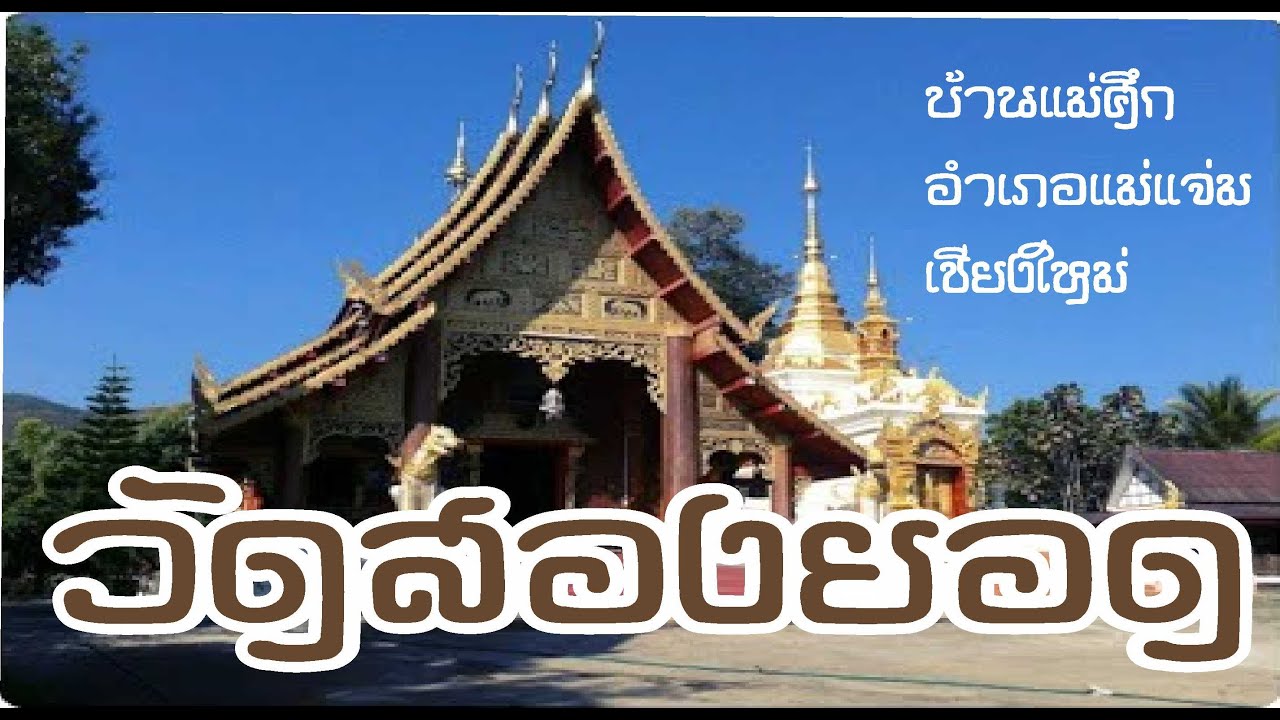
 Click to Access the Navigation Map GPS
Wat Song Yot Map
Recommend

 Muang Chiang Mai(121)Chom Thong(47)Mae Chaem(25)Chiang Dao(33)Doi Saket(68)Mae Taeng(85)Mae Rim(69)Samoeng(29)Fang(71)Mae Ai(59)Phrao(70)San Pa Tong(103)San Kamphaeng(66)San Sai(73)Hang Dong(73)Hot(32)Doi Tao(22)Omkoi(11)Saraphi(74)Wiang Haeng(15)Chai Prakan(28)Mae Wang(32)Mae On(22)Doi Lo(34)Galyani Vadhana(1)


