
lovethailand home >North Travel Attractions >Chiang Mai Travel Attractions >Mae Chaem >Mae Suek > Wat Na Hong
TL;DR: Wat Na Hong is located at Moo 5, Ban Na Hong, Mae Suek Subdistrict, Mae Chaem District, Chiang Mai Province, open Daily, hours 08.00 - 17.00.

Wat Na Hong
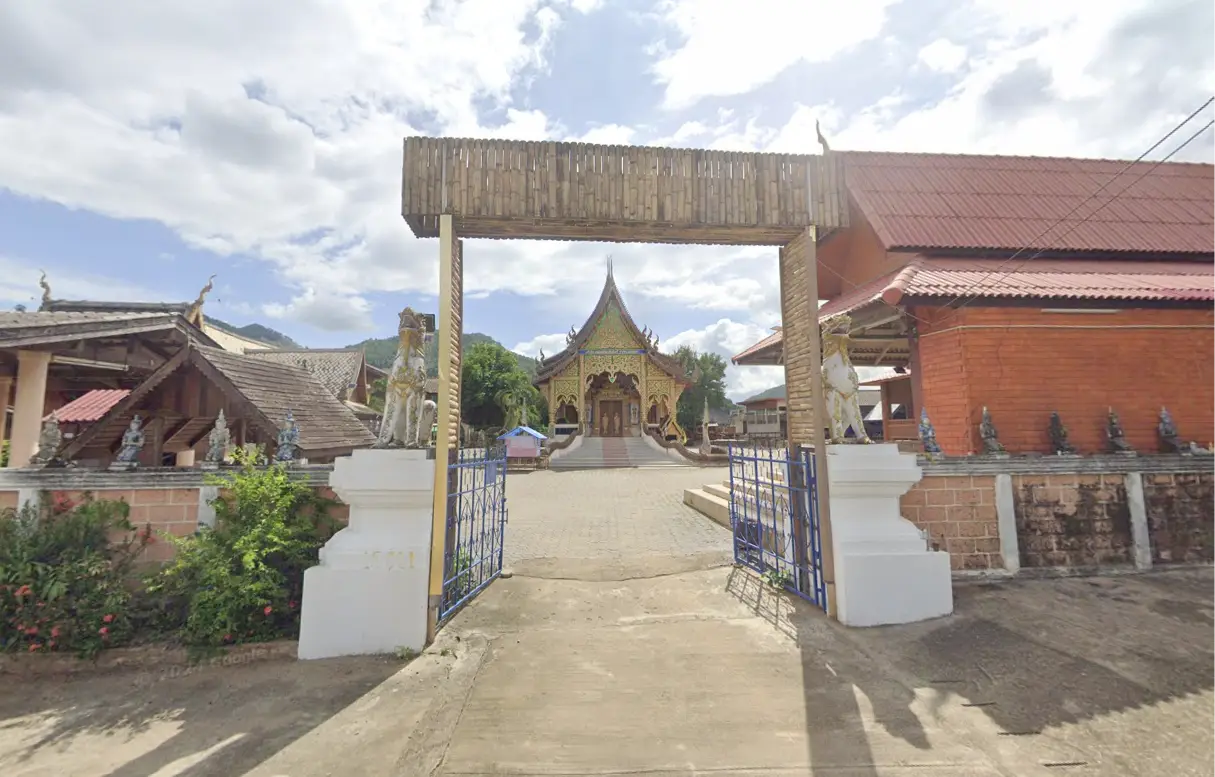
Open Days: Daily
Opening Hours: 08.00 - 17.00
Wat Na Hong is located in Moo 5, Ban Na Hong, Mae Suek Subdistrict, Mae Chaem District, Chiang Mai Province, postal code 50270. It is a local Buddhist temple under the Mahanikaya order. The temple was officially established in 1905 and received its royal monastic boundary in 1987. The current abbot is Phra Khru Sangwon Kitchaphirat Chittathilo. Wat Na Hong is an important community temple for Ban Na Hong and one of the long-established village temples in the northern part of Mae Chaem.
Ban Na Hong is a village in Mae Suek Subdistrict, Mae Chaem District, Chiang Mai Province. The area is shaped by highland terrain, forest, farming land, village roads, streams, and mountain communities. Wat Na Hong therefore stands within a living rural landscape rather than a commercial tourist zone. Visitors who come here will see a village temple closely connected with local life, agriculture, and the natural setting of Mae Chaem.
The name “Na Hong” has a local story behind it. According to community memory, Chinese Haw settlers once lived in the area and developed irrigation channels and rice fields. After they left, the land was abandoned for a period before local villagers returned to clear and cultivate it. The name associated with the old rice-field area and the Chinese Haw community gradually became “Na Hong,” which remains the village name today.
Because the temple carries the same name as the village, Wat Na Hong represents the spiritual identity of Ban Na Hong. In northern Thailand, village temples are often named after the communities that support them. A temple is not only a place of worship but also a shared space for merit-making, ceremonies, sermons, community gatherings, and local memory. Wat Na Hong should therefore be understood together with the history of Ban Na Hong itself.
The official establishment of Wat Na Hong in 1905 shows that the temple has served the local community for more than a century. A temple founded in this period reflects the formation of a settled community and the need for a central religious space. Wat Na Hong is therefore important not because of scale or grandeur, but because it has continuously functioned as a village temple for generations.
The royal monastic boundary granted in 1987 further strengthened the temple’s formal Buddhist status. In Thai Buddhism, a royal monastic boundary is a designated sacred boundary that allows monks to perform important monastic rites according to the Vinaya. This gives Wat Na Hong clear religious status as both a village temple and a fully recognized Buddhist monastery.
Phra Khru Sangwon Kitchaphirat Chittathilo, the abbot of Wat Na Hong, is an important monk in the local Buddhist network of Mae Suek and Mae Nachon. Contemporary records identify him as the abbot of Wat Na Hong and also connect his name with ecclesiastical activities in the Mae Suek–Mae Nachon area. This adds to the temple’s importance beyond the village level.
Wat Na Hong is associated with regular Buddhist activities and annual merit-making traditions. Kathin, held after Buddhist Lent, is especially important for village temples because local residents and supporters gather to offer robes and donations to support the monks and maintain the temple. Through such ceremonies, Wat Na Hong remains a place where religious faith and community bonds are renewed every year.
The wider landscape of Ban Na Hong includes forest, streams, rice fields, and local water systems. The village is connected with the Mae Yot stream and other water sources that support community life. Local records also identify Ban Na Hong in relation to community forest networks. These details show the strong connection between the temple, the village, farming life, and natural resources.
Wat Na Hong is best suited for travelers who prefer quiet cultural places over crowded attractions. It is not a large tourist temple, but it offers a meaningful view of Buddhist village life in Mae Chaem. Visitors can pay respect, make merit, observe the peaceful temple atmosphere, and learn how temples continue to support social and spiritual life in highland communities.
Wat Na Hong can be combined with nearby cultural and natural destinations. A route through Mae Suek and Mae Nachon may include Wat Mae Nachon, Ban Mae Hoi, Ban Mae Sa, and Wat Kong Kan. Wat Kong Kan is one of Mae Chaem’s important temples and is known for Phra Chao Ton Luang, a large Buddha image highly respected by local people. A route that includes Wat Na Hong and nearby temples gives travelers a broader understanding of Mae Chaem’s religious landscape.
For travelers interested in local culture, Wat Na Hong offers a chance to understand the role of a village temple away from the main tourist route. Its value lies in continuity: the temple has served the community since 1905, remains connected with local Buddhist activities, and reflects the history of Ban Na Hong as a village shaped by settlement, farming, water, and forest.
Getting There is most convenient by private car, rental car, or a vehicle with a local driver. From Mae Chaem town, travel toward Mae Suek Subdistrict and Ban Na Hong. Travelers coming from Chiang Mai can reach Mae Chaem via Chom Thong and Doi Inthanon or by the Hot route, depending on the itinerary. Some sections of the route include mountain roads and curves, so careful driving and daytime travel are recommended.
The best time to visit Wat Na Hong is in the morning or late afternoon, when the weather is more comfortable and the temple atmosphere is calm. During the rainy season and early cool season, the surrounding countryside becomes green and scenic. During the cool season, visitors can enjoy fresh mountain air and a slower travel pace through Mae Suek and Mae Nachon.
Visitors should dress modestly, keep their voices low, respect monks and local residents, and avoid photographing people or community activities without permission. Wat Na Hong is an active village temple, so respectful behavior is essential. If a ceremony is taking place, visitors should follow the guidance of local people.
Wat Na Hong adds depth to a Mae Chaem itinerary because it shows the connection between temple, village, forest, farming, and local history. Travelers who want to understand Mae Chaem beyond well-known viewpoints and rice terraces should include Wat Na Hong as part of a cultural route through Mae Suek Subdistrict.
| Name | Wat Na Hong |
| Location | Moo 5, Ban Na Hong, Mae Suek Subdistrict, Mae Chaem District, Chiang Mai Province |
| Address | Moo 5, Ban Na Hong, Mae Suek Subdistrict, Mae Chaem District, Chiang Mai 50270, Thailand |
| Open Days | Daily |
| Opening Hours | 08.00 - 17.00 |
| Temple Type | Local Buddhist temple under the Mahanikaya order |
| History | Officially established in 1905 and granted royal monastic boundary status in 1987 |
| Abbot / Caretaker | Phra Khru Sangwon Kitchaphirat Chittathilo |
| Highlights | A long-established village temple of Ban Na Hong with more than a century of community religious history |
| Name Origin | The name Na Hong is connected with old rice fields and the memory of Chinese Haw settlers who once developed irrigation channels in the area |
| Importance | A place for merit-making, sermons, Buddhist ceremonies, and the spiritual life of Ban Na Hong |
| Local Context | Ban Na Hong is a highland village in Mae Suek Subdistrict, with forest, farming land, streams, and community water systems |
| Travel Information | Best reached by private car, rental car, or local driver from Mae Chaem town toward Mae Suek Subdistrict and Ban Na Hong |
| Current Status | Open as a local Mahanikaya temple with Kathin and regular Buddhist community activities |
| Main Areas / Zones | Worship area, ceremony area, temple hall, and community activity space |
| Traditions / Rituals | Buddhist holy days, Buddhist Lent, end of Buddhist Lent, Kathin, robe-offering ceremonies, and village merit-making activities |
| Nearby Tourist Attractions | 1. Ban Na Hong Community Forest, about 1 km 2. Wat Mae Nachon, about 10 km 3. Ban Mae Hoi, about 14 km 4. Ban Mae Sa, about 20 km 5. Wat Kong Kan, about 31 km |
| Nearby Restaurants | 1. Hot Coffee Guest House and Resort, about 11 km, Tel. 081-163-2525 2. Mae Chaem Gate Restaurant, about 34 km, Tel. 085-671-3061 3. Sikon Restaurant, about 34 km, Tel. 087-067-8193 4. Moo Inter Mae Chaem, about 34 km, Tel. 061-354-2369 5. Khuang Na Restaurant, about 35 km, Tel. 087-183-6931 |
| Nearby Accommodations | 1. Hot Coffee Guest House and Resort, about 11 km, Tel. 081-163-2525 2. Phu Chaem House, about 33 km, Tel. 081-024-6223 3. Khuang Na Farmview, about 34 km, Tel. 087-183-6931 4. Muangchaem House, about 34 km, Tel. 080-739-1184 5. Maechaem Hotel And Resort, about 35 km, Tel. 053-828-025 |
Frequently Asked Questions (FAQ)
Q: Where is Wat Na Hong located?
A: Wat Na Hong is located in Moo 5, Ban Na Hong, Mae Suek Subdistrict, Mae Chaem District, Chiang Mai Province.
Q: What are the opening days and hours of Wat Na Hong?
A: Wat Na Hong is open daily from 08.00 to 17.00.
Q: What type of temple is Wat Na Hong?
A: Wat Na Hong is a local Buddhist temple under the Mahanikaya order.
Q: When was Wat Na Hong officially established?
A: Wat Na Hong was officially established in 1905.
Q: When did Wat Na Hong receive its royal monastic boundary?
A: Wat Na Hong received its royal monastic boundary in 1987.
Q: Who is the abbot of Wat Na Hong?
A: The abbot is Phra Khru Sangwon Kitchaphirat Chittathilo.
Q: What kind of trip is Wat Na Hong suitable for?
A: It is suitable for merit-making, quiet temple visits, community-based cultural travel, and learning about Ban Na Hong in Mae Suek Subdistrict.
Q: What nearby places can be visited with Wat Na Hong?
A: Nearby places include Ban Na Hong Community Forest, Wat Mae Nachon, Ban Mae Hoi, Ban Mae Sa, and Wat Kong Kan.
 Category: ●Places of Worship
 Group: ●Temple
Last Update : 2 WeekAgo
 Last Update : 2 WeekAgo
 Click to Access the Navigation Map GPS
 Muang Chiang Mai(121)Chom Thong(47)Mae Chaem(25)Chiang Dao(33)Doi Saket(68)Mae Taeng(85)Mae Rim(69)Samoeng(29)Fang(71)Mae Ai(59)Phrao(70)San Pa Tong(103)San Kamphaeng(66)San Sai(73)Hang Dong(73)Hot(32)Doi Tao(22)Omkoi(11)Saraphi(74)Wiang Haeng(15)Chai Prakan(28)Mae Wang(32)Mae On(22)Doi Lo(33)Galyani Vadhana(1)


