
lovethailand home >North Travel Attractions >Chiang Mai Travel Attractions >Mae Chaem >Tha Pha > Wat Ban Thap
TL;DR: Wat Ban Thap is located at Moo 5, Ban Thap, Tha Pha Subdistrict, Mae Chaem District, Chiang Mai Province, open Daily, hours 08.00 - 17.00.

Wat Ban Thap
Open Days: Daily
Opening Hours: 08.00 - 17.00
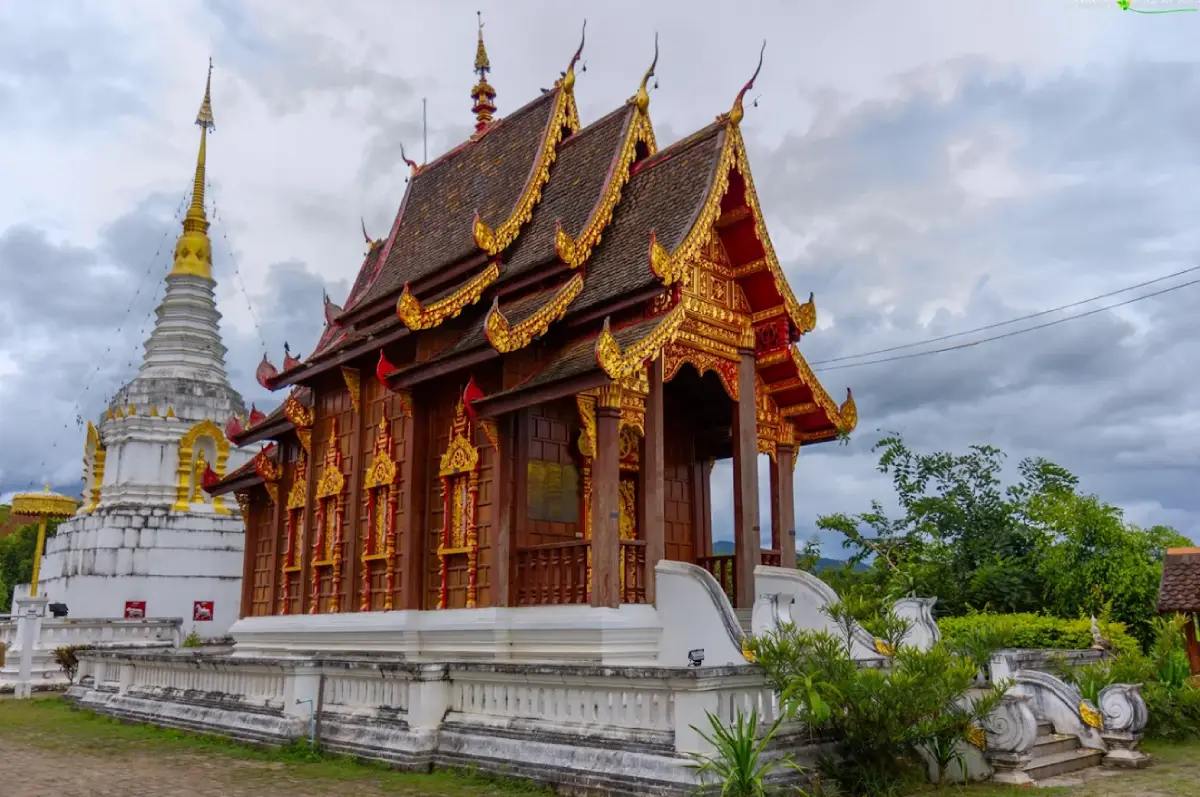
Wat Ban Thap is located at 93 Moo 5, Tha Pha Subdistrict, Mae Chaem District, Chiang Mai Province. It is a local Buddhist temple under the Mahanikaya order and an important spiritual center for Ban Thap, Ban Thong Fai, and Ban Rai communities. The temple is known for its long local history, its relocation from a flood-prone site, its teakwood ubosot in an adapted Lanna style, and the Chula Kathin tradition that reflects Mae Chaem’s cotton-growing and weaving heritage.
Wat Ban Thap was formerly known as Wat Si Nong Nuea. The original temple stood to the south of the present site, but the area was repeatedly affected by annual flooding. Monks, novices, and local residents agreed that the temple should be moved to a safer area to the north. This relocation was not just a practical response to flooding. It was a major community decision that preserved the temple’s religious continuity and allowed it to remain the spiritual center of the village.
The relocation of the temple involved many important local figures. Phra Tip Sumangkhalo was the abbot during the move, supported by his disciples. Thao Khuean Kham Kongchan from Ban Thap acted as a patron, Pho Nan Upanan Kannika from Ban Thong Fai served as the temple lay leader, and Pho Noi Pok Sophana from Ban Thap led the local faith community. Villagers from every household joined the effort, showing how deeply the temple was connected to the people of the area.
One of the most memorable stories of Wat Ban Thap is the transfer of the main Buddha image from the old temple to the new site. The villagers placed the principal Buddha image on a raft and brought it to the new location for enshrinement. This story shows that the Buddha image was more than a sacred object. It represented the living heart of the old temple and the continuity of local faith as the community moved to a safer and more suitable place.
The new temple site had once been an abandoned temple called Wat Pha Daeng. Local legends mention a cave, a golden boat, the Sri Kanchai sword, a water area known as Hat Pha Daeng, and a sacred cool-water well called Nam Bo Yen. These stories add a deeper cultural layer to the temple site. Wat Ban Thap therefore stands on land that already carried local memory and spiritual meaning before the relocation of Wat Si Nong Nuea.
After the relocation, the temple was named Wat Ban Thap. The name is connected with the village name, Ban Thap, which is associated with a story that soldiers once set up a military camp in the area. The word “Thap” refers to a camp or army encampment. The temple name therefore reflects both the village identity and the historical memory of the locality.
Wat Ban Thap was officially established in 1859 under the Mahanikaya order. The temple land covers 4 rai and 25 square wah. Its northern boundary measures about 80 meters and borders private rice fields. The southern boundary measures about 62 meters and borders a road and rice fields. The eastern boundary measures about 43 meters and borders private rice fields, while the western boundary measures about 54 meters and borders a road and a school. These boundaries show how the temple remains closely surrounded by agricultural land, roads, and community institutions.
The temple has long been supported by 411 households from Ban Thong Fai, Ban Thap, and Ban Rai. This number is significant because it shows that Wat Ban Thap is not only a temple of one village. It is a shared religious center for several connected communities. Through merit-making, Kathin ceremonies, and village festivals, the temple continues to link local families, monks, and lay supporters across the area.
The temple compound includes a viharn, monks’ residence, dining hall, and ubosot. The viharn is built with masonry walls and teakwood pillars. Its gable is made of cement decorated with glass, and the interior includes paintings of the Vessantara Jataka. The monks’ residence is a half-concrete, half-wooden building, while the dining hall supports temple and community activities. These structures reflect the practical role of a village temple in northern Thailand.
The important sacred object at Wat Ban Thap is an ancient Buddha image made of brick and stucco. This image is meaningful not only as a devotional object, but also as part of the temple’s memory. The story of transferring the principal Buddha image by raft from the old temple site makes the Buddha image tradition of Wat Ban Thap especially significant to local people.
The ubosot of Wat Ban Thap is made of teakwood in an adapted Lanna style. The temple received its royal monastic boundary on 2 June 1989. The boundary area is 20 meters wide and 40 meters long. A teakwood ubosot is culturally important in northern Thailand because teak has long been associated with Lanna architecture, craftsmanship, and religious construction. The royal monastic boundary also allows the temple to perform formal monastic rites according to Buddhist discipline.
Wat Ban Thap is also valued for its landscape setting. It stands near rice fields and the Mae Chaem River, giving visitors a view of the temple within a living cultural landscape. From Mae Chaem town, Wat Ban Thap can be seen across fields and the river. This relationship between temple, rice fields, village, and water is one of the most distinctive features of Mae Chaem’s cultural scenery.
The current abbot of Wat Ban Thap is Phra Khru Pramoch Rattanachai, also known as Chairat Chayaphinanto. Contemporary community and official documents identify him as an important monk connected with Wat Ban Thap and Tha Pha Subdistrict. This confirms that Wat Ban Thap remains an active religious site with ongoing Buddhist activities, not an abandoned temple or a permanently closed location.
The most distinctive tradition associated with Wat Ban Thap is the Chula Kathin ceremony. Chula Kathin is a special form of Kathin in which the entire process of making monastic robes must be completed within one day. The process includes harvesting cotton, ginning cotton, spinning thread, weaving cloth, cutting, sewing, dyeing, drying, and preparing the robe set for offering to monks. Wat Ban Thap is well suited to this tradition because Mae Chaem communities have long been connected with cotton cultivation and weaving.
The Chula Kathin at Wat Ban Thap involves cooperation among three communities: Ban Thap, Ban Thong Fai, and Ban Rai. During the preparation day, villagers prepare the Kathin procession, cotton-spinning tools, weaving equipment, robes, food, and cultural performances. In the evening, local residents gather at the temple, and visitors may learn about cotton processing, spinning, and weaving from community members. The ceremony is therefore both a religious event and a living demonstration of Mae Chaem’s textile heritage.
The beauty of the Chula Kathin tradition lies in the shared effort of the community. Cotton must be planted and timed carefully so that it can be harvested after Buddhist Lent. Skilled villagers must prepare the fiber, weave the cloth, and complete the robe within the traditional timeframe. The ceremony shows faith, discipline, craftsmanship, and community unity. It is one of the strongest cultural reasons to visit Wat Ban Thap during the post-Lent season.
For travelers interested in Lanna culture, Wat Ban Thap offers several layers of meaning in one place: the relocation from a flood-prone temple site, the transfer of the principal Buddha image by raft, the legend of Wat Pha Daeng and Nam Bo Yen, the teakwood ubosot, the Vessantara Jataka paintings in the viharn, and the Chula Kathin tradition linked with cotton weaving. This makes the temple especially suitable for cultural, historical, and religious travel.
Getting There is most convenient by private car, rental car, or a vehicle with a local driver. From Mae Chaem town, travel toward Tha Pha Subdistrict and Ban Thap. The road network connects nearby communities such as Ban Thap, Ban Thong Fai, Ban Rai, Ban Lao, and Ban Pa Daet. Travelers coming from Chiang Mai can reach Mae Chaem via Chom Thong and Doi Inthanon or by the Hot–Mae Chaem route, depending on the itinerary. Some roads in Mae Chaem are mountainous and winding, so careful driving is recommended, especially during rain or fog.
The best time to visit Wat Ban Thap is in the morning or late afternoon, when the weather is more comfortable and the temple atmosphere is calm. Travelers who want to experience the temple’s living tradition should plan around the post-Lent Kathin season. Wat Ban Thap can also be combined with Wat Ban Lao, Wat Phra Bat Tha Pha, Wat Pa Daet, Wat Yang Luang, Wat Kong Khaek, and other cultural sites around Mae Chaem.
Visitors should dress modestly, avoid loud behavior, respect monks and local residents, and avoid touching sacred objects unnecessarily. If taking photographs inside the ubosot or during ceremonies, visitors should ask permission first. Wat Ban Thap is an active community temple, so respectful behavior is essential.
Wat Ban Thap is one of the best places to understand Mae Chaem as a living cultural district. Its value comes from the way history, landscape, Buddhist faith, textile wisdom, and community memory come together. Travelers who spend time here will see Mae Chaem not only as a scenic mountain district, but also as a place where village temples continue to preserve local identity from generation to generation.
| Name | Wat Ban Thap |
| Location | Moo 5, Ban Thap, Tha Pha Subdistrict, Mae Chaem District, Chiang Mai Province |
| Address | 93 Moo 5, Tha Pha Subdistrict, Mae Chaem District, Chiang Mai 50270, Thailand |
| Highlights | Historic Mae Chaem village temple formerly known as Wat Si Nong Nuea, with a relocation story, a raft-transferred principal Buddha image, a teakwood ubosot, and the Chula Kathin tradition |
| History | Officially established in 1859 and granted royal monastic boundary status on 2 June 1989 |
| Name Origin | The name is connected with Ban Thap, a village associated with a story of soldiers once setting up a military camp in the area |
| Former Name | Wat Si Nong Nuea |
| Local Legend | The present site was formerly an abandoned temple called Wat Pha Daeng, associated with legends of a cave, golden boat, Sri Kanchai sword, Hat Pha Daeng, and Nam Bo Yen |
| Distinctive Features | Masonry viharn with teak pillars, glass-decorated cement gable, Vessantara Jataka paintings, and an adapted Lanna-style teakwood ubosot |
| Important Sacred Objects | Principal Buddha image transferred from the former temple, ancient brick-and-stucco Buddha image, viharn, teakwood ubosot, monks’ residence, and dining hall |
| Travel Information | Best reached by private car, rental car, or local driver from Mae Chaem town toward Tha Pha Subdistrict and Ban Thap |
| Current Status | Active Buddhist temple with religious activities and annual merit-making traditions such as Kathin and Chula Kathin |
| Open Days | Daily |
| Opening Hours | 08.00 - 17.00 |
| Main Areas / Zones | Viharn, teakwood ubosot, monks’ residence, dining hall, and community merit-making area |
| Abbot / Caretaker | Phra Khru Pramoch Rattanachai (Chairat Chayaphinanto) |
| Traditions / Rituals | Chula Kathin at Wat Ban Thap, Kathin after Buddhist Lent, and merit-making activities on important Buddhist days |
| Nearby Tourist Attractions | 1. Wat Ban Lao, about 2 km 2. Wat Phra Bat Tha Pha, about 3 km 3. Wat Pa Daet, about 4 km 4. Wat Yang Luang, about 5 km 5. Wat Kong Khaek, about 6 km |
| Nearby Restaurants | 1. Mae Chaem Gate Restaurant, about 3 km, Tel. 097-996-5568 2. Sikon Restaurant, about 4 km, Tel. 087-067-8193 3. Moo Inter Mae Chaem, about 5 km, Tel. 061-354-2369 4. Khuang Na Restaurant, about 5 km, Tel. 087-183-6931 5. Ban Ran Cake by Nom Chaem Cafe, about 5 km, Tel. 087-059-9763 |
| Nearby Accommodations | 1. Phu Chaem House, about 3 km, Tel. 081-024-6223 2. Khuang Na Farmview, about 5 km, Tel. 087-183-6931 3. Muangchaem House, about 5 km 4. Maechaem Hotel And Resort, about 6 km 5. Huean Him Pan Homestay, about 7 km |
Frequently Asked Questions (FAQ)
Q: Where is Wat Ban Thap located?
A: Wat Ban Thap is located at 93 Moo 5, Tha Pha Subdistrict, Mae Chaem District, Chiang Mai Province.
Q: What was the former name of Wat Ban Thap?
A: The temple was formerly known as Wat Si Nong Nuea before it was moved from a flood-prone site to its present location.
Q: Why is it called Wat Ban Thap?
A: The name is connected with Ban Thap, a village associated with a local story that soldiers once set up a military camp in the area.
Q: What are the important features of Wat Ban Thap?
A: Important features include the principal Buddha image transferred from the former temple, an ancient brick-and-stucco Buddha image, the viharn with Vessantara Jataka paintings, and the adapted Lanna-style teakwood ubosot.
Q: Who is the abbot of Wat Ban Thap?
A: The abbot is Phra Khru Pramoch Rattanachai, also known as Chairat Chayaphinanto.
Q: What tradition is Wat Ban Thap known for?
A: Wat Ban Thap is known for the Chula Kathin tradition, which involves preparing monastic robes through cotton harvesting, spinning, weaving, sewing, dyeing, and offering within the traditional timeframe.
Q: How can travelers get to Wat Ban Thap?
A: Travelers can reach the temple by private car, rental car, or local driver from Mae Chaem town toward Tha Pha Subdistrict and Ban Thap.
Q: What nearby places can be visited with Wat Ban Thap?
A: Nearby places include Wat Ban Lao, Wat Phra Bat Tha Pha, Wat Pa Daet, Wat Yang Luang, and Wat Kong Khaek.
 Category: ●Places of Worship
 Group: ●Temple
Last Update : 1 DayAgo
 Last Update : 1 DayAgo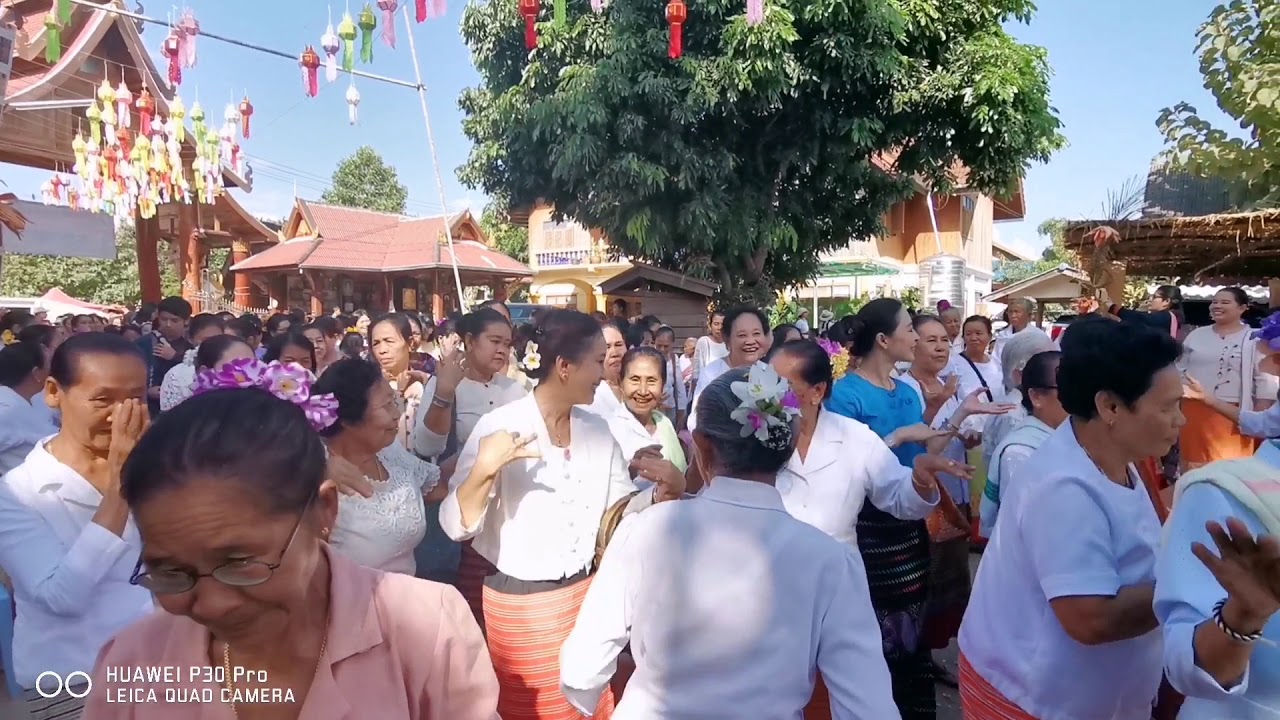
 Click to Access the Navigation Map GPS
Wat Ban Thap Map
Recommend

 Muang Chiang Mai(121)Chom Thong(47)Mae Chaem(25)Chiang Dao(33)Doi Saket(68)Mae Taeng(85)Mae Rim(69)Samoeng(29)Fang(71)Mae Ai(62)Phrao(70)San Pa Tong(105)San Kamphaeng(66)San Sai(73)Hang Dong(74)Hot(32)Doi Tao(22)Omkoi(11)Saraphi(74)Wiang Haeng(15)Chai Prakan(28)Mae Wang(32)Mae On(22)Doi Lo(34)Galyani Vadhana(1)


