
lovethailand home >North Travel Attractions >Chiang Mai Travel Attractions >Mae Chaem >Chang Khoeng > Wat Phut En
TL;DR: Wat Phut En is located at Moo 15, Chang Khoeng Subdistrict, Mae Chaem District, Chiang Mai Province 50270, Thailand, open Daily, hours 07:00 - 18:00.
Wat Phut En
Open Days: Daily
Opening Hours: 07:00 - 18:00
Wat Phut En, also spelled Wat Phuttha En or Wat Phut Ean, is located in Moo 15, Chang Khoeng Subdistrict, Mae Chaem District, Chiang Mai Province. It is a community Buddhist temple under the Mahanikaya order. The temple was formerly known as Wat Si Sutthawat, and local cultural records also refer to it as Wat Si Sutthawat Oen Mongkut. Wat Phut En is one of Mae Chaem’s most important old temples because it preserves a rare and highly distinctive water-bound ordination hall, locally known as a “bot nam” or udaka sima, a wooden ordination hall standing in the middle of a pond.
The temple is situated in Chang Khoeng, one of the key cultural communities of Mae Chaem. The surrounding landscape is typical of Mae Chaem’s mountain-valley settlements, where old temples, villages, the Mae Chaem River, agricultural land, and local roads remain closely connected. A visit to Wat Phut En is therefore not only a temple visit but also an introduction to the religious and cultural geography of Mae Chaem.
The most outstanding feature of Wat Phut En is its Lanna-style water ordination hall. The wooden structure stands in a rectangular pond, with its posts set into the water and the ritual boundary enclosed by laterite walls. The area from the ordination hall to the surrounding wall is known as an udaka sima, or water boundary. In Buddhist monastic practice, this kind of boundary serves the same ritual function as a consecrated boundary on land, but water itself becomes the defining element of the sacred space.
The concept of a water-bound ordination space is associated with ideas of purity and separation from ordinary surroundings. In local explanations, this tradition is linked to Buddhist influence from Lanka. In the past, ordination in a water-bound hall was considered especially pure because the water clearly separated the monastic ritual space from the outside world. Although ordination in this form is no longer practiced at Wat Phut En, the water ordination hall remains an important architectural and religious witness to this older ritual tradition.
Seen from outside, the wooden hall appears calm and self-contained. The pond functions both as a ritual boundary and as a visual setting. The reflection of the building on the water, the surrounding laterite wall, and the quiet atmosphere of the compound create a strong sense of sacred separation. This is why Wat Phut En should not be treated merely as a photo stop; the building represents a rare surviving form of Buddhist ritual architecture in northern Thailand.
Another important feature of the temple is the sacred spring at the front of the compound. Local legend says that the Buddha once came to this area with his disciples and called Ananda to bring him water. After the Buddha rinsed his mouth at this spot, a spring appeared and continued to flow without drying. Local residents have long regarded this water source as sacred. This legend connects Wat Phut En with the themes of water, purity, blessing, and the spiritual identity of Mae Chaem.
The name “Phut En” or “Phut Ean” is connected with the northern Thai word “ean,” meaning to call or shout. According to local tradition, the name recalls the Buddha calling for water. Another interpretation links the word “en” with a term associated with a pond or water, which also fits the temple’s defining feature: an ordination hall in the middle of a pond. In both interpretations, water remains central to the identity of the temple.
Wat Phut En is also associated with narratives found in the Phra Chao Liap Lok tradition, a body of northern Buddhist legends that links the Buddha’s journeys with landscapes in Lanna. Such legends helped local communities explain mountains, rivers, springs, and temple sites through Buddhist memory. At Wat Phut En, the sacred spring and the water ordination hall make these beliefs visible in the physical landscape.
The temple received its royal boundary recognition on 1 August 1990. In Thai Buddhist practice, royal boundary recognition, or wisungkhamsima, is important because it establishes the proper consecrated area for formal monastic acts. Together with the temple’s rare udaka sima, this makes Wat Phut En especially interesting for visitors who want to understand Buddhist ritual space, monastic boundaries, and Lanna temple architecture.
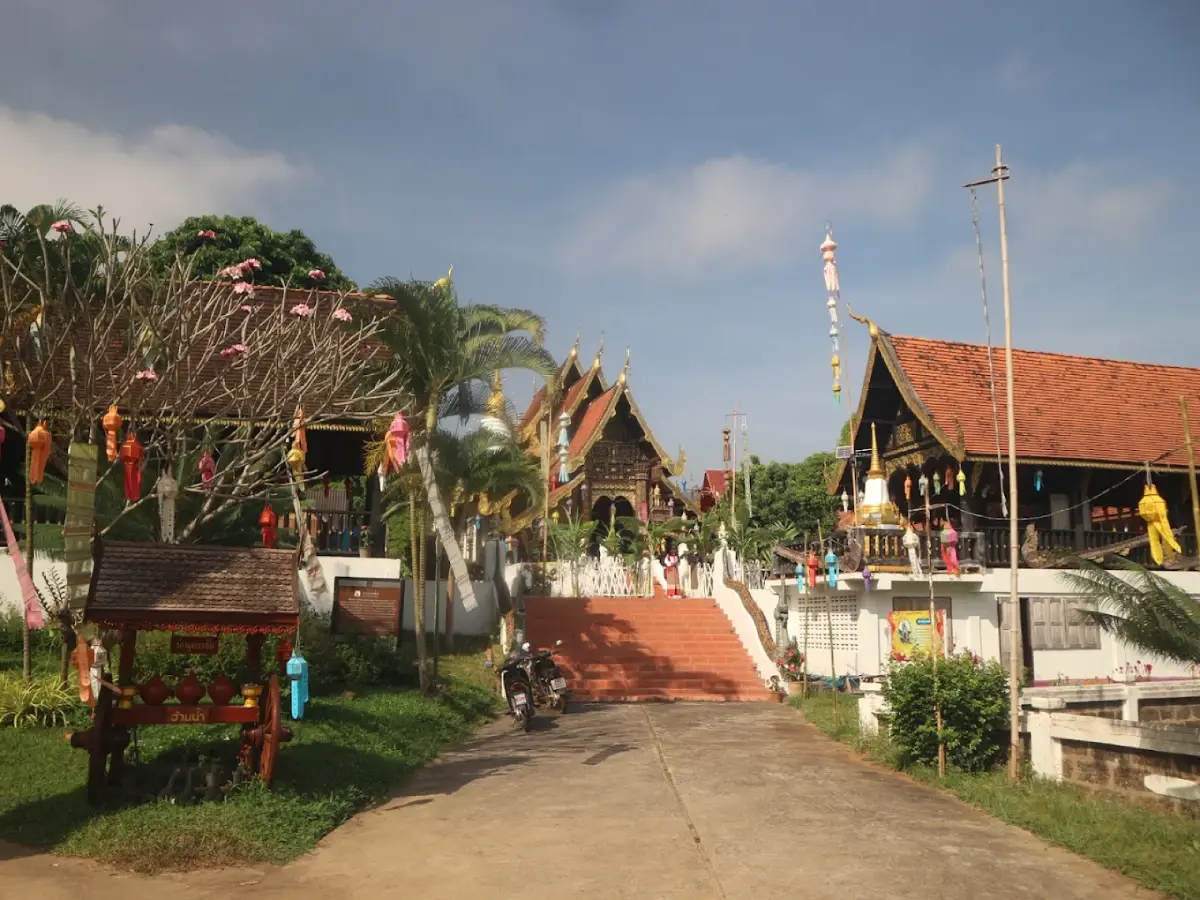
The temple compound includes a one-storey Thai-style sermon hall, monks’ residences built partly in masonry and partly in wood, a Lanna-style viharn, and the water-bound ordination hall. These structures show that Wat Phut En is both a historic temple and a functioning community temple. It continues to support worship, merit-making, and Buddhist activities while preserving an important historic monument.
The old viharn behind the water ordination hall is another valuable element of the temple. Inside, there were once mural paintings by Shan-style artisans. Today, only small surviving traces remain, especially above the rear doorway. Even in fragmentary form, these murals are important because they show cultural exchange between Mae Chaem, Lanna, and Shan artistic traditions. They remind visitors that Mae Chaem was never culturally isolated; people, craftsmen, beliefs, and artistic styles moved through the region over time.
Thai cultural encyclopedia records describe the viharn as a Lanna-style structure with a multi-tiered roof, carved wooden naga motifs, ornamental panels, glass decoration, and guardian lion sculptures at the front stairway. These details make the viharn valuable for anyone interested in northern Thai temple craftsmanship. The woodcarving, decorative glass, roof forms, and symbolic animals all belong to the artistic language of Lanna Buddhist architecture.
Behind the viharn is the temple’s chedi. The chedi follows a Lanna form, with a circular stupa rising from a square indented base. It features layered mouldings and a small bell-shaped element above them. The base is decorated with the twelve zodiac signs in the Lanna tradition. These signs connect the monument with local beliefs about time, birth years, cycles of life, and spiritual protection.
Inside the temple, visitors will also find important Buddha images, including Phra Chao Saen Tong and Phra Chao Than Chai. Phra Chao Than Chai reflects a northern Thai devotional tradition connected with focused prayer and merit-making. These Buddha images show that the temple remains a living place of worship, not merely a preserved monument.
The value of Wat Phut En lies in several layers. Historically, it is an old Mae Chaem temple with more than two centuries of local memory. Architecturally, it preserves a rare water ordination hall. Artistically, it contains a Lanna viharn, surviving mural traces, and a chedi with zodiac decoration. Spiritually, it is connected with a sacred spring and local Buddhist legend. Socially, it remains part of the religious life of Chang Khoeng and Mae Chaem.
For travelers, Wat Phut En is suitable for those interested in old temples, Lanna wooden architecture, rare ritual structures, sacred springs, and local legends. Visitors who come only for photographs may notice the water ordination hall, but those who spend more time will discover many additional details: the laterite boundary, the sacred spring, the old viharn, the remaining murals, the chedi, and the role of the temple in the life of the community.
A meaningful way to explore Wat Phut En is to begin at the sacred spring near the front of the temple, then continue to the water ordination hall to observe the udaka sima, the pond, the wooden structure, and the laterite boundary. After that, visitors can walk to the old viharn, observe the surviving mural traces and principal Buddha images, and finally continue to the chedi behind the viharn. This route allows the temple to be understood through its key themes: water, ritual, art, faith, and community.
Visitors should treat the water ordination hall and surrounding historic features with respect. Do not climb on structures, touch old surfaces, enter restricted areas, or disturb worshippers. If signs or temple instructions are displayed, follow them carefully. Photography should be done quietly and respectfully, especially around old murals, sacred images, and religious activities.
Modest dress is expected when visiting Wat Phut En. Shoulders and knees should be covered, shoes should be removed in designated areas, and voices should be kept low. Do not enter monks’ living quarters without permission. Wat Phut En is still a temple used by local residents, so respect for the living religious community is as important as appreciation of the historic monument.
Getting There from Mae Chaem Municipality is straightforward. Drive along the main local road for about 1 km to the intersection near Mae Chaem Police Station, turn right for approximately 1.5 km, cross the bridge to the other side of the Mae Chaem River, and continue for about 1 km to reach the temple. Because local roads may have small junctions, using map navigation is recommended.
From Chiang Mai city, there are two main routes to Mae Chaem. The first follows Highway 108 through Hang Dong, San Pa Tong, and Chom Thong, then continues via Highway 1009 toward Doi Inthanon before connecting with Highway 1192 down to Mae Chaem. This route is scenic and suitable for combining Doi Inthanon with Mae Chaem, but it includes mountain curves and steep sections.
The second route follows Highway 108 toward Hot and Op Luang, then connects with Highway 1088 into Mae Chaem. This route is useful for travelers coming from southern Chiang Mai Province or those who want to include Op Luang in the trip. Once in Mae Chaem, continue toward Chang Khoeng Subdistrict and use the coordinates of Wat Phut En for navigation.
The temple’s coordinates are approximately 18.5134 latitude and 98.35082 longitude. It is close to several important Mae Chaem temples, making it suitable for a half-day or full-day cultural temple route. Private car, rental car, or motorcycle is the most convenient way to explore the area because Mae Chaem’s temples and attractions are spread across different villages.
Nearby temples and attractions include Wat Phrao Num, Wat Ban Chiang or Wat Chiang, Wat Ku, Wat Phra That Chang Khoeng, and Wat Pa Daet. Wat Phrao Num is an old community temple nearby. Wat Ban Chiang is associated with Phra Chao Saen Tong and local Buddhist heritage. Wat Ku lies within the same cultural area. Wat Phra That Chang Khoeng is another important temple of the subdistrict, while Wat Pa Daet is suitable for visitors interested in old temple art and historic atmosphere.
A practical temple route can begin at Wat Phut En in the morning, then continue to Wat Phrao Num or Wat Ban Chiang. After lunch in Mae Chaem town, visitors may continue to Wat Phra That Chang Khoeng or Wat Pa Daet. This route provides a good overview of Mae Chaem’s temples without rushing.
Nearby restaurants include Sikon Restaurant in Chang Khoeng, Jam A Rom Ancient Tom Yum Noodle, Khuang Na Restaurant, Pema Cafe, and Mae Chaem Gate Restaurant. These options make it easy to combine temple visits with lunch, coffee, or dinner in the Mae Chaem area.
Nearby accommodations include Loft Room 71 Mae Chaem, Take View Mueang Chaem Homestay, Phu Chaem House, Phu Pha Home, and Hug Khao at Mae Chaem. Staying overnight is recommended for travelers who want to explore Wat Phut En and other nearby temples without returning to Chiang Mai on the same day.
The best time to visit Wat Phut En is in the morning or late afternoon. Morning visits are good for quiet worship and observing the sacred spring and water ordination hall in soft light. Late afternoon is suitable for combining the temple with nearby cultural sites or restaurants. During the rainy season, be cautious on wet surfaces and mountain roads. During the cool season, Mae Chaem is especially pleasant for slower cultural travel.
Wat Phut En is one of the clearest examples of a temple that combines local legend, Buddhist ritual, Lanna architecture, and community faith in one place. The water ordination hall gives it architectural distinction. The sacred spring gives it legendary and devotional power. The viharn and murals connect it with regional art. The chedi and Buddha images preserve the temple’s religious function. Together, these elements make Wat Phut En one of the most meaningful cultural stops in Mae Chaem.
For travelers who want to understand Mae Chaem beyond rice terraces and mountain scenery, Wat Phut En is an essential stop. It shows that Mae Chaem’s identity is built not only from landscape but also from temples, water, legends, faith, and the continuity of local Buddhist life. A respectful visit to Wat Phut En offers a deeper view of northern Thai culture and the living heritage of the Mae Chaem valley.
| Name | Wat Phut En, also spelled Wat Phuttha En or Wat Phut Ean |
| Former Name | Wat Si Sutthawat or Wat Si Sutthawat Oen Mongkut |
| Temple Type | Community Buddhist temple under the Mahanikaya order and an important historic temple site of Mae Chaem |
| Location | Moo 15, Chang Khoeng Subdistrict, Mae Chaem District, Chiang Mai Province 50270, Thailand |
| Coordinates | 18.5134, 98.35082 |
| Open Days | Daily |
| Opening Hours | 07:00 - 18:00 |
| Phone | +66 53 485 358 |
| Abbot / Caretaker | Phra Khru Sathit Supphawat |
| Royal Boundary Recognition | 1 August 1990 |
| Age / Period | Early Rattanakosin period, with a history of more than 200 years |
| Main Highlights | Water ordination hall or udaka sima, sacred spring, Lanna viharn, Shan-style mural traces, chedi, and important Buddha images |
| Historic Monument | A wooden Lanna-style ordination hall standing in a pond, enclosed by laterite walls and registered as a historic monument by the Fine Arts Department |
| Meaning Of Udaka Sima | A water boundary used to define the sacred area for formal monastic acts, serving a similar ritual purpose to land-based consecrated boundaries |
| Sacred Spring | A spring at the front of the temple associated with the legend of the Buddha calling Ananda for water and creating a flowing spring |
| Main Areas / Zones | Sacred spring, water ordination hall, Lanna viharn, chedi, sermon hall, monks’ residences, and community worship areas |
| Temple Buildings | One-storey Thai-style sermon hall, partly masonry and partly wooden monks’ residences, Lanna-style viharn, and water ordination hall |
| Current Status | Active Buddhist temple open for worship, cultural visits, and learning about Mae Chaem’s local heritage |
| Best For | Old Mae Chaem temples, Lanna historic monuments, water ordination hall, sacred spring legends, and cultural travel |
| Getting There | From Mae Chaem Municipality, drive to the intersection near Mae Chaem Police Station, turn right for about 1.5 km, cross the Mae Chaem River, and continue about 1 km to the temple. From Chiang Mai, travel via Highway 108, 1009, and 1192, or use the Hot–Op Luang–Highway 1088 route into Mae Chaem. |
| Nearby Tourist Attractions | 1. Wat Phrao Num — approx. 1 km 2. Wat Ban Chiang / Wat Chiang — approx. 1 km 3. Wat Ku — approx. 1 km 4. Wat Phra That Chang Khoeng — approx. 3 km 5. Wat Pa Daet, Mae Chaem — approx. 5 km |
| Nearby Restaurants | 1. Sikon Restaurant — approx. 2 km, Tel. +66 87 067 8193 2. Jam A Rom Ancient Tom Yum Noodle — approx. 2 km, Tel. +66 81 167 5992 3. Khuang Na Restaurant — approx. 3 km, Tel. +66 87 183 6931 4. Pema Cafe — approx. 3 km, Tel. +66 88 229 5692 5. Mae Chaem Gate Restaurant — approx. 6 km, Tel. +66 85 671 3061 |
| Nearby Accommodations | 1. Loft Room 71 Mae Chaem — approx. 1 km, Tel. +66 61 273 1989 2. Take View Mueang Chaem Homestay — approx. 3 km, Tel. +66 96 102 4162 3. Phu Chaem House — approx. 6 km, Tel. +66 81 024 6223 4. Phu Pha Home — approx. 6 km, Tel. +66 64 350 2333 5. Hug Khao at Mae Chaem — approx. 7 km, Tel. +66 93 140 1254 |
Frequently Asked Questions (FAQ)
Q: Where is Wat Phut En located?
A: Wat Phut En is located in Moo 15, Chang Khoeng Subdistrict, Mae Chaem District, Chiang Mai Province 50270, Thailand.
Q: What are the opening days and hours of Wat Phut En?
A: Wat Phut En is open daily from 07:00 to 18:00.
Q: Why is Wat Phut En important?
A: Wat Phut En is important because it preserves a rare water ordination hall, a sacred spring, a Lanna viharn, Shan-style mural traces, and a chedi with strong local cultural value.
Q: What is the water ordination hall at Wat Phut En?
A: The water ordination hall is a wooden ubosot standing in the middle of a pond. The surrounding water forms an udaka sima, or water boundary, used to define a sacred monastic ritual area.
Q: What legend is connected with the sacred spring at Wat Phut En?
A: Local legend says the Buddha came to this area and called Ananda to bring him water. After the Buddha rinsed his mouth at the site, a spring appeared and continued to flow.
Q: When did Wat Phut En receive royal boundary recognition?
A: Wat Phut En received royal boundary recognition on 1 August 1990.
Q: Which nearby temples can be combined with Wat Phut En?
A: Nearby temples include Wat Phrao Num, Wat Ban Chiang, Wat Ku, Wat Phra That Chang Khoeng, and Wat Pa Daet in Mae Chaem.
Q: What should visitors keep in mind when visiting Wat Phut En?
A: Visitors should dress respectfully, keep quiet, avoid climbing on or touching historic structures, follow temple instructions, and ask permission before photographing people or religious activities.
 Category: ●Places of Worship
 Group: ●Temple
Last Update : 2 DayAgo
 Last Update : 2 DayAgo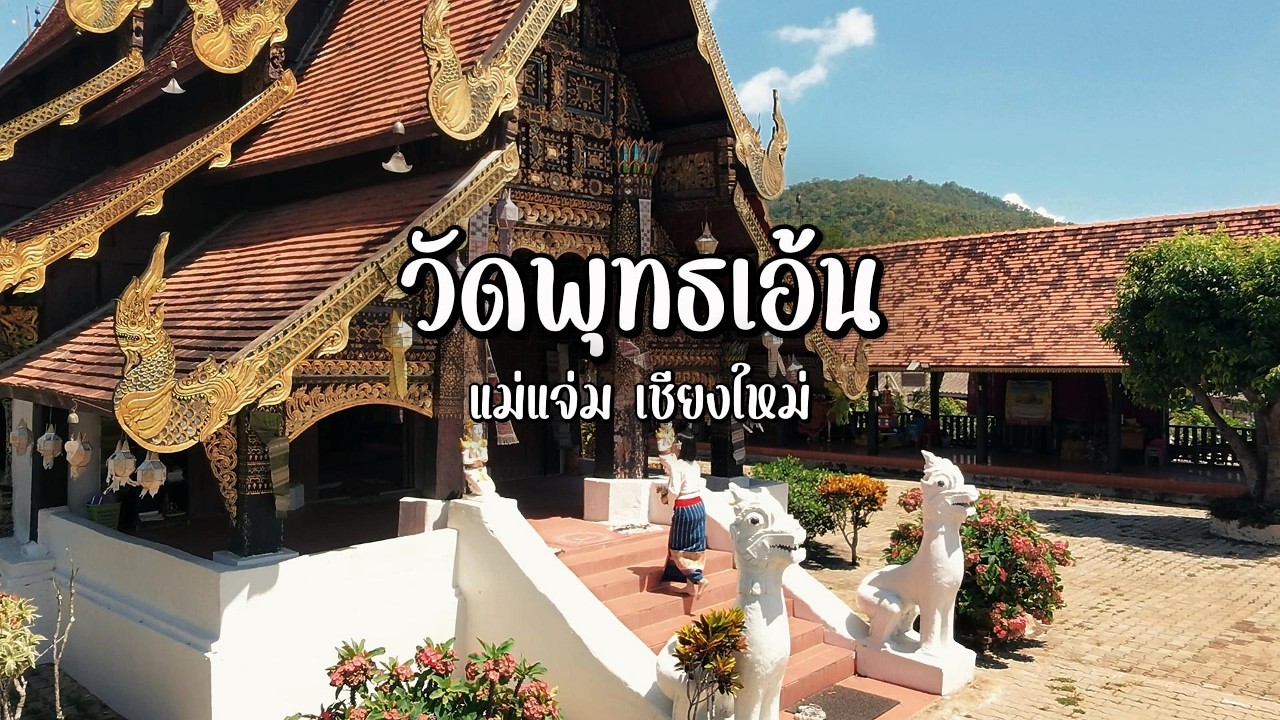
 Click to Access the Navigation Map GPS
Wat Phut En Map
Recommend

 Muang Chiang Mai(121)Chom Thong(47)Mae Chaem(25)Chiang Dao(33)Doi Saket(68)Mae Taeng(85)Mae Rim(69)Samoeng(29)Fang(71)Mae Ai(62)Phrao(70)San Pa Tong(105)San Kamphaeng(66)San Sai(73)Hang Dong(74)Hot(32)Doi Tao(22)Omkoi(11)Saraphi(74)Wiang Haeng(15)Chai Prakan(28)Mae Wang(32)Mae On(22)Doi Lo(34)Galyani Vadhana(1)


