
lovethailand home >North Travel Attractions >Chiang Mai Travel Attractions >Mae Chaem >Chang Khoeng > Wat Bon Na
TL;DR: Wat Bon Na is located at Ban Bon Na, Chang Khoeng Subdistrict, Mae Chaem District, Chiang Mai Province, open Daily, hours 08.00 – 17.00.

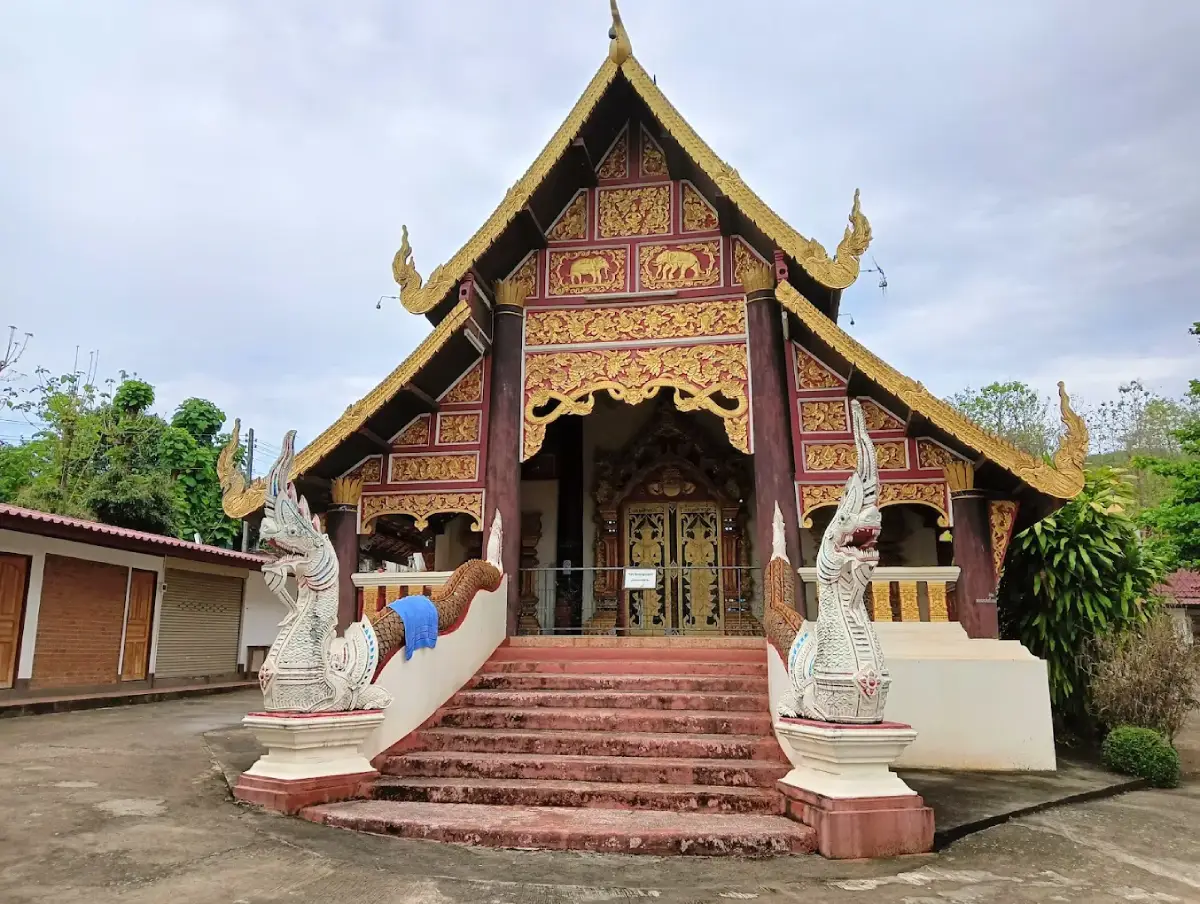
Wat Bon Na
Open Days: Daily
Opening Hours: 08.00 – 17.00
Wat Bon Na is a long-established community Buddhist temple in Ban Bon Na, Chang Khoeng Subdistrict, Mae Chaem District, Chiang Mai Province. The temple belongs to the Mahanikaya tradition and was officially established in 1910. More than a century later, it remains connected to Buddhist monastic life and the local community. Its abbot is Phra Khru Wibun Kalyanakitti (Udom Kalyano), a senior monk who has played a long-standing role in the ecclesiastical administration of Chang Khoeng. For travelers exploring Mae Chaem, Wat Bon Na is best experienced as part of a wider cultural route linking Wat Phutthoen, Wat Chang Khoeng, Wat Kong Kan, Wat Yang Luang, and Wat Pa Daet.
The temple stands in Ban Bon Na, within Chang Khoeng, one of the core communities of Mae Chaem. The surrounding landscape is typical of this mountainous district: villages, agricultural land, valleys, and ranges of forested hills are closely interwoven. The commonly referenced location of the temple is approximately 18.50851 latitude and 98.34403 longitude. Public mapping records place the temple close to Rural Road 4024, providing a practical connection with Mae Chaem town and other communities in Chang Khoeng.
The recorded address is 249 Moo 14, Ban Bon Na, Chang Khoeng Subdistrict, Mae Chaem District, Chiang Mai 50270. Ban Bon Na remains an active local community, with accommodation and tourism-related businesses operating in the surrounding area. The name therefore represents not merely an old administrative location but a living village that continues to be part of contemporary Mae Chaem.
The most important documented milestone in Wat Bon Na's history is its official establishment in 1910. This places the temple among a network of long-established village temples in Mae Chaem. Historical records for Chang Khoeng list several temples created or formally recognized across different generations, including Wat Koo, Wat Chang Khoeng, Wat To Ruea, Wat Noi, Wat Phutthoen, Wat Ban Chiang, Wat Phrao Num, and Wat Bon Na. Together, these temples demonstrate how Buddhist institutions developed alongside settlement and community formation throughout Mae Chaem.
In northern Thai rural communities, the establishment of a temple traditionally represented more than the creation of a religious building. A temple became a shared space linking monks, families, education, merit-making, ceremonies, and community organization. Wat Bon Na should therefore be understood within this wider social structure. Its history is connected not only to Buddhist practice but also to the continuity of Ban Bon Na as a community.
Evidence from recent Buddhist education records also confirms the temple's continued activity. A 2025 national Dhamma-study examination record includes a novice associated with Wat Bon Na in Mae Chaem. This is significant because it demonstrates that the temple is not merely an old name preserved in a historic registry; it continues to participate in the living monastic and educational system of Thai Buddhism.
Phra Khru Wibun Kalyanakitti, also recorded as Udom Kalyano, is closely associated with the modern history of Wat Bon Na. Official Sangha records identify him as the abbot of Wat Bon Na and as a senior ecclesiastical figure connected with Chang Khoeng Zone 2. His work extended beyond the administration of the temple itself to the wider monastic structure of the subdistrict.
Historical research into Buddhist administration in Mae Chaem records that Udom Kalyano assumed responsibilities within the Chang Khoeng Zone 2 ecclesiastical administration in 1991. In 1996, he received the ecclesiastical title Phra Khru Wibun Kalyanakitti. This long period of service gives Wat Bon Na particular significance within the religious administration of Mae Chaem, as the temple has been associated with a monk whose responsibilities extended across several local Buddhist communities.
A Sangha Supreme Council record published in 2023 continued to identify Phra Khru Wibun Kalyanakitti as abbot of Wat Bon Na and as the ecclesiastical head of Chang Khoeng Zone 2 before his appointment as an adviser to the local ecclesiastical administration. This provides important modern documentation linking Wat Bon Na directly to Mae Chaem's formal Buddhist administrative structure.
For travelers, the appeal of Wat Bon Na differs from that of the major monumental temples in central Chiang Mai. It is primarily a living community temple rather than a tourism complex. Visiting therefore offers an opportunity to experience a quieter side of Chiang Mai: a village Buddhist temple surrounded by the agricultural and mountain environment of Mae Chaem, where religious and community life still share the same physical landscape.
Available public records do not document a specific nationally recognized monument, artifact, or architectural masterpiece inside Wat Bon Na in sufficient detail to present one as its defining attraction. The temple's importance is better understood through its age, the continuity of its Buddhist community, the role of its abbot, and its place within Mae Chaem's wider network of historic temples. Travelers should therefore approach the site as a cultural and community destination rather than expecting a large-scale tourist landmark.
A visit is best taken slowly. Maintain a quiet voice, avoid interrupting monks or residents engaged in religious activities, and pay attention to the relationship between the temple and the surrounding village. This relationship is itself part of the cultural value of the site. In communities such as Ban Bon Na, the temple is not isolated from everyday life but forms part of the spatial and social fabric of the settlement.
Mae Chaem has an unusually strong cultural identity within Chiang Mai Province. Its mountain geography has allowed many communities to preserve local traditions, handicrafts, temple culture, agricultural practices, and distinctive settlement patterns. The district is particularly associated with Mae Chaem teen jok weaving, old temples, rice-growing landscapes, and villages spread through mountain valleys. Seeing Wat Bon Na within this larger context makes the visit far more meaningful.
Traditional Mae Chaem teen jok textiles are among the district's best-known cultural expressions. Weaving communities in Tha Pha and nearby areas can be combined with a temple route, allowing travelers to understand how Buddhist culture, domestic craft traditions, farming, and village life coexist within the same cultural landscape. A journey that includes Wat Bon Na and a weaving community provides a more complete understanding of Mae Chaem than a trip focused exclusively on scenic rice terraces.
One of the closest cultural stops is Wat Phutthoen, approximately 1 km from Wat Bon Na. Wat Phutthoen is known for its sacred spring and its strong relationship with water. The temple is an important religious landmark in Chang Khoeng and adds another dimension to a local temple itinerary by combining Buddhist belief with a naturally occurring water source that has long held significance for the community.
Wat Chang Khoeng lies approximately 3 km away. It is especially important to the history of Mae Chaem and has been studied in academic research. The temple is associated with historic inscriptions using Fak Kham and Lanna script, making it particularly worthwhile for visitors interested in northern Thai history, epigraphy, language, and Buddhist culture. Visiting Wat Bon Na and Wat Chang Khoeng together reveals how individual temples within the same subdistrict developed different historical roles.
Wat Kong Kan is about 5 km from Wat Bon Na. It is another important temple in Mae Chaem and is associated with Phra Chao Ton Luang, a revered Buddha image connected with the local community. The temple also lies close to the terraced agricultural landscape of Ban Kong Kan. During the rice-growing season, a route linking Wat Bon Na, Wat Phutthoen, and Wat Kong Kan therefore combines religious heritage with some of Mae Chaem's characteristic rural scenery.
Wat Yang Luang, approximately 6 km away in Tha Pha Subdistrict, is one of Mae Chaem's historically and artistically distinctive temples. A particularly important feature is the Ku Prasat, sometimes referred to locally as a Kichakut structure, situated behind the principal Buddha image. The temple is also connected with stories of the ethnic communities historically described in Lanna sources as Yang. Adding Wat Yang Luang to a Wat Bon Na itinerary introduces another layer of Mae Chaem's cultural diversity.
Wat Pa Daet is also roughly 6 km from Wat Bon Na. It is known for historic mural paintings inside its old viharn, including Buddhist narratives and scenes that provide insight into earlier local life. For travelers interested in art history, the murals make Wat Pa Daet a valuable complement to Wat Bon Na. The two temples represent different dimensions of Mae Chaem heritage: one a long-lived community institution, the other particularly notable for surviving visual art.
Because these temples are relatively close to one another, travelers with a private vehicle can combine several sites in half a day or a full day. A practical route can begin in Chang Khoeng before continuing toward Tha Pha. Those with additional time can add the Mae Chaem Teen Jok weaving community, local restaurants, and the district's rice-growing landscapes to create a broader cultural itinerary.
In terms of experience, daylight hours are the most practical time to explore the temple and its surrounding village environment. Morning and later afternoon generally offer more comfortable conditions for walking and photography than the hottest part of the day. During the rainy season and early cool season, the agricultural landscape around Mae Chaem becomes especially green, while later in the rice-growing cycle many fields gradually turn golden before harvest.
Visitors should dress respectfully. Clothing should cover the shoulders and extend appropriately over the legs. Shoes should be removed wherever required. Avoid posing disrespectfully with Buddha images or religious structures, and keep an appropriate distance from monks engaged in prayers, teaching, or daily monastic duties. These practices apply not only at Wat Bon Na but throughout Mae Chaem's community temples.
Photography should also be approached with respect. General views of the temple, landscape, and village surroundings can be photographed without disrupting activities, but permission should be requested before taking close photographs of monks, residents, or religious ceremonies. Small community temples are active religious environments rather than staged tourist attractions, and considerate behavior helps protect the relationship between visitors and local residents.
For travelers interested in cultural geography, Wat Bon Na can be viewed as a starting point for reading the Mae Chaem landscape. The temple stands among homes and agricultural land rather than in a separate tourism precinct. This arrangement illustrates a characteristic feature of many Lanna communities, where temples developed as an integral part of settlement rather than as isolated monuments.
The temple's age is itself significant. Since its official establishment in 1910, generations of residents and monks have maintained a Buddhist presence at Ban Bon Na. When considered alongside the other historic temples of Chang Khoeng, Wat Bon Na contributes to evidence of a long-standing religious network across the valley. Its cultural value therefore lies partly in continuity rather than monumentality.
The name “Bon Na” is directly associated with Ban Bon Na, the village in which the temple stands. No sufficiently documented public record was found that supports a more elaborate origin legend for the name, so the most reliable interpretation is the direct connection between the temple and its community. Ban Bon Na remains a recognizable locality today, appearing in modern addresses for accommodation and other businesses in the area.
Getting There from Chiang Mai city is most direct via Highway 108 toward Chom Thong. Before or around Chom Thong, turn onto Highway 1009 toward Doi Inthanon, then connect with Highway 1192 leading down toward Mae Chaem. The total distance is approximately 115–120 km. The mountain section includes steep gradients and numerous curves, so drivers should allow sufficient travel time and use appropriate speeds.
An alternative route continues south on Highway 108 through Chom Thong toward Hot and the Op Luang area before turning onto Highway 1088 for Mae Chaem. This route is longer, at roughly 150 km, but can be useful for travelers combining Mae Chaem with Op Luang or arriving from southern Chiang Mai Province. Once in Mae Chaem, continue toward Chang Khoeng and Ban Bon Na using the temple coordinates for final navigation.
Within Mae Chaem, a private car or motorcycle is the most flexible option because temples, villages, restaurants, and scenic areas are spread across the district. Mountain roads require additional care during rain, early morning mist, and low-visibility conditions. Travelers planning a full-day cultural circuit should carry drinking water and ensure they have adequate fuel before leaving the town area.
For a half-day visit, Wat Bon Na, Wat Phutthoen, and Wat Chang Khoeng form a convenient group within Chang Khoeng. Travelers with a full day can continue to Wat Kong Kan, Wat Yang Luang, Wat Pa Daet, and a teen jok weaving community. This route covers a broad range of cultural themes without requiring long transfers outside Mae Chaem.
Travelers visiting Mae Chaem for terraced rice landscapes can also include Wat Bon Na in the same itinerary. Ban Kong Kan and other agricultural areas are within reasonable driving distance of the Chang Khoeng temple cluster. Visiting temples in the morning before continuing to rice-growing areas later in the day creates a balanced itinerary combining cultural heritage and landscape.
Mae Chaem town and Chang Khoeng offer a growing selection of restaurants and cafés. Nearby options include Pema Cafe, Jam A Rom Ancient Tom Yum Noodle, Khuang Na Restaurant, Mae Chaem Gate Restaurant, and Hean Mae Ui. These businesses are located within a few kilometers of the temple and provide convenient stops before or after visiting the cultural sites of Chang Khoeng and Tha Pha.
Accommodation ranges from small homestays to simple traveler-oriented lodgings. Take View Mueang Chaem Homestay is located in Ban Bon Na itself, while Loft Room 71 is in Chang Khoeng. Phu Chaem House, Phu Pha Home, and Hug Khao at Mae Chaem are additional options within the district. Staying overnight allows visitors to experience Mae Chaem at a slower pace and explore temples and communities without having to return to Chiang Mai the same evening.
Visitors coming specifically to Wat Bon Na should allow more than a brief photo stop. Spending time observing the temple, village, and surrounding cultural landscape provides a clearer sense of why the site matters. Its value comes from the relationship between the temple and Ban Bon Na as much as from the religious compound itself.
As a community temple rather than a large tourism attraction, Wat Bon Na should be visited with basic personal supplies such as drinking water and cash. Keep the grounds clean, remove personal waste, respect private monastic areas, and follow any instructions provided at the temple during the visit.
Wat Bon Na is particularly suitable for travelers interested in local culture, Buddhist history, rural Chiang Mai, Lanna communities, and slow travel. Instead of competing with Chiang Mai's monumental temples, it offers a different type of experience: a chance to see how a Buddhist institution has remained integrated with a mountain community for more than a century.
Its documented establishment in 1910, the long service of Phra Khru Wibun Kalyanakitti, and evidence of Buddhist educational activity in 2025 demonstrate meaningful historical continuity. Wat Bon Na therefore deserves to be understood as more than a pin on a map. It is part of the religious and social history of Mae Chaem and remains connected to the contemporary life of the district.
For an effective cultural itinerary, travelers can begin at Wat Bon Na, continue to Wat Phutthoen and Wat Chang Khoeng, then extend the route toward Wat Kong Kan, Wat Yang Luang, and Wat Pa Daet. Within a relatively compact area, this route brings together living village temples, sacred water traditions, historic inscriptions, important Buddha images, distinctive architecture, and mural painting.
Ultimately, the character of Wat Bon Na lies in continuity rather than grandeur. The temple has stood in Ban Bon Na for more than a century, remains associated with an important senior monk of Mae Chaem, and continues to function within a community that retains a strong local identity. Travelers who visit respectfully and take time to understand this context can experience a side of Chiang Mai very different from the province's mainstream attractions.
| Name | Wat Bon Na |
| Temple Type | Community Buddhist temple, Mahanikaya tradition |
| Location | Ban Bon Na, Chang Khoeng Subdistrict, Mae Chaem District, Chiang Mai Province |
| Address | 249 Moo 14, Ban Bon Na, Chang Khoeng, Mae Chaem, Chiang Mai 50270, Thailand |
| Coordinates | 18.50851, 98.34403 |
| Official Establishment | 1910 |
| Approximate Age | More than 100 years |
| Abbot | Phra Khru Wibun Kalyanakitti (Udom Kalyano) |
| Ecclesiastical Role | Former head of the Chang Khoeng Zone 2 ecclesiastical administration and appointed adviser to the local ecclesiastical head |
| Highlights | A century-old living community temple with long-term connections to Buddhist administration, monastic education, and Ban Bon Na |
| Current Status | Active Buddhist temple; Wat Bon Na appears in recent temple records and in the 2025 national Dhamma-study examination records |
| Travel Information | From Chiang Mai take Highway 108 toward Chom Thong, continue via Highway 1009 and Highway 1192 to Mae Chaem, then travel to Chang Khoeng and Ban Bon Na. An alternative route follows Highway 108 through Hot and connects to Highway 1088. |
| Nearby Tourist Attractions | 1. Wat Phutthoen — approx. 1 km 2. Wat Chang Khoeng — approx. 3 km 3. Wat Kong Kan — approx. 5 km 4. Wat Yang Luang — approx. 6 km 5. Wat Pa Daet, Mae Chaem — approx. 6 km |
| Nearby Restaurants | 1. Pema Cafe — approx. 4 km, Tel. +66 88 229 5692 2. Jam A Rom Ancient Tom Yum Noodle — approx. 4 km, Tel. +66 81 167 5992 3. Khuang Na Restaurant — approx. 4 km, Tel. +66 87 183 6931 4. Mae Chaem Gate Restaurant — approx. 5 km, Tel. +66 85 671 3061 5. Hean Mae Ui — approx. 5 km, Tel. +66 93 039 3819 |
| Nearby Accommodations | 1. Take View Mueang Chaem Homestay — approx. 1 km, Tel. +66 96 102 4162 2. Loft Room 71 — approx. 4 km, Tel. +66 93 051 0706 3. Phu Chaem House — approx. 6 km, Tel. +66 81 024 6223 4. Phu Pha Home — approx. 6 km, Tel. +66 64 350 2333 5. Hug Khao at Mae Chaem — approx. 7 km, Tel. +66 93 140 1254 |
Frequently Asked Questions (FAQ)
Q: Where is Wat Bon Na located?
A: Wat Bon Na is in Ban Bon Na, Chang Khoeng Subdistrict, Mae Chaem District, Chiang Mai Province, at approximately 18.50851, 98.34403.
Q: How old is Wat Bon Na?
A: Wat Bon Na was officially established in 1910, making it more than a century old.
Q: Which Buddhist tradition does Wat Bon Na belong to?
A: Wat Bon Na is a community temple belonging to Thailand's Mahanikaya monastic tradition.
Q: Who is the abbot of Wat Bon Na?
A: The abbot is Phra Khru Wibun Kalyanakitti (Udom Kalyano), a senior monk with a long history of ecclesiastical service in Chang Khoeng Zone 2.
Q: Is Wat Bon Na still an active temple?
A: Yes. The temple remains listed in current temple databases, and a learner associated with Wat Bon Na appears in the 2025 national Dhamma-study examination records.
Q: What attractions can be combined with a visit to Wat Bon Na?
A: Nearby cultural stops include Wat Phutthoen, Wat Chang Khoeng, Wat Kong Kan, Wat Yang Luang, and Wat Pa Daet, all approximately 1–6 km away.
Q: How do I travel from Chiang Mai to Wat Bon Na?
A: Take Highway 108 toward Chom Thong, turn onto Highway 1009 toward Doi Inthanon, then use Highway 1192 to Mae Chaem before continuing to Chang Khoeng and Ban Bon Na.
Q: What should visitors wear at Wat Bon Na?
A: Wear modest clothing that covers the shoulders and legs, remove shoes where required, maintain a quiet manner, and ask permission before photographing monks, residents, or religious activities.
 Category: ●Places of Worship
 Group: ●Temple
Last Update : 6 DayAgo
 Last Update : 6 DayAgo
 Click to Access the Navigation Map GPS
Wat Bon Na Map
Recommend

 Muang Chiang Mai(121)Chom Thong(47)Mae Chaem(25)Chiang Dao(33)Doi Saket(68)Mae Taeng(85)Mae Rim(69)Samoeng(29)Fang(71)Mae Ai(59)Phrao(70)San Pa Tong(105)San Kamphaeng(66)San Sai(73)Hang Dong(74)Hot(32)Doi Tao(22)Omkoi(11)Saraphi(74)Wiang Haeng(15)Chai Prakan(28)Mae Wang(32)Mae On(22)Doi Lo(34)Galyani Vadhana(1)


