
lovethailand home >North Travel Attractions >Chiang Mai Travel Attractions >Mae Chaem >Chang Khoeng > Wat To Rua
TL;DR: Wat To Rua is located at Moo 2, Ban To Ruea, Chang Khoeng Subdistrict, Mae Chaem District, Chiang Mai Province, open Daily, hours 08.00 - 17.00.

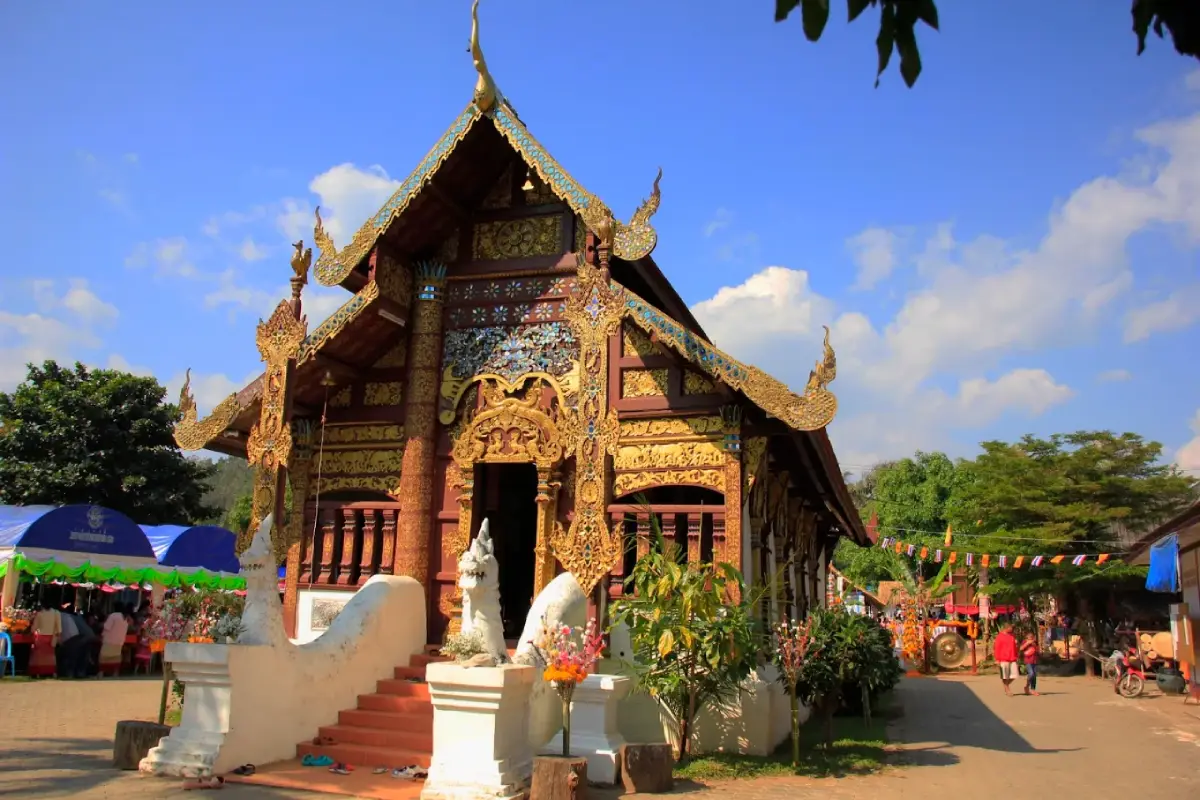
Wat To Rua
Open Days: Daily
Opening Hours: 08.00 - 17.00
Wat To Ruea is located in Moo 2, Ban To Ruea, Chang Khoeng Subdistrict, Mae Chaem District, Chiang Mai Province. It is a local Buddhist temple under the Maha Nikaya tradition and serves as the community temple of Ban To Ruea. The temple was officially permitted to be established in B.E. 2438 and received its royal boundary on 17 January B.E. 2534. Wat To Ruea is suitable for travelers who want a calm temple visit, merit-making, and a deeper understanding of village-level Buddhist life in Mae Chaem.
The importance of Wat To Ruea lies in its role as a village temple in Chang Khoeng Subdistrict, one of the key cultural areas of Mae Chaem District. The temple may not be as widely promoted as Wat Phra That Chang Khoeng, Wat Phuttha En, or Wat Kong Kan, but it has value as a local religious space that has supported the faith of Ban To Ruea residents for generations. Temples of this kind are essential to village life because they provide space for merit-making, Buddhist observances, sermons, ceremonies, and community gatherings.
The temple’s establishment in B.E. 2438 gives Wat To Ruea a history of more than a century. In the context of Mae Chaem, a district with strong Lanna cultural roots, Wat To Ruea is part of a wider network of Buddhist temples that reflect settlement, community organization, and the continuation of local religious practice. It is not merely a name in a temple register; it is a village religious space that helps explain Buddhist life in Mae Chaem at the community level.
The royal boundary granted on 17 January B.E. 2534 is an important part of the temple’s formal religious status. In Thai Buddhism, a royal boundary marks the area used for monastic acts according to Buddhist discipline. A temple that has received a royal boundary has a clearer and more complete religious function. For Wat To Ruea, this reflects the temple’s stability and its role in supporting the monastic and lay Buddhist community of Ban To Ruea.
The name “To Ruea” has a strong cultural image because “ruea,” or boat, is associated with water, travel, transport, and communities connected with waterways. In Mae Chaem, where the Mae Chaem River is an important natural feature, a place name related to boats suggests the relationship between people, water, movement, and settlement. Although publicly available sources do not provide a detailed origin story for the temple’s name, the name gives Wat To Ruea a distinct identity within the temple network of Chang Khoeng.
Ban To Ruea is part of Chang Khoeng Subdistrict, an area shaped by villages, agricultural land, waterways, and roads connecting different communities of Mae Chaem. Local life in the area is closely tied to farming, village routes, and temples that act as spiritual centers. Wat To Ruea should therefore be understood together with the surrounding community and landscape. Its value comes from the way it belongs to Ban To Ruea and supports the religious life of the village.
Chang Khoeng Subdistrict has several community temples, including Wat Chang Khoeng, Wat Ku, Wat Chiang, Wat Doi Sakan, Wat Thung Yao, Wat Noi, Wat Phrao Num, Wat Phuttha En, Wat Mae Pan, and Wat Huai Rin. Wat To Ruea is part of this local Buddhist network and is located in Moo 2, the same village area as Ban To Ruea. This density of village temples shows how important temples are in northern Thai community structure. Each temple serves its own village while also contributing to the wider religious landscape of Mae Chaem.
Wat To Ruea is also indirectly connected with the wider sacred landscape of Mae Chaem. Ban To Ruea is located near Wat Doi Sakan, a site associated with the legend of Phra That Chang Khoeng and the surrounding sacred stupas of Mae Chaem. According to local belief connected with Phra That Chang Khoeng, objects associated with the Buddha’s hair relics were enshrined in subsidiary stupas around the town. This gives the Chang Khoeng area a wider religious context beyond any single temple.
For this reason, Wat To Ruea is best understood as part of a cultural temple route in Mae Chaem rather than as an isolated stop. Travelers can begin with Wat Phra That Chang Khoeng to understand the central legend of the area, then continue to Wat Ku, Wat To Ruea, Wat Doi Sakan, Wat Phuttha En, and Wat Kong Kan. This route allows visitors to see Mae Chaem’s Buddhist landscape through both famous temples and quieter village temples.
The role of Wat To Ruea in Ban To Ruea is both religious and social. In northern Thai villages, temples are used for merit-making, Buddhist holy days, sermons, annual ceremonies, and important family or community rituals. Wat To Ruea is therefore meaningful not only for visitors but also for local residents who continue to use the temple as part of village life. This active community role is the main value of the temple.
For cultural travelers, Wat To Ruea is a useful example of a Maha Nikaya village temple. Many local temples in northern Thailand do not have extensive tourist information, but they are important to residents and to the cultural structure of their villages. Wat To Ruea shows that Buddhism in Mae Chaem is not limited to major temples and famous relic sites. It also lives through community temples that serve each village.
Mae Chaem is known for mountains, rice fields, terraced landscapes, woven textiles, agricultural life, and many old temples. Wat To Ruea helps complete this picture by connecting travelers with Ban To Ruea in Chang Khoeng Subdistrict. Visiting the temple is suitable for those who want to experience Mae Chaem through local communities rather than only through viewpoints or nature destinations.
The atmosphere of Wat To Ruea is calm and local. Visitors should expect a community temple rather than a heavily commercialized attraction. The visit is best appreciated through quiet worship, respectful observation, and an understanding that the temple is still part of local village life. Travelers interested in cultural context should pay attention to the temple’s setting in Ban To Ruea and its relationship with the wider Mae Chaem temple network.
Getting to Wat To Ruea is most convenient by private car or rental car. Travelers can enter Mae Chaem District and continue toward Chang Khoeng Subdistrict and Moo 2 Ban To Ruea. Roads in Mae Chaem may include curves, village roads, agricultural areas, and narrower local roads, so careful driving is recommended, especially during the rainy season or early morning when mist and wet road surfaces may occur.
Travelers coming from Chiang Mai city can reach Mae Chaem by routes through Chom Thong and Doi Inthanon or through Hot District, depending on road conditions and itinerary. Because Mae Chaem involves mountain roads and rural sections, visitors should allow enough travel time. Once in Mae Chaem, continue toward Chang Khoeng Subdistrict and Ban To Ruea.
Wat To Ruea can be combined with other temples in Mae Chaem, including Wat Doi Sakan, Wat Phra That Chang Khoeng, Wat Ku, Wat Phuttha En, and Wat Kong Kan. This route is suitable for travelers who want to understand different layers of Mae Chaem’s religious landscape, from historic relic temples to quiet village temples with local community meaning.
Travelers who want to combine culture and nature can also connect Wat To Ruea with Mae Chaem rice-field scenery, local viewpoints, Pa Bong Piang, and routes toward Doi Inthanon. A balanced itinerary may begin with temple visits in the morning and continue to rural landscapes later in the day. This gives the trip a mix of faith, community history, and natural scenery.
The best time to visit is in the morning or late afternoon, when the weather is more comfortable and the temple atmosphere is usually calm. During the rainy season, travelers should check weather and road conditions because some village and mountain roads may become wet or slippery. A private vehicle gives the most flexibility for visiting Wat To Ruea and nearby temples in the same trip.
Visitors should dress modestly, speak respectfully, and observe proper Thai temple manners. Shoes should be removed where required, especially before entering worship areas. If monks, villagers, or community groups are using the temple, visitors should give them space. Wat To Ruea is a living religious site for the local community, not only a sightseeing location.
From a cultural writing perspective, Wat To Ruea should be presented through verified details: its location in Moo 2, Ban To Ruea, Chang Khoeng Subdistrict, Mae Chaem District; its status as a Maha Nikaya local temple; its establishment in B.E. 2438; and the royal boundary granted on 17 January B.E. 2534. These facts are enough to show the temple’s historical and cultural value without exaggerating it into a major tourist landmark.
Wat To Ruea is suitable for slow travelers, cultural writers, documentary photographers, and visitors who want to understand Mae Chaem at the village level. Its value lies in its community role, its place name, its location in Ban To Ruea, and its position within the wider temple network of Chang Khoeng. It is meaningful because it preserves the quiet religious life of a Mae Chaem village.
Meals and accommodation are best planned around Mae Chaem town, Chang Khoeng, and nearby areas where there are more restaurant and lodging choices than in the immediate village area. Visitors can stop at Wat To Ruea for worship and cultural exploration, then continue to nearby temples, restaurants, homestays, rice-field viewpoints, or routes toward Doi Inthanon.
In summary, Wat To Ruea is a Maha Nikaya community temple in Moo 2, Ban To Ruea, Chang Khoeng Subdistrict, Mae Chaem District, Chiang Mai Province. It was officially permitted to be established in B.E. 2438 and received its royal boundary on 17 January B.E. 2534. Its main value lies in its role as the village temple of Ban To Ruea, its connection with the cultural landscape of Chang Khoeng, and its place in Mae Chaem’s wider Buddhist temple network.
| Name | Wat To Ruea |
| Type | Local Buddhist temple under the Maha Nikaya tradition |
| Location | Moo 2, Ban To Ruea, Chang Khoeng Subdistrict, Mae Chaem District, Chiang Mai Province |
| Address | Moo 2, Ban To Ruea, Chang Khoeng Subdistrict, Mae Chaem District, Chiang Mai 50270 |
| Highlights | Village temple of Ban To Ruea, suitable for worship, merit-making, and quiet cultural travel in Mae Chaem District |
| History | Officially permitted to be established as a temple in B.E. 2438 and received its royal boundary on 17 January B.E. 2534 |
| Distinctive Features | A local village temple reflecting the Buddhist life and community identity of Ban To Ruea in Chang Khoeng Subdistrict |
| Travel Information | Travel by private car or rental car into Mae Chaem District, then continue toward Chang Khoeng Subdistrict and Moo 2 Ban To Ruea |
| Current Status | Open for visits and worship |
| Open Days | Daily |
| Opening Hours | 08.00 - 17.00 |
| Nearby Tourist Attractions | 1. Wat Doi Sakan, about 1 km 2. Wat Phra That Chang Khoeng, about 4 km 3. Wat Ku, about 5 km 4. Wat Phuttha En, about 7 km 5. Wat Kong Kan, about 8 km |
| Nearby Restaurants | 1. Mae Chaem Gate Restaurant, about 4 km, Tel. 097-996-5568 2. Sikon Restaurant, about 4 km, Tel. 087-067-8193 3. Moo Inter Mae Chaem, about 5 km, Tel. 061-354-2369 4. Chadaporn Mae Chaem Restaurant, about 4 km, Tel. 081-883-6737 5. Khuang Na Restaurant, about 7 km |
| Nearby Accommodations | 1. The Say Ba Homestay at Mae Chaem, about 4 km 2. Huen Jam Rat, about 4 km, Tel. 089-687-1415 3. Phu Chaem House, about 7 km, Tel. 081-024-6223 4. Kowit Maechaem Farmhouse, about 10 km, Tel. 091-858-4546 5. Hug Khao Homestay Mae Chaem, about 14 km, Tel. 090-261-3805 |
Frequently Asked Questions (FAQ)
Q: Where is Wat To Ruea located?
A: Wat To Ruea is located in Moo 2, Ban To Ruea, Chang Khoeng Subdistrict, Mae Chaem District, Chiang Mai Province.
Q: What are the opening days and hours of Wat To Ruea?
A: Wat To Ruea is open daily from 08.00 to 17.00.
Q: What type of temple is Wat To Ruea?
A: Wat To Ruea is a local Buddhist temple under the Maha Nikaya tradition in Chang Khoeng Subdistrict, Mae Chaem District.
Q: When was Wat To Ruea established?
A: Wat To Ruea was officially permitted to be established as a temple in B.E. 2438.
Q: When did Wat To Ruea receive its royal boundary?
A: Wat To Ruea received its royal boundary on 17 January B.E. 2534.
Q: Is Wat To Ruea suitable for travelers?
A: Yes. It is suitable for travelers who want a quiet Buddhist temple visit and a local cultural stop in Mae Chaem District.
Q: How can travelers get to Wat To Ruea?
A: The most convenient way is by private car or rental car into Mae Chaem District, then onward to Chang Khoeng Subdistrict and Moo 2 Ban To Ruea.
Q: What nearby attractions can be combined with Wat To Ruea?
A: Travelers can combine the visit with Wat Doi Sakan, Wat Phra That Chang Khoeng, Wat Ku, Wat Phuttha En, and Wat Kong Kan.
 Category: ●Places of Worship
 Group: ●Temple
Last Update : 4 DayAgo
 Last Update : 4 DayAgo
 Click to Access the Navigation Map GPS
Wat To Rua Map
Recommend

 Muang Chiang Mai(121)Chom Thong(47)Mae Chaem(25)Chiang Dao(33)Doi Saket(68)Mae Taeng(85)Mae Rim(69)Samoeng(29)Fang(71)Mae Ai(62)Phrao(70)San Pa Tong(105)San Kamphaeng(66)San Sai(73)Hang Dong(74)Hot(32)Doi Tao(22)Omkoi(11)Saraphi(74)Wiang Haeng(15)Chai Prakan(28)Mae Wang(32)Mae On(22)Doi Lo(34)Galyani Vadhana(1)


