
lovethailand home >North Travel Attractions >Chiang Mai Travel Attractions >Mae Chaem >Chang Khoeng > Wat Phra That Chang Khoeng
TL;DR: Wat Phra That Chang Khoeng is located at Moo 4, Chang Khoeng Subdistrict, Mae Chaem District, Chiang Mai Province, open Daily, hours 08.00 – 17.00.

Wat Phra That Chang Khoeng
Open Days: Daily
Opening Hours: 08.00 – 17.00
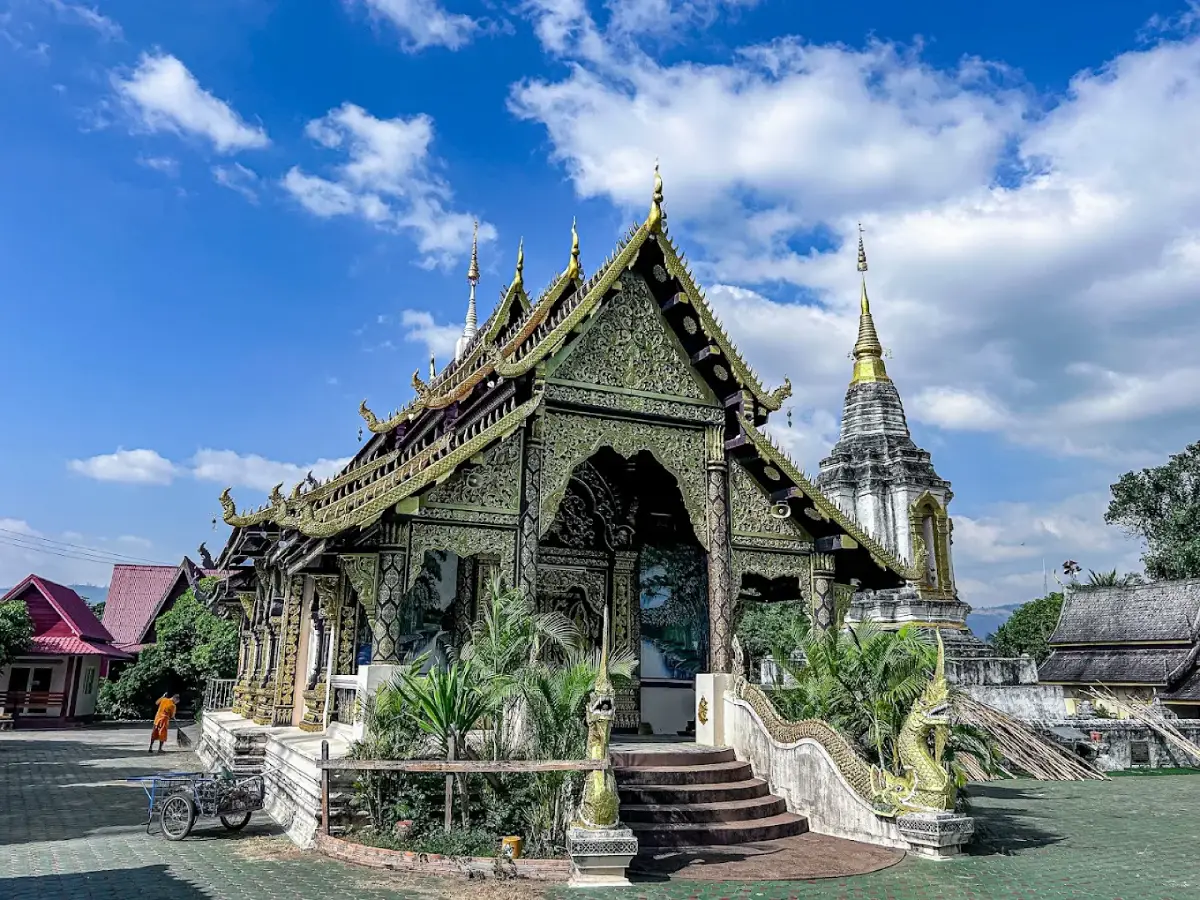
Wat Chang Khoeng, also known as Wat Phra That Chang Khoeng, is located in Moo 4, Chang Khoeng Subdistrict, Mae Chaem District, Chiang Mai Province. It is a local Buddhist temple under the Maha Nikaya tradition and one of the most culturally important temples in Mae Chaem. The temple was officially permitted to be established in B.E. 1970 and received its royal boundary on 21 November B.E. 2532. The abbot is Phra Khru Wisut Panyakun Athipanyo.
The significance of Wat Chang Khoeng lies in its role as a historic religious center of Mae Chaem. Local cultural information records that the temple was once called Wat Luang Chang Khoeng and was locally known as Wat Luang because it stood at the symbolic center, or navel, of the old town. This makes the temple more than a village temple; it is a key spiritual and cultural landmark in the Mae Chaem landscape.
The name “Chang Khoeng” is connected with the word “khoeng,” meaning half or middle. According to local legend, when the Buddha traveled through the Mae Chaem basin, he encountered two lion siblings fighting over territory. He used his staff to draw a boundary line between them. That line later became the stream known as Huai Chang Khoeng, representing the middle point of the land. This legend gives the temple’s name a strong symbolic meaning related to balance, boundary, and peaceful settlement.
Another important legend tells of the Buddha giving sacred hair relics to two merchants to enshrine in a stupa. Phra That Chang Khoeng is believed in local tradition to be connected with these hair relics. The story also mentions items used to receive the relics, including a carrying pole, a vessel, a bamboo casket, and white cloth. These were later associated with subsidiary stupas in the four directions of the town, such as Doi Ku, Doi Ku Tai, Doi Huak, and Doi Sakan. The temple therefore stands at the center of a wider sacred landscape.
Phra That Chang Khoeng is the heart of the temple and one of the most important objects of devotion for Mae Chaem residents. The stupa is associated with the Buddha’s hair relics and has long been a focus of worship, ritual, and community identity. For visitors, paying respect at the stupa is the most meaningful part of a visit to the temple.
The temple also has other important areas connected with local legend, including Bo Nam Thip, the sacred well, a pond, and the vihara of Phra Maha Kaccayana. Local tradition describes the well and pond as places associated with the Buddha and Phra Maha Kaccayana. These features make the temple a layered sacred site, not only a place with a stupa but also a place with multiple points of religious memory.
The pond at Wat Chang Khoeng also has a continuing ritual meaning. Local tradition says villagers often release fish used in life-prolonging ceremonies into the pond because they do not want anyone to catch and eat them. This detail shows how the temple remains connected with Lanna ritual practice and local ideas of merit, compassion, and auspicious life.
Wat Chang Khoeng is also important for its inscription evidence. The wooden inscription of Wat Phra That Chang Khoeng is connected with donation, merit-making, the making of ceremonial umbrellas, and the construction of a vihara. Such evidence gives the temple historical value beyond oral legend, showing how people in the past supported religious construction and Buddhist merit-making.
The temple remains central to several annual traditions. Important events include the bathing of the stupa on 16 April, the Hok Peng full-moon festival of the northern sixth lunar month, the offering of khua tan, festive processions, and the Tan Kuai Salak merit-making tradition on Sip Song Peng, the full moon of the northern twelfth lunar month. These events show that Wat Chang Khoeng is still a ritual center for Mae Chaem people.
The bathing of the stupa is especially meaningful because it allows the community to express respect for Phra That Chang Khoeng and renew merit at the beginning of the northern Thai New Year period. The use of water in this ritual reflects purification, auspiciousness, and devotion to the sacred relic tradition.
The Hok Peng festival and the offering of khua tan show the strength of local Lanna practice. Villagers prepare offerings, join processions, and gather at the temple in a festive atmosphere. These activities turn the temple into a living community space where faith, art, music, procession, and merit-making come together.
The Tan Kuai Salak tradition at Sip Song Peng is another important event. In this Lanna merit-making tradition, villagers prepare offering baskets and dedicate merit through a ritual lottery system. The tradition is connected with generosity, remembrance, and community participation. Wat Chang Khoeng remains one of the important places where such practices can be understood in their local context.
From a cultural perspective, Wat Chang Khoeng should be visited slowly. The temple includes Phra That Chang Khoeng, the sacred well, the pond, the vihara of Phra Maha Kaccayana, the inscription tradition, and spaces used for annual festivals. These elements should be seen together as a religious landscape connected with the history of Mae Chaem.
Chang Khoeng Subdistrict has both lowland and mountainous landscapes, with the Mae Chaem River as a main waterway. Local livelihoods are strongly connected with agriculture, including rice fields and other crops. This local agricultural context is important because temple festivals and Buddhist observances are closely tied to the rhythms of village life.
Wat Chang Khoeng is suitable for travelers who want to understand Mae Chaem beyond rice terraces and scenic viewpoints. Mae Chaem is not only a destination for rural landscapes; it is also a district with old temples, inscriptions, legends, sacred relic traditions, and living community rituals. Wat Chang Khoeng brings these elements together in one site.
Getting to Wat Chang Khoeng is most convenient by private car or rental car. Travelers can enter Mae Chaem District and continue toward Chang Khoeng Subdistrict, Moo 4. Roads in Mae Chaem may include curves, village roads, and agricultural areas, so careful driving is recommended, especially during the rainy season or early morning when mist and wet road surfaces may occur.
Wat Chang Khoeng can be combined with other temples in Mae Chaem, including Wat Ku, Wat Phuttha En, Wat Kong Kan, Wat Yang Luang, and Wat Pa Daet. This route is suitable for travelers who want to explore the religious and cultural landscape of Mae Chaem, from central historic temples to quiet village temples with local stories.
Travelers who want to combine culture and nature can also connect Wat Chang Khoeng with Mae Chaem rice-field scenery, Pa Bong Piang, viewpoints, and routes toward Doi Inthanon. A good itinerary may begin with temple visits in the morning and continue to rural landscapes later in the day.
The best time to visit is in the morning or late afternoon, when the weather is more comfortable and the temple atmosphere is usually calm. Visitors interested in local traditions should consider visiting around the stupa-bathing ceremony on 16 April, the Hok Peng festival, or the Tan Kuai Salak season, while respecting local worshippers and community rituals.
Visitors should dress modestly, speak respectfully, and observe proper temple manners. Shoes should be removed where required. If monks, villagers, or festival participants are using the temple, visitors should give them space. Wat Chang Khoeng is a living religious site, not merely a sightseeing location.
Meals and accommodation are best planned around Mae Chaem town, Chang Khoeng, and Tha Pha areas, where there are more restaurant and lodging choices. Visitors can stop at Wat Chang Khoeng for worship and cultural exploration, then continue to nearby temples, restaurants, homestays, rice-field viewpoints, or routes toward Doi Inthanon.
In summary, Wat Chang Khoeng or Wat Phra That Chang Khoeng is a Maha Nikaya community temple in Moo 4, Chang Khoeng Subdistrict, Mae Chaem District, Chiang Mai Province. It was established in B.E. 1970 and received its royal boundary on 21 November B.E. 2532. Its key value lies in Phra That Chang Khoeng, the sacred hair-relic legend, the former name Wat Luang Chang Khoeng, Bo Nam Thip, the pond, the vihara of Phra Maha Kaccayana, the wooden inscription, and the annual Lanna traditions that continue to connect the temple with Mae Chaem community life.
| Name | Wat Chang Khoeng / Wat Phra That Chang Khoeng |
| Type | Local Buddhist temple under the Maha Nikaya tradition |
| Location | Moo 4, Chang Khoeng Subdistrict, Mae Chaem District, Chiang Mai Province |
| Address | Moo 4, Chang Khoeng Subdistrict, Mae Chaem District, Chiang Mai 50270 |
| Telephone | 0-5382-8310 |
| Abbot / Caretaker | Phra Khru Wisut Panyakun Athipanyo |
| Highlights | Phra That Chang Khoeng, the sacred hair-relic legend, Bo Nam Thip, the pond, the vihara of Phra Maha Kaccayana, and annual Lanna festivals |
| History | Officially established as a temple in B.E. 1970 and granted a royal boundary on 21 November B.E. 2532 |
| Former Name / Local Name | Formerly known as Wat Luang Chang Khoeng and locally called Wat Luang |
| Name Origin | The name relates to “khoeng,” meaning half or middle, and to the legend of dividing territory in the Mae Chaem basin |
| Key Areas And Sacred Objects | Phra That Chang Khoeng Bo Nam Thip Sacred Well Pond Vihara Of Phra Maha Kaccayana Wat Phra That Chang Khoeng Wooden Inscription Annual Festival Areas |
| Traditions And Rituals | Stupa-Bathing Ceremony On 16 April Hok Peng Festival Khua Tan Offering Tan Kuai Salak On Sip Song Peng Fish Release Connected With Life-Prolonging Ceremonies |
| Distinctive Features | A historic central temple of Mae Chaem with a sacred relic legend, Lanna ritual traditions, inscription evidence, and strong community identity |
| Travel Information | Travel by private car or rental car into Mae Chaem District, then continue toward Chang Khoeng Subdistrict, Moo 4 |
| Current Status | Open for visits and worship |
| Open Days | Daily |
| Opening Hours | 08.00 – 17.00 |
| Nearby Tourist Attractions | 1. Wat Ku, about 1 km 2. Wat Phuttha En, about 4 km 3. Wat Kong Kan, about 5 km 4. Wat Yang Luang, about 8 km 5. Mae Chaem Rice Terraces, about 15 km |
| Nearby Restaurants | 1. Mae Chaem Gate Restaurant, about 2 km 2. Sikon Restaurant, about 2 km 3. Moo Inter Mae Chaem, about 3 km, Tel. 061-354-2369 4. Khuang Na Restaurant, about 5 km 5. Chadaporn Mae Chaem Restaurant, about 2 km |
| Nearby Accommodations | 1. The Say Ba Homestay & Hostel at Mae Chaem, about 2 km 2. Huen Jam Rat, about 2 km 3. Phu Chaem House, about 6 km, Tel. 081-024-6223 4. Kowit Maechaem Farmhouse, about 8 km, Tel. 091-858-4546 5. Hug Khao Homestay Mae Chaem, about 12 km, Tel. 090-261-3805 |
Frequently Asked Questions (FAQ)
Q: Where is Wat Chang Khoeng located?
A: Wat Chang Khoeng is located in Moo 4, Chang Khoeng Subdistrict, Mae Chaem District, Chiang Mai Province.
Q: What are the opening days and hours of Wat Chang Khoeng?
A: Wat Chang Khoeng is open daily from 08.00 to 17.00.
Q: When was Wat Chang Khoeng established?
A: Wat Chang Khoeng was officially permitted to be established as a temple in B.E. 1970.
Q: When did Wat Chang Khoeng receive its royal boundary?
A: Wat Chang Khoeng received its royal boundary on 21 November B.E. 2532.
Q: Why is Wat Chang Khoeng important?
A: Wat Chang Khoeng is an old central temple of Mae Chaem, known for Phra That Chang Khoeng, the sacred hair-relic legend, Bo Nam Thip, the pond, the vihara of Phra Maha Kaccayana, and important annual Lanna traditions.
Q: Why is it called Wat Chang Khoeng?
A: The name relates to “khoeng,” meaning half or middle, and to a local legend about dividing territory in the Mae Chaem basin.
Q: Who is the abbot of Wat Chang Khoeng?
A: The abbot of Wat Chang Khoeng is Phra Khru Wisut Panyakun Athipanyo.
Q: What nearby places can be combined with Wat Chang Khoeng?
A: Travelers can combine the visit with Wat Ku, Wat Phuttha En, Wat Kong Kan, Wat Yang Luang, and Mae Chaem rice-field scenery.
 Category: ●Places of Worship
 Group: ●Temple
Last Update : 1 WeekAgo
 Last Update : 1 WeekAgo
 Click to Access the Navigation Map GPS
Wat Phra That Chang Khoeng Map
Recommend

 Muang Chiang Mai(121)Chom Thong(47)Mae Chaem(25)Chiang Dao(33)Doi Saket(68)Mae Taeng(85)Mae Rim(69)Samoeng(29)Fang(71)Mae Ai(59)Phrao(70)San Pa Tong(103)San Kamphaeng(66)San Sai(73)Hang Dong(73)Hot(32)Doi Tao(22)Omkoi(11)Saraphi(74)Wiang Haeng(15)Chai Prakan(28)Mae Wang(32)Mae On(22)Doi Lo(34)Galyani Vadhana(1)


