
lovethailand home >North Travel Attractions >Chiang Mai Travel Attractions >Phrao >Long Khot > Wat Chetiyabanphot
TL;DR: Wat Chetiyabanphot is located at Ban Thung Daeng, Moo 1, Long Khot Subdistrict, Phrao District, Chiang Mai Province, open Daily, hours 08.00 – 17.00.
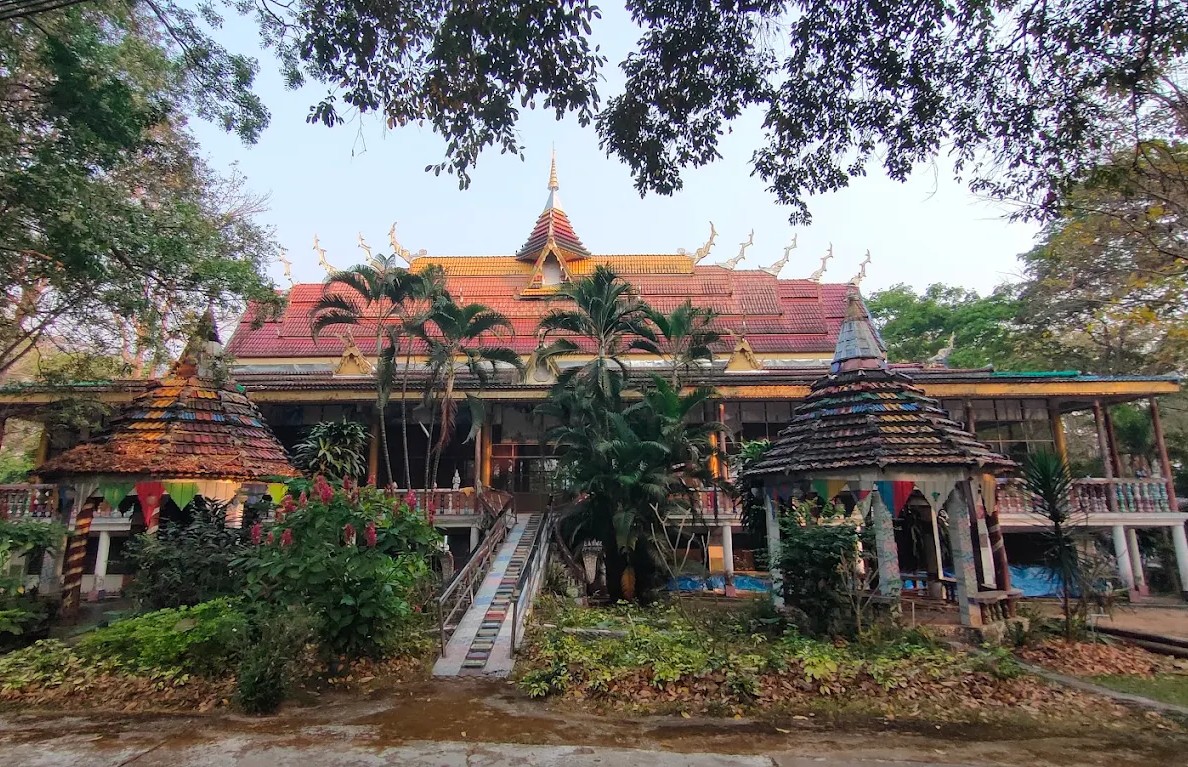
Wat Chetiyabanphot
Open Days: Daily
Opening Hours: 08.00 – 17.00
Wat Chetiyabanphot is a Dhammayut community temple in Ban Thung Daeng, Long Khot Subdistrict, Phrao District, Chiang Mai Province. It is suitable for travelers who want to visit a quiet rural Lanna temple, make merit, and explore the temple route of Long Khot. Key features include a chedi, a metal Buddha image, an ordination hall, a sermon hall, monks’ residences, and a multipurpose pavilion.
Wat Chetiyabanphot is located in Ban Thung Daeng, Moo 1, Long Khot Subdistrict, Phrao District, Chiang Mai Province 50190. It is a local Buddhist temple under the Dhammayut order. The temple was officially permitted to be established in 1985 and received its royal Wisungkhamsima in 1987. Phra Khru Siribunwat Sukkasiri serves as the abbot. The temple reflects the relationship between Buddhism, Ban Thung Daeng community life, and the mountain-and-village landscape of Long Khot Subdistrict.
Long Khot is an important subdistrict in Phrao District, consisting of several villages such as Ban Thung Daeng, Ban Pa Taeng, Ban Na Meng, Ban Mae Bon, Ban Pa Ha, Ban Luang, Ban Mae Sai, Ban Hang Tam, and Ban Mae Sai Na Lao. Wat Chetiyabanphot stands in Ban Thung Daeng, the first village of the subdistrict. Its location gives the temple a clear community role. It supports merit-making, Buddhist observances, local ceremonies, and the continuity of Lanna Buddhist culture in a rural setting.
The name “Chetiyabanphot” carries a meaning that matches the temple’s religious and geographical identity. “Chetiya” is associated with a sacred monument or chedi, while “banphot” means mountain. The name therefore suggests a sacred place connected with a raised or mountainous landscape. This meaning is appropriate for Long Khot, an area known for its natural setting, village communities, agricultural life, and nearby hills.
The temple’s documented history begins with its official establishment in 1985. This period is important because the creation of a local temple often reflects the growth and needs of a community. A village temple allows residents to make merit, listen to Dhamma teachings, organize family ceremonies, and join seasonal Buddhist events without traveling far from home. For Ban Thung Daeng, Wat Chetiyabanphot became a spiritual anchor and a practical religious space for community life.
The temple received its royal Wisungkhamsima in 1987, an important milestone in its religious development. A Wisungkhamsima is connected with the consecrated boundary used for significant monastic acts. Receiving this status strengthened the temple’s formal Buddhist role and showed that the temple had developed beyond a basic community worship area into a more complete religious institution.
Wat Chetiyabanphot belongs to the Dhammayut order. This makes it distinctive in the local religious landscape because many rural temples in northern Thailand belong to the Mahanikaya order. The presence of a Dhammayut temple in Long Khot adds another layer to the Buddhist diversity of Phrao District. Visitors interested in Thai Buddhism can see that local temples in this district are not uniform. They differ in monastic affiliation, community function, setting, and historical background.
Phra Khru Siribunwat Sukkasiri, the abbot of Wat Chetiyabanphot, plays an important role in maintaining the temple’s religious activities and its relationship with the local community. A community temple remains active through the combined support of monks, lay devotees, village leaders, and residents. With an abbot overseeing monastic life, the temple can continue to serve as a place for merit-making, Dhamma listening, and Buddhist ceremonies.
The temple’s important structures include an ordination hall, a sermon hall, monks’ residences, and a multipurpose pavilion. Its important sacred objects include a chedi and a metal Buddha image. These elements make the temple functional as a Buddhist religious site. The ordination hall supports monastic ceremonies, the sermon hall serves community Dhamma and merit-making activities, the monks’ residences support monastic life, and the multipurpose pavilion allows the temple to host community activities.
The chedi is an especially meaningful feature because it corresponds with the word “chetiya” in the temple’s name. Visitors should approach the chedi respectfully and understand it as a sacred object of worship rather than a simple sightseeing feature. The metal Buddha image is another important object for paying respect and making merit. Together, these features give the temple a clear religious identity while preserving the quiet character of a rural Lanna temple.
The atmosphere of Wat Chetiyabanphot is best appreciated by visitors who value calm community temples rather than large tourist sites. The temple is located within the context of Ban Thung Daeng and Long Khot Subdistrict. Its appeal lies in its simplicity, its active community role, and its connection with local Buddhist life. Travelers can experience the slower rhythm of rural Phrao, where temples remain part of everyday life rather than only attractions for visitors.
The temple plays both religious and social roles for Ban Thung Daeng. It is a place for Buddhist holy days, Dhamma listening, family ceremonies, and annual merit-making activities. These events help maintain relationships among villagers, elders, families, and younger generations. In northern Thai communities, a temple is often not only a sacred place but also a social center where people meet, support one another, and keep local customs alive.
In the Lanna cultural context, community temples are closely connected with Buddhist Lent, the end of Buddhist Lent, Kathin robe offerings, forest robe offerings, and regular merit-making days. Public information does not list a specific annual festival unique to Wat Chetiyabanphot, but as a local temple with an ordination hall, sermon hall, and community support, it naturally functions as a place for Buddhist activities according to the religious calendar and local practice.
Visitors should approach Wat Chetiyabanphot as a cultural and community-based destination. Dress modestly, keep voices low, avoid entering monks’ private areas without permission, and do not take close photographs of monks or local residents without asking. Around the ordination hall, sermon hall, chedi, and Buddha image, visitors should maintain a respectful manner. This helps preserve the quiet atmosphere of the temple and shows respect for the community that cares for it.
Getting There is most convenient by private car or rental car. From Chiang Mai city, travel toward Phrao District via the Chiang Mai – Mae Jo – Phrao route, then continue into Long Khot Subdistrict using local roads. The temple is located along Road 1001 in Long Khot. Daytime travel is recommended, especially for visitors who are not familiar with rural roads in Phrao District.
A practical connected route can begin at Wat Chetiyabanphot, then continue to nearby temples such as Wat Thung Daeng, Wat Phra That Doi Wiang Chai Mongkhon, Wat San Na Meng, Wat Si Maha Pho, and Wat Pa Ha. Travelers who want to explore more of Long Khot can also continue toward Ban Luang and nearby community areas. This route gives visitors a wider view of local temples, agricultural life, mountain scenery, and the religious landscape of Phrao District.
Wat Chetiyabanphot is also suitable for travelers interested in Dhammayut temples in Phrao District. The district contains temples of different affiliations and functions, including community temples, forest temples, and temples connected with local faith traditions. By visiting Wat Chetiyabanphot together with other temples in Long Khot and nearby subdistricts, travelers can better understand the diversity of Buddhist practice in rural Chiang Mai.
For visitors planning an overnight trip, Phrao District offers homestays and local accommodations that can serve as a base for exploring Long Khot and nearby areas. Staying overnight allows travelers to visit multiple temples without rushing and to experience the slower pace of the district. Wat Chetiyabanphot can therefore be included in a half-day, full-day, or overnight cultural route depending on the traveler’s schedule.
The best time to visit is in the morning or late afternoon during opening hours, when the weather is more comfortable for walking around the temple grounds. During the rainy season, road and weather conditions should be checked in advance. During the cool season, Phrao District is especially pleasant for temple visits and community-based travel. Visitors should take time for merit-making, paying respect, and understanding the temple’s community context rather than treating it as a quick photo stop.
Overall, Wat Chetiyabanphot is a Dhammayut community temple of Ban Thung Daeng, Long Khot Subdistrict, with value in religion, local history, and cultural travel. It was officially established in 1985, received its royal Wisungkhamsima in 1987, and contains important structures such as an ordination hall, sermon hall, monks’ residences, multipurpose pavilion, chedi, and metal Buddha image. For travelers seeking a quiet rural temple route in Phrao District, Wat Chetiyabanphot is a meaningful stop.
| Name | Wat Chetiyabanphot |
| Location | Ban Thung Daeng, Moo 1, Long Khot Subdistrict, Phrao District, Chiang Mai Province |
| Address | 198 Ban Thung Daeng, Phrao – Chiang Mai Road, Moo 1, Long Khot Subdistrict, Phrao District, Chiang Mai 50190, Thailand |
| Coordinates | 19.1183, 99.16702 |
| Temple Type | Local Buddhist Temple Under The Dhammayut Order |
| Temple Area | 38 Rai |
| History | Officially permitted to be established as a temple in 1985 and received its royal Wisungkhamsima in 1987 |
| Abbot / Caretaker | Phra Khru Siribunwat Sukkasiri |
| Important Sacred Objects | Chedi And Metal Buddha Image |
| Important Structures | Ordination Hall Sermon Hall Monks’ Residences Multipurpose Pavilion |
| Highlights | A quiet Dhammayut community temple in Ban Thung Daeng with a chedi, metal Buddha image, and rural Lanna atmosphere |
| Community Role | A spiritual center for Ban Thung Daeng, used for merit-making, Dhamma listening, and Buddhist activities |
| Related Traditions | Buddhist holy days, Buddhist Lent, the end of Buddhist Lent, Kathin robe offerings, forest robe offerings, and local community merit-making |
| Open Days | Daily |
| Opening Hours | 08.00 – 17.00 |
| Travel Information | Private car or rental car is the most convenient option. From Chiang Mai city, travel toward Phrao District via the Chiang Mai – Mae Jo – Phrao route, then continue into Long Khot Subdistrict. The temple is located along Road 1001. |
| Current Status | Active local Dhammayut temple in Long Khot Subdistrict, Phrao District, Chiang Mai Province |
| Nearby Tourist Attractions | 1. Wat Thung Daeng, about 1 km 2. Wat Phra That Doi Wiang Chai Mongkhon, about 4 km 3. Wat San Na Meng, about 5 km 4. Wat Si Maha Pho, about 6 km 5. Wat Pa Ha, about 8 km 6. Ban Luang And Long Khot Community Area, about 12 km |
| Nearby Restaurants | 1. Kerb Krun At Phrao Cafe, about 7 km 2. Chuu Cafe, about 16 km, Tel. 088-261-3150 3. Khun Muen Boat Noodles, about 17 km, Tel. 088-138-8457 4. Kummoon Cafe, about 18 km, Tel. 095-683-9698 5. Laab 11 Phrao, about 20 km, Tel. 095-791-1952 6. Phrao Proud Restaurant, about 21 km, Tel. 095-675-6509 |
| Nearby Accommodations | 1. Konkubdin Homestay, about 12 km, Tel. 087-183-2992 2. Siam Lanna Homestay, about 18 km, Tel. 099-269-5415 3. Phrao Place & Market, about 20 km, Tel. 086-301-3004 4. Mon Saeng Jun Homestay, about 30 km, Tel. 095-446-0556 5. Hong Cha Hug Mee, about 32 km, Tel. 081-669-6653 |
Frequently Asked Questions (FAQ)
Q: Where is Wat Chetiyabanphot located?
A: Wat Chetiyabanphot is located in Ban Thung Daeng, Moo 1, Long Khot Subdistrict, Phrao District, Chiang Mai Province 50190.
Q: What are the open days and opening hours?
A: Wat Chetiyabanphot is open daily from 08.00 to 17.00.
Q: What type of temple is Wat Chetiyabanphot?
A: It is a local Buddhist temple under the Dhammayut order.
Q: Why is Wat Chetiyabanphot historically important?
A: The temple was officially established in 1985 and received its royal Wisungkhamsima in 1987.
Q: Who is the abbot of Wat Chetiyabanphot?
A: The abbot is Phra Khru Siribunwat Sukkasiri.
Q: What important structures and sacred objects are found in the temple?
A: The temple has an ordination hall, sermon hall, monks’ residences, multipurpose pavilion, chedi, and metal Buddha image.
Q: What kind of travelers is Wat Chetiyabanphot suitable for?
A: It is suitable for visitors who want to make merit, visit a quiet rural Lanna temple, and explore the local temple route of Long Khot and Phrao District.
Q: What nearby places can be visited with Wat Chetiyabanphot?
A: Nearby places include Wat Thung Daeng, Wat Phra That Doi Wiang Chai Mongkhon, Wat San Na Meng, Wat Si Maha Pho, Wat Pa Ha, and Ban Luang in Long Khot.
 Category: ●Places of Worship
 Group: ●Temple
Last Update : 1 WeekAgo
 Last Update : 1 WeekAgo
 Click to Access the Navigation Map GPS
 Muang Chiang Mai(121)Chom Thong(47)Mae Chaem(25)Chiang Dao(33)Doi Saket(68)Mae Taeng(85)Mae Rim(69)Samoeng(29)Fang(71)Mae Ai(59)Phrao(70)San Pa Tong(103)San Kamphaeng(66)San Sai(73)Hang Dong(73)Hot(32)Doi Tao(22)Omkoi(11)Saraphi(74)Wiang Haeng(15)Chai Prakan(28)Mae Wang(32)Mae On(22)Doi Lo(33)Galyani Vadhana(1)


