
lovethailand home >North Travel Attractions >Chiang Mai Travel Attractions >Phrao >San Sai > Wat Tha Ma Kiang
TL;DR: Wat Tha Ma Kiang is located at Ban Tha Ma Kiang, Moo 4, San Sai Subdistrict, Phrao District, Chiang Mai Province, open Daily, hours 08.00 – 17.00.

Wat Tha Ma Kiang
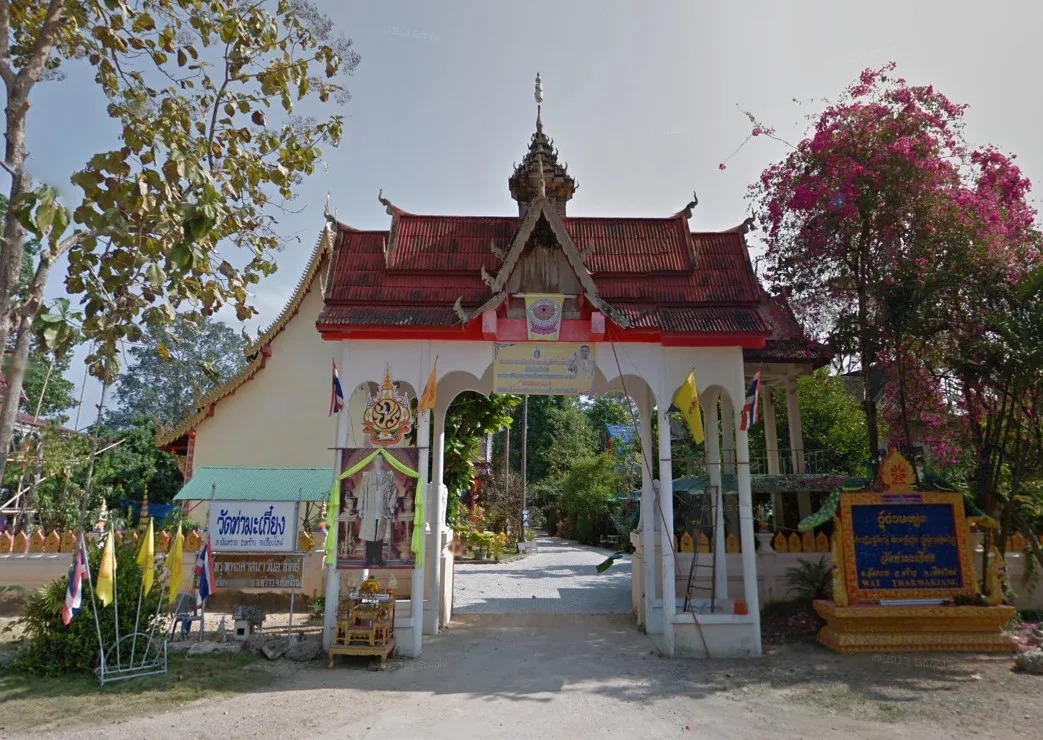
Open Days: Daily
Opening Hours: 08.00 – 17.00
Wat Tha Ma Kiang is a local non-royal Buddhist temple under the Mahanikaya order, located in Moo 4, Ban Tha Ma Kiang, San Sai Subdistrict, Phrao District, Chiang Mai Province. The temple was officially permitted to be established in 1852 and received its Wisungkhamsima in 1933. Its abbot is Phra Athikan Charoen Suphattho. Wat Tha Ma Kiang is an old community temple of San Sai Subdistrict and serves as a spiritual center for Ban Tha Ma Kiang, a village closely connected with the Mae Kon waterway, local farmland, village roads, schools, and Lanna Buddhist traditions.
Ban Tha Ma Kiang is Moo 4 of San Sai Subdistrict, Phrao District, Chiang Mai Province. The village name is connected with local geography and a native tree. The word “tha” refers to a landing or a path down to a water point, while “ma kiang” refers to a local softwood tree related to the Java plum family, whose ripe fruit has a sweet and sour taste. The name therefore reflects a landscape linked with the Mae Kon waterway, local vegetation, water access, and the agricultural setting of the village.
San Sai Subdistrict in Phrao District is a rural Lanna area with villages connected by local roads, waterways, farmland, schools, temples, and community spaces. Wat Tha Ma Kiang stands within this living landscape. It is not only a place for Buddhist ceremonies, but also a community center where villagers make merit, listen to Dhamma, join annual merit events, and maintain the relationship between home, water, land, and faith.
The establishment year of 1852 gives Wat Tha Ma Kiang more than 170 years of history. A village temple of this age reflects the long-term stability of the community, the faith of local residents, the presence of monks, and the cooperation of villagers who maintained a Buddhist center close to their homes. Wat Tha Ma Kiang is therefore important as both a religious site and a historical landmark of Ban Tha Ma Kiang.
The temple received its Wisungkhamsima in 1933. Wisungkhamsima is the consecrated boundary used for important monastic acts under Buddhist discipline. This status confirms the temple’s religious completeness and its ability to serve the Sangha and the local community. When considered together with the establishment year of 1852, Wat Tha Ma Kiang shows both historical depth and continued religious development.
Phra Athikan Charoen Suphattho is the abbot of Wat Tha Ma Kiang. In a community temple, the abbot plays an important role in caring for the temple grounds, guiding Buddhist activities, maintaining religious order, and sustaining the relationship between monks and villagers. A temple such as Wat Tha Ma Kiang depends on cooperation among monks, temple committee members, village leaders, elders, schools, and local devotees.
Wat Tha Ma Kiang plays several roles in the community. Spiritually, it is a place for worship, merit-making, offerings, Dhamma listening, Buddhist holy days, and ceremonies. Socially, it is a shared space for Ban Tha Ma Kiang residents. Culturally, it helps preserve Lanna Buddhist traditions and annual merit-making activities. Emotionally, it gives villagers a place to turn to during important moments of family and community life.
The atmosphere of Wat Tha Ma Kiang is quiet, modest, and closely connected with local village life. The main experience for visitors is merit-making, worship, Dhamma listening, and observing the role of a community temple within a living rural settlement. The temple is most meaningful when seen together with Ban Tha Ma Kiang, local houses, village roads, schools, farmland, and the Mae Kon waterway.
Wat Tha Ma Kiang also supports learning and moral development in the community. The temple has been used as a venue for children’s moral and ethical training activities organized by local educational institutions under San Sai Subdistrict Administrative Organization. This role shows that the temple continues to serve not only adult merit-making, but also the moral education of children and young people in the community.
This educational role gives Wat Tha Ma Kiang strong contemporary relevance. The temple is not only visited on Buddhist holy days or during major ceremonies; it also serves as a learning environment where children can develop awareness, social responsibility, gratitude, discipline, and basic moral values. This makes the temple part of a wider network connecting families, schools, local administration, and Buddhist practice.
Kathin, Pha Pa, Buddhist holy days, Buddhist Lent, end-of-Lent activities, ancestor-related merit-making, and local Lanna merit activities keep Wat Tha Ma Kiang active within the annual rhythm of the village. These activities allow residents to support monks, maintain the temple, prepare offerings, gather as families, and strengthen community relationships. The temple therefore functions as a meeting point of religion, tradition, kinship, and local unity.
The name Tha Ma Kiang also helps visitors understand the relationship between the temple and its local landscape. “Tha” suggests a water landing or access to a stream, while “ma kiang” points to a native tree once associated with the area. Because the temple shares the village name, it preserves local place memory through everyday religious practice and community identity.
San Sai Subdistrict includes several nearby villages and routes, including Ban San Pong, Ban Tha Ma Kiang Nuea, Ban Huai San, Ban Nong Pit, and Ban San Sai. Local roads connect these communities, making Wat Tha Ma Kiang a useful stop on a San Sai community-temple route. A visit to the temple gives travelers a view of how temples, houses, schools, roads, waterways, and farmland function together in rural Phrao.
The distinctive value of Wat Tha Ma Kiang lies in its old establishment year, its Wisungkhamsima, its link with the Mae Kon waterway and native Ma Kiang tree, and its continuing role as a place of worship and moral learning for the community. The temple is not a large-scale tourist attraction, but its value lies in authenticity, continuity, and community use.
Important points to appreciate at Wat Tha Ma Kiang include the worship area, temple courtyard, merit-making area, ceremonial spaces, and the quiet atmosphere of a village temple. Visitors should move respectfully, dress modestly, and give priority to local worshippers if a ceremony is taking place. The temple is best appreciated as part of Ban Tha Ma Kiang rather than as a quick standalone sightseeing stop.
Wat Tha Ma Kiang is suitable for travelers interested in local Lanna temples, old temples in Phrao, Ban Tha Ma Kiang history, San Sai Subdistrict community life, and quiet Buddhist cultural travel. Visitors who want to understand Phrao through local villages rather than only through major attractions will find this temple especially meaningful.
A meaningful route from Wat Tha Ma Kiang can begin with worship and merit-making at the temple, then continue to nearby temples and cultural places in San Sai and Phrao town, such as Wat San Sai, Wat Nong Pit, Wat Klang Wiang, Wat Kham Sum, Wat Pa Siao, Wat Mae Koi, Wat Nong O, and Wat Thung Luang. Travelers who want to extend the route toward Mae Pang Subdistrict can continue to Wat Doi Mae Pang, Wat Phra That Doi Namo, Wat Mae Pang, and Mon Hin Lai Waterfall.
For travelers interested in both nature and Buddhist culture, Wat Tha Ma Kiang can be combined with Mon Hin Lai Waterfall, Mae Saluam Reservoir, Wat Doi Mae Pang, or Wat Phra That Doi Namo in a full-day itinerary. Such a route shows Phrao through community temples, hill temples, relic sites, natural scenery, waterways, and agricultural landscapes.
Getting There is easiest by private car, rental car, or local hired transport. From Chiang Mai city, travel along the Chiang Mai–Mae Jo–Phrao route toward Phrao District, then continue into San Sai Subdistrict and Ban Tha Ma Kiang, Moo 4. In a map application, search for “Wat Tha Ma Kiang, San Sai, Phrao” to avoid confusion with similarly named places elsewhere. A private vehicle is the most practical way to connect the temple with nearby temples, restaurants, accommodations, and natural sites.
The best time to visit is in the morning or late afternoon, when the weather is more comfortable and the temple atmosphere is calm. Travelers interested in local merit-making can follow major Buddhist periods such as Kathin, Pha Pa, Buddhist Lent, the end of Lent, or Buddhist holy days. For general travel, Wat Tha Ma Kiang can be included in a half-day San Sai and Phrao town temple route, or in a full-day route that continues toward Mae Pang and natural attractions.
Visitors should dress modestly, speak quietly, respect monks and local worshippers, and avoid entering private monastic areas without permission. If a ceremony, merit-making activity, or community event is taking place, local participants should be given priority. Around worship and ceremonial areas, photography should be done respectfully because Wat Tha Ma Kiang remains an active religious place used by the local community.
Overall, Wat Tha Ma Kiang is an old community temple of San Sai Subdistrict, Phrao District, Chiang Mai Province. It preserves an establishment year of 1852, a Wisungkhamsima granted in 1933, and the leadership of Phra Athikan Charoen Suphattho. Its value lies in the way it brings together local faith, the Mae Kon waterway, the native Ma Kiang tree, village memory, agricultural life, moral education, and the living Buddhist culture of northern Thailand.
| Name | Wat Tha Ma Kiang |
| Location | Ban Tha Ma Kiang, Moo 4, San Sai Subdistrict, Phrao District, Chiang Mai Province |
| Temple Type | Local Non-Royal Buddhist Temple Under The Mahanikaya Order |
| History | Officially established as a temple in 1852; an old community temple of Ban Tha Ma Kiang and San Sai Subdistrict, Phrao District |
| Wisungkhamsima | Granted in 1933 |
| Community Name Meaning | The village name is connected with a path down to the Mae Kon water landing and the Ma Kiang tree, a native softwood tree related to the Java plum family with sweet and sour ripe fruit |
| Importance | Spiritual center of Ban Tha Ma Kiang, used for worship, merit-making, Buddhist ceremonies, and moral education activities in San Sai Subdistrict |
| Highlights | Merit-making, worship, learning about an old community temple connected with the Mae Kon waterway, the Tha Ma Kiang village name, and Lanna Buddhist village life |
| Distinctive Features | More than 170 years of temple history, connected with village life, schools, farmland, local roads, and youth moral education activities |
| Main Areas / Zones | Worship area, temple courtyard, merit-making area, ceremonial area, and monastic residential area |
| Community Role | Used for merit-making, Dhamma listening, Buddhist ceremonies, annual merit events, moral training for children and youth, and community gathering |
| Important Activities / Ceremonies | Kathin, Pha Pa, Buddhist holy day merit-making, Buddhist Lent, end-of-Lent activities, ancestor-related merit-making, and local Lanna merit-making |
| Abbot / Caretaker | Phra Athikan Charoen Suphattho |
| Open Days | Daily |
| Opening Hours | 08.00 – 17.00 |
| Travel Information | Best reached by private car, rental car, or local hired transport from Chiang Mai along the Chiang Mai–Mae Jo–Phrao route, then into San Sai Subdistrict and Ban Tha Ma Kiang, Moo 4 |
| Current Status | Active community temple in Ban Tha Ma Kiang, San Sai Subdistrict, Phrao District, Chiang Mai Province |
| Nearby Tourist Attractions | 1. Wat San Sai, about 4–7 km 2. Wat Nong Pit, about 5–8 km 3. Wat Klang Wiang, about 8–12 km 4. Wat Kham Sum, about 9–13 km 5. Wat Pa Siao, about 10–14 km 6. Wat Nong O, about 10–15 km 7. Wat Doi Mae Pang, about 20–28 km 8. Mon Hin Lai Waterfall, about 30–40 km |
| Nearby Restaurants | 1. Nong Prince Chicken Rice, about 8–12 km, Tel. 094-559-0182 2. 135 Cafe, about 10–15 km, Tel. 083-549-6399 3. Krua Jae Kee Wild Food And River Fish, about 10–15 km, Tel. 084-488-8560 4. Shong Cha Café, Mae Pang Branch, about 22–28 km, Tel. 080-258-2854 5. Tiao Kwai Nan Daeng, about 24–30 km, Tel. 065-983-5978 |
| Nearby Accommodations | 1. PK Hotel / PK Hostel, about 8–12 km, Tel. 088-992-2444 2. Phrao Boutique Hotel, about 8–12 km 3. Phrao Place, about 8–12 km 4. Khoom Kam Kaew, about 15–20 km 5. Siam Lanna Homestay, about 15–22 km 6. Mae Pang Camping, about 25–32 km |
Frequently Asked Questions (FAQ)
Q: Where is Wat Tha Ma Kiang located?
A: Wat Tha Ma Kiang is located in Moo 4, Ban Tha Ma Kiang, San Sai Subdistrict, Phrao District, Chiang Mai Province.
Q: What is the history of Wat Tha Ma Kiang?
A: Wat Tha Ma Kiang is a local non-royal Buddhist temple under the Mahanikaya order. It was officially established as a temple in 1852 and received Wisungkhamsima in 1933.
Q: Who is the abbot of Wat Tha Ma Kiang?
A: The abbot of Wat Tha Ma Kiang is Phra Athikan Charoen Suphattho.
Q: What does the name Tha Ma Kiang mean?
A: The name is connected with a path down to the Mae Kon water landing and the Ma Kiang tree, a native tree related to the Java plum family whose ripe fruit has a sweet and sour taste.
Q: What are the opening days and hours of Wat Tha Ma Kiang?
A: Wat Tha Ma Kiang is open daily from 08.00 to 17.00.
Q: What kind of travelers is Wat Tha Ma Kiang suitable for?
A: It is suitable for travelers interested in local Lanna temples, old temples in Phrao, Ban Tha Ma Kiang history, San Sai Subdistrict community life, and quiet Buddhist cultural travel.
Q: How can travelers get to Wat Tha Ma Kiang?
A: The temple is best reached by private car, rental car, or local hired transport from Chiang Mai toward Phrao District, then into San Sai Subdistrict and Ban Tha Ma Kiang, Moo 4.
Q: What nearby places can be visited with Wat Tha Ma Kiang?
A: Nearby places include Wat San Sai, Wat Nong Pit, Wat Klang Wiang, Wat Kham Sum, Wat Pa Siao, Wat Nong O, Wat Doi Mae Pang, and Mon Hin Lai Waterfall.
 Category: ●Places of Worship
 Group: ●Temple
Last Update : 1 WeekAgo
 Last Update : 1 WeekAgo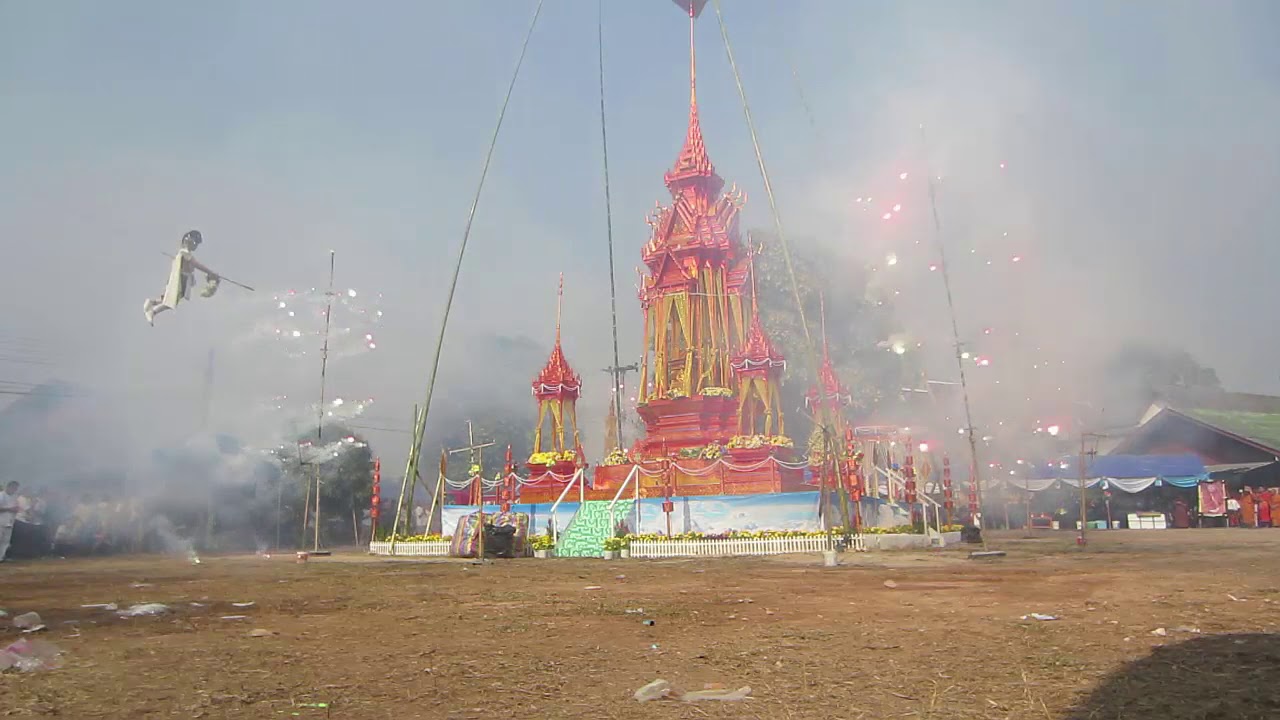
 Click to Access the Navigation Map GPS
Wat Tha Ma Kiang Map
Recommend

 Muang Chiang Mai(121)Chom Thong(47)Mae Chaem(25)Chiang Dao(33)Doi Saket(68)Mae Taeng(85)Mae Rim(69)Samoeng(29)Fang(71)Mae Ai(59)Phrao(70)San Pa Tong(103)San Kamphaeng(66)San Sai(73)Hang Dong(73)Hot(32)Doi Tao(22)Omkoi(11)Saraphi(74)Wiang Haeng(15)Chai Prakan(28)Mae Wang(32)Mae On(22)Doi Lo(34)Galyani Vadhana(1)


