
lovethailand home >North Travel Attractions >Chiang Mai Travel Attractions >Phrao >Mae Pang > Wat Thung Buak Khao
TL;DR: Wat Thung Buak Khao is located at Ban Thung Buak Khao, Moo 6, Mae Pang Subdistrict, Phrao District, Chiang Mai Province.
Wat Thung Buak Khao
Operating day: Daily
Operating time: 08.00 - 17.00
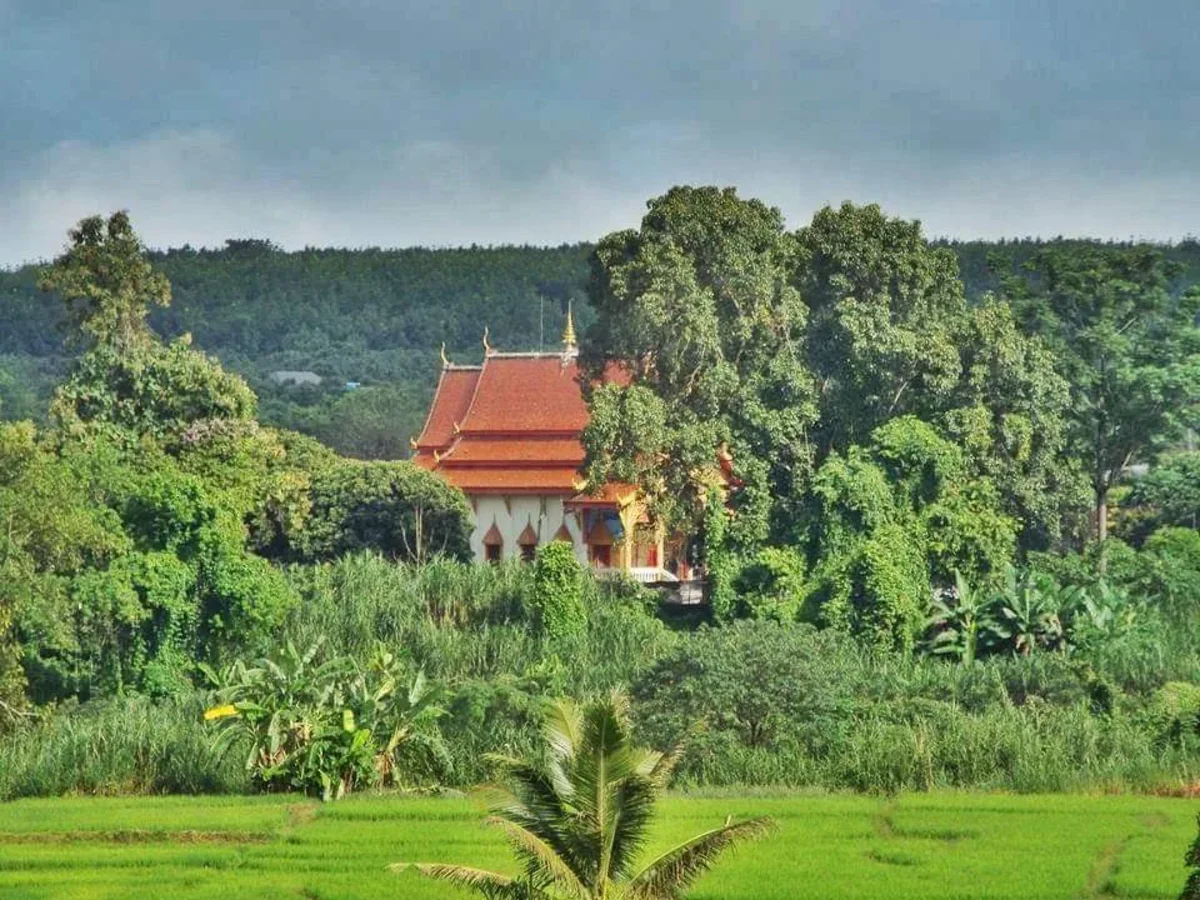
Wat Thung Buak Khao is a local non-royal Buddhist temple under the Mahanikaya order, located in Moo 6, Ban Thung Buak Khao, Mae Pang Subdistrict, Phrao District, Chiang Mai Province. The temple was officially permitted to be established in 1839 and received its Wisungkhamsima in 1976. Its abbot is Phra Athikan Prasert Chanthammo. Wat Thung Buak Khao is an old community temple of Ban Thung Buak Khao, serving as a spiritual center for local merit-making, Dhamma listening, Buddhist ceremonies, and village religious life.
Ban Thung Buak Khao is Moo 6 of Mae Pang Subdistrict in Phrao District. The area belongs to the rural Lanna landscape of northern Thailand, shaped by villages, farmland, local roads, waterways, lowland fields, and surrounding hills. The name Thung Buak Khao evokes a landscape connected with rice fields and water. In northern Thai usage, the word thung suggests open fields, while khao refers to rice. The temple name therefore reflects the agricultural identity of the community it serves.
Mae Pang Subdistrict is located to the south of Phrao District center, with a landscape of plains, hills, and waterways. Ban Thung Buak Khao appears as one of the villages in the subdistrict’s basic local information. Wat Thung Buak Khao is therefore not only a temple name in a database; it is part of an active village community with homes, residents, roads, and public development projects that continue to support daily life in the area.
The establishment year of 1839 makes Wat Thung Buak Khao one of the older community temples in Phrao District. A temple with such a long history has meaning beyond present-day buildings. It has served generations of villagers, from early community settlers and temple supporters to later generations who continued Buddhist ceremonies, temple maintenance, Kathin, Pha Pa, Buddhist Lent activities, and local merit-making. The temple is therefore a living record of village faith and community continuity.
In the Lanna context, a community temple founded in the 19th century usually developed from the needs of villagers who required a local place for worship, merit-making, ordination, funeral rites, Buddhist holy days, and annual ceremonies. Wat Thung Buak Khao reflects this pattern. It grew from a village community that needed a sacred center close to home, where monks, village leaders, elders, and devotees could work together to sustain Buddhist life.
The temple received its Wisungkhamsima in 1976. Wisungkhamsima is the consecrated boundary used for important monastic acts under Buddhist discipline. This status confirms the temple’s religious readiness and its ability to support important Buddhist functions of the Sangha and the local community. When seen together with its establishment year of 1839, Wat Thung Buak Khao shows both deep village roots and formal religious development.
Phra Athikan Prasert Chanthammo is the abbot of Wat Thung Buak Khao. In a community temple, the abbot plays an important role in caring for the temple grounds, guiding Buddhist activities, maintaining monastic order, and sustaining the relationship between monks and villagers. A temple with a long history depends on cooperation among monks, the temple committee, community leaders, elders, and local devotees.
Publicly available information about the specific structures inside Wat Thung Buak Khao is limited. For that reason, this article does not add unsupported details about a particular ubosot, viharn, chedi, bell tower, sermon hall, or principal Buddha image. As a recognized community temple that has received Wisungkhamsima, Wat Thung Buak Khao has religious areas for worship, merit-making, ceremonies, and monastic residence. Visitors should approach it as a living village temple rather than as a large-scale tourist attraction.
The distinctive value of Wat Thung Buak Khao lies in its character as an old village temple of Mae Pang Subdistrict. Its name is closely connected with rice fields, water, and the agricultural landscape of Ban Thung Buak Khao. The temple is suitable for travelers who want to understand Phrao beyond major attractions. It offers a quiet view of how Buddhism continues to support rural community life in northern Thailand.
Wat Thung Buak Khao can also be connected with important religious routes in Mae Pang Subdistrict, especially Wat Doi Mae Pang and Wat Phra That Doi Namo. These nearby sacred places are associated with hill temples, relic worship, forest practice, and the Buddhist landscape of Mae Pang. Wat Thung Buak Khao represents the village-temple layer of this route, while the surrounding temples and hill sites add broader religious and cultural depth.
The temple plays several roles in the community. Spiritually, it is where villagers make merit, offer food to monks, listen to Dhamma, observe Buddhist holy days, and join ceremonies. Socially, it is a shared space for Ban Thung Buak Khao residents. Culturally, it helps preserve Lanna Buddhist traditions such as Buddhist Lent, the end of Lent, Kathin, Pha Pa, ancestor-related merit-making, and seasonal village ceremonies.
Kathin and Pha Pa are important forms of community support for the temple. Buddhist Lent and the end of Lent give villagers opportunities to gather at the temple. Buddhist holy days allow local people to practice generosity, listen to Dhamma, and preserve moral discipline. In a village whose name is associated with fields and rice, local merit-making is also naturally linked with agricultural seasons, gratitude, abundance, and the memory of ancestors.
Ban Thung Buak Khao remains active in current local development. Local municipal information refers to road improvement projects connecting Ban Mae Pang and Ban Thung Buak Khao, as well as reinforced concrete road work in Ban Thung Buak Khao, Moo 6. These projects show that the village continues to be inhabited, used, and improved. Wat Thung Buak Khao therefore remains part of a living settlement, not a forgotten historical name.
The village is also connected with water-related infrastructure and monitoring in the Mae Ngat basin area. This context helps explain how local settlement, agriculture, roads, waterways, and temple life are connected in Mae Pang. Wat Thung Buak Khao stands within this wider system of village life, where religion, water, rice fields, local roads, and community development support one another.
Important points to see and respect at Wat Thung Buak Khao include the worship area, temple courtyard, merit-making area, ceremonial space, and the quiet village-temple atmosphere. This type of temple may not have extensive signage or large tourist facilities, but its value lies in authenticity. It is a place used by villagers for real religious practice and community continuity.
Wat Thung Buak Khao is suitable for travelers interested in local Lanna temples, old village temples, the cultural landscape of Phrao, and quiet Buddhist routes in Mae Pang Subdistrict. Visitors should dress modestly, speak quietly, respect monks and local worshippers, and avoid entering private monastic areas without permission. If a ceremony or merit-making activity is taking place, local participants should be given priority.
A meaningful route from Wat Thung Buak Khao can include Wat Phra That Doi Namo, Wat Doi Mae Pang, Wat Ban Kham Sum Wiang, Wat Ton Chan, Wat San Kamphaeng in Mae Pang Subdistrict, Wat Huai Ngu, and Wat Mae Pang. Travelers who want to continue toward Phrao town can also visit Wat Klang Wiang and other cultural sites in the district center. This route shows the diversity of Phrao’s religious landscape, from village temples to hill temples and sacred relic sites.
For travelers interested in forest-practice and hill-temple contexts, Wat Thung Buak Khao can be combined with Wat Doi Mae Pang and Wat Phra That Doi Namo. Wat Doi Mae Pang is associated with the memory of Luang Pu Waen Sujinno, while Wat Phra That Doi Namo is connected with a hilltop sacred landscape in the Ban Thung Buak Khao area. This combination gives the route depth, linking community Buddhism, forest practice, relic worship, and local village life.
Getting There is easiest by private car, rental car, or local hired transport. From Chiang Mai city, travel toward Phrao District, then continue into Mae Pang Subdistrict and Ban Thung Buak Khao, Moo 6. Before departure, search for “Wat Thung Buak Khao, Mae Pang, Phrao” or “Ban Thung Buak Khao, Mae Pang” in a map application. A private vehicle is the most practical option for connecting the temple with Wat Doi Mae Pang, Wat Phra That Doi Namo, nearby restaurants, and accommodations in Phrao.
The best time to visit is in the morning or late afternoon, when the weather is more comfortable and the temple atmosphere is calm. Travelers planning to explore Mae Pang Subdistrict should allow a half-day or full-day route. The late rainy season and cool season are especially suitable for cultural travel in Phrao because the rural landscape, hills, and village roads are more pleasant for slow exploration.
Visitors should prepare for a rural community temple visit. Dress modestly, speak quietly, do not disturb monks or local worshippers, and ask permission before entering private temple areas or photographing religious spaces during ceremonies. During the rainy season, road conditions should be checked in advance because Mae Pang includes village roads, agricultural areas, and water-related landscapes. Planning enough time will make the visit smoother and more respectful.
Overall, Wat Thung Buak Khao is a valuable old community temple in Mae Pang Subdistrict. It preserves an establishment year of 1839, a Wisungkhamsima granted in 1976, and an ongoing role as the spiritual center of Ban Thung Buak Khao. Its importance lies not in mass tourism, but in its connection with rice fields, waterways, village roads, Lanna Buddhist traditions, and the wider sacred landscape of Mae Pang and Phrao District.
| Name | Wat Thung Buak Khao |
| Location | Ban Thung Buak Khao, Moo 6, Mae Pang Subdistrict, Phrao District, Chiang Mai Province |
| Address | Moo 6, Ban Thung Buak Khao, Mae Pang Subdistrict, Phrao District, Chiang Mai 50190, Thailand |
| Temple Type | Local Non-Royal Buddhist Temple Under The Mahanikaya Order |
| History | Officially established as a temple in 1839 and granted Wisungkhamsima in 1976 |
| Importance | Old community temple of Ban Thung Buak Khao, serving as a spiritual center and Buddhist ceremonial place for Moo 6, Mae Pang Subdistrict |
| Highlights | Merit-making, worship, learning about an old Mae Pang village temple, and connecting the route with Wat Doi Mae Pang and Wat Phra That Doi Namo |
| Distinctive Features | Village temple whose name is connected with rice fields, water, local geography, and the agricultural life of Ban Thung Buak Khao |
| Main Areas / Zones | Worship area, temple courtyard, merit-making area, ceremonial area, and monastic residential area |
| Community Role | Spiritual center of Ban Thung Buak Khao, used for merit-making, Dhamma listening, Buddhist ceremonies, and community gatherings |
| Important Activities / Ceremonies | Kathin, Pha Pa, Buddhist holy day merit-making, Buddhist Lent, end-of-Lent activities, ancestor-related merit-making, and local Lanna merit-making |
| Abbot / Caretaker | Phra Athikan Prasert Chanthammo |
| Travel Information | Best reached by private car, rental car, or local hired transport from Chiang Mai toward Phrao District, then into Mae Pang Subdistrict and Ban Thung Buak Khao, Moo 6 |
| Current Status | Active community temple in Mae Pang Subdistrict, Phrao District, Chiang Mai Province |
| Nearby Tourist Attractions | 1. Wat Phra That Doi Namo, about 2 km 2. Wat Doi Mae Pang, about 3 km 3. Wat Ban Kham Sum Wiang, about 5 km 4. Wat Ton Chan, about 6 km 5. Wat San Kamphaeng, Mae Pang Subdistrict, about 8 km 6. Wat Huai Ngu, about 10 km 7. Wat Mae Pang, about 12 km 8. Wat Klang Wiang, Phrao District, about 18 km |
| Nearby Restaurants | 1. Local Restaurants In Ban Thung Buak Khao And Mae Pang, about 1–5 km 2. Yai Noi Souvenir Shop, about 1–3 km, Tel. 096-962-8222 3. Restaurants And Cafés In Phrao Town, about 15–20 km 4. Nong Prince Chicken Rice, about 18 km, Tel. 094-559-0182 5. 135 Cafe, about 20 km, Tel. 083-549-6399 6. Krua Jae Kee Wild Food And River Fish, about 22 km, Tel. 084-488-8560 |
| Nearby Accommodations | 1. Local Homestays In Mae Pang Subdistrict, about 3–8 km 2. Khoom Kam Kaew, about 16 km 3. Siam Lanna Homestay, about 18 km 4. Phrao Camping Village, about 20 km, Tel. 061-279-9015 5. PK Hotel / PK Hostel, about 21 km, Tel. 088-992-2444 6. Phrao Boutique Hotel, about 22 km |
Frequently Asked Questions (FAQ)
Q: Where is Wat Thung Buak Khao located?
A: Wat Thung Buak Khao is located in Moo 6, Ban Thung Buak Khao, Mae Pang Subdistrict, Phrao District, Chiang Mai 50190, Thailand.
Q: What is the history of Wat Thung Buak Khao?
A: Wat Thung Buak Khao was officially established as a temple in 1839 and received its Wisungkhamsima in 1976. It is an old Mahanikaya community temple of Ban Thung Buak Khao.
Q: Who is the abbot of Wat Thung Buak Khao?
A: The abbot of Wat Thung Buak Khao is Phra Athikan Prasert Chanthammo.
Q: What makes Wat Thung Buak Khao special?
A: Its value lies in its role as an old village temple connected with rice fields, waterways, the agricultural landscape of Ban Thung Buak Khao, and the wider sacred route of Mae Pang Subdistrict.
Q: What kind of travelers is Wat Thung Buak Khao suitable for?
A: It is suitable for travelers interested in local Lanna temples, old community temples, rural Buddhist culture, Mae Pang temple routes, and quiet cultural travel in Phrao District.
Q: How can travelers get to Wat Thung Buak Khao?
A: The temple is best reached by private car, rental car, or local hired transport from Chiang Mai toward Phrao District, then into Mae Pang Subdistrict and Ban Thung Buak Khao, Moo 6.
Q: What nearby temples can be visited with Wat Thung Buak Khao?
A: Nearby temples include Wat Phra That Doi Namo, Wat Doi Mae Pang, Wat Ban Kham Sum Wiang, Wat Ton Chan, Wat San Kamphaeng, Wat Huai Ngu, and Wat Mae Pang.
Q: What nearby places can be visited with Wat Thung Buak Khao?
A: Nearby places include Wat Phra That Doi Namo, Wat Doi Mae Pang, Wat Ban Kham Sum Wiang, Wat Ton Chan, Wat San Kamphaeng, Wat Huai Ngu, Wat Mae Pang, and Wat Klang Wiang in Phrao town.
 Category: ●Places of Worship
 Group: ●Temple
Last Update : 1 WeekAgo
 Last Update : 1 WeekAgo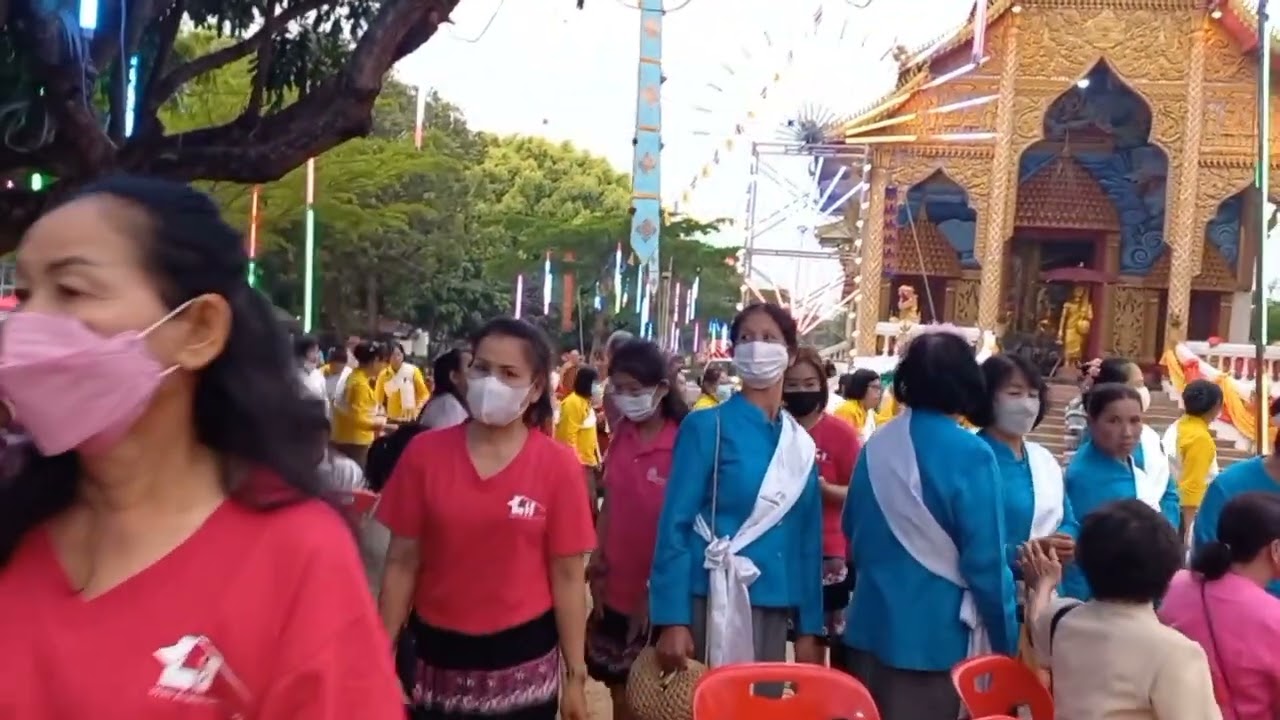
 Click to Access the Navigation Map GPS
Wat Thung Buak Khao Map
Recommend

 Muang Chiang Mai(121)Chom Thong(47)Mae Chaem(25)Chiang Dao(33)Doi Saket(68)Mae Taeng(85)Mae Rim(69)Samoeng(29)Fang(71)Mae Ai(59)Phrao(70)San Pa Tong(103)San Kamphaeng(66)San Sai(73)Hang Dong(73)Hot(32)Doi Tao(22)Omkoi(11)Saraphi(74)Wiang Haeng(15)Chai Prakan(28)Mae Wang(32)Mae On(22)Doi Lo(33)Galyani Vadhana(1)


