
lovethailand home >North Travel Attractions >Chiang Mai Travel Attractions >Phrao >Pa Nai > Wat San Po Thong
TL;DR: Wat San Po Thong is located at Ban San Po Thong, Moo 6, Pa Nai Subdistrict, Phrao District, Chiang Mai Province, open Daily, hours 08.00 – 17.00.
Wat San Po Thong
Open Days: Daily
Opening Hours: 08.00 – 17.00
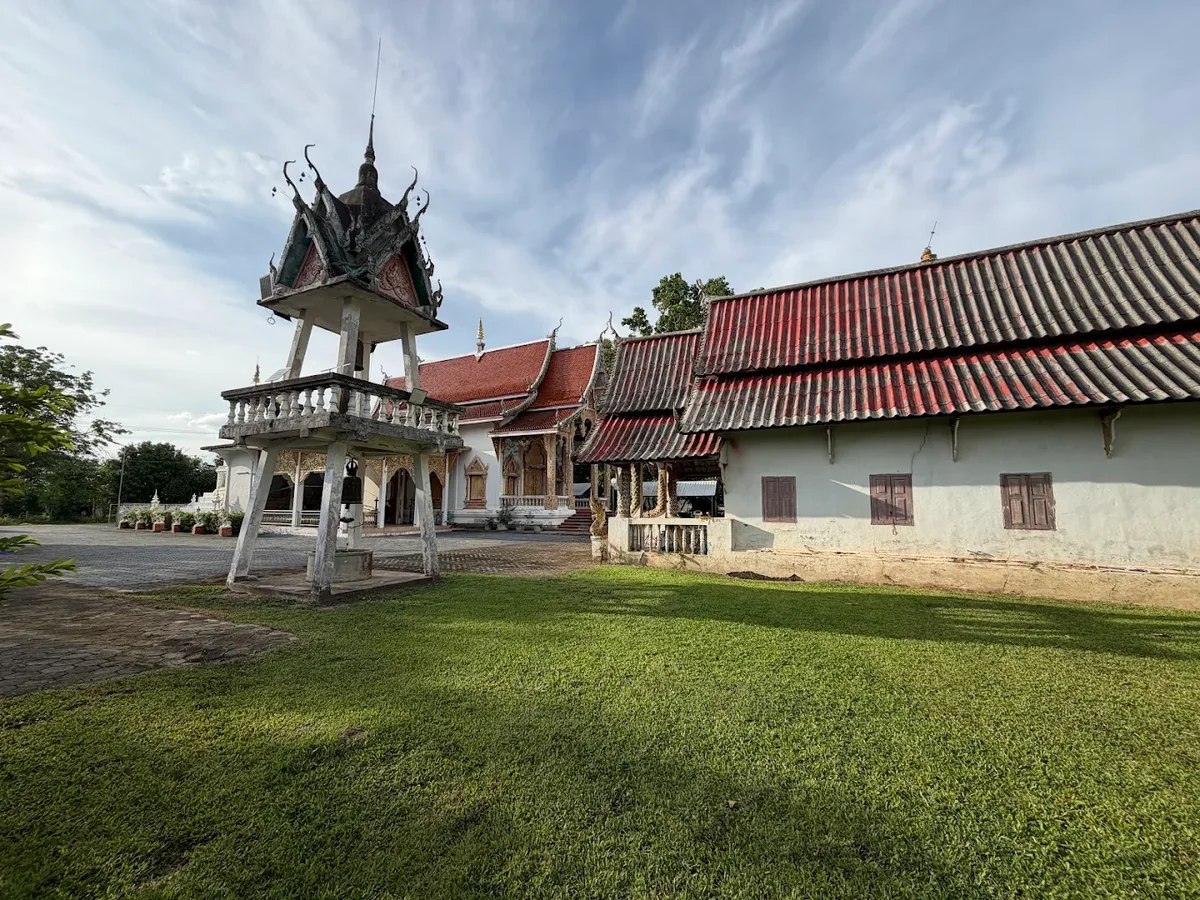
Wat San Po Thong is a local non-royal Buddhist temple under the Mahanikaya order, located at 89 Moo 6, Ban San Po Thong, Pa Nai Subdistrict, Phrao District, Chiang Mai Province. The temple is an important community temple of Ban San Po Thong and one of the more complete village temples in Pa Nai Subdistrict, with a relic chedi, ubosot, viharn, and monks’ residences. Wat San Po Thong is not only a place for local merit-making, but also a sacred space that reflects the cooperation of monks, village leaders, and local devotees across generations.
Ban San Po Thong is Moo 6 of Pa Nai Subdistrict in Phrao District. The village belongs to the rural Lanna landscape of northern Thailand, where temples, local roads, irrigation channels, houses, farmland, and mountain scenery shape everyday life. Wat San Po Thong is closely connected with this village setting. It stands among local homes, a public road, a public irrigation channel, and community land, making it both a sacred place and a shared village space.
The temple land covers 2 rai, 1 ngan, and 74 square wah under title deed number 100. Its boundaries are connected with local homes to the north and south, a public irrigation channel to the east, and a public road to the west. These details show the typical character of a Lanna village temple. The sacred space is not isolated from daily life; it is embedded within the village and connected with the movement, water system, and social structure of the community.
The known history of Wat San Po Thong begins clearly with the restoration and construction of its relic chedi in 1873. This work was led by Khruba Inta, together with the village headman Pho Nan Chai and local devotees. The fact that the temple’s early history centers on a relic chedi is significant. In Lanna Buddhist culture, a chedi is more than an architectural structure. It is a sacred monument and a spiritual focus for communal worship, merit-making, and village identity.
The year 1873 places the early restoration of Wat San Po Thong within a period when many rural communities in Phrao were developing through village settlement, agriculture, and local Buddhist faith. When a community had homes, leaders, farmland, and a shared desire for a spiritual center, the temple became the anchor of village life. The restoration of the chedi by Khruba Inta, Pho Nan Chai, and local villagers was therefore both a religious act and a community-building event.
The name San Po Thong reflects the local character of northern Thai village names. The word “san” often refers to a raised ridge or elevated ground, while Po Thong may connect with local plant names or symbolic village memory. A fully verified explanation of the name is not available in public sources, so the article does not add unsupported speculation. What can be stated clearly is that the temple carries the name of the village it serves, making it a marker of identity for Ban San Po Thong, Moo 6.
Wat San Po Thong contains several key religious elements: a relic chedi, ubosot, viharn, and monks’ residences. The relic chedi is the spiritual core of the temple and is directly connected with its early restoration history. The ubosot supports important monastic acts, the viharn serves as a worship and ceremonial hall for villagers, and the monks’ residences support the presence of monks within the community. These elements make the temple well equipped for village Buddhist life.
The relic chedi should be the main point of respect for visitors. It is connected with the temple’s founding memory and the faith of the earliest supporters. Paying respect to the chedi is therefore not merely an act of worship toward a structure, but also a way of acknowledging the faith of monks, leaders, and villagers who built and maintained the temple. Visitors should move around the chedi respectfully, avoid touching or climbing sacred structures, and behave with care in the temple grounds.
The ubosot is another important component of Wat San Po Thong. In a Buddhist temple, an ubosot is used for important monastic acts under Buddhist discipline. Its presence shows that the temple supports more than general merit-making. It also has the physical and religious capacity to support key Sangha activities. The viharn, meanwhile, is the space where villagers gather to worship, listen to Dhamma, and take part in Buddhist ceremonies.
The monks’ residences reflect the ongoing religious life of the temple. A temple with monastic residence is not merely an old site or historical landmark; it is a living religious place connected with daily Buddhist practice. Although no sufficiently verified current source was found for the present abbot’s name, the temple remains part of the local Buddhist and community landscape of Ban San Po Thong.
Wat San Po Thong continues to function as a community space. Local municipal information refers to public election outreach activities held at Wat San Po Thong, Moo 6. This shows that the temple is still used as a shared village place, not only for religious ceremonies but also for local public activities. In rural Lanna communities, this broader role is common: the temple is a place of worship, gathering, announcement, learning, and social cooperation.
The role of Wat San Po Thong in the community can be understood in several dimensions. Spiritually, it is where villagers make merit, offer food to monks, listen to Dhamma, and join Buddhist ceremonies. Socially, it is a gathering space for Ban San Po Thong residents. Culturally, it helps maintain the rhythm of Lanna Buddhist life through Buddhist holy days, Buddhist Lent, the end of Lent, Kathin, Pha Pa, candle offerings, and merit-making for ancestors.
The temple is connected with annual and seasonal Buddhist activities such as Kathin, Pha Pa, Buddhist holy day merit-making, Buddhist Lent, candle offerings, the end of Buddhist Lent, and local seasonal merit-making. These events help villagers return to the temple, share responsibilities, support the monks, and pass local Buddhist customs to younger generations. The temple therefore remains both a sacred place and a social foundation of the village.
The main appeal of Wat San Po Thong lies in its completeness as a village temple and its clear history of chedi restoration. Visitors can pay respect to the relic chedi, make merit, observe the ubosot and viharn, and experience the quiet atmosphere of a rural community temple. This is not a mass-tourism temple, but a place whose value lies in local faith, village identity, and continuity.
Wat San Po Thong is best appreciated slowly. Visitors should observe how the temple relates to nearby homes, a public road, an irrigation channel, and the wider rural landscape. This approach gives the visit more depth than a short photo stop. It helps travelers understand how Buddhist temples in Chiang Mai’s rural districts remain part of everyday village life, not separate from it.
Wat San Po Thong can be included in a Pa Nai temple route. Nearby temples and sacred sites include Wat San Klang, Wat Ban Lao, Wat Dong Pa Da, Wat Phra That Khun Kon, Wat Pa Nai, Wat San Yao, Wat Muang Thoi, and Wat Muang Kham. This route shows how each village in Pa Nai Subdistrict has its own temple and local religious story. Wat San Po Thong stands out as the temple of Ban San Po Thong, Moo 6, with a relic chedi as its key spiritual focus.
The temple is especially close to Wat San Klang and Wat Ban Lao, making it suitable for a half-day cultural route. Travelers who want to add natural scenery can continue to Mae Kon Reservoir and the Doi Mon Lan route. This combination offers village temples, relic worship, rural roads, farmland, reservoir scenery, and mountain landscapes in one journey through Phrao District.
Getting There is easiest by private car, rental car, or local hired transport. From Chiang Mai city, travel toward Phrao District, then continue into Pa Nai Subdistrict and Ban San Po Thong, Moo 6. Before departure, search for “Wat San Po Thong, Pa Nai, Phrao” or “Ban San Po Thong, Pa Nai” in a map application. Since the temple is located within a village rather than on a major tourist road, preparing navigation in advance is recommended. A private vehicle also makes it easier to visit nearby temples, restaurants, accommodations, and natural attractions on the same trip.
The best time to visit is in the morning or late afternoon, when the weather is more comfortable and the temple atmosphere is calm. Travelers planning to explore Pa Nai Subdistrict should allow a half-day or full-day route. The late rainy season and cool season are especially suitable for cultural travel in Phrao because the rural landscape, fields, hills, and village roads are more pleasant for slow exploration.
Visitors should dress modestly, speak quietly, respect monks and local worshippers, and avoid entering private monastic areas without permission. Photography should be done respectfully, especially around the relic chedi, ubosot, viharn, and any area where ceremonies are taking place. If a merit-making event is underway, local participants should be given priority.
Overall, Wat San Po Thong is a valuable community temple in Pa Nai Subdistrict. Its known history reaches back to the restoration of the relic chedi in 1873, and its temple grounds include a chedi, ubosot, viharn, and monks’ residences. Its importance lies not in mass tourism, but in its completeness as a village temple, its role as a spiritual center of Ban San Po Thong, and its ability to show how Buddhism, community life, irrigation, roads, and rural Lanna identity are closely connected in Phrao District.
| Name | Wat San Po Thong |
| Location | Ban San Po Thong, Moo 6, Pa Nai Subdistrict, Phrao District, Chiang Mai Province |
| Address | 89 Moo 6, Ban San Po Thong, Pa Nai Subdistrict, Phrao District, Chiang Mai 50190, Thailand |
| Coordinates | 19.41872, 99.21489 |
| Temple Type | Local Non-Royal Buddhist Temple Under The Mahanikaya Order |
| History | The relic chedi was restored and built in 1873 by Khruba Inta, Pho Nan Chai, and local devotees of Ban San Po Thong |
| Temple Area | 2 rai, 1 ngan, and 74 square wah; title deed number 100 |
| Boundaries | North: house of Nai Kham Khanping South: houses of Nai Chuen and Nai Cha Phatwan East: public irrigation channel West: public road |
| Main Religious Structures | Relic chedi, ubosot, viharn, and monks’ residences |
| Main Sacred Monument | Relic chedi of Wat San Po Thong |
| Highlights | A complete village temple with a relic chedi, ubosot, viharn, monks’ residences, and a restoration history dating to 1873 |
| Distinctive Features | Community temple connected with Ban San Po Thong, Moo 6, a public irrigation channel, local roads, and the temple network of Pa Nai Subdistrict |
| Main Areas / Zones | Relic chedi area, ubosot, viharn, temple courtyard, ceremonial area, and monastic residential area |
| Community Role | Spiritual center of Ban San Po Thong, used for merit-making, Dhamma listening, Buddhist ceremonies, and local community activities |
| Important Activities / Ceremonies | Kathin, Pha Pa, Buddhist holy day merit-making, Buddhist Lent, candle offerings, end-of-Lent activities, and local Lanna community merit-making |
| Travel Information | Best reached by private car, rental car, or local hired transport from Chiang Mai toward Phrao District, then into Pa Nai Subdistrict and Ban San Po Thong, Moo 6 |
| Current Status | Active community temple in Pa Nai Subdistrict, Phrao District, Chiang Mai Province |
| Open Days | Daily |
| Opening Hours | 08.00 – 17.00 |
| Nearby Tourist Attractions | 1. Wat San Klang, about 660 m 2. Wat Ban Lao, about 1 km 3. Wat Dong Pa Da, about 2 km 4. Wat Phra That Khun Kon, about 6 km 5. Wat Pa Nai, about 6 km 6. Wat San Yao, about 7 km 7. Mae Kon Reservoir, about 12 km 8. Doi Mon Lan, about 28 km |
| Nearby Restaurants | 1. Local Restaurants In Ban San Po Thong, about 1–3 km 2. Cafés And Restaurants In Pa Nai Subdistrict, about 5–8 km 3. Nong Prince Chicken Rice, about 13 km, Tel. 094-559-0182 4. 135 Cafe, about 15 km, Tel. 083-549-6399 5. Jin Jum And Made-To-Order Food, about 16 km, Tel. 053-475-209 6. Krua Jae Kee Wild Food And River Fish, about 17 km, Tel. 084-488-8560 |
| Nearby Accommodations | 1. Khoom Kam Kaew, about 7 km 2. Siam Lanna Homestay, about 10 km 3. Phrao Camping Village, about 16 km, Tel. 061-279-9015 4. PK Hotel / PK Hostel, about 17 km, Tel. 088-992-2444 5. Phrao Boutique Hotel, about 18 km, Tel. 094-412-3466 6. Inthang Boutique Hotel, about 19 km, Tel. 084-849-5725 |
Frequently Asked Questions (FAQ)
Q: Where is Wat San Po Thong located?
A: Wat San Po Thong is located at 89 Moo 6, Ban San Po Thong, Pa Nai Subdistrict, Phrao District, Chiang Mai 50190, Thailand.
Q: What is the history of Wat San Po Thong?
A: Wat San Po Thong has a known restoration history dating to 1873, when Khruba Inta, Pho Nan Chai, and local devotees worked together to restore and build the temple’s relic chedi.
Q: What important structures can visitors see at Wat San Po Thong?
A: Important structures include the relic chedi, ubosot, viharn, and monks’ residences, making it one of the more complete village temples in Pa Nai Subdistrict.
Q: What makes Wat San Po Thong special?
A: Its value lies in its complete village-temple layout, the relic chedi with an 1873 restoration history, and its role as the spiritual center of Ban San Po Thong, Moo 6.
Q: What are the opening days and hours of Wat San Po Thong?
A: Wat San Po Thong is open daily from 08.00 to 17.00.
Q: How can travelers get to Wat San Po Thong?
A: The temple is best reached by private car, rental car, or local hired transport from Chiang Mai toward Phrao District, then into Pa Nai Subdistrict and Ban San Po Thong, Moo 6.
Q: What kind of travelers is Wat San Po Thong suitable for?
A: It is suitable for travelers interested in local temples, Lanna Buddhist culture, relic chedis, village history, merit-making, and quiet cultural routes in Phrao District.
Q: What nearby places can be visited with Wat San Po Thong?
A: Nearby places include Wat San Klang, Wat Ban Lao, Wat Dong Pa Da, Wat Phra That Khun Kon, Wat Pa Nai, Wat San Yao, Mae Kon Reservoir, and Doi Mon Lan.
 Category: ●Places of Worship
 Group: ●Temple
Last Update : 2 WeekAgo
 Last Update : 2 WeekAgo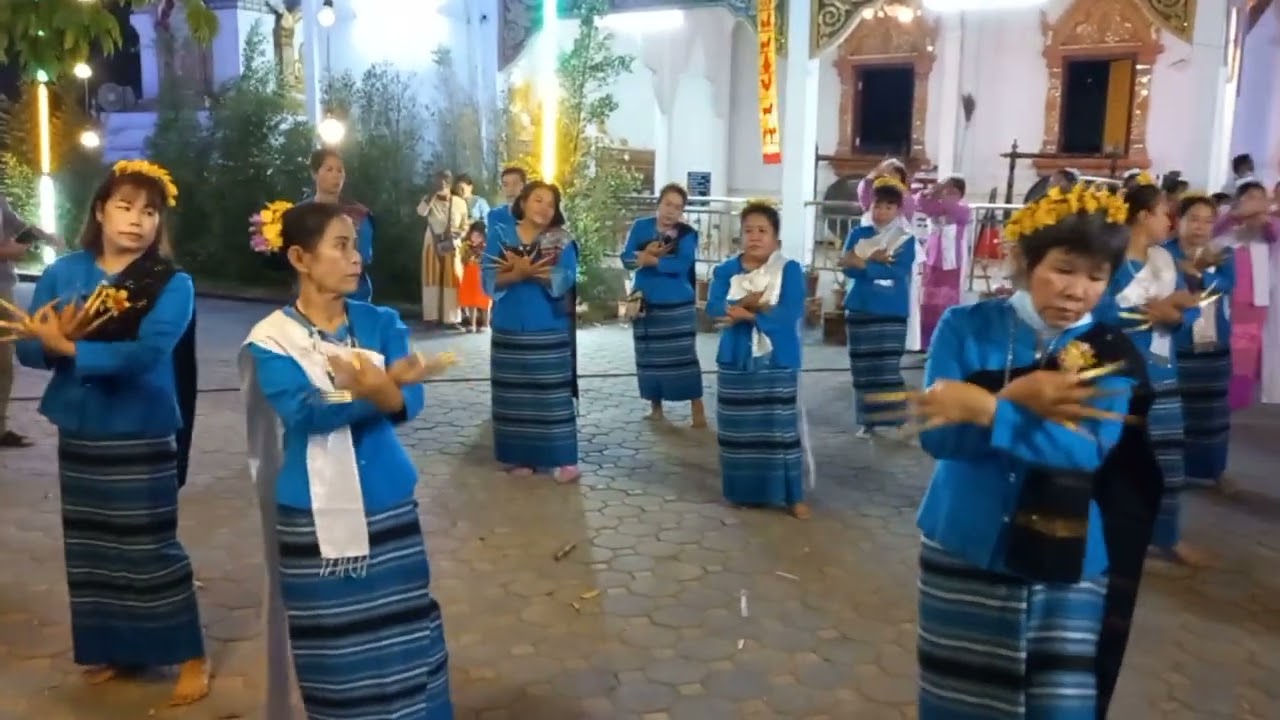
 Click to Access the Navigation Map GPS
Wat San Po Thong Map
Recommend

 Muang Chiang Mai(121)Chom Thong(47)Mae Chaem(25)Chiang Dao(33)Doi Saket(68)Mae Taeng(85)Mae Rim(69)Samoeng(29)Fang(71)Mae Ai(59)Phrao(70)San Pa Tong(103)San Kamphaeng(66)San Sai(73)Hang Dong(73)Hot(32)Doi Tao(22)Omkoi(11)Saraphi(74)Wiang Haeng(15)Chai Prakan(28)Mae Wang(32)Mae On(22)Doi Lo(33)Galyani Vadhana(1)


