
lovethailand home >North Travel Attractions >Chiang Mai Travel Attractions >Phrao >Pa Tum > Wat San Khamok
TL;DR: Wat San Khamok is located at Ban San Khamok, Moo 1, Pa Tum Subdistrict, Phrao District, Chiang Mai Province, open Daily, hours 08.00 – 17.00.
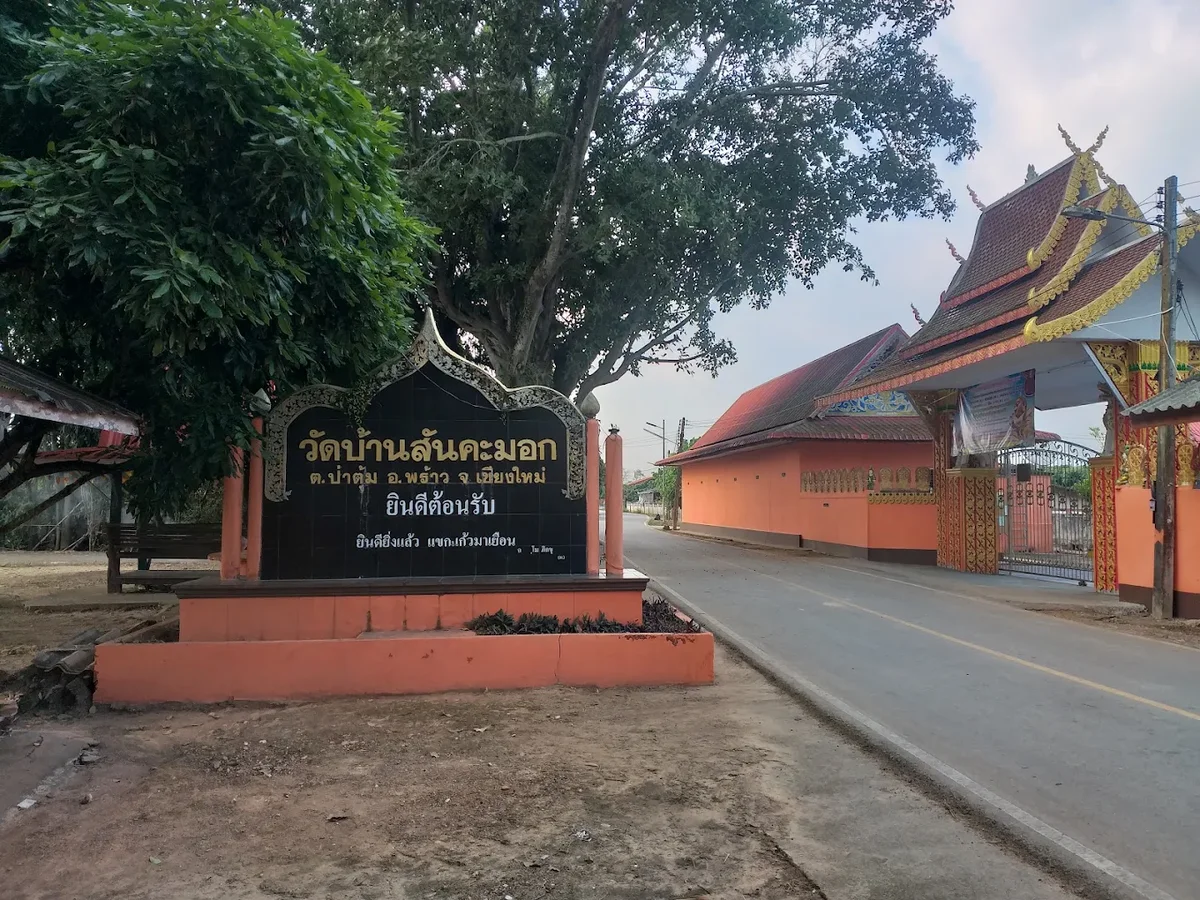
Wat San Khamok
Open Days: Daily
Opening Hours: 08.00 – 17.00
Wat San Khamok is a local Mahanikaya Buddhist temple located at 94 Moo 1, Ban San Khamok, Pa Tum Subdistrict, Phrao District, Chiang Mai Province. The temple was officially permitted to be established in 1908 and is currently led by Phra Kamon Katachayo as abbot. Wat San Khamok is an important community temple for Ban San Khamok, serving as a place for worship, merit-making, Buddhist ceremonies, Dhamma listening, and the preservation of local stories connected with the Khamok flower, buffalo shelters, the old temple grove, the Lua people, and Phra That San Khamok.
Wat San Khamok is situated in Moo 1 of Pa Tum Subdistrict, an area of Phrao District known for its network of local village temples. Nearby temples include Wat Thung Ku, Wat Ton Rung, Wat Thung Ha, Wat San Thanon, Wat Pa Tum Don, Wat Pa Tum Hong, and Wat Phra Chao Lan Thong. These temples are not only religious places; they are also social and cultural anchors for the villages of Pa Tum. Wat San Khamok should therefore be understood as part of a wider local Buddhist landscape where each village temple preserves its own memory, sacred space, and community identity.
The name San Khamok is linked to a local story about a fragrant flowering tree known as the Khamok flower. In the past, the area was used by villagers as a place to build shelters for buffaloes. Later, around 7 or 8 households began to settle in the area, and the community gradually developed into Ban San Khamok. The temple name is therefore directly tied to the village name and reflects an older landscape that combined natural vegetation, livestock spaces, and early settlement before becoming a full community with a temple at its spiritual center.
The history of Wat San Khamok is closely connected with the relocation of the present temple from its former grove site in 1908. This period was the late reign of King Rama V, when many northern communities were organizing local spaces more clearly around villages, temples, schools, and agricultural land. The move from the old grove to the present location reflects the growth of Ban San Khamok and the community’s need for a temple that could better serve worship, merit-making, and village gatherings. Wat San Khamok therefore represents a transition from an older sacred grove and rural settlement pattern into a more structured village temple.
One of the most meaningful local narratives associated with Wat San Khamok involves the Lua people. According to community memory, Lua people once lived to the south of the area around Ban San Pa Daeng and were searching for a place to build a temple. They found the area of the old Wat San Khamok site, now remembered as a grove. They placed a bundle of rice there and made a sacred wish: if the place was suitable for a temple, the rice should remain whole; if not, it should scatter. A buffalo herder from San Khamok later scattered the rice, and the Lua people did not build a temple there. This story remains part of the cultural memory surrounding the old grove and the temple’s origin.
Although this Lua story belongs to oral tradition and local belief, it is important for understanding Wat San Khamok as a cultural site. It shows how villagers remember sacred space, former settlements, groves, and spirits. In many Lanna communities, forests, old temple sites, and ancient groves are often seen as places protected by spirits or ancestral forces. The story of Wat San Khamok therefore connects Buddhism with older layers of local belief, making the temple more than a religious building. It is also a vessel of community memory.
Today, local people continue to pay respect to Phra That San Khamok, an old sacred relic monument associated with the village. The community holds an annual tradition of going up to worship the relic on the waning moon day of the 8th northern lunar month. This tradition is central to the spiritual life of Ban San Khamok. It keeps the relationship between villagers, temple, sacred relic, ancestors, and local history alive. Through this ritual, Wat San Khamok remains a living place of faith rather than a passive historical site.
The role of Wat San Khamok in the community can be understood on several levels. Spiritually, it is where villagers make merit, listen to Dhamma, offer food to monks, and take part in Buddhist holy day activities. Socially, it functions as a meeting place for the village and a venue for community ceremonies. Culturally, it preserves local narratives about the Khamok flower, buffalo shelters, the old temple grove, the Lua people, and Phra That San Khamok. These layers make the temple an important point of identity for Ban San Khamok.
Ban San Khamok also has a strong educational identity because Phraoburapa School is located in the same village. The school was established on 1 May 1939 and serves students from kindergarten to lower secondary level. The presence of both a temple and a school in the same community reflects a familiar structure of rural Lanna villages: the temple supports moral and spiritual life, while the school supports formal education. Together, they help define Ban San Khamok as a community with both religious and educational centers.
Publicly available details about the temple’s internal buildings are limited, but as an active village temple, Wat San Khamok includes areas for worship, merit-making, temple activities, and monastic residence. Visitors should approach the temple with the manners expected at a working community temple. They should avoid entering private monastic areas without permission, speak quietly, and respect local worshippers. If visitors wish to see Phra That San Khamok or any specific sacred area, they should ask a temple caretaker or local resident first.
The main appeal of Wat San Khamok is not monumental architecture but local depth. It is a place for travelers who want to understand village Buddhism, Lanna oral tradition, sacred groves, and community memory. A visit here gives insight into how a temple can hold the story of a village: its name, its migration of sacred space, its local legend, its annual relic tradition, and its role as a spiritual anchor. Wat San Khamok is therefore a meaningful stop for cultural travelers exploring the quieter side of Chiang Mai.
Wat San Khamok can be included in a Pa Tum temple route together with Wat Thung Ku, Wat Ton Rung, Wat Thung Ha, Wat San Thanon, Wat Pa Tum Don, Wat Pa Tum Hong, and Wat Phra Chao Lan Thong. This route is suitable for travelers who want to see how each village temple serves as a local spiritual center. Wat San Khamok stands out because of its story of the Khamok flower, the buffalo-shelter landscape, the Lua narrative, and the annual tradition of worship at Phra That San Khamok.
For a broader cultural route in Phrao District, Wat San Khamok can also be connected with Wat Pa Tum Don, known for Shan-Lanna Buddhist art, Phra That Chom Hin in the Ban Thung Ha area, Wat Phra Chao Lan Thong in Nam Phrae Subdistrict, and Wat Klang Wiang in the district center. Together, these sites show that Phrao is a district of village temples, sacred relics, local legends, ethnic heritage, and Buddhist traditions that remain closely tied to community life.
Getting There is most convenient by private car, rental car, or local hired transport. From Chiang Mai city, travel toward Phrao District, then continue into Pa Tum Subdistrict and Ban San Khamok, Moo 1. Travelers may use the village road linking Ban Thung Ku and Ban San Khamok. Since the temple is located within a village rather than on a major tourist road, it is best to prepare map navigation before departure. A private vehicle also makes it easier to visit nearby temples, local restaurants, and accommodations around Phrao.
The best time to visit is in the morning or late afternoon, when the weather is more comfortable and the temple atmosphere is calm. Travelers planning a temple route in Pa Tum can arrange a half-day or full-day trip that includes Wat San Khamok, Wat Thung Ku, Wat Ton Rung, Wat Thung Ha, and Wat Pa Tum Don. This slower approach is more suitable than a quick visit because it allows travelers to understand the relationship between village, temple, and local memory.
Visitors should dress modestly, speak quietly, respect monks and local worshippers, and avoid entering private monastic areas without permission. Photography should be done respectfully, especially around sacred objects, relic monuments, and any areas used for ceremonies. If a merit-making event is taking place, local participants should be given priority. Respectful behavior is essential because Wat San Khamok is an active community temple, not simply a sightseeing venue.
Overall, Wat San Khamok is a valuable cultural stop in Phrao District. It preserves a documented establishment date in 1908, a current abbot, a close relationship with Ban San Khamok, and local stories about the Khamok flower, buffalo shelters, the Lua people, the old temple grove, and Phra That San Khamok. Its importance lies in the depth of community memory rather than architectural grandeur. For travelers who want to understand Chiang Mai through village temples and local traditions, Wat San Khamok is a meaningful destination.
| Name | Wat San Khamok |
| Location | Ban San Khamok, Moo 1, Pa Tum Subdistrict, Phrao District, Chiang Mai Province |
| Address | 94 Moo 1, Ban San Khamok, Pa Tum Subdistrict, Phrao District, Chiang Mai 50190, Thailand |
| Temple Type | Private-sector Buddhist temple under the Mahanikaya order |
| History | Officially established as a temple in 1908; the present temple was moved from its former grove site in the same year |
| Name Origin | Linked with Ban San Khamok and the fragrant Khamok flower in local village memory |
| Highlights | Community temple of Ban San Khamok with stories of the Khamok flower, buffalo shelters, the Lua people, the old temple grove, and the annual Phra That San Khamok worship tradition |
| Distinctive Features | Village temple connected with Buddhism, Lanna local belief, oral tradition, and the settlement history of Ban San Khamok |
| Sacred Site | Phra That San Khamok, respected by the local community and associated with an annual worship tradition on the waning moon day of the 8th northern lunar month |
| Main Areas / Zones | Worship area, merit-making area, temple courtyard, religious activity area, and monastic residential area |
| Community Role | Spiritual center of Ban San Khamok, used for merit-making, Dhamma listening, Buddhist ceremonies, and preserving local community memory |
| Important Activities / Ceremonies | Annual Phra That San Khamok worship tradition, Kathin, Pha Pa, Buddhist holy day merit-making, Buddhist Lent, end-of-Lent activities, and local community merit-making |
| Abbot / Caretaker | Phra Kamon Katachayo |
| Travel Information | Best reached by private car, rental car, or local hired transport from Chiang Mai toward Phrao District, then into Pa Tum Subdistrict and Ban San Khamok, Moo 1 |
| Current Status | Active community temple in Pa Tum Subdistrict, Phrao District, Chiang Mai Province |
| Open Days | Daily |
| Opening Hours | 08.00 – 17.00 |
| Facilities | Worship area, merit-making area, temple courtyard, and parking area within or near the temple community |
| Nearby Tourist Attractions | 1. Wat Thung Ku, about 2 km 2. Wat Ton Rung, about 2 km 3. Wat Thung Ha, about 3 km 4. Wat San Thanon, about 4 km 5. Wat Pa Tum Don, about 5 km 6. Wat Phra Chao Lan Thong, about 14 km |
| Nearby Restaurants | 1. Nong Prince Chicken Rice, about 9 km, Tel. 094-559-0182 2. 135 Cafe, about 11 km, Tel. 083-549-6399 3. Jin Jum And Made-To-Order Food, about 12 km, Tel. 053-475-209 4. Krua Jae Kee Wild Food And River Fish, about 13 km, Tel. 084-488-8560 5. Rain Tree Cafe, about 18 km, Tel. 093-131-0928 |
| Nearby Accommodations | 1. PK Hotel / PK Hostel, about 11 km, Tel. 088-992-2444 2. Phrao Boutique Hotel, about 12 km, Tel. 094-412-3466 3. Inthang Boutique Hotel, about 13 km, Tel. 084-849-5725 4. Phrao Camping Village, about 14 km 5. Anothai Place, about 15 km, Tel. 086-658-0405 |
Frequently Asked Questions (FAQ)
Q: Where is Wat San Khamok located?
A: Wat San Khamok is located at 94 Moo 1, Ban San Khamok, Pa Tum Subdistrict, Phrao District, Chiang Mai 50190, Thailand.
Q: What is the history of Wat San Khamok?
A: Wat San Khamok was officially established in 1908, and the present temple was moved from its former grove site in the same year. Local stories connect the temple with the Khamok flower, buffalo shelters, the Lua people, and the old temple grove.
Q: What does the name San Khamok mean?
A: The name is linked with Ban San Khamok and a local story about a fragrant flowering tree called the Khamok flower, which became part of the village and temple identity.
Q: What important tradition is associated with Wat San Khamok?
A: The important tradition is the annual worship of Phra That San Khamok on the waning moon day of the 8th northern lunar month, a community ritual that connects villagers with the sacred relic monument.
Q: What are the opening days and hours of Wat San Khamok?
A: Wat San Khamok is open daily from 08.00 to 17.00.
Q: How can travelers get to Wat San Khamok?
A: The temple is best reached by private car, rental car, or local hired transport from Chiang Mai toward Phrao District, then into Pa Tum Subdistrict and Ban San Khamok, Moo 1.
Q: What kind of travelers is Wat San Khamok suitable for?
A: It is suitable for travelers interested in community temples, Lanna culture, oral traditions, village history, and cultural routes in Phrao District.
Q: What nearby places can be visited with Wat San Khamok?
A: Nearby places include Wat Thung Ku, Wat Ton Rung, Wat Thung Ha, Wat San Thanon, Wat Pa Tum Don, and Wat Phra Chao Lan Thong.
 Category: ●Places of Worship
 Group: ●Temple
Last Update : 10 HourAgo
 Last Update : 10 HourAgo
 Click to Access the Navigation Map GPS
 Muang Chiang Mai(121)Chom Thong(47)Mae Chaem(25)Chiang Dao(33)Doi Saket(68)Mae Taeng(85)Mae Rim(69)Samoeng(29)Fang(71)Mae Ai(59)Phrao(70)San Pa Tong(105)San Kamphaeng(66)San Sai(73)Hang Dong(74)Hot(32)Doi Tao(22)Omkoi(11)Saraphi(74)Wiang Haeng(15)Chai Prakan(28)Mae Wang(32)Mae On(22)Doi Lo(34)Galyani Vadhana(1)


