
lovethailand home >North Travel Attractions >Chiang Mai Travel Attractions >Phrao >Pa Tum > Wat Ton Rung
TL;DR: Wat Ton Rung is located at Ban Ton Rung, Moo 3, Pa Tum Subdistrict, Phrao District, Chiang Mai Province 50190. Highlights include A peaceful community temple in Ban Ton Rung, suitable for merit-making and cultural travel in Phrao District.
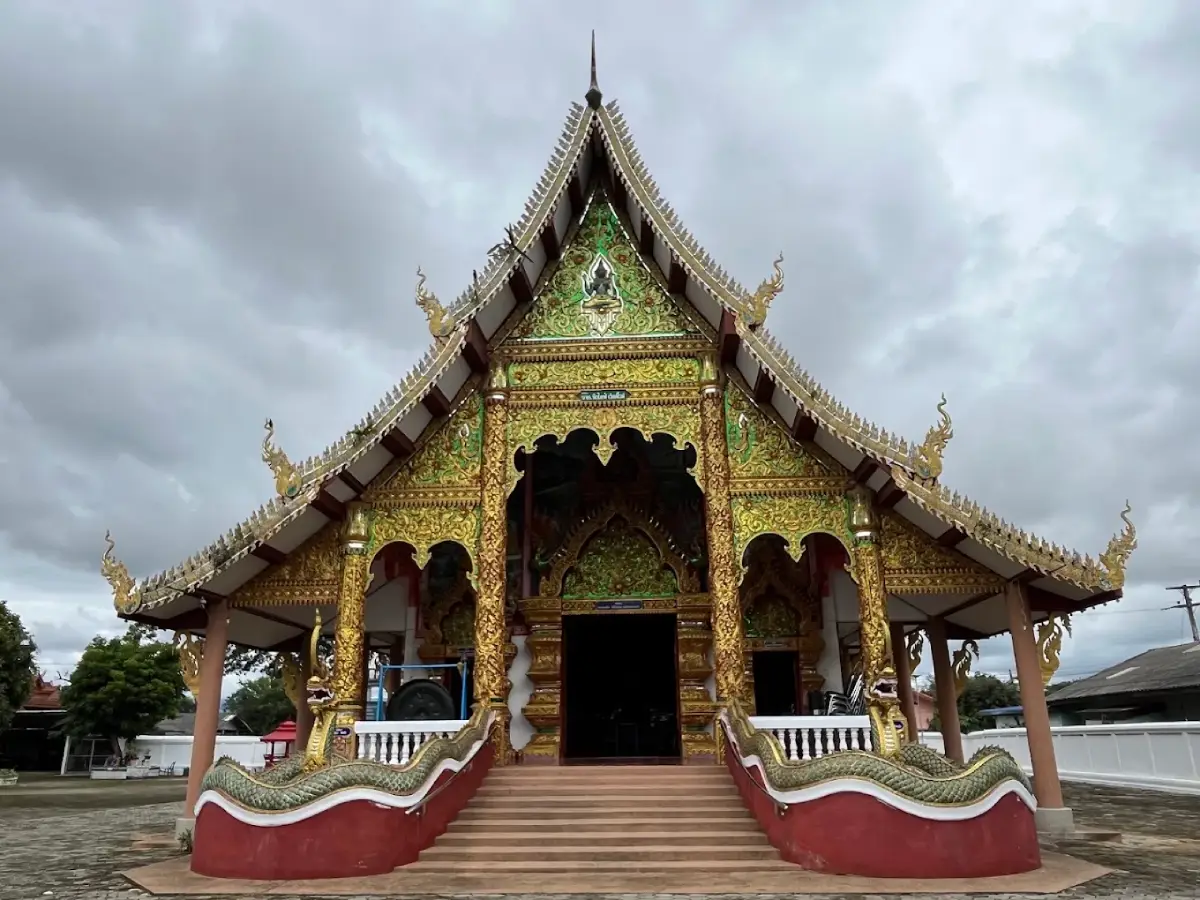
Wat Ton Rung
Operating day: Daily
Operating time: 08.00 - 17.00
Wat Ton Rung is a local Buddhist temple at 202 Moo 3, Ban Ton Rung, Pa Tum Subdistrict, Phrao District, Chiang Mai Province. It is a community temple under the Maha Nikaya order. The temple was officially permitted as a temple in 1932 and received its royal consecrated boundary in 1950, making it an important religious and community landmark for Ban Ton Rung and the surrounding Pa Tum area.
Wat Ton Rung is located in Ban Ton Rung, Moo 3, Pa Tum Subdistrict, Phrao District, Chiang Mai Province. It represents the quiet and deeply rooted character of rural northern Thai temples, where Buddhism, village life, agriculture, and local identity are closely connected. Unlike large tourist temples in central Chiang Mai, Wat Ton Rung is valued as a living community temple. It serves local residents as a place for merit-making, Buddhist ceremonies, community gatherings, and spiritual reflection.
The temple’s historical importance begins with its official status as a local temple under the Maha Nikaya order. Wat Ton Rung was permitted as a temple in 1932, showing that Ban Ton Rung already had a stable Buddhist community and a need for its own religious center during the early 20th century. In 1950, the temple received its royal consecrated boundary, known in Thai as visungkhamsima. This boundary is significant in Buddhist monastic practice because it designates the area where the Sangha may perform formal ecclesiastical acts. These milestones make Wat Ton Rung more than a simple village shrine; they establish it as a formal Buddhist institution within the local ecclesiastical structure.
Ban Ton Rung is part of Pa Tum Subdistrict, an area with long-standing village communities, temples, and cultural sites. Wat Ton Rung should therefore be understood within the broader cultural landscape of Pa Tum and Phrao. Nearby religious and cultural landmarks include Wat Pa Tum Don, Phra That Chom Hin, Wat Thung Ha, Wat Pa Tum Hong, Wat San Thanon, and Wat Huai Ku. Together, these places form a meaningful route for travelers who want to explore rural Buddhist culture beyond the main tourist zones of Chiang Mai.
The main appeal of Wat Ton Rung lies in its role as a genuine village temple. Visitors will find a calm, local atmosphere rather than a heavily commercialized tourist site. The temple is suitable for merit-making, paying respect, and observing the relationship between a northern Thai temple and the village it serves. Community temples like Wat Ton Rung are important because they preserve everyday Buddhist practice. They are where local people gather for religious occasions, make offerings, listen to Dhamma teachings, and maintain social ties through shared acts of faith.
Historically, Wat Ton Rung is closely connected with the development of Ban Ton Rung and Pa Tum Subdistrict. Its presence in the village reflects the traditional role of a temple in northern Thailand: not only a place of worship, but also a social and cultural center. In rural Lanna communities, temples often function as the heart of village life. They support rituals, moral education, communal cooperation, and the continuity of local customs. Wat Ton Rung continues this pattern by remaining part of the daily religious life of the people in Ban Ton Rung.
Pa Tum Subdistrict itself adds depth to the temple’s context. The area is associated with older village settlements, agricultural ways of life, and local cultural memory. The name Pa Tum is connected with the ton tum tree, once found in the area. The subdistrict also contains sites linked to community history, Tai Yai cultural heritage, sacred hills, temples, and local natural landmarks. For this reason, a visit to Wat Ton Rung can be planned as part of a broader cultural route through Pa Tum rather than as a single isolated stop.
The temple is led by Phra Khru Prapat Bunyakon Katapunyo, the abbot of Wat Ton Rung. In a village temple, the abbot’s role is central. He oversees religious activities, supports the temple’s relationship with the community, maintains the temple grounds, and helps keep the temple a peaceful place for local Buddhists and visitors. This close relationship between monks, villagers, and temple space is one of the defining features of Buddhist communities in rural northern Thailand.
The most clearly established information about Wat Ton Rung includes its location, temple status, affiliation, date of official establishment, royal consecrated boundary, and abbot. Its confirmed religious importance is tied to its recognition as a temple and its consecrated boundary. For visitors, the temple should be approached as a quiet community place rather than a monument-focused attraction. The important areas of the temple include spaces used for merit-making, religious activity, the temple courtyard, and the ecclesiastical boundary associated with its royal consecration.
When visiting Wat Ton Rung, travelers should focus on the quiet village atmosphere, the temple’s connection with Ban Ton Rung, and the surrounding cultural landscape of Pa Tum Subdistrict. The experience is best suited to travelers who appreciate local temples, rural communities, and slow cultural travel. Visitors should dress modestly, speak respectfully, and avoid entering monks’ quarters or private temple areas without permission. The value of Wat Ton Rung lies not in grand scale, but in its authenticity as a working Buddhist temple of a local community.
Wat Ton Rung is also a good stop for travelers who want to see a different side of Chiang Mai. Many visitors know Chiang Mai through the old city, Mae Rim, Doi Suthep, and major mountain attractions, but Phrao offers a quieter cultural landscape. A route through Pa Tum can include Wat Ton Rung, Wat Pa Tum Don, Phra That Chom Hin, and other local temples. This type of itinerary gives travelers a clearer picture of village Buddhism, agricultural communities, and the living religious geography of northern Thailand.
Getting There from Chiang Mai city is most convenient by private car, rental car, or motorcycle. Travelers can follow the Chiang Mai–Phrao route toward Phrao District, then continue into Pa Tum Subdistrict and Ban Ton Rung. Once inside the local community area, drive carefully because the route passes through villages and smaller local roads. A day trip from Chiang Mai is possible, but travelers who plan to visit several temples and natural sites in Phrao may find it more comfortable to stay overnight in the district.
The best way to understand Wat Ton Rung is to combine it with nearby cultural and religious sites. Wat Pa Tum Don is especially interesting for travelers who want to see Tai Yai-style Buddhist heritage. Phra That Chom Hin is a sacred hilltop site associated with local belief and the landscape of Ban Thung Ha. Other nearby temples, including Wat Thung Ha, Wat Pa Tum Hong, Wat San Thanon, and Wat Huai Ku, help show how temples are distributed across the villages of Pa Tum. Together, these places create a meaningful cultural route through rural Phrao.
In summary, Wat Ton Rung is a valuable community temple in Phrao District, Chiang Mai Province. Its importance comes from its official establishment in 1932, its royal consecrated boundary in 1950, its status as a Maha Nikaya local temple, and its continuing role in Ban Ton Rung. Travelers interested in rural temples, local Buddhist practice, and cultural routes in northern Thailand should consider including Wat Ton Rung as part of a Pa Tum and Phrao itinerary.
| Name | Wat Ton Rung |
| Location | Ban Ton Rung, Moo 3, Pa Tum Subdistrict, Phrao District, Chiang Mai Province 50190 |
| Address | 202 Moo 3, Ton Rung, Pa Tum Subdistrict, Phrao District, Chiang Mai Province 50190 |
| Temple Type | Local Temple |
| Affiliation | Maha Nikaya Order |
| History | Officially permitted as a temple in 1932 and granted its royal consecrated boundary in 1950 |
| Highlights | A peaceful community temple in Ban Ton Rung, suitable for merit-making and cultural travel in Phrao District |
| Distinctive Features | Quiet rural temple atmosphere closely connected with the local village community |
| Local Importance | A spiritual and community center for Ban Ton Rung and nearby villages |
| Main Areas / Zones | Merit-making areas, religious activity spaces, temple courtyard, and ecclesiastical boundary associated with the royal consecration |
| Abbot / Caretaker | Phra Khru Prapat Bunyakon Katapunyo |
| Travel Information | From Chiang Mai city, follow the Chiang Mai–Phrao route toward Phrao District, then continue into Pa Tum Subdistrict and Ban Ton Rung. Private car, rental car, or motorcycle is recommended. |
| Current Status | Listed as a temple in Pa Tum Subdistrict, Phrao District, Chiang Mai Province |
| Nearby Tourist Attractions | 1. Wat Pa Tum Don, about 6 km 2. Phra That Chom Hin, Ban Thung Ha, about 7 km 3. Wat Thung Ha, about 5 km 4. Wat Pa Tum Hong, about 6 km 5. Wat San Thanon, about 5 km 6. Wat Huai Ku, about 7 km |
| Nearby Restaurants | 1. Phrao Proud, about 13 km, Tel. 095-675-6509 2. Jin Jum and Made-to-Order Restaurant, about 13 km, Tel. 053-475-209 3. Krua Je Kee, about 14 km, Tel. 084-488-8560 4. Ton Nam & Ban Ton Nam, about 14 km, Tel. 081-034-2407 5. Chuu Café Phrao Chiang Mai, about 16 km, Tel. 093-580-6136 |
| Nearby Accommodations | 1. Inthang Boutique Hotel, about 14 km, Tel. 084-849-5725 2. Cha Hom Ban Khun Yai, about 14 km, Tel. 081-472-1199 3. Bedbookbike, about 16 km, Tel. 086-185-6813 4. Khon Kap Din Homestay, about 28 km, Tel. 087-183-2992 5. Omdoy Resort, about 18 km |
Frequently Asked Questions (FAQ)
Q: Where is Wat Ton Rung located?
A: Wat Ton Rung is located at 202 Moo 3, Ban Ton Rung, Pa Tum Subdistrict, Phrao District, Chiang Mai Province 50190.
Q: What type of temple is Wat Ton Rung?
A: Wat Ton Rung is a local Buddhist temple under the Maha Nikaya order.
Q: What is the historical background of Wat Ton Rung?
A: The temple was officially permitted as a temple in 1932 and received its royal consecrated boundary in 1950.
Q: Who is the abbot of Wat Ton Rung?
A: The abbot of Wat Ton Rung is Phra Khru Prapat Bunyakon Katapunyo.
Q: What kind of travelers should visit Wat Ton Rung?
A: The temple is suitable for travelers interested in rural Buddhist temples, local culture, quiet village settings, and cultural routes in Phrao District.
Q: What nearby places can be combined with Wat Ton Rung?
A: Nearby places include Wat Pa Tum Don, Phra That Chom Hin, Wat Thung Ha, Wat Pa Tum Hong, Wat San Thanon, and Wat Huai Ku.
Q: How should visitors behave at Wat Ton Rung?
A: Visitors should dress modestly, speak respectfully, observe temple etiquette, and avoid entering private monastic areas without permission.
 Category: ●Places of Worship
 Group: ●Temple
Last Update : 3 DayAgo
 Last Update : 3 DayAgo
 Click to Access the Navigation Map GPS
 Muang Chiang Mai(121)Chom Thong(47)Mae Chaem(25)Chiang Dao(33)Doi Saket(68)Mae Taeng(85)Mae Rim(69)Samoeng(29)Fang(71)Mae Ai(59)Phrao(70)San Pa Tong(103)San Kamphaeng(66)San Sai(73)Hang Dong(74)Hot(32)Doi Tao(22)Omkoi(11)Saraphi(74)Wiang Haeng(15)Chai Prakan(28)Mae Wang(32)Mae On(22)Doi Lo(34)Galyani Vadhana(1)


