
lovethailand home >North Travel Attractions >Chiang Mai Travel Attractions >Phrao >Nam Phrae > Wat Phra Chao Lan Thong
TL;DR: Wat Phra Chao Lan Thong is located at Ban Nong Pla Man, Moo 1, Nam Phrae Subdistrict, Phrao District, Chiang Mai Province.
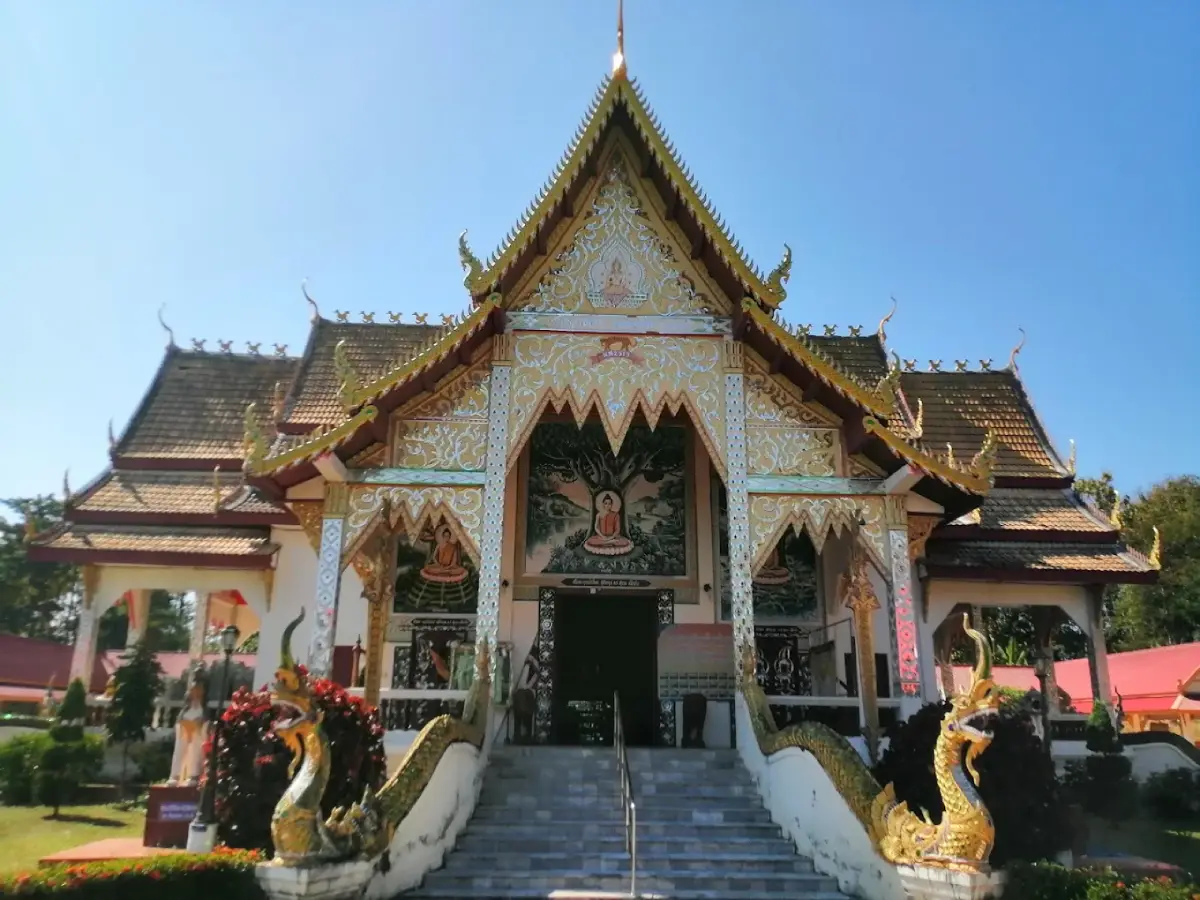
Wat Phra Chao Lan Thong
Operating day: Daily
Operating time: 08.00 - 17.00
Wat Phra Chao Lan Thong is an important historic Buddhist site in Ban Nong Pla Man, Moo 1, Nam Phrae Subdistrict, Phrao District, Chiang Mai Province. The temple stands west of central Phrao, about 4 kilometers from the district center, within the old landscape of Phrao Wang Hin. It enshrines Phra Chao Lan Thong, also called Phra Chao Lan Tong or Phra Chao Luang, a highly revered bronze Buddha image regarded as a sacred guardian image of Phrao. The image is in the Mara-Vijaya posture, measures 180 centimeters across the lap and 274 centimeters in total height including the base, and was registered as an ancient object by the Fine Arts Department in 1985. Wat Phra Chao Lan Thong is therefore both a sacred site and a major historical landmark of Phrao District.
Nam Phrae Subdistrict is one of the culturally important areas of Phrao. Its local identity is associated with Tham Dok Kham, old town history, Wat Phra Chao Lan Thong, agriculture, forest conservation, and local traditions. Wat Phra Chao Lan Thong stands within this wider cultural landscape of temples, caves, ancient town traces, forested areas, waterways, and farming communities. A visit to the temple therefore helps visitors understand Phrao as a historic Lanna area rather than only a rural district of Chiang Mai.
The temple’s location is connected with the old town of Phrao Wang Hin. Academic surveys, including the 1992 survey by Hans Penth, Phanphen Khrueathai, and Srilao Ketphrom, identified Wat Phra Chao Lan Thong as an important site in the old Phrao area. The temple is located west of central Phrao and within the broader historic landscape of the former town. This gives the site significance not only as a place of worship but also as evidence of old settlement geography.
The name Wat Phra Chao Lan Thong comes from the principal sacred image enshrined at the temple. Phra Chao Lan Thong is also known in Northern Thai as Phra Chao Lan Tong and is also called Phra Chao Luang. Local people have revered the image for generations as a sacred Buddha image of Phrao. The temple’s name therefore preserves the identity of the Buddha image, the old town, and the local community at the same time.
Phra Chao Lan Thong is a bronze Buddha image in the Mara-Vijaya posture. The image measures 180 centimeters across the lap and 274 centimeters in total height including the base. An inscription beneath the base is associated with the year 1526 CE, or 2069 BE, making the image nearly 500 years old when counted from that date. The Buddha image is therefore a major sacred object and a valuable piece of Lanna religious history.
The registration of Phra Chao Lan Thong as an ancient object by the Fine Arts Department in 1985 confirms its national cultural value. The image is not only a local sacred object but also a protected cultural heritage item. This registration helps emphasize the importance of conservation, respectful worship, and historical study at the temple.
Wat Phra Chao Lan Thong is located within the old town landscape of Phrao. The temple area is associated with earthworks and remnants of old moats around the site, reflecting the historic layout of Phrao Wang Hin or the former settlement area. This means the temple stands within a layered landscape of Buddhist worship, old urban traces, and community memory.
Local historical memory also connects the temple with King Naresuan’s military route through Phrao. The story says that when King Naresuan led his army through the area, he stopped at Wat Phra Chao Lan Thong. This tradition contributes to the temple’s identity as a historic sacred place of Phrao, even as its strongest material evidence remains the Buddha image, inscription, old town setting, and later restoration history.
After the old-town period, Wat Phra Chao Lan Thong was abandoned for a long time. Local historical accounts describe the temple falling into disuse after warfare and population movement. In 1907, a white-clad ascetic of Lao background named Pu Kale Yangyang came to explore the deserted town and found Phra Chao Lan Thong on a ruined brick base. The image was darkened by forest-fire smoke. He repaired the base with old bricks from the area and built a temporary wooden shelter with a thatched roof to protect the image.
In 1916, Khruba Inta Sathorn, the abbot of Wat Nong Pla Man, worked with local devotees to build a wooden viharn to house the Buddha image more securely. He also led devotees from Ban Nong Pla Man and nearby villages in a water-pouring ceremony for Phra Chao Lan Thong. This ceremony became an important annual tradition and marked the revival of the temple from abandonment into a living place of worship.
A later phase of restoration shaped the temple as visitors see it today. In 1969, Khruba Intha Sukhawatthako of Wat Phuttha Santipangkorn in San Pa Tong District led the construction of a cruciform viharn. When the building was around 80 percent complete, Phra Chao Lan Thong was moved from the old wooden viharn into the new viharn. The Phra Chedi Maha Phutthaphiban was also built, and the water-pouring ceremony for the Buddha image and chedi was revived as a major annual event.
The cruciform viharn is one of the temple’s most important structures. It has a Lanna-inspired architectural character, with four-sided access, enclosed walls, entrances and light openings on each side, and decorative stucco details. Inside, Phra Chao Lan Thong is enshrined as the principal image. The viharn is both a worship space and a visible result of the temple’s long restoration history.
Important sacred and historical features at the temple include Phra Chao Lan Thong, Phra Chao Saen Thong, the cruciform viharn, Phra Chedi Maha Phutthaphiban, the Phrao Wang Hin gate, an old takhian tree revered by local people, and the monument of King Mangrai. These features give the temple several layers of meaning: sacred image, old town memory, abandoned-temple revival, Lanna cultural identity, and contemporary community devotion.
The Phrao Wang Hin gate is another memorable feature. Built in 2019, the wooden brown gateway evokes the idea of an old fortification and helps connect the present temple with the memory of the old town. The gate was created from a recurring dream of Phra Athikan Duangdet Wijittadhammo, the current abbot of Wat Phra Chao Lan Thong. It gives visitors a visual entry into the historical identity of the site.
Phra Chedi Maha Phutthaphiban is closely connected with the modern revival of the temple and the annual water-pouring tradition. It is worshipped together with Phra Chao Lan Thong and forms part of the ritual focus of the annual festival. The presence of both the Buddha image and the chedi allows the temple to support large-scale devotional activity for local residents and visitors.
The temple’s most important annual tradition is the water-pouring ceremony for Phra Chao Lan Thong and Phra Chedi Maha Phutthaphiban. It is held on the full moon of the ninth lunar month of the Northern Thai calendar, usually around May to June. The event includes merit-making, procession activities, water-pouring rites, participation by monks, local authorities, community leaders, and many devotees. This annual ceremony keeps the relationship between the sacred Buddha image and the people of Phrao alive.
Wat Phra Chao Lan Thong plays several roles for the community. Religiously, it is a place to worship Phra Chao Lan Thong, make merit, pour water on sacred objects, and participate in Buddhist ceremonies. Historically, it preserves the memory of Phrao Wang Hin, earthworks, moats, and the revival of an abandoned temple. Culturally, it sustains a major Lanna annual tradition and gives Nam Phrae and Phrao District a shared spiritual landmark.
The atmosphere of the temple is best suited to cultural and devotional travel. Visitors should begin by paying respect to Phra Chao Lan Thong inside the viharn, then walk through the temple grounds to see Phra Chedi Maha Phutthaphiban, the Phrao Wang Hin gate, the King Mangrai monument, and the old-town surroundings. A slow visit helps reveal the temple as a layered place of faith, history, and community memory.
Wat Phra Chao Lan Thong is suitable for visitors interested in important Buddha images, Lanna art, old town landscapes, local tradition, and temple routes in Phrao District. It should not be treated only as a quick photo stop. The temple’s story is carried in the Buddha image, inscription, viharn, restoration history, annual ceremony, and Nam Phrae cultural landscape.
Getting There is most convenient by private car, rental car, or local hired transport. From Chiang Mai city, travel toward Phrao District, then continue to Nam Phrae Subdistrict and Ban Nong Pla Man, Moo 1. The temple is about 4 kilometers west of Phrao District center. Travelers can search for “Wat Phra Chao Lan Thong, Nam Phrae, Phrao, Chiang Mai” in a map application before departure.
Wat Phra Chao Lan Thong can be combined with several nearby sites in Nam Phrae and Phrao District. A half-day route can include Wat Phra Chao Lan Thong, Wat Nam Phrae, and Wat Tham Dok Kham. A full-day route can extend to Wat Nong Pla Man, Wat Pa Ngio, Wat Doi Mae Pang, Wat Phra That Doi Wiang Chai Mongkhon, and other important temples in Phrao.
Visitors should dress modestly, speak quietly, respect monks and worshippers, and avoid touching the Buddha image, ancient objects, or parts of the historic site without permission. Photography should be done respectfully, especially inside the viharn and around sacred objects. During the annual water-pouring festival, visitors should follow temple and local authority guidance because the event attracts many participants.
In summary, Wat Phra Chao Lan Thong is a major historical and sacred site in Nam Phrae Subdistrict, Phrao District, Chiang Mai Province. Located in Ban Nong Pla Man, Moo 1, it enshrines Phra Chao Lan Thong, a bronze Mara-Vijaya Buddha image measuring 180 centimeters across the lap and 274 centimeters in total height. The image is associated with the year 1526 CE, was registered as an ancient object in 1985, and remains one of the most revered sacred images of Phrao. The temple is strongly connected with Phrao Wang Hin, old town traces, restoration from an abandoned site, the annual water-pouring tradition, and the living faith of the people of Phrao.
| Name | Wat Phra Chao Lan Thong |
| Location | Ban Nong Pla Man, Moo 1, Nam Phrae Subdistrict, Phrao District, Chiang Mai Province |
| Place Type | Historic Buddhist Site, Temple, Important Sacred Site Of Phrao District |
| Temple Area | 10 rai and 80 square wah |
| Distance From Phrao District Center | About 4 km west of Phrao District center |
| Highlights | Phra Chao Lan Thong, cruciform viharn, Phra Chedi Maha Phutthaphiban, Phrao Wang Hin gate, old town moats, King Mangrai monument, and annual water-pouring ceremony |
| Important Buddha Image | Phra Chao Lan Thong / Phra Chao Lan Tong / Phra Chao Luang, a bronze Mara-Vijaya Buddha image measuring 180 cm across the lap and 274 cm in total height including the base |
| Year Associated With The Inscription | 1526 CE / 2069 BE |
| Ancient Object Status | Phra Chao Lan Thong was registered as an ancient object by the Fine Arts Department in 1985 |
| Historical Importance | Located in the old Phrao / Phrao Wang Hin area, associated with old earthworks, moats, abandonment, and several phases of temple revival from 1907 onward |
| Abbot / Caretaker | Phra Athikan Duangdet Wijittadhammo |
| Main Areas / Structures | Cruciform viharn, Phra Chedi Maha Phutthaphiban, Phrao Wang Hin gate, King Mangrai monument, temple courtyard, worship area, ceremony area, parking area, restrooms, and information pavilion |
| Important Annual Tradition | Water-pouring ceremony for Phra Chao Lan Thong and Phra Chedi Maha Phutthaphiban on the full moon of the ninth Northern Thai lunar month, usually around May to June |
| Community Context | Located in Nam Phrae, a subdistrict known for old town history, major temples, agriculture, forest conservation, and local culture |
| Community Role | Spiritual center of Phrao, sacred image worship site, annual merit-making venue, old Phrao Wang Hin learning site, and place for preserving Lanna tradition |
| Travel Information | Best reached by private car, rental car, or local hired transport from Chiang Mai toward Phrao District, then into Nam Phrae Subdistrict and Ban Nong Pla Man, Moo 1 |
| Current Status | Active historic temple and cultural site of Phrao District, used for worship, annual water-pouring tradition, and local cultural activities |
| Nearby Tourist Attractions | 1. Wat Nam Phrae, about 3 km 2. Wat Nong Pla Man, about 3 km 3. Wat Tham Dok Kham, about 5 km 4. Wat Pa Ngio, about 4 km 5. Wat Lo Pa Tong, about 6 km 6. Wat Doi Mae Pang, about 15 km 7. Wat Phra That Doi Wiang Chai Mongkhon, about 18 km |
| Nearby Restaurants | 1. Mae Oei Khanom Chin, about 1 km 2. Pa Phen Noodle Shop, San Khwang, about 5 km 3. 135 Cafe, about 11 km, Tel. 083-549-6399 4. Jin Jum And Made-To-Order Food, about 12 km, Tel. 053-475-209 5. Krua Jae Kee, about 13 km, Tel. 084-488-8560 6. Krua Ban Mong, about 14 km, Tel. 099-345-0782 |
| Nearby Accommodations | 1. Phrao Camping Village, about 7 km, Tel. 091-564-2641 2. Wanchana View, about 8 km 3. PK Hotel / PK Hostel, about 12 km, Tel. 088-992-2444 4. Phrao Boutique Hotel, about 13 km 5. Inthang Boutique Hotel, about 14 km 6. Mae Wan Resort, about 24 km |
Frequently Asked Questions (FAQ)
Q: Where is Wat Phra Chao Lan Thong located?
A: Wat Phra Chao Lan Thong is located in Ban Nong Pla Man, Moo 1, Nam Phrae Subdistrict, Phrao District, Chiang Mai Province, about 4 km west of central Phrao.
Q: What is Phra Chao Lan Thong?
A: Phra Chao Lan Thong is a bronze Buddha image in the Mara-Vijaya posture, measuring 180 cm across the lap and 274 cm in total height. It is revered as a sacred guardian image of Phrao and was registered as an ancient object in 1985.
Q: What is the history of Wat Phra Chao Lan Thong?
A: The temple is located in the old Phrao / Phrao Wang Hin area, with traces of old town earthworks and moats. It was once abandoned and was revived in phases from 1907 onward, including the construction of a wooden viharn, the cruciform viharn, and Phra Chedi Maha Phutthaphiban.
Q: What is the main annual tradition of the temple?
A: The main annual tradition is the water-pouring ceremony for Phra Chao Lan Thong and Phra Chedi Maha Phutthaphiban, held on the full moon of the ninth Northern Thai lunar month, usually around May to June.
Q: What can visitors see inside Wat Phra Chao Lan Thong?
A: Visitors can see Phra Chao Lan Thong, Phra Chao Saen Thong, the cruciform viharn, Phra Chedi Maha Phutthaphiban, the Phrao Wang Hin gate, an old takhian tree, and the King Mangrai monument.
Q: What kind of visit is Wat Phra Chao Lan Thong suitable for?
A: It is suitable for worship, merit-making, learning about Phrao Wang Hin history, studying an important Lanna Buddha image, observing Lanna architecture, and joining a temple route through Nam Phrae.
Q: How can travelers get to Wat Phra Chao Lan Thong?
A: The most convenient way is by private car, rental car, or local hired transport from Chiang Mai toward Phrao District, then into Nam Phrae Subdistrict and Ban Nong Pla Man, Moo 1.
Q: What places can be visited together with Wat Phra Chao Lan Thong?
A: Nearby places include Wat Nam Phrae, Wat Tham Dok Kham, Wat Nong Pla Man, Wat Pa Ngio, Wat Lo Pa Tong, Wat Doi Mae Pang, and Wat Phra That Doi Wiang Chai Mongkhon.
 Category: ●Places of Worship
 Group: ●Temple
Last Update : 4 HourAgo
 Last Update : 4 HourAgo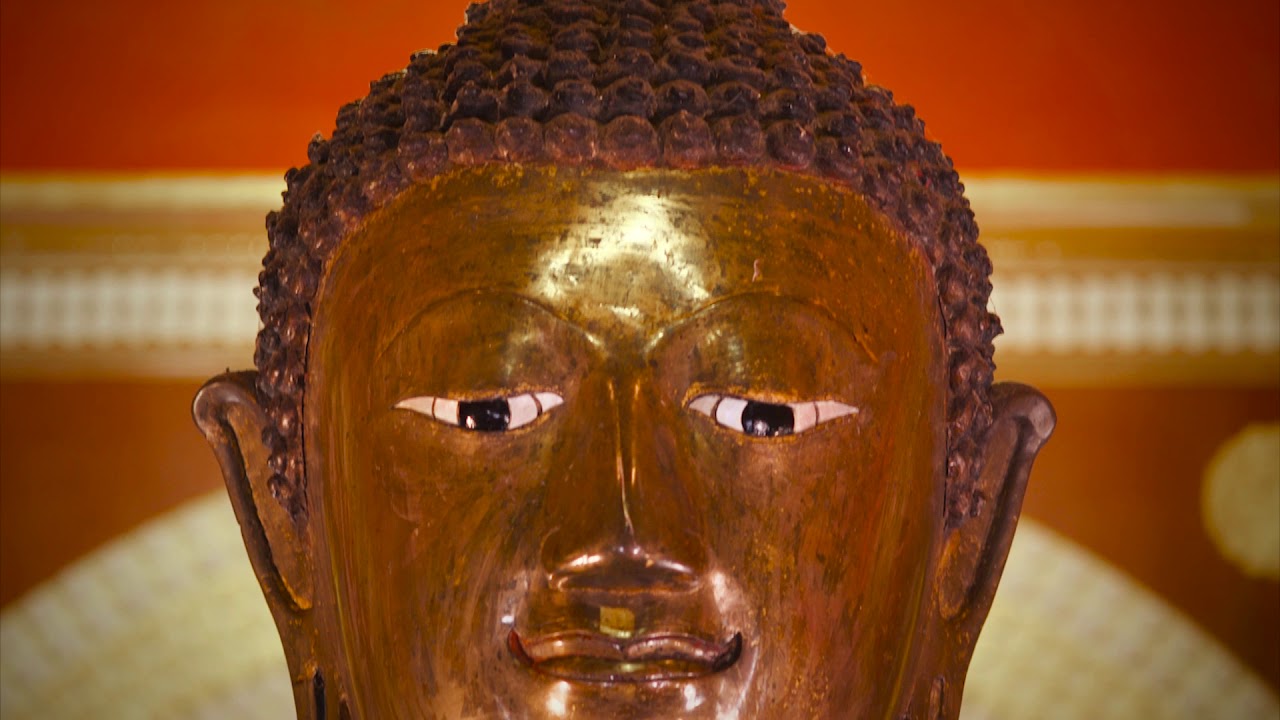
 Click to Access the Navigation Map GPS
Wat Phra Chao Lan Thong Map
Recommend

 Muang Chiang Mai(121)Chom Thong(47)Mae Chaem(25)Chiang Dao(33)Doi Saket(68)Mae Taeng(85)Mae Rim(69)Samoeng(29)Fang(71)Mae Ai(59)Phrao(70)San Pa Tong(105)San Kamphaeng(66)San Sai(73)Hang Dong(74)Hot(32)Doi Tao(22)Omkoi(11)Saraphi(74)Wiang Haeng(15)Chai Prakan(28)Mae Wang(32)Mae On(22)Doi Lo(34)Galyani Vadhana(1)


