
lovethailand home >North Travel Attractions >Chiang Mai Travel Attractions >Phrao >Nam Phrae > Wat Pa Ngio
TL;DR: Wat Pa Ngio is located at Ban Pa Ngio, Moo 2, Nam Phrae Subdistrict, Phrao District, Chiang Mai Province, open Daily, hours 08.00 – 17.00.

Wat Pa Ngio
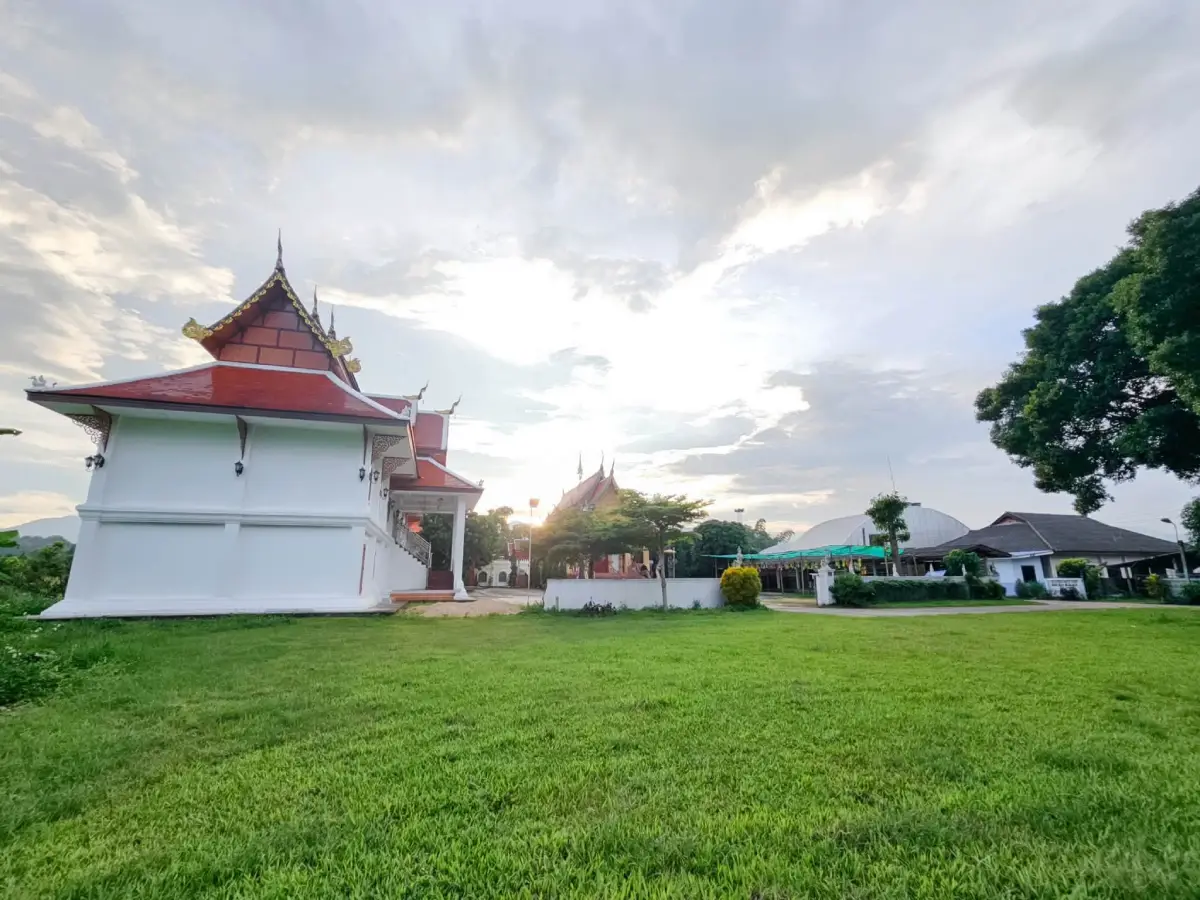
Open Days: Daily
Opening Hours: 08.00 – 17.00
Wat Pa Ngio is a private-sector Buddhist temple under the Mahanikaya order located at 86 Moo 2, Ban Pa Ngio, Nam Phrae Subdistrict, Phrao District, Chiang Mai Province 50190. The temple was officially permitted to be established in 1877. It covers 2 rai and 44 square wah of temple land, with one additional monastic land plot of 1 rai. The current abbot is Phra Athikan Khanong Atthakamo. Wat Pa Ngio is an old community temple of Nam Phrae, serving as a place for worship, merit-making, Dhamma listening, Buddhist ceremonies, and the preservation of Lanna Buddhist traditions in Ban Pa Ngio.
Ban Pa Ngio is Moo 2 of Nam Phrae Subdistrict, Phrao District, Chiang Mai Province. Nam Phrae is an important cultural and religious area of Phrao, known for Tham Dok Kham, old town history, Wat Phra Chao Lan Thong, agriculture, forest conservation, and local culture. Wat Pa Ngio therefore stands within a wider landscape of temples, farming communities, village roads, local traditions, and Buddhist faith.
The official history of Wat Pa Ngio dates back to 1877, showing that the temple has served the local community for well over a century. In that period, a village temple was central to both religious and social life. It provided a place for monks to reside, villagers to make merit, elders to listen to Dhamma, and the community to gather for important ceremonies. Wat Pa Ngio is therefore evidence of the long-standing Buddhist faith of Ban Pa Ngio and the Nam Phrae area.
The name Wat Pa Ngio is directly connected with the village name. A temple carrying the name of its community preserves local identity and memory. When people speak of Wat Pa Ngio, they are also referring to Ban Pa Ngio, its households, annual merit-making events, local elders, village ceremonies, and the relationship between Buddhism and rural life in northern Chiang Mai.
The temple land covers 2 rai and 44 square wah, with one additional monastic land plot of 1 rai. Its boundary information records approximate measurements on all four sides. Although the temple is not a large tourist complex, its size is appropriate for a functioning village temple. It supports monks’ residence, worship, communal merit-making, sermons, and local Buddhist ceremonies.
The main structures of Wat Pa Ngio include the sermon hall, monks’ residences, viharn, dining hall, alms pavilion, temple courtyard, merit-making area, sermon area, and community ceremony spaces. These structures reflect the practical layout of a Lanna village temple. The sermon hall supports Dhamma listening and community gatherings, the monks’ residences support monastic life, the viharn provides space for worship, and the dining hall and alms pavilion support the offering culture of lay devotees.
The viharn is the core worship area where local people come to pay respect, make merit, and take part in Buddhist ceremonies. In a village temple, the viharn is more than an architectural feature. It is the place where faith becomes visible through offerings, chanting, blessings, and community participation. Wat Pa Ngio’s viharn therefore plays a central role in the spiritual life of Ban Pa Ngio.
The sermon hall is another important area because Dhamma listening remains one of the essential functions of a village temple. It is a place where monks and laypeople meet, where moral teachings are shared, and where annual ceremonies are organized. Through the sermon hall, Wat Pa Ngio helps preserve Buddhist values, community manners, and Lanna devotional practice.
The monks’ residences, dining hall, and alms pavilion show the continuing relationship between monks and villagers. Laypeople support the Sangha through food offerings, merit-making, and participation in temple maintenance. Monks, in turn, provide teachings, blessings, rituals, and spiritual support. This reciprocal relationship is the foundation of a rural Mahanikaya temple such as Wat Pa Ngio.
Phra Athikan Khanong Atthakamo serves as the abbot of Wat Pa Ngio. As abbot, he oversees the temple’s religious activities and its relationship with the local community. A community temple depends on cooperation among monks, temple caretakers, village leaders, and local devotees. This cooperation keeps the temple active throughout the year.
Wat Pa Ngio plays several roles in the community. Religiously, it is a place for worship, merit-making, Dhamma listening, precepts, and Buddhist ceremonies. Socially, it is a gathering place for villagers during holy days, funerals, annual events, and community activities. Culturally, it helps preserve Lanna Buddhist customs and the relationship between village life and temple life. Historically, it records the presence of Buddhist faith in Ban Pa Ngio since 1877.
Ban Pa Ngio remains an active village community within Nam Phrae Subdistrict. The wider subdistrict includes several temples and community institutions, including Wat Nam Phrae, Wat Tham Dok Kham, Wat Phra Chao Lan Thong, Wat Nong Pla Man, Wat Lo Pa Tong, and Wat San Khwang. Wat Pa Ngio is therefore part of a religious network that gives Nam Phrae its cultural character.
Nam Phrae Subdistrict is especially rich in Buddhist sites. Wat Phra Chao Lan Thong is an important historic temple of Phrao, Wat Tham Dok Kham is associated with the Phra Chao Liap Lok tradition and the Paet Peng festival, and Wat Nam Phrae preserves old community temple history. Wat Pa Ngio adds to this landscape as an old village temple serving Ban Pa Ngio and nearby communities.
The main value of Wat Pa Ngio is not monumental scale or elaborate tourism design. Its value lies in being a living community temple. Visitors can see a local Mahanikaya temple with a long history, a clear community function, and a setting within Nam Phrae’s agricultural and religious landscape. It is suitable for visitors who want to understand everyday Buddhist life in a northern Thai village.
Temple activities at Wat Pa Ngio follow the Buddhist calendar and Lanna community traditions. Important activities include Buddhist holy day merit-making, Pha Pa, Kathin, Dhamma listening, Buddhist Lent, end-of-Lent activities, Northern Thai New Year, Loy Krathong, and annual village merit-making events. These activities bring villagers together to prepare the temple, offer food, receive blessings, listen to teachings, and maintain community unity.
A visit to Wat Pa Ngio should be slow and respectful. Visitors can begin by paying respect inside the viharn, making merit according to their faith, walking quietly through the temple grounds, and observing the sermon hall, dining hall, alms pavilion, and village setting. The temple is best appreciated as a place of community faith rather than as a large tourist attraction.
Getting There is most convenient by private car, rental car, or local hired transport. From Chiang Mai city, travel toward Phrao District, then continue into Nam Phrae Subdistrict and Ban Pa Ngio, Moo 2. Travelers can search for “Wat Pa Ngio Nam Phrae Phrao Chiang Mai” or use the address 86 Moo 2, Nam Phrae Subdistrict, Phrao District, Chiang Mai 50190 in a map application before departure.
From Phrao town, Wat Pa Ngio can be included in a Nam Phrae temple route. A half-day route can include Wat Pa Ngio, Wat Nam Phrae, Wat Phra Chao Lan Thong, and Wat Tham Dok Kham. With more time, visitors can continue to Wat Nong Pla Man, Wat Lo Pa Tong, Wat San Khwang, Wat Doi Mae Pang, or Wat Phra That Doi Wiang Chai Mongkhon.
Visitors should dress modestly, speak quietly, respect monks and worshippers, avoid entering private monastic areas, and take photographs respectfully. During ceremonies, visitors should follow the guidance of temple caretakers and local residents. Since Wat Pa Ngio is an active village temple, respectful conduct is essential.
In summary, Wat Pa Ngio is an old Mahanikaya community temple in Ban Pa Ngio, Moo 2, Nam Phrae Subdistrict, Phrao District, Chiang Mai Province. Established in 1877, it has temple land of 2 rai and 44 square wah, an additional monastic land plot, and important structures including a sermon hall, monks’ residences, viharn, dining hall, and alms pavilion. Led by Phra Athikan Khanong Atthakamo, the temple remains a spiritual center for Ban Pa Ngio and a meaningful stop on the Buddhist cultural route through Nam Phrae and Phrao District.
| Name | Wat Pa Ngio |
| Location | Ban Pa Ngio, Moo 2, Nam Phrae Subdistrict, Phrao District, Chiang Mai Province |
| Address | 86 Moo 2, Nam Phrae Subdistrict, Phrao District, Chiang Mai 50190, Thailand |
| Open Days | Daily |
| Opening Hours | 08.00 – 17.00 |
| Temple Type | Private-Sector Buddhist Temple, Mahanikaya Order |
| Temple Area | 2 rai and 44 square wah, with one additional monastic land plot of 1 rai |
| Map Code | 954C+94X, Nam Phrae, Phrao District, Chiang Mai 50190 |
| Highlights | Historic village temple of Ban Pa Ngio, established in 1877, with complete community temple structures and a strong role in Nam Phrae’s Buddhist landscape |
| History | Officially permitted to be established as a temple in 1877 |
| Temple Boundaries | North: about 3 sen; South: about 2 sen; East: about 2 sen 14 wa; West: about 2 sen 7 wa |
| Abbot / Caretaker | Phra Athikan Khanong Atthakamo |
| Main Areas / Structures | Sermon hall, monks’ residences, viharn, dining hall, alms pavilion, temple courtyard, merit-making area, sermon area, and community ceremony spaces |
| Community Context | Ban Pa Ngio is Moo 2 of Nam Phrae Subdistrict, a religious, agricultural, and cultural area of Phrao District |
| Community Role | Spiritual center for worship, merit-making, Dhamma listening, Buddhist ceremonies, and preservation of Lanna traditions in Ban Pa Ngio |
| Important Activities / Ceremonies | Buddhist holy day merit-making, Pha Pa, Kathin, Dhamma sermons, Buddhist Lent, end-of-Lent activities, Northern Thai New Year, Loy Krathong, and annual Lanna community merit-making events |
| Travel Information | Best reached by private car, rental car, or local hired transport from Chiang Mai toward Phrao District, then into Nam Phrae Subdistrict and Ban Pa Ngio, Moo 2 |
| Current Status | Active community temple in Nam Phrae Subdistrict used for religious activities and local Buddhist ceremonies |
| Nearby Tourist Attractions | 1. Wat Nam Phrae, about 2 km 2. Wat Phra Chao Lan Thong, about 4 km 3. Wat Nong Pla Man, about 5 km 4. Wat Tham Dok Kham, about 6 km 5. Wat Lo Pa Tong, about 6 km 6. Wat San Khwang, about 7 km 7. Wat Doi Mae Pang, about 17 km |
| Nearby Restaurants | 1. 135 Cafe, about 11 km, Tel. 083-549-6399 2. Jin Jum And Made-To-Order Food, about 12 km, Tel. 053-475-209 3. Krua Jae Kee, about 13 km, Tel. 084-488-8560 4. Krua Ban Mong, about 14 km, Tel. 099-345-0782 5. Rain Tree Cafe, about 21 km, Tel. 087-660-0933 6. Nong Prince Chicken Rice, about 23 km, Tel. 094-559-0182 |
| Nearby Accommodations | 1. Phrao Camping Village, about 7 km, Tel. 091-564-2641 2. Suan Doctor, about 8 km 3. PK Hotel / PK Hostel, about 12 km, Tel. 088-992-2444 4. Phrao Boutique Hotel, about 13 km 5. Inthang Boutique Hotel, about 14 km 6. Mae Wan Resort, about 24 km |
Frequently Asked Questions (FAQ)
Q: Where is Wat Pa Ngio located?
A: Wat Pa Ngio is located at 86 Moo 2, Ban Pa Ngio, Nam Phrae Subdistrict, Phrao District, Chiang Mai Province 50190.
Q: What is the history of Wat Pa Ngio?
A: Wat Pa Ngio is a private-sector Mahanikaya temple officially permitted to be established in 1877 and is one of the old village temples of Nam Phrae Subdistrict.
Q: Who is the abbot of Wat Pa Ngio?
A: The abbot of Wat Pa Ngio is Phra Athikan Khanong Atthakamo.
Q: What important structures are found at Wat Pa Ngio?
A: Important structures include the sermon hall, monks’ residences, viharn, dining hall, alms pavilion, temple courtyard, and community ceremony spaces.
Q: What is the main highlight of Wat Pa Ngio?
A: Its main highlight is its identity as an old village temple of Ban Pa Ngio, with a long history since 1877 and an active role in Nam Phrae’s Buddhist community life.
Q: What kind of visit is Wat Pa Ngio suitable for?
A: It is suitable for worship, merit-making, learning about old community temples, observing village Buddhist life, and joining a religious route through Nam Phrae Subdistrict.
Q: How can travelers get to Wat Pa Ngio?
A: The most convenient way is by private car, rental car, or local hired transport from Chiang Mai toward Phrao District, then into Nam Phrae Subdistrict and Ban Pa Ngio, Moo 2.
Q: What places can be visited together with Wat Pa Ngio?
A: Nearby places include Wat Nam Phrae, Wat Phra Chao Lan Thong, Wat Nong Pla Man, Wat Tham Dok Kham, Wat Lo Pa Tong, Wat San Khwang, and Wat Doi Mae Pang.
 Category: ●Places of Worship
 Group: ●Temple
Last Update : 1 WeekAgo
 Last Update : 1 WeekAgo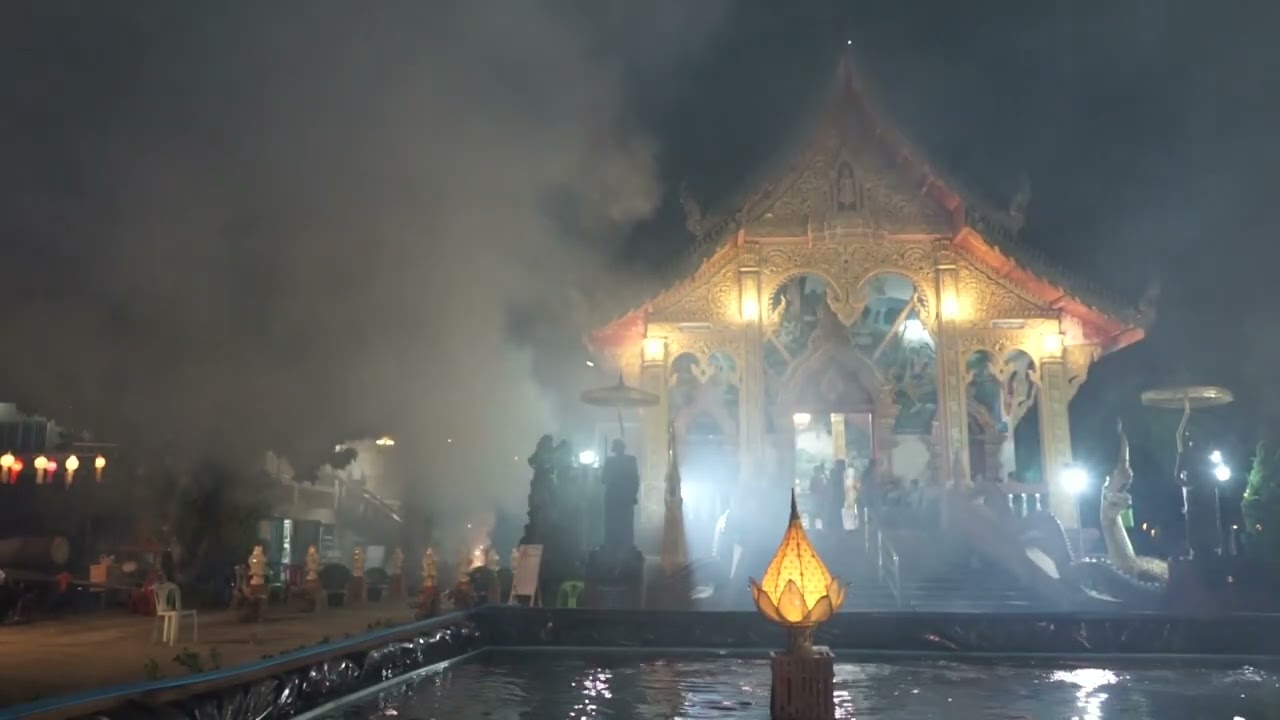
 Click to Access the Navigation Map GPS
Wat Pa Ngio Map
Recommend

 Muang Chiang Mai(121)Chom Thong(47)Mae Chaem(25)Chiang Dao(33)Doi Saket(68)Mae Taeng(85)Mae Rim(69)Samoeng(29)Fang(71)Mae Ai(59)Phrao(70)San Pa Tong(103)San Kamphaeng(66)San Sai(73)Hang Dong(73)Hot(32)Doi Tao(22)Omkoi(11)Saraphi(74)Wiang Haeng(15)Chai Prakan(28)Mae Wang(32)Mae On(22)Doi Lo(33)Galyani Vadhana(1)


