
lovethailand home >North Travel Attractions >Chiang Mai Travel Attractions >Phrao >Thung Luang > Wat Thung Luang
TL;DR: Wat Thung Luang is located at Ban San Mana, San Sai–Phrao Road, Moo 3, Thung Luang Subdistrict, Phrao District, Chiang Mai Province.
Wat Thung Luang
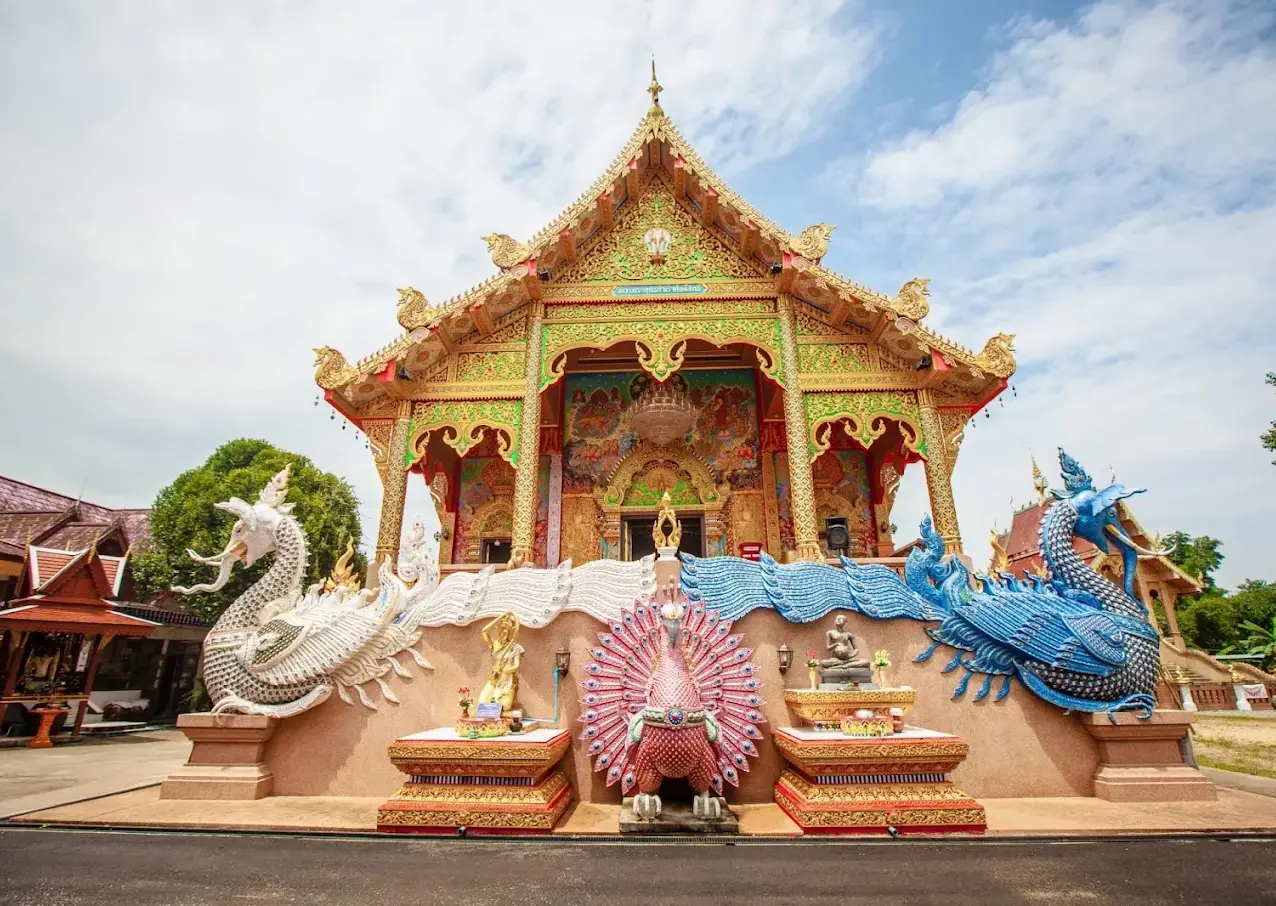
Operating day: Daily
Operating time: 08.00 - 17.00
Wat Thung Luang is a private-sector Buddhist temple under the Mahanikaya order located at 33 Ban San Mana, San Sai–Phrao Road, Moo 3, Thung Luang Subdistrict, Phrao District, Chiang Mai Province. The temple is significant not only as a place of worship but also as a community learning center, folk museum, local weaving center, rescue service base, and public activity space for residents of Wiang–Thung Luang. Its history is connected with Khruba Chao Intha, the relocation of the temple to Ban San Mana, and the continuing role of the temple as a living cultural center in Phrao.
Thung Luang Subdistrict lies south of the old Wiang Phrao area. Its name suggests a broad rice-field landscape, and the community has long been connected with farming, waterways, local temples, and Lanna cultural traditions. The subdistrict includes communities such as Ban Thung Luang, Ban Pa Chi, Ban San Mana, Ban Mae Chat, Ban Mo Bon, and Ban Mo Lang. Wat Thung Luang, located in Ban San Mana, therefore stands within a cultural landscape where village life, temple life, rice fields, and local traditions remain closely connected.
The history of Wat Thung Luang is distinctive because the temple moved more than once before reaching its present site. It was originally located near the Thung Luang Subdistrict health station. Because the old site became too narrow, local devotees moved the temple to an area near the former post and telegraph office and the telephone exchange building in Phrao. Later, the community discussed moving the temple again because the site was considered unsuitable. The temple was then relocated to its current location at Ban San Mana on the San Sai–Phrao Road.
The present temple site was made possible through local devotion. Pho Mo Sit and Mae Ui Loon Sitthiphuang donated the land for the temple. The original land area was recorded as 2 rai and 33 square wah. Later, in 1997, the land was surveyed and issued a title deed, with an area of about 3 rai and 62 square wah, along with an additional monastic land plot. The temple’s location beside the San Sai–Phrao Road gives it direct contact with the village, local travel routes, and the surrounding community.
Khruba Chao Intha played a central role in initiating the construction of Wat Thung Luang. Local historical accounts place the beginning of construction in 1883, while temple registry information records the temple’s establishment in 1889. This early period reflects the formation of a Buddhist center for Thung Luang’s local community. Building a temple in that era required cooperation between monks, local leaders, and villagers, including land preparation, construction of monastic buildings, support for monks, and the use of the temple as a place of moral and religious learning.
Wat Thung Luang has a long line of abbots, beginning with Khruba Chao Intha and continuing through many later monks, including Phra Athikan Buntha, Phra Bunpeng, Phra Kham Puan, Phra Uen Kham, Phra Duang Di, Phra Ai, Phra Buntha, Phra Sangob, Phra Boon Si, and later abbots. This continuity reflects the persistence of Buddhist community life in Thung Luang and the long relationship between the temple and Ban San Mana.
The temple is currently led by Phra Khru Preechaphirat, who serves as the abbot of Wat Thung Luang, ecclesiastical chief of Wiang–Thung Luang Subdistrict, and president of the Phrao Wang Hin rescue center. His role gives the temple a broader community function. Wat Thung Luang is not only a temple for worship and merit-making; it is also a place for elderly activities, rescue coordination, community learning, and public service.
One of the most important highlights of Wat Thung Luang is its folk museum, which uses part of the bell tower as an exhibition space. The bell tower and museum have a Thai-Lanna character and serve as a local heritage space. The museum displays antiques, art objects, traditional household items, old banknotes, coins, and objects donated by villagers in Phrao District for educational purposes. This makes the museum a community memory archive where younger generations and visitors can learn about local life through real objects.
The museum is valuable because it does not simply store old objects. Traditional tools and household items reveal how people once lived and worked. Old banknotes and coins show changes in the local economy and monetary culture. Art objects and antiques reflect local aesthetics, faith, and community identity. Because many items were donated by villagers, the museum represents a shared heritage rather than a private collection.
The folk museum is part of the Thai Cultural Learning Network project associated with Wat Thung Luang and is also connected with the temple’s role as a local culture and wisdom learning center for Wiang–Thung Luang. The center provides tourism information, local history, museum learning, Lanna traditional activities, and cultural knowledge. Visitors therefore come not only to worship but also to learn about community history, local crafts, and the cultural identity of Phrao.
Wat Thung Luang is also connected with a local weaving group. The weaving group is based within the temple and represents an important form of Lanna community wisdom. Traditional weaving preserves knowledge of patterns, techniques, materials, and women’s community work. By housing the weaving group, the temple supports both cultural preservation and local livelihoods, showing how a temple can serve religious, social, and economic roles at the same time.
Important structures and areas within Wat Thung Luang include the viharn, sermon hall, monks’ residences, multipurpose hall, bell tower, folk museum, cultural learning center, weaving group area, Sala Sang Suk, and the Phrao Wang Hin rescue center. These areas support worship, merit-making, sermons, community activities, lifelong learning, elderly programs, and public service.
The temple’s public-service role is especially clear through the Phrao Wang Hin rescue center, located at the temple. The center was formed by local volunteers who saw the need for emergency support in Phrao District. Under the leadership of Phra Khru Preechaphirat, the center helps coordinate assistance for accidents, disasters, and emergency illness. This gives Wat Thung Luang a practical role in community safety as well as a spiritual role.
Wat Thung Luang is also an important activity space for older residents. Elderly quality-of-life programs and senior school activities have been held at Sala Sang Suk within the temple. These programs allow older adults to gather, learn, exchange experiences, and participate in activities that support physical, mental, and social well-being. The temple therefore remains central to community life across generations.
Merit-making and annual temple activities at Wat Thung Luang follow the Buddhist calendar and Lanna community traditions. Suitable activities include Buddhist holy day merit-making, Pha Pa, Kathin, Dhamma listening, Northern Thai New Year activities, Loy Krathong, cultural learning events, weaving activities, and local seasonal traditions. These activities help maintain unity, faith, and shared identity within the community.
Wat Thung Luang is suitable for visitors interested in worship, local museums, Lanna community history, traditional weaving, and living temple culture. A visit can begin with worship in the viharn, followed by exploring the temple grounds, visiting the folk museum inside the bell tower, viewing old objects, banknotes, coins, traditional tools, and learning about the temple’s weaving group and community learning role.
The temple’s value lies in its many living functions. It is a place for worship and Dhamma listening, a folk museum, a cultural learning center, a weaving group base, a rescue center, and an elderly activity space. This makes Wat Thung Luang especially meaningful for cultural travel because visitors can see a temple that actively serves the community in many dimensions, not only as a tourist attraction.
Wat Thung Luang can be combined with nearby temples and learning sites in Phrao District, including Wat Ban Mo, Wat Pa Chi, Mae Chat religious site, Wat Phra That Doi Wiang Chai Mongkhon, Wat Khuean Phak, Wat Huai Bong, and other community sites in Wiang Phrao. This route is suitable for travelers who want to understand Phrao through old communities, Lanna temples, folk museums, weaving heritage, and rice-field landscapes.
Getting There is most convenient by private car, rental car, or local hired transport. From Chiang Mai city, travel toward Phrao District, then continue onto the San Sai–Phrao Road in Thung Luang Subdistrict. The temple is located at Ban San Mana, Moo 3. Travelers can search for “Wat Thung Luang Phrao Chiang Mai” or use the address 33 Ban San Mana, San Sai–Phrao Road, Moo 3, Thung Luang Subdistrict, Phrao District, Chiang Mai 50190 in a map application.
From Phrao town, Wat Thung Luang is easily combined with other nearby temples and community learning sites. A half-day route can include Wat Thung Luang, Wat Ban Mo, Wat Pa Chi, and nearby local learning areas. A full-day route can continue to Wat Phra That Doi Wiang Chai Mongkhon, Wat Khuean Phak, or Wat Huai Bong to experience a wider range of temple styles and community histories in Phrao.
Visitors should dress modestly, speak quietly, respect monks and worshippers, and avoid disturbing activities at the learning center, rescue center, or elderly activity areas. Inside the folk museum, visitors should avoid touching antiques, banknotes, coins, and displayed objects without permission. Photography should be done respectfully, especially around sacred spaces and community activities.
In summary, Wat Thung Luang is a Mahanikaya private-sector temple in Ban San Mana, Thung Luang Subdistrict, Phrao District, Chiang Mai Province. Initiated by Khruba Chao Intha and supported by local land donors, the temple has become a living center of worship, local history, folk museum learning, weaving wisdom, public rescue service, and elderly community activity. It is suitable for worship, merit-making, learning about local heritage, visiting a folk museum, and joining a broader cultural route through Phrao District.
| Name | Wat Thung Luang |
| Location | Ban San Mana, San Sai–Phrao Road, Moo 3, Thung Luang Subdistrict, Phrao District, Chiang Mai Province |
| Address | 33 Ban San Mana, San Sai–Phrao Road, Moo 3, Thung Luang Subdistrict, Phrao District, Chiang Mai 50190, Thailand |
| Place Type | Private-Sector Buddhist Temple, Mahanikaya Order / Local Culture And Wisdom Learning Center |
| Temple Area | Original donated land: 2 rai and 33 square wah; later surveyed land title in 1997: about 3 rai and 62 square wah, with an additional monastic land plot |
| Highlights | Folk museum inside the bell tower, local culture and wisdom learning center, traditional weaving group, Phrao Wang Hin rescue center, elderly activity space, and temple relocation history |
| History | Initiated by Khruba Chao Intha from 1883; temple registry information records establishment in 1889 |
| Land Donors | Pho Mo Sit and Mae Ui Loon Sitthiphuang |
| Abbot / Caretaker | Phra Khru Preechaphirat, abbot of Wat Thung Luang, ecclesiastical chief of Wiang–Thung Luang Subdistrict, and president of the Phrao Wang Hin rescue center |
| Contact | 095-178-9899 |
| Main Areas / Zones | Viharn, sermon hall, monks’ residences, multipurpose hall, bell tower, folk museum, local culture and wisdom learning center, weaving group area, Sala Sang Suk, and Phrao Wang Hin rescue center |
| Folk Museum | Displays antiques, art objects, traditional household items, old banknotes, coins, and donated community objects for educational purposes |
| Community Role | Spiritual center, local history learning site, weaving wisdom center, rescue service base, and elderly activity space for Wiang–Thung Luang community |
| Important Activities / Ceremonies | Buddhist holy day merit-making, Pha Pa, Kathin, Dhamma sermons, cultural learning activities, elderly school activities, weaving activities, and annual Lanna community traditions |
| Travel Information | Best reached by private car, rental car, or local hired transport from Chiang Mai toward Phrao District, then onto the San Sai–Phrao Road in Thung Luang Subdistrict |
| Current Status | Active community temple, local learning center, folk museum, and public activity space of Thung Luang Subdistrict |
| Nearby Tourist Attractions | 1. Wat Thung Luang Folk Museum, inside the temple 2. Wat Ban Mo, about 3 km 3. Wat Pa Chi, about 4 km 4. Mae Chat Religious Site, about 5 km 5. Wat Phra That Doi Wiang Chai Mongkhon, about 18 km 6. Wat Khuean Phak, about 20 km 7. Wat Huai Bong, about 22 km |
| Nearby Restaurants | 1. 135 Cafe, about 6 km, Tel. 083-549-6399 2. Rain Tree Cafe, about 16 km, Tel. 087-660-0933 3. Jin Jum And Made-To-Order Food, about 8 km, Tel. 053-475-209 4. Krua Jae Kee, about 9 km, Tel. 084-488-8560 5. Nong Prince Chicken Rice, about 18 km, Tel. 094-559-0182 6. Krua Ban Mong, about 10 km, Tel. 099-345-0782 |
| Nearby Accommodations | 1. PK Hotel / PK Hostel, about 8 km 2. Phrao Boutique Hotel, about 9 km 3. Inthang Boutique Hotel, about 10 km 4. Phrao Camping Village, about 13 km, Tel. 091-564-2641 5. Mae Wan Resort, about 20 km |
Frequently Asked Questions (FAQ)
Q: Where is Wat Thung Luang located?
A: Wat Thung Luang is located at 33 Ban San Mana, San Sai–Phrao Road, Moo 3, Thung Luang Subdistrict, Phrao District, Chiang Mai 50190, Thailand.
Q: What is the history of Wat Thung Luang?
A: Wat Thung Luang was initiated by Khruba Chao Intha from 1883, while temple registry information records establishment in 1889. The temple moved from earlier locations before settling at Ban San Mana.
Q: Who is the abbot of Wat Thung Luang?
A: The abbot of Wat Thung Luang is Phra Khru Preechaphirat, who also serves as ecclesiastical chief of Wiang–Thung Luang Subdistrict and president of the Phrao Wang Hin rescue center.
Q: What can visitors see at the Wat Thung Luang folk museum?
A: The folk museum uses part of the bell tower and displays antiques, art objects, traditional household items, old banknotes, coins, and objects donated by local residents for educational purposes.
Q: What kind of visit is Wat Thung Luang suitable for?
A: It is suitable for worship, merit-making, visiting a folk museum, learning local history, observing traditional weaving, and joining a cultural route through Phrao District.
Q: What role does Wat Thung Luang play in the community?
A: It serves as a spiritual center, local culture and wisdom learning center, weaving group base, rescue center, and elderly activity space for the Wiang–Thung Luang community.
Q: How can travelers get to Wat Thung Luang?
A: The most convenient way is by private car, rental car, or local hired transport from Chiang Mai toward Phrao District, then onto the San Sai–Phrao Road in Thung Luang Subdistrict.
Q: What places can be visited together with Wat Thung Luang?
A: Nearby places include Wat Ban Mo, Wat Pa Chi, Mae Chat religious site, Wat Phra That Doi Wiang Chai Mongkhon, Wat Khuean Phak, and Wat Huai Bong.
 Category: ●Places of Worship
 Group: ●Temple
Last Update : 5 DayAgo
 Last Update : 5 DayAgo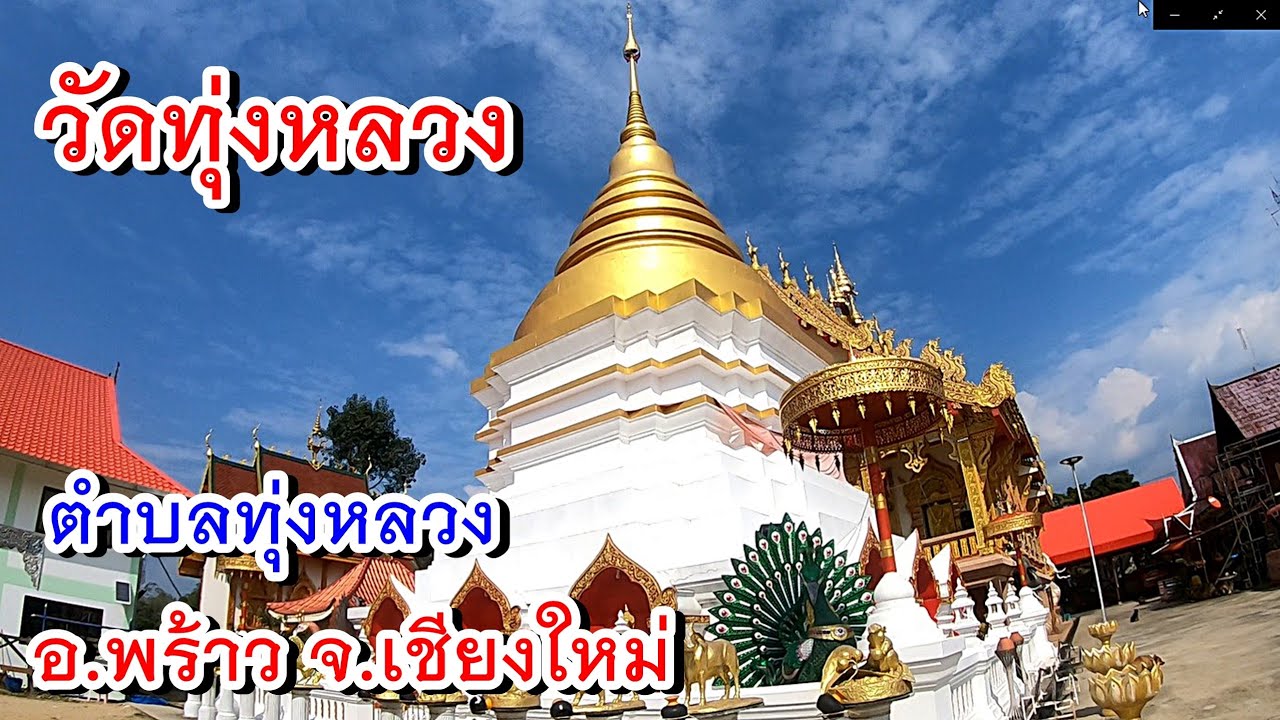
 Click to Access the Navigation Map GPS
Wat Thung Luang Map
Recommend

 Muang Chiang Mai(121)Chom Thong(47)Mae Chaem(25)Chiang Dao(33)Doi Saket(68)Mae Taeng(85)Mae Rim(69)Samoeng(29)Fang(71)Mae Ai(59)Phrao(70)San Pa Tong(103)San Kamphaeng(66)San Sai(73)Hang Dong(73)Hot(32)Doi Tao(22)Omkoi(11)Saraphi(74)Wiang Haeng(15)Chai Prakan(28)Mae Wang(32)Mae On(22)Doi Lo(34)Galyani Vadhana(1)


