
lovethailand home >North Travel Attractions >Chiang Mai Travel Attractions >Doi Lo >Song Khwae > Wat Thung Tho
TL;DR: Wat Thung Tho is located at Ban Thung Tho, Moo 2, Song Khwae Subdistrict, Doi Lo District, Chiang Mai Province 50160. is a community Buddhist temple in Ban Thung Tho, Moo 2, Song Khwae Subdistrict, Doi Lo District, Chiang Mai Province 50160. The temple.
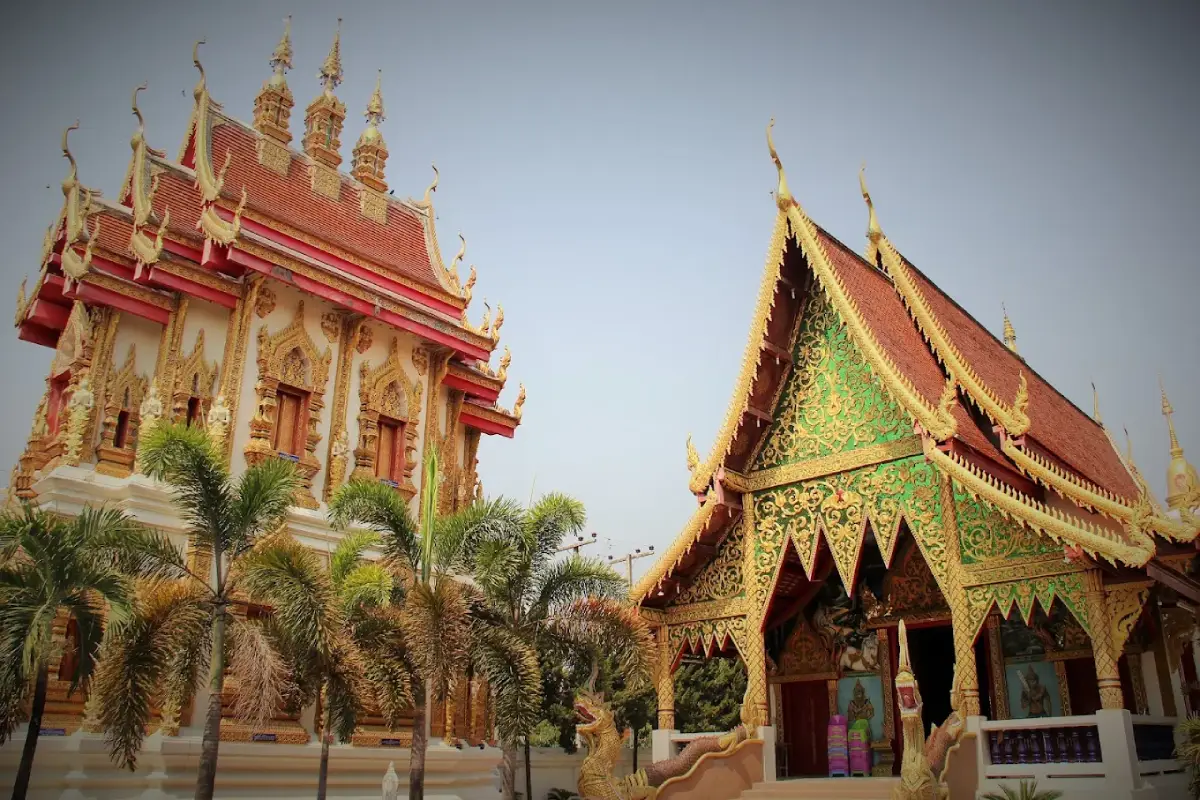
Wat Thung Tho
Operating day: Daily
Operating time: 08.00 - 17.00
Wat Thung Tho is a community Buddhist temple in Ban Thung Tho, Moo 2, Song Khwae Subdistrict, Doi Lo District, Chiang Mai Province 50160. The temple belongs to the Maha Nikaya order and remains an active part of the Thai Buddhist administrative system. The current temple registry lists Wat Thung Tho under registration code 350240202, while the 2025 Buddhist monastic education directory also lists the temple together with Phra Khru Panya Phisut Kittipanyo.
Wat Thung Tho is one of the principal village temples of Song Khwae Subdistrict, an agricultural and rural area in southern Chiang Mai Province. Temples in communities such as this traditionally perform several functions at the same time. They are places of worship, centers for Buddhist education, meeting places for villagers, and institutions through which northern Thai traditions are passed from one generation to the next.
Historical temple records date the establishment of Wat Thung Tho to 1867, corresponding to Buddhist Era 2410. This gives the temple a history of more than 150 years. The temple was founded during a period when rural communities in Chiang Mai depended heavily on agriculture, waterways, village networks, and Buddhist monasteries long before modern roads became the principal form of transportation.
The monk traditionally associated with the founding of Wat Thung Tho is Khru Ba Thep. His role is important for understanding the temple's early history because respected monks in traditional Lanna communities often served not only as religious teachers but also as spiritual leaders who brought villagers together and connected individual communities with broader Buddhist traditions.
The wider context of Song Khwae helps explain the temple's continuing importance. Local administrative information describes the majority of residents as Buddhist and identifies the preservation of Lanna customs and traditions as part of community life. Important Buddhist temples in the subdistrict include Wat Lang Tham, Wat Thung Tho, Wat Song Khwae, Wat Hua Khuang, Wat Pa Lan, and Wat Phra That Khong Khao.
These six temples are also grouped within the same Song Khwae monastic administrative area. Wat Thung Tho therefore belongs to a wider network of village temples rather than functioning as an isolated religious site. This network supports local Buddhist ceremonies, monastic administration, religious education, and relations among neighboring communities.
Historical records give the main temple property as approximately 1 rai, 1 ngan and 69 square wah, with an additional monastic land parcel of approximately 1 ngan and 72 square wah. The relatively compact size reflects the character of Wat Thung Tho as a village monastery rather than a large urban or tourism-oriented temple complex.
Buildings specifically recorded in historical temple documentation include a sermon hall and monks' residences. The sermon hall serves Buddhist teaching, merit-making ceremonies, meetings, and community activities, while the monks' residences provide living quarters for members of the Sangha. Together they reflect the practical role of the temple as a functioning religious institution.
Reliable independent documentation is currently insufficient to provide detailed descriptions of a wihan, ubosot, chedi, relic shrine, bell tower, principal Buddha image, or other specific sacred structures at Wat Thung Tho. These features are therefore not described as confirmed historical highlights. Visitors may encounter additional structures at the temple today, but their date, artistic style, and historical significance should not be assumed without supporting documentation.
The name “Thung Tho” is closely connected with local language and community memory. Local traditions link the name with gatherings of Buddhist devotees and the northern Thai language used by villagers. Over time the local pronunciation was adapted into the standard Thai form “Thung Tho.” The place-name is therefore part of the cultural history of the village rather than merely a geographical label.
The surrounding region has historically been connected with waterways including the Ping River system and the Khan River. Before modern road transport became dominant, waterways played an important role in communication between communities, travel to religious ceremonies, and movement through southern Chiang Mai. This historical landscape helps explain why stories of Buddhist journeys and communal gatherings remain part of local temple memory.
Wat Thung Tho also belongs to the wider religious landscape associated with Wat Phra That Si Chom Thong Worawihan in nearby Chom Thong District. Worship of the sacred relic at Chom Thong has long been important to Buddhist communities in southern Chiang Mai. Although annual schedules at Wat Thung Tho should always be checked for the relevant year, the historic relationship between local communities and major regional pilgrimage centers is an important part of the temple's cultural setting.
The temple's location within Ban Thung Tho places it close to several other rural communities, including areas around Tha Wang Phrao and Mae Khan. This geography enabled Wat Thung Tho to function historically as a gathering point for people whose daily lives were closely connected through agriculture, religion, and local travel.
Wat Thung Tho continues to have a role in Buddhist education. The temple appears in Thailand's 2025 monastic Buddhist education directory, where Phra Khru Panya Phisut Kittipanyo is listed in association with Wat Thung Tho. This contemporary record is important because it confirms that the temple remains connected to the formal educational structure of the Thai Sangha.
Phra Khru Panya Phisut Kittipanyo is the monk identified with Wat Thung Tho in current monastic education records. Earlier Sangha directories also associate Phra Khru Panya Phisut with Doi Lo District and Song Khwae. For this reason, current information uses his name rather than extending older abbot lists into the present without recent supporting evidence.
Older temple histories preserve the names of several monks connected with Wat Thung Tho over different periods, including Khru Ba Thep, Khru Ba Chak, Khru Ba Thananchai, Khru Ba Tha, Khru Ba Duangkaeo, and Phra Chan Thong Siripanyo. These names demonstrate continuity in monastic leadership even though complete dates are not available for every individual.
The role of a village temple extends beyond formal Buddhist ceremonies. Monks traditionally participate in merit-making days, Buddhist Lent, the end of Buddhist Lent, Kathin ceremonies, funerals, family merit-making events, and other community observances. Through these activities a temple becomes part of the social life of the village as well as its religious center.
No sufficiently current official schedule has been found for an annual Kathin ceremony, Pha Pa offering, relic-bathing ceremony, or temple festival at Wat Thung Tho. Dates from previous years should therefore not be treated as permanent annual schedules. Travelers wishing to attend a religious event should confirm the program locally shortly before visiting.
The importance of Wat Thung Tho to Song Khwae lies in this continuing community function. Local administrative information notes the strong presence of Buddhism and Lanna cultural traditions in the subdistrict. The temple serves as a place of worship and religious learning as well as a gathering point for community life.
For travelers, Wat Thung Tho offers a very different experience from Chiang Mai's famous city temples. The attraction lies in seeing a genuine rural monastery within an agricultural community. The surrounding environment is quieter and less commercial, making the temple suitable for visitors interested in local history, Lanna culture, village Buddhism, and slower forms of travel.
Visitors should approach Wat Thung Tho as an active sacred place rather than a conventional sightseeing complex. Dress modestly, remove shoes where required, keep noise low, and avoid entering monks' residential areas without permission. Close-up photographs of monks, ceremonies, or local residents should be taken only after asking permission.
Some online travel information lists visiting hours of 08:00–17:00, but no sufficiently current official temple announcement confirming fixed opening hours has been located. A daytime visit is therefore the most practical choice. Visitors who need to meet a monk or attend a specific ceremony should confirm arrangements before traveling.
No entrance ticket or official admission fee has been found. Wat Thung Tho functions as a local Buddhist monastery rather than a ticketed tourist attraction. Visitors who wish to contribute may make a voluntary donation through the temple's designated donation points.
Several telephone numbers appear in records from different periods. Older Sangha directories list 053-367274 and 087-1746950, while a more recent online business listing gives 096-9461350. Because an official current contact channel for the temple has not been identified, travelers should verify the number before relying on it for an appointment or formal coordination.
Getting There From Chiang Mai city, take Highway 108, the Chiang Mai–Hot Road, south through Hang Dong and San Pa Tong toward Doi Lo District. Continue into Song Khwae Subdistrict and Ban Thung Tho. A private car or rental vehicle is the most practical choice because temples, restaurants, accommodation, and natural attractions are distributed across several villages.
When using digital navigation, search for the full destination “Wat Thung Tho, Song Khwae, Doi Lo, Chiang Mai.” Some current map databases display the English name as “Wat Thung O,” while the accompanying address identifies Ban Thung Tho in Song Khwae. Checking the village and district names helps avoid navigation errors.
Wat Thung Tho can be combined with other Buddhist sites in Song Khwae, particularly Wat Lang Tham, Wat Phra That Khong Khao, Wat Song Khwae, Wat Hua Khuang, and Wat Pa Lan. Visiting several of these temples provides a broader understanding of how Buddhist monasteries are distributed among northern Thai villages.
For a longer day trip, travelers can continue to Ganesh Museum in Yang Kram or Pha Chor in Mae Wang National Park. Pha Chor is known for dramatic eroded sediment cliffs and earth formations, while Ganesh Museum focuses on religious imagery and material associated with Ganesha. Together with Wat Thung Tho, these sites create an itinerary combining village Buddhism, religious art, and natural landscapes.
Accommodation closest to the temple includes Baantidnam, listed approximately 0.89 km from Wat Thung Tho, and Pimprajan Homestay, approximately 1.29 km away. Other accommodation options in the wider Doi Lo area include Baan Rim Ping River Side Resort, Green Tree Resort, Baan Rai Inn, and Bandin Resort.
Food and coffee options are distributed across Song Khwae and the wider Doi Lo area. Current business listings include ice coffee and Jai Cha Coffee in Song Khwae, together with DOK JIK coffee homemade, PHANSA COFFEE, and Yuka Coffee elsewhere in Doi Lo. Having a private vehicle makes it much easier to combine these stops with temples and attractions.
Wat Thung Tho is ultimately significant because its historical and contemporary roles overlap. Founded in 1867, the temple has passed through generations of monastic leadership and today remains registered within the Thai Sangha and connected with monastic Buddhist education. Its value therefore lies not in monumental scale but in the continuity of Buddhism within the life of Ban Thung Tho and Song Khwae.
For visitors seeking a deeper understanding of Chiang Mai beyond the major tourist districts, Wat Thung Tho provides a useful perspective on how a rural Lanna temple functions as a religious center, educational institution, social meeting place, and repository of community memory. A visit here is best understood as an encounter with living local culture rather than simply another stop on a temple checklist.
| Name | Wat Thung Tho |
| Temple Type | Community Buddhist Temple, Maha Nikaya |
| Location | Ban Thung Tho, Moo 2, Song Khwae Subdistrict, Doi Lo District, Chiang Mai Province 50160 |
| Temple Registration Code | 350240202 |
| Foundation Year | 1867 / Buddhist Era 2410 |
| Founder | Khru Ba Thep |
| Historical Temple Area | Approximately 1 rai, 1 ngan and 69 square wah |
| Additional Monastic Land | Approximately 1 ngan and 72 square wah |
| Historically Recorded Buildings | Sermon hall and monks' residences |
| Current Monastic Record | Phra Khru Panya Phisut Kittipanyo |
| Buddhist Education | Listed in the 2025 monastic Buddhist education directory |
| Current Status | Active temple listed in current Maha Nikaya and monastic education records |
| Admission Fee | No official admission fee found |
| Getting There | Take Highway 108 south from Chiang Mai through Hang Dong and San Pa Tong toward Doi Lo, then continue to Ban Thung Tho in Song Khwae Subdistrict. Private car is the most convenient option. |
| Nearby Attractions | 1. Wat Lang Tham — Song Khwae Subdistrict 2. Wat Phra That Khong Khao — Ban Sam Lang, Song Khwae 3. Wat Song Khwae — Song Khwae Subdistrict 4. Ganesh Museum — Yang Kram, Tel. 053-024287 5. Pha Chor, Mae Wang National Park — Doi Lo, Tel. 053-106759 |
| Nearby Food And Cafes | 1. ice coffee, Song Khwae, Tel. 082-5294681 2. Jai Cha Coffee, Song Khwae, Tel. 083-2635142 3. DOK JIK coffee homemade, Doi Lo, Tel. 080-9453376 4. PHANSA COFFEE, Doi Lo, Tel. 099-2729849 5. Yuka Coffee, Doi Lo, Tel. 099-3313412 |
| Nearby Accommodations | 1. Baantidnam — approximately 0.89 km from Wat Thung Tho 2. Pimprajan Homestay — approximately 1.29 km, Tel. 090-8851545 3. Baan Rim Ping River Side Resort — Doi Lo, Tel. 089-8949172 4. Green Tree Resort — Yang Kram, Tel. 063-3833183 5. Baan Rai Inn — Doi Lo, Tel. 081-7831315 6. Bandin Resort — Doi Lo, Tel. 053-360189 |
Frequently Asked Questions (FAQ)
Q: Where is Wat Thung Tho located?
A: Wat Thung Tho is in Ban Thung Tho, Moo 2, Song Khwae Subdistrict, Doi Lo District, Chiang Mai Province 50160.
Q: When was Wat Thung Tho founded?
A: Historical temple records date the foundation of Wat Thung Tho to 1867, or Buddhist Era 2410, with Khru Ba Thep identified as the founding monk.
Q: Who is currently associated with Wat Thung Tho?
A: The 2025 monastic Buddhist education directory lists Phra Khru Panya Phisut Kittipanyo in association with Wat Thung Tho.
Q: Is Wat Thung Tho still active?
A: Yes. The temple remains in the current Maha Nikaya temple registry under code 350240202 and is also listed in the 2025 monastic education system.
Q: Is there an entrance fee at Wat Thung Tho?
A: No official admission fee has been found. Visitors may make a voluntary donation according to their preference.
Q: What makes Wat Thung Tho historically important?
A: Its significance comes from its foundation in 1867, its long relationship with Ban Thung Tho, its role in Lanna Buddhist community life, and its continuing connection with monastic education.
Q: What other temples can be visited near Wat Thung Tho?
A: Nearby temples in Song Khwae include Wat Lang Tham, Wat Phra That Khong Khao, Wat Song Khwae, Wat Hua Khuang, and Wat Pa Lan.
Q: How do I get to Wat Thung Tho from Chiang Mai city?
A: Take Highway 108 south through Hang Dong and San Pa Tong toward Doi Lo, then continue to Song Khwae Subdistrict and Ban Thung Tho. Traveling by private car or rental vehicle is the most convenient option.
 Category: ●Places of Worship
 Group: ●Temple
Last Update : 3 DayAgo
 Last Update : 3 DayAgo
 Click to Access the Navigation Map GPS
 Muang Chiang Mai(121)Chom Thong(47)Mae Chaem(25)Chiang Dao(33)Doi Saket(68)Mae Taeng(85)Mae Rim(69)Samoeng(29)Fang(71)Mae Ai(59)Phrao(70)San Pa Tong(103)San Kamphaeng(66)San Sai(73)Hang Dong(73)Hot(32)Doi Tao(22)Omkoi(11)Saraphi(74)Wiang Haeng(15)Chai Prakan(28)Mae Wang(32)Mae On(22)Doi Lo(33)Galyani Vadhana(1)


