
lovethailand home >North Travel Attractions >Chiang Mai Travel Attractions >Doi Lo >Yang Khram > Wat Ban Tham (Yang Kram)
TL;DR: Wat Ban Tham (Yang Kram) is located at Ban Huai Nam Khao area, Yang Kram Subdistrict, Doi Lo District, Chiang Mai 50160, Thailand, open Daily, hours 08:00 - 17:00.
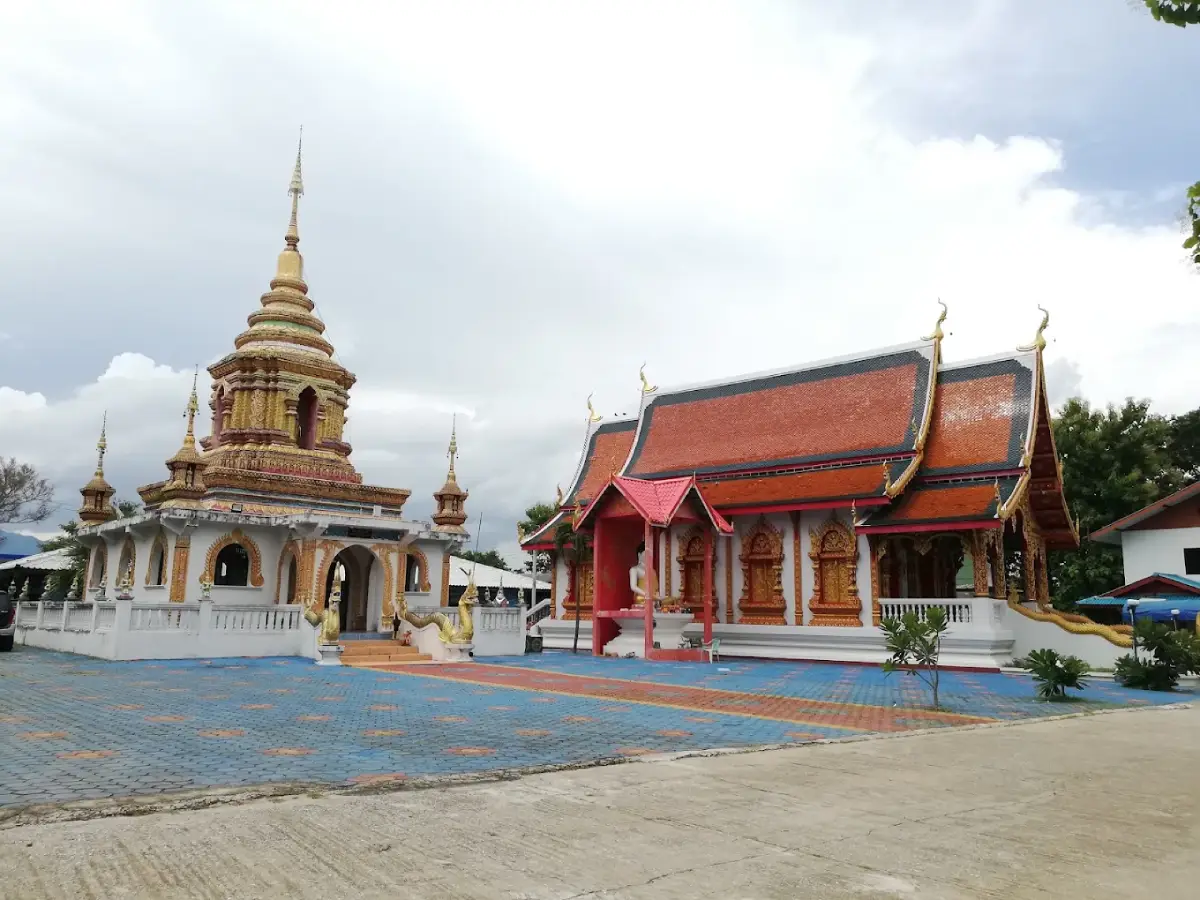
Wat Ban Tham (Yang Kram)
Open Days: Daily
Opening Hours: 08:00 - 17:00
Wat Ban Tham (Yang Kram) is a community Buddhist temple of the Maha Nikaya order in the Ban Huai Nam Khao area of Yang Kram Subdistrict, Doi Lo District, Chiang Mai Province 50160. Its official temple code is 350240303. Wat Ban Tham has a distinctive history shaped by the revival of an abandoned religious site, the presence of wandering monks, cooperation among local villagers, the rebuilding of monastic structures, and a natural cave that forms one of the most important features of the temple grounds. The name “Wat Ban Tham” was formally adopted in 1972, and the monastery remains part of the active Maha Nikaya temple system today.
The temple occupies 14 rai, 1 ngan and 50 square wah of land under Nor Sor 3 Kor document No. 2070. Its northern boundary extends for approximately 242 meters along a public irrigation channel, while the southern boundary runs for around 200 meters along another public channel. The eastern boundary is approximately 124 meters and adjoins an irrigation channel and private land, while the western boundary extends for approximately 140 meters.
This relationship with irrigation channels is important because Wat Ban Tham stands within the agricultural environment of Ban Huai Nam Khao. The temple's location reflects the close relationship between Buddhist institutions, farming communities, water management, and village settlement patterns in rural Doi Lo.
Wat Ban Tham is located at approximately 18.58028, 98.79720, at an elevation of around 315 meters above sea level. Ban Huai Nam Khao School stands very close to the temple, while Huai Nam Khao stream and agricultural land form part of the surrounding landscape. The monastery is therefore embedded directly in the daily life of the local community rather than isolated as a purpose-built tourist attraction.
The early history of the site includes a local account of an abandoned monastery and a wandering monk known as Phra Tui. When residents learned that the monk had arrived in the area during his wandering practice, they cleared part of the abandoned temple grounds, created temporary accommodation, and invited him to remain for the rains retreat.
Phra Tui stayed for a period of time, taught local residents, and helped revive Buddhist activity around the abandoned religious site. He later continued his wandering journey, leaving the community once again without a permanent monk at the temple.
The site subsequently fell into abandonment again until a major restoration movement around 1957. Phra Duangdee, Phra Unruean of Wat Si Daen Mueang, Phra Duangchan of Wat Bun Yuen, and residents of Ban Huai Nam Khao worked together to clear the old grounds and construct new monastic facilities.
This restoration transformed the site from an abandoned religious area into a functioning community monastery. During this stage the temple became known as Wat Ban Tham Huai Nam Khao, a name combining its defining natural feature—the cave—with the name of the surrounding village.
In 1972, the monastery formally adopted the name Wat Ban Tham. The change created a concise and distinctive identity while preserving the site's most important physical characteristic: the cave within the temple grounds.
The cave is one of the most significant features of Wat Ban Tham. It is not simply a natural formation but a place associated with the temple's local history and with old objects preserved within or beneath the cave area. Visitors should approach the cave as a religious and historical space rather than as an adventure attraction.
Old objects associated with the cave form part of the community's historical memory. Visitors should not move, remove, or handle objects without permission. The cave should be explored only in areas opened by the temple, particularly because natural cave environments may contain uneven surfaces, humidity, and sensitive historic materials.
The temple also preserves several Buddha images as important objects of worship. Public temple history does not provide a complete individual catalogue of each image, its age, or artistic school, so they are best understood collectively as part of the religious heritage accumulated through different periods of the monastery's restoration.
An important historical object mentioned in the temple record is a bronze bell. Bells have long played an important role in Thai Buddhist monasteries, marking religious routines, calling monks and laypeople to activities, and forming part of the traditional soundscape of community temple life.
The sermon hall is one of the principal community buildings. It provides space for Buddhist teaching, merit-making, offerings to monks, community meetings, funerals, seasonal ceremonies, and collective religious activities.
The bell tower reflects another traditional function of the monastery. Before modern communication systems became widespread, temple bells could serve as audible signals for religious events and community activities.
The temple also has a kitchen, an important practical feature for a community monastery. Large merit-making ceremonies in northern Thailand often depend on villagers working together to prepare food for monks and participants. The kitchen therefore reflects the social as well as religious role of Wat Ban Tham.
Together, the Buddha images, sermon hall, bell tower, kitchen, cave, and historic objects demonstrate that Wat Ban Tham is more than a single sacred building. It is a functioning religious complex where worship, community cooperation, history, and the natural landscape meet.
The temple's administrative history includes several monks who played important roles after its revival. Recorded names include Phra Duangchan, Phra Duangdee, Phra Unruean, Phra Chanchak, who served during part of the period from 1958 to 1967, Phra Khamtan from 1967 to 1970, and Phra Athikan Duangdee Santaro from 1970 onward in the historical temple account.
More recent Sangha education records from 2023 list Phra Montri Panyasaro and Phra Suchat Khantiko as monks affiliated with Wat Ban Tham in Doi Lo. This confirms the continuation of active monastic life at the temple in the modern period.
The temple remains registered in the contemporary Dhamma-study system under code 350240303 as a Maha Nikaya temple in Yang Kram Subdistrict, Doi Lo District. It belongs to the wider Buddhist network of Yang Kram alongside Wat Chetawan, Wat Don Chai, Wat Pa Lan, Wat Yang Kram, Wat Si Daen Mueang, Wat Si Sai Mun, Wat Nong Lua, and Wat Mai Phatthana.
Wat Ban Tham also has a close relationship with Ban Huai Nam Khao School, located only a short distance from the temple. The proximity of school and monastery reflects a traditional village pattern in northern Thailand, where education, religious life, family activities, and community ceremonies remain closely connected.
The agricultural setting of Ban Huai Nam Khao is another part of the visitor experience. Longan cultivation and other farming activities have historically shaped the local economy, while irrigation channels and village roads structure the surrounding landscape.
Visitors should begin by paying respect to the Buddha images in the areas open for worship and then explore the sermon hall, bell tower, and cave area. If the cave is open, all posted or verbal instructions from monks or caretakers should be followed carefully.
The cave is best appreciated as a place of local history and religious memory. It should not be entered deeply without permission or treated as an unrestricted adventure site. Historic objects should remain untouched so that the community can preserve them for future generations.
The atmosphere of Wat Ban Tham is quiet and distinctly local. It is particularly suitable for travelers interested in community Buddhism, rural culture, temple history, and places away from Chiang Mai's heavily visited tourist districts.
Like other active Buddhist monasteries, Wat Ban Tham participates in the religious rhythm of Buddhist holy days, Makha Bucha, Visakha Bucha, Asalha Bucha, Buddhist Lent, the end of Lent, Kathin, forest-robe offerings, and family merit-making activities.
Kathin is particularly important for monasteries with resident monks. After Buddhist Lent, villagers and supporters gather to offer robes and donations while supporting maintenance of the monastery. The temple's sermon hall, kitchen, and open grounds make it well suited to community ceremonies of this kind.
Visitors should dress modestly, covering shoulders and knees, remove shoes where required, keep voices low, and avoid entering monks' residential areas without permission. Photography of monks, private ceremonies, or historic objects should be undertaken respectfully.
Wat Ban Tham is generally open daily from 08:00 to 17:00. No official admission charge is published. Visitors may make voluntary merit donations. Access to individual buildings or the cave may vary according to temple activities and local conditions.
Getting There from Chiang Mai city is straightforward by private car. Follow Highway 108 south through Hang Dong and San Pa Tong into Doi Lo District, then continue toward Yang Kram Subdistrict and Ban Huai Nam Khao. Search for “Wat Ban Tham, Yang Kram, Doi Lo, Chiang Mai” or use the coordinates 18.58028, 98.79720.
The temple stands close to Ban Huai Nam Khao School and Huai Nam Khao stream. Visitors should drive slowly through the village, especially near the school and residential areas.
Wat Ban Phan Ton lies approximately 1–2 kilometers north of Wat Ban Tham, while Wat Bun Yuen is at a similar distance to the northeast. Wat Bun Yuen is historically relevant because Phra Duangchan from that monastery was involved in the restoration of Wat Ban Tham around 1957.
The Ganesha Himal Museum in Yang Kram lies approximately 4 kilometers away and provides a contrasting cultural stop focused on Ganesha-related art and religious imagery.
Wat Mai Phatthana is another nearby temple in Yang Kram, while Wat Don Chai, Wat Yang Kram, and Wat Si Daen Mueang can be added to a longer temple route through the subdistrict.
Travelers with more time can continue toward Wat Phra That Doi Noi or central Doi Lo, creating a full-day itinerary combining community temples, the cave landscape, museums, and larger historic Buddhist sites.
Nearby cafés and restaurants include Hop Chafe, Lake Restaurant, and Rin Coffee at Doi Lo. Lake Restaurant can be contacted at 081-606-1426, while Rin Coffee at Doi Lo can be contacted at 089-953-8276.
For accommodation, Green Tree Resort is approximately 3.7 kilometers from Wat Ban Tham and can be contacted at 063-383-3183. It is also close to the Ganesha museum, making it a convenient base for exploring Yang Kram.
Other accommodation options include Huentipviman, Tel. 062-428-9153; The Starly Night Cottage, Tel. 081-939-5610; De Aerng Boutique Hotel, Tel. 061-316-0822; and Pimprajan Homestay, Tel. 090-885-1545.
A practical half-day itinerary can begin at Wat Ban Tham in the morning, allowing time for worship and the cave area before continuing to Wat Ban Phan Ton or Wat Bun Yuen and then the Ganesha Himal Museum.
A full-day route can add Wat Mai Phatthana, Wat Don Chai, Wat Yang Kram, or Wat Si Daen Mueang. Staying overnight in Yang Kram or central Doi Lo also makes it easy to continue toward Chom Thong and Doi Inthanon the following day.
The cultural importance of Wat Ban Tham goes far beyond the presence of a cave. Its character comes from the combination of natural landscape, an abandoned temple site, wandering monks, local restoration efforts, Buddhist objects, and continuing community faith.
The story of Phra Tui illustrates how a wandering monk could inspire villagers to restore religious activity at an abandoned site, while the later work of Phra Duangdee, Phra Unruean, Phra Duangchan, and Ban Huai Nam Khao residents transformed temporary revival into a more permanent monastery.
The formal adoption of the name Wat Ban Tham in 1972 represented the culmination of that restoration process and established the identity still used today.
The cave and its historic objects remain a physical connection between the temple's past and present. Although individual antiquities are not fully catalogued in publicly available records, the community's preservation of the site demonstrates its historical and spiritual value.
Wat Ban Tham combines Buddhist worship, community space, natural landscape, and local history within one monastery. Buddha images represent devotion, the sermon hall brings the community together, the bell tower recalls the traditional rhythm of temple life, the kitchen supports merit-making ceremonies, and the cave preserves a distinctive sense of place.
For travelers seeking a quieter and more locally rooted experience of Chiang Mai, Wat Ban Tham offers an opportunity to understand Buddhism as part of village life rather than only as monumental architecture in famous tourist temples.
Today Wat Ban Tham remains an active Maha Nikaya monastery with monks appearing in contemporary Sangha records. Its survival demonstrates that the community's restoration efforts succeeded in transforming an abandoned religious site into a living Buddhist institution once again.
A respectful visit to Wat Ban Tham combines Buddhist worship, local history, cave heritage, and rural community life. It is particularly worthwhile for travelers exploring Yang Kram and Doi Lo who want to understand southern Chiang Mai beyond its best-known tourist routes.
| Name | Wat Ban Tham (Yang Kram) |
| Temple Type | Community Buddhist Temple, Maha Nikaya |
| Temple Code | 350240303 |
| Location | Ban Huai Nam Khao area, Yang Kram Subdistrict, Doi Lo District, Chiang Mai 50160, Thailand |
| Coordinates | 18.58028, 98.79720 |
| Temple Land | 14 rai, 1 ngan and 50 square wah under Nor Sor 3 Kor document No. 2070 |
| Formal Temple Name | Wat Ban Tham, formally adopted in 1972 |
| Restoration-Era Name | Wat Ban Tham Huai Nam Khao |
| Important Restoration Figures | Phra Tui, Phra Duangdee, Phra Unruean, Phra Duangchan, and Ban Huai Nam Khao residents |
| Important Features | Cave, Buddha images, sermon hall, bell tower, temple kitchen, bronze bell, and historic objects associated with the cave |
| Recent Monastic Records | Phra Montri Panyasaro and Phra Suchat Khantiko were affiliated with Wat Ban Tham in 2023 Sangha education records |
| Open Days | Daily |
| Opening Hours | 08:00 - 17:00 |
| Admission | No official admission fee is published |
| Highlights | Revived abandoned monastery, cave heritage, historic objects, Buddha images, bronze bell, and authentic Ban Huai Nam Khao community atmosphere |
| Getting There | Take Highway 108 south from Chiang Mai through Hang Dong and San Pa Tong into Doi Lo, then continue to Yang Kram and Ban Huai Nam Khao. Search for “Wat Ban Tham, Yang Kram, Doi Lo, Chiang Mai” or use the coordinates. |
| Current Status | Active Maha Nikaya temple with monks appearing in contemporary Sangha records |
| Nearby Tourist Attractions | 1. Wat Ban Phan Ton, about 1–2 km 2. Wat Bun Yuen, about 1–2 km 3. Ganesha Himal Museum, about 4 km, Tel. 053-024-287 4. Wat Mai Phatthana, about 4–6 km 5. Wat Don Chai, about 5–6 km |
| Nearby Restaurants And Cafés | 1. Hop Chafe, about 4–5 km 2. Lake Restaurant, about 5–7 km, Tel. 081-606-1426 3. Rin Coffee at Doi Lo, about 8–10 km, Tel. 089-953-8276 4. Food and café options around the Ganesha museum area, about 4 km 5. Local restaurants along Highway 108, about 8–12 km |
| Nearby Accommodations | 1. Green Tree Resort, about 3.7 km, Tel. 063-383-3183 2. Huentipviman, about 5–7 km, Tel. 062-428-9153 3. The Starly Night Cottage, about 10–12 km, Tel. 081-939-5610 4. De Aerng Boutique Hotel, about 14–16 km, Tel. 061-316-0822 5. Pimprajan Homestay, about 14–18 km, Tel. 090-885-1545 |
Frequently Asked Questions (FAQ)
Q: Where is Wat Ban Tham in Yang Kram?
A: Wat Ban Tham is located in the Ban Huai Nam Khao area of Yang Kram Subdistrict, Doi Lo District, Chiang Mai 50160, at approximately 18.58028, 98.79720.
Q: When was Wat Ban Tham established?
A: The site had previously been an abandoned monastery and was restored through several stages. A major restoration took place around 1957, and the name Wat Ban Tham was formally adopted in 1972.
Q: Why is it called Wat Ban Tham?
A: The name reflects the cave within the temple grounds, one of the monastery's defining natural and historical features.
Q: What are the main things to see?
A: Important features include the cave, several Buddha images, the sermon hall, bell tower, temple kitchen, a bronze bell, and historic objects associated with the cave area.
Q: Are monks still resident at Wat Ban Tham?
A: Yes. Wat Ban Tham remains registered as an active Maha Nikaya temple, and monks affiliated with the monastery appear in contemporary Sangha education records.
Q: What are the opening hours and is there an admission fee?
A: The temple is generally open daily from 08:00 to 17:00. No official admission fee is published, and visitors may make voluntary merit donations.
Q: Can visitors enter the cave?
A: Visitors should enter only areas opened by the temple and follow local instructions. Historic objects should not be touched, moved, or removed.
Q: What nearby places can be visited after Wat Ban Tham?
A: Nearby options include Wat Ban Phan Ton, Wat Bun Yuen, the Ganesha Himal Museum, Wat Mai Phatthana, and Wat Don Chai.
 Category: ●Places of Worship
 Group: ●Temple
Last Update : 3 DayAgo
 Last Update : 3 DayAgo
 Click to Access the Navigation Map GPS
Wat Ban Tham (Yang Kram) Map
Recommend

 Muang Chiang Mai(121)Chom Thong(47)Mae Chaem(25)Chiang Dao(33)Doi Saket(68)Mae Taeng(85)Mae Rim(69)Samoeng(29)Fang(71)Mae Ai(59)Phrao(70)San Pa Tong(103)San Kamphaeng(66)San Sai(73)Hang Dong(73)Hot(32)Doi Tao(22)Omkoi(11)Saraphi(74)Wiang Haeng(15)Chai Prakan(28)Mae Wang(32)Mae On(22)Doi Lo(33)Galyani Vadhana(1)


