
lovethailand home >North Travel Attractions >Chiang Mai Travel Attractions >Doi Lo >Doi Lo > Wat Lod (Wat Pak Thang Charoen)
TL;DR: Wat Lod (Wat Pak Thang Charoen) is located at 4 Ban Pak Thang Charoen, Moo 4, Doi Lo Subdistrict, Doi Lo District, Chiang Mai 50160, Thailand, open Daily, hours 08:00 - 17:00.

Wat Lod (Wat Pak Thang Charoen)
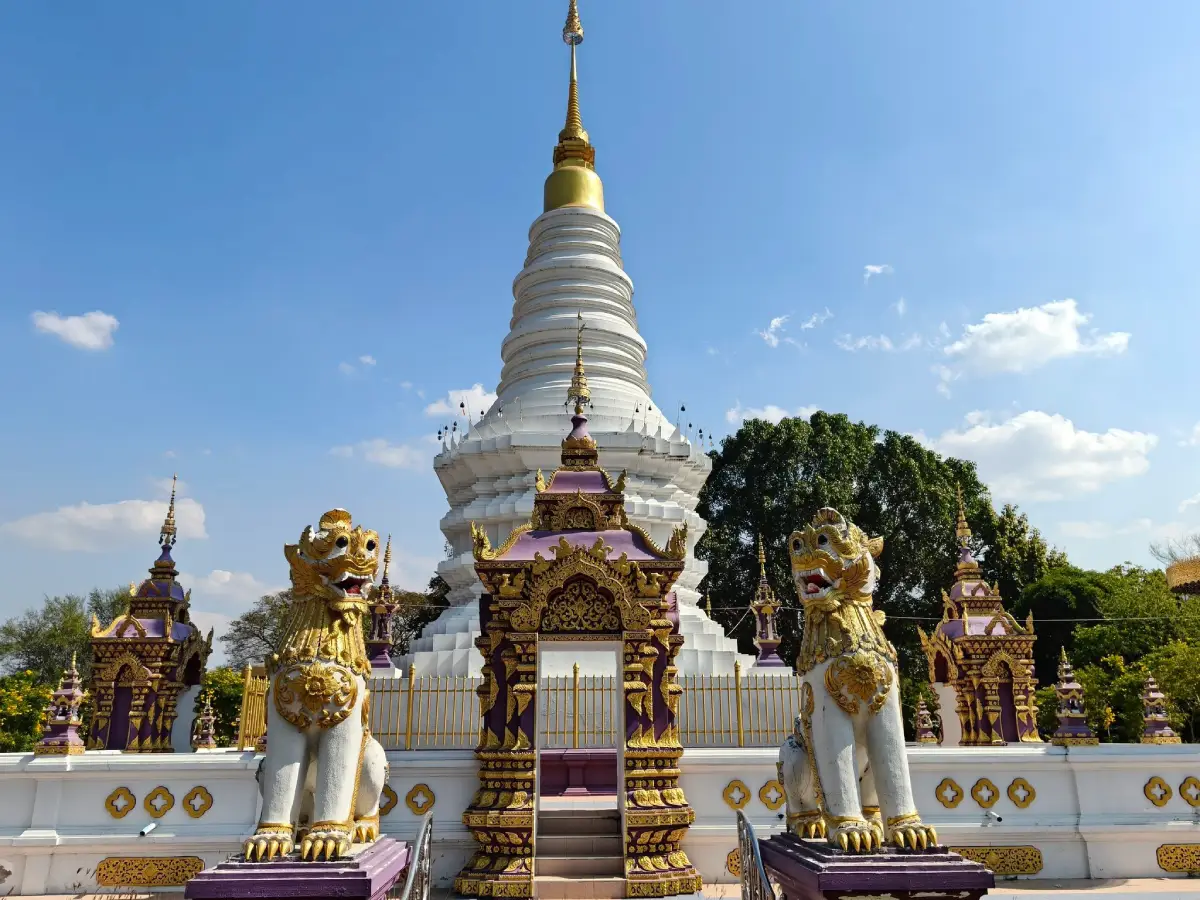
Open Days: Daily
Opening Hours: 08:00 - 17:00
Wat Lod, now officially known as Wat Pak Thang Charoen, is a community Buddhist temple of the Maha Nikaya order located at No. 4, Ban Pak Thang Charoen, Moo 4, Doi Lo Subdistrict, Doi Lo District, Chiang Mai Province 50160. Its temple code is 350240112. The monastery was historically known as Wat Lod, but on 20 August 2020 the Sangha Supreme Council approved a formal change of name to “Wat Pak Thang Charoen,” reflecting the name of the surrounding village and the wishes of the local community.
Both names continue to appear in modern sources. Some temple registers still display the older name Wat Lod, while more recent government and Sangha-related publications use Wat Pak Thang Charoen. They refer to the same monastery. For travelers and researchers, knowing both names is important because searches using only one name may miss relevant historical or contemporary information.
The temple is particularly interesting because its modern history is a story of restoration rather than the uninterrupted development of an ancient monastery. Local accounts place the beginning of renewed construction and restoration at around 1977. More than a decade later, official Buddhist administrative records state that the abandoned temple was formally restored to the status of a monastery with resident monks in 1990.
Older local accounts sometimes give 1991 for this transition. However, the 2020 Sangha Supreme Council record, after reviewing the temple's official history, explicitly states that Wat Lod was proclaimed an abandoned temple restored to one with resident monks in 1990. The 1990 date is therefore used for the official administrative milestone, while the earlier restoration story remains part of the community history.
Local tradition also remembers that part of the old temple property had, during an earlier period, been occupied and associated with medical care for people affected by leprosy, connected in community memory with the work of McKean. The available published material does not provide enough detail to establish the precise boundaries, institutional arrangement, or dates of this use, so the history is preserved without expanding it beyond the surviving account.
When the community sought to restore Buddhist life at the site, Phra Kaeo Kalyano was invited to help develop the monastery. His arrival marked an important stage in the restoration process, helping transform the site from an abandoned temple into a functioning place where monks could reside and villagers could again gather for Buddhist ceremonies.
One of the best-documented structures created during this period was the sermon and community hall. It was built to accommodate religious ceremonies and community activities. In a rural Thai temple, such a hall often serves multiple purposes: merit-making, sermons, offerings to monks, village meetings, funerals, festival preparations, and collective Buddhist observances.
The construction of this hall therefore represented much more than the addition of a building. It created a shared religious space where residents of Ban Pak Thang Charoen could gather and restored the temple's social function within the community.
The temple later passed through several abbots and phases of administration. In more recent decades, Phra Khru Aphiwatwikrom, also known as Banyong Aphiwatthano, became closely associated with Wat Pak Thang Charoen. He has been identified in earlier community records as abbot and later appears in official Chiang Mai Sangha news connected with administrative work in Doi Lo District.
In 2024, Chiang Mai government public-relations reporting continued to identify Phra Khru Aphiwatwikrom with Wat Pak Thang Charoen while describing his role in district-level Sangha administration. This provides recent evidence that the temple remains an active monastery connected with the organized Buddhist administration of Doi Lo.
Phra Khru Aphiwatwikrom was also associated with community moral education and local cultural preservation. Earlier accounts describe his involvement with a community radio station known as the “White Wave,” linked with the Doi Lo Cultural Council. The broadcasts were used to promote Buddhist ethics, youth moral development, and the preservation of Lanna customs and culture.
This broadcasting role shows how Wat Pak Thang Charoen expanded its influence beyond ceremonies conducted inside the temple grounds. Through community radio, Buddhist teaching and cultural messages could reach residents and young people across a much wider part of the district.
The original name “Wat Lod” is closely connected with the natural history of the area. According to local tradition, a fruit tree known in northern Thailand as “ma lot” once grew abundantly around the site. The fruit has a distinctive combination of sour and sweet flavors. Because these trees were a recognizable feature of the landscape, the word “Lod” became associated with the place and eventually with the temple.
The old name therefore preserves an environmental memory. Across northern Thailand, villages and temples are frequently named after plants, water features, landforms, or other characteristics of the landscape. Even though the temple now bears the official name Wat Pak Thang Charoen, the name Wat Lod remains culturally valuable because it recalls the vegetation that once characterized the locality.
Local historical material also mentions an earlier name, Wat San Chi Thung, before the temple became associated with the Pak Thang Charoen community. The surviving public record does not provide a clear date for the use or abandonment of this name. It is therefore best preserved as part of local oral and community history rather than fitted into an invented chronological sequence.
The most important documented name change occurred in 2020. Chiang Mai authorities formally proposed changing Wat Lod to “Wat Pak Thang Charoen” because that name matched Ban Pak Thang Charoen, Moo 4, and had received support from local residents. The request passed through civil and ecclesiastical authorities before reaching the Sangha Supreme Council.
At its meeting on 20 August 2020, the Sangha Supreme Council approved the change and authorized immediate implementation. This was therefore an official administrative name change rather than an informal local nickname.
The same Sangha record also clarifies the history of the monastery's restoration. It states that Wat Lod was officially raised from abandoned-temple status to a temple with resident monks in 1990. This date is used in the present article because it comes directly from the national Buddhist administrative record.
The difference between the official 1990 date and the 1991 date found in some older community descriptions illustrates how local and administrative histories can preserve different milestones. Restoration work may have begun earlier, and community memory may focus on another event, while the government record refers to the formal proclamation. Both contexts help explain the temple's development, but the dates should not be treated as interchangeable.
Modern Buddhist registers continue to list the temple under the old name Wat Lod and code 350240112, in Doi Lo Subdistrict, Doi Lo District, Chiang Mai, Moo 4. More recent government publications and Sangha news use Wat Pak Thang Charoen. This overlap explains why both names remain visible online today.
The monastery also belongs to the local Sangha administrative network alongside Wat Phra That Doi Noi, Wat Phra That Doi Lo, Wat San Khayom, and Wat Nong Ngok. The temple is therefore integrated into the broader Buddhist structure of Doi Lo rather than functioning as an isolated local shrine.
Recent evidence of continued activity comes from 2024 reporting on Sangha administration in Doi Lo, which identifies Phra Khru Aphiwatwikrom of Wat Pak Thang Charoen in district-level ecclesiastical work. This confirms that the monastery remains active and connected with contemporary Buddhist administration.
The temple's role within Ban Pak Thang Charoen extends beyond formal Sangha administration. It is a local place for merit-making, Buddhist observances, religious ceremonies, and community gatherings. Its history as a restored abandoned temple gives this role particular meaning, since the monastery returned to life through cooperation between monks and local supporters.
The sermon hall is an important physical symbol of that restoration. It was specifically built to provide a space for community religious ceremonies, allowing villagers to use the monastery again as a collective Buddhist center. The building therefore represents the practical relationship between the temple and the community.
At present, sufficiently reliable public documentation has not been found to establish the construction dates or architectural histories of a viharn, ubosot, chedi, relic shrine, principal Buddha image, bell tower, or other individual structures at this specific temple. Such details should not be invented or borrowed from similarly named temples elsewhere.
Visitors should consequently approach Wat Pak Thang Charoen as a living community monastery with an important restoration history rather than expecting a monumental archaeological complex. Its strongest cultural value lies in the story of how an abandoned religious site was returned to active use.
The temple is suitable for travelers who appreciate quiet village monasteries, local history, and community Buddhism. Visitors can pay respect, make merit, and observe the atmosphere of a functioning temple without the crowds found at many well-known attractions in central Chiang Mai.
Appropriate temple etiquette should always be observed. Dress modestly, remove shoes where required, keep voices low, and avoid entering monks' residential areas without permission. When a funeral, merit-making ceremony, or other local event is taking place, residents participating in the ceremony should be given priority.
Published visiting hours associated with the temple are daily from 08:00 to 17:00. Because Wat Pak Thang Charoen is a working community monastery, individual buildings may open according to monastic duties and local ceremonies rather than operating as fixed tourist exhibits.
No current official admission charge has been identified. The temple functions as a Buddhist community institution rather than a ticketed attraction. Visitors can make voluntary merit donations using the arrangements available at the temple.
Older listings published telephone numbers 053-369-238 and 084-169-9087, but those listings have not been updated for many years. They are therefore not presented as current verified temple contact numbers in the summary table.
Kathin, forest-robe offerings, Buddhist holy days, and other merit-making activities form part of normal temple life. Wat Pak Thang Charoen appeared in Chiang Mai's 2021 list of temples seeking Kathin sponsors, confirming its continued participation in the annual Kathin tradition.
Kathin dates change each year according to the Buddhist calendar and sponsorship arrangements, so a historical date should never be treated as a permanent annual festival date. Travelers hoping to participate should confirm the current year's schedule locally.
The temple's association with community radio adds a distinctive cultural dimension. Buddhist monks used the “White Wave” broadcasts to promote ethical values, youth development, and Lanna cultural preservation. This demonstrates how a village temple could use modern communication technology to extend traditional religious and social roles.
Getting There from Chiang Mai city is straightforward. Follow Highway 108, the Chiang Mai-Hot Road, south through Hang Dong and San Pa Tong into Doi Lo District. Continue to Ban Pak Thang Charoen, Moo 4. Private car or rental vehicle is the most practical option. Approximate coordinates are 18.48358, 98.80867.
Navigation systems should be searched using either “Wat Pak Thang Charoen, Doi Lo, Chiang Mai” or “Wat Lod, Doi Lo.” Some mapping and directory systems use the new name, while others retain the historic name.
The nearby Pak Thang Charoen Market provides useful context for the community surrounding the temple. A visit can therefore include both the religious site and everyday village life, helping travelers understand the temple as part of a living settlement rather than an isolated attraction.
Wat Sirimangkalachan is one of the most interesting nearby temples because its own history is strongly connected with the Pak Thang Charoen community. Before receiving its present royal name, Wat Sirimangkalachan was itself commonly called Wat Pak Thang Charoen after the village.
This can be confusing for researchers today, but it also reveals the importance of the village name. Wat Sirimangkalachan was established in 1966 as a new community temple, while Wat Lod was an older abandoned site later restored and ultimately renamed Wat Pak Thang Charoen in 2020. Visiting both places helps clarify these two distinct histories.
Wat San Khayom is another useful nearby stop. Its local oral history stretches back much further and includes an old brick-and-stucco principal Buddha image. Combining Wat San Khayom with Wat Pak Thang Charoen allows visitors to compare an old oral-history temple with a modern restored monastery.
Wat Phra That Doi Noi adds a more prominent historic and landscape dimension. Situated on elevated ground, the temple is one of the important Buddhist sites of Doi Lo and can be reached easily as part of the same cultural route.
Wat Mon Huai Kaeo and Wat Wang Kham Pom can also be added. Wat Mon Huai Kaeo developed from a community monastic foundation in the 1990s, while Wat Wang Kham Pom has a nineteenth-century history associated with the Ping River and the relocation of a temple because of water shortages.
Travelers wanting a non-temple cultural stop can continue to the Ganesha Museum in Yang Kram or travel farther toward Pha Chor and Mae Wang National Park. A morning temple route followed by an afternoon natural attraction works particularly well for a full day in Doi Lo.
Nearby food and café options include Ta Ton Yon Coffee&Cafe along Highway 108, Rin Coffee at Doi Lo, DOK JIK coffee homemade, and Uka Coffee. These provide convenient rest stops between temples and other attractions without requiring a return to Chiang Mai city.
Ta Ton Yon Coffee&Cafe is approximately 4.3 kilometers from the temple area and can be contacted at 052-000-566. Rin Coffee at Doi Lo can be contacted at 089-953-8276, DOK JIK coffee homemade at 080-945-3376, and Uka Coffee at 099-331-3412. Small local-business opening times can change, so travelers should verify them on the day of travel if a particular stop is essential.
Accommodation options include Baan Rim Ping River Side Resort, around 4.2 kilometers away, Tel. 089-894-9172; The Starly Night Cottage, around 6.2 kilometers away, Tel. 081-939-5610; Pimprajan Homestay, around 9 kilometers away, Tel. 090-885-1545; and Green Tree Resort in Yang Kram, around 12.2 kilometers away, Tel. 063-383-3183. De Aerng Boutique Hotel is another practical Doi Lo option for travelers continuing toward Chom Thong or Doi Inthanon.
A half-day route can begin at Wat Pak Thang Charoen in the morning, continue to Wat Sirimangkalachan, Wat San Khayom, and Wat Phra That Doi Noi, and finish with lunch in Doi Lo. A full-day itinerary can add Wat Mon Huai Kaeo, Wat Wang Kham Pom, the Ganesha Museum, or Pha Chor.
The strength of this route is that the temples do not tell the same story. Wat San Khayom preserves older community memory. Wat Sirimangkalachan reflects twentieth-century resettlement after the Bhumibol Dam project. Wat Pak Thang Charoen tells the story of restoring an abandoned monastery. Wat Mon Huai Kaeo represents a later community temple foundation.
Wat Pak Thang Charoen is therefore best understood through the idea of revival. Its modern identity began with the restoration of an abandoned religious site around the late 1970s, followed by formal restoration to a resident monastery in 1990 and the official name change in 2020.
This history demonstrates that a Buddhist temple depends on more than buildings. A monastery requires resident monks, community support, places for religious ceremonies, and people who continue to use and maintain the site. An abandoned temple can become a living religious institution again when these elements return.
The historic name Wat Lod preserves the memory of the local ma lot trees, while the current name Wat Pak Thang Charoen expresses the temple's connection with the present-day village. Rather than replacing one history with another, the two names reveal different layers of the same place.
The continued appearance of Wat Lod in some official databases and Wat Pak Thang Charoen in newer government publications is therefore itself part of the temple's modern history. Researchers and visitors benefit from remembering both names when looking for information or directions.
Phra Khru Aphiwatwikrom's later role in district Sangha administration also shows how far the temple developed after restoration. From a once-abandoned site, it became a monastery associated with a monk involved in Buddhist administration, moral education, community communication, and Lanna cultural preservation.
For residents of Ban Pak Thang Charoen, the temple represents decades of collective religious effort. The sermon hall, resident Sangha, merit-making activities, and cultural outreach all demonstrate how the site became part of the community's shared identity.
From the beginning of restoration around 1977 to official resident-temple status in 1990 and the formal adoption of the name Wat Pak Thang Charoen in 2020, the monastery's modern history spans several decades of rebuilding and institutional development.
Wat Lod, or Wat Pak Thang Charoen, is therefore more than a small village monastery. It is an example of how a community can recover an abandoned sacred site and create a new role for it. The old name preserves the memory of the natural landscape, the sermon hall represents restoration, the resident Sangha represents renewed religious life, and the present name records the temple's strong relationship with Ban Pak Thang Charoen.
| Current Name | Wat Pak Thang Charoen |
| Former Name | Wat Lod; local history also mentions Wat San Chi Thung |
| Temple Type | Community Buddhist Temple, Maha Nikaya |
| Temple Code | 350240112 |
| Address | 4 Ban Pak Thang Charoen, Moo 4, Doi Lo Subdistrict, Doi Lo District, Chiang Mai 50160, Thailand |
| Coordinates | 18.48358, 98.80867 |
| Restoration Period | Around 1977 according to local temple history |
| Restored As Resident Temple | 1990 according to the National Office of Buddhism record |
| Renamed Wat Pak Thang Charoen | Approved by the Sangha Supreme Council on 20 August 2020 |
| Important Monk During Restoration | Phra Kaeo Kalyano |
| Important Contemporary Monk | Phra Khru Aphiwatwikrom, also known as Banyong Aphiwatthano, associated with Wat Pak Thang Charoen and Doi Lo Sangha administration |
| Confirmed Historic Structure | Community sermon hall constructed for Buddhist ceremonies and village activities |
| Origin Of The Name Wat Lod | Derived from ma lot fruit trees that once grew abundantly in the area |
| Highlights | Restoration of an abandoned monastery, relationship with Ban Pak Thang Charoen, local ma lot tree history, community Buddhist activity, and cultural outreach |
| Open Days | Daily |
| Opening Hours | 08:00 - 17:00 |
| Getting There | Follow Highway 108 south from Chiang Mai through Hang Dong and San Pa Tong into Doi Lo, then continue to Ban Pak Thang Charoen, Moo 4. Search both “Wat Pak Thang Charoen” and “Wat Lod” when using navigation systems. |
| Current Status | Active community monastery connected with contemporary Sangha administration in Doi Lo |
| Nearby Tourist Attractions | 1. Wat Sirimangkalachan, about 1–2 km 2. Wat San Khayom, about 2–3 km 3. Wat Phra That Doi Noi, about 3–4 km 4. Wat Mon Huai Kaeo, about 5–6 km 5. Wat Wang Kham Pom, about 6–7 km |
| Nearby Restaurants And Cafés | 1. Ta Ton Yon Coffee&Cafe, about 4.3 km, Tel. 052-000-566 2. Rin Coffee at Doi Lo, about 4–6 km, Tel. 089-953-8276 3. DOK JIK coffee homemade, about 5–7 km, Tel. 080-945-3376 4. Uka Coffee, about 6–8 km, Tel. 099-331-3412 5. Additional local food and café options are available along Highway 108 in central Doi Lo |
| Nearby Accommodations | 1. Baan Rim Ping River Side Resort, about 4.2 km, Tel. 089-894-9172 2. The Starly Night Cottage, about 6.2 km, Tel. 081-939-5610 3. De Aerng Boutique Hotel, about 6–8 km, Tel. 061-316-0822 4. Pimprajan Homestay, about 9 km, Tel. 090-885-1545 5. Green Tree Resort, about 12.2 km, Tel. 063-383-3183 |
Frequently Asked Questions (FAQ)
Q: Are Wat Lod and Wat Pak Thang Charoen the same temple?
A: Yes. Wat Lod was the former name. On 20 August 2020, the Sangha Supreme Council approved changing the name to Wat Pak Thang Charoen to match Ban Pak Thang Charoen, Moo 4.
Q: Where is Wat Pak Thang Charoen located?
A: The temple is at No. 4, Ban Pak Thang Charoen, Moo 4, Doi Lo Subdistrict, Doi Lo District, Chiang Mai 50160. Approximate coordinates are 18.48358, 98.80867.
Q: When was Wat Lod restored?
A: Local history places the beginning of restoration at around 1977, with Phra Kaeo Kalyano helping develop the temple. Official Buddhist records state that the abandoned temple was formally restored as a monastery with resident monks in 1990.
Q: Why was the temple originally called Wat Lod?
A: The name came from ma lot trees that once grew abundantly in the area. Their fruit has both sour and sweet flavors, and the tree became closely associated with the locality.
Q: Which monks are important in the temple's modern history?
A: Phra Kaeo Kalyano played an important role during the early restoration. In later decades, Phra Khru Aphiwatwikrom, also known as Banyong Aphiwatthano, became closely associated with the temple, community moral education, and Sangha administration in Doi Lo.
Q: What should visitors see at the temple?
A: The documented historic feature is the community sermon hall created for Buddhist ceremonies. The main value of a visit is experiencing a functioning village monastery and understanding how an abandoned religious site was restored as a community Buddhist center.
Q: What are the opening hours and is there an admission fee?
A: Published visiting hours are daily from 08:00 to 17:00. No current official admission charge has been identified; visitors may make voluntary merit donations.
Q: What nearby places can be combined with a visit?
A: Nearby temples include Wat Sirimangkalachan, Wat San Khayom, Wat Phra That Doi Noi, Wat Mon Huai Kaeo, and Wat Wang Kham Pom. With more time, travelers can continue to the Ganesha Museum or Pha Chor.
 Category: ●Places of Worship
 Group: ●Temple
Last Update : 3 DayAgo
 Last Update : 3 DayAgo
 Click to Access the Navigation Map GPS
Wat Lod (Wat Pak Thang Charoen) Map
Recommend

 Muang Chiang Mai(121)Chom Thong(47)Mae Chaem(25)Chiang Dao(33)Doi Saket(68)Mae Taeng(85)Mae Rim(69)Samoeng(29)Fang(71)Mae Ai(59)Phrao(70)San Pa Tong(103)San Kamphaeng(66)San Sai(73)Hang Dong(73)Hot(32)Doi Tao(22)Omkoi(11)Saraphi(74)Wiang Haeng(15)Chai Prakan(28)Mae Wang(32)Mae On(22)Doi Lo(33)Galyani Vadhana(1)


