
lovethailand home >North Travel Attractions >Chiang Mai Travel Attractions >Doi Lo >Doi Lo > Wat Nong Ngok
TL;DR: Wat Nong Ngok is located at Ban Huai Thang, Moo 12, Doi Lo Subdistrict, Doi Lo District, Chiang Mai 50160, Thailand, open Daily, hours 08:00 - 17:00.
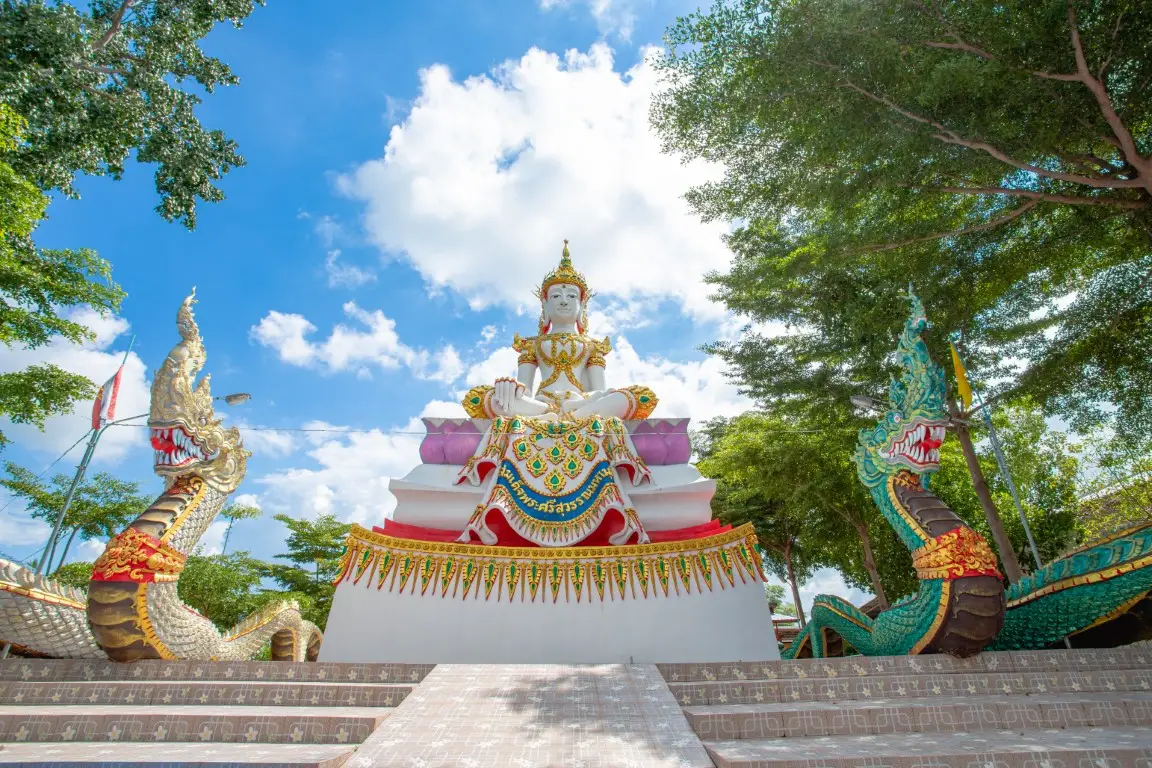
Wat Nong Ngok
Open Days: Daily
Opening Hours: 08:00 - 17:00
Wat Nong Ngok is a community Buddhist temple of the Maha Nikaya order located in Ban Huai Thang, Moo 12, Doi Lo Subdistrict, Doi Lo District, Chiang Mai Province 50160. Its official temple code is 350240111. The temple remains part of the active Sangha system in Doi Lo, and a 2025 Chiang Mai monastic education record lists Phra Anucha Aphinyopho as a monk affiliated with Wat Nong Ngok. Although detailed public documentation about the temple's earliest foundation is limited, the modern temple database records its registration on 2 August 2000.
An important distinction should be made between the temple's official registration date and the actual beginning of Buddhist activity at the site. The date 2 August 2000 appears in a modern temple database as the registration date, but no sufficiently reliable public source has been found establishing that this was also the year in which the first monastery or religious site was constructed. For that reason, the early history of Wat Nong Ngok should be presented conservatively rather than supplemented with unsupported stories or dates.
This caution is particularly important because several temples in Thailand share the name Wat Nong Ngok. Search results frequently mix information from Wat Nong Ngok in Sisaket and Yasothon with the temple in Chiang Mai. Buildings, Buddha images, abbots, and legends belonging to those temples should not be transferred to this site. The Wat Nong Ngok covered here is specifically the temple in Ban Huai Thang, Moo 12, Doi Lo Subdistrict, Doi Lo District, Chiang Mai, temple code 350240111.
Ban Huai Thang is officially Moo 12 of Doi Lo Subdistrict. The subdistrict covers approximately 93 square kilometers and contains 26 villages spread across agricultural lowlands, foothills, and rural settlements. Agriculture remains central to the local economy, with longan being especially important alongside rice, cantaloupe, tomatoes, and other crops. Wat Nong Ngok therefore belongs to a rural agricultural landscape rather than the densely visited urban temple environment of central Chiang Mai.
This setting helps explain the importance of a community temple. Wat Nong Ngok is not simply a place for travelers to see. It is part of the everyday religious structure of Ban Huai Thang, providing a place for Buddhist observances, merit-making, local ceremonies, and interaction between monks and lay residents.
Contemporary Sangha administration places Wat Nong Ngok within the Maha Nikaya order. Ecclesiastical district documentation groups the temple with Wat Phra That Doi Noi, Wat Phra That Doi Lo, Wat San Khayom, and Wat Lot within Doi Lo Sangha District 3. This places Wat Nong Ngok clearly within the organized Buddhist network of the district.
A significant piece of recent evidence comes from the 2025 Nak Tham examination records of the Chiang Mai provincial Sangha. The list includes Phra Anucha Aphinyopho Thongsi, aged 28 with nine rains retreats, affiliated with Wat Nong Ngok in Doi Lo. His presence in the formal monastic education system confirms that the temple remains connected with active Sangha life.
The document identifies Phra Anucha as a monk affiliated with the temple, not specifically as the abbot. No sufficiently current public appointment record identifying the abbot has been found, so the title should not be assigned without evidence. Similarly, no current temple telephone number could be verified with enough confidence to include in the article.
The temple is located at approximately 18.48150, 98.82344 in the Ban Huai Thang area. This position corresponds with geographic data identifying Wat Nong Ngok as a religious site in Doi Lo. The temple lies east of the main Highway 108 corridor and within a relatively compact network of villages and temples near the Chiang Mai-Lamphun side of the Ping River basin.
Doi Lo's landscape is predominantly lowland, with higher terrain toward the north and west and agricultural land extending through much of the subdistrict. The eastern side connects toward Lamphun Province. Wat Nong Ngok therefore sits within a cultural landscape shaped by farming communities, local roads, irrigation, village settlements, and Buddhist temples located only a few kilometers apart.
No sufficiently reliable public architectural record has been found documenting the construction years of a viharn, ubosot, chedi, Buddha relic shrine, principal Buddha image, bell tower, sermon hall, or monks' residences specifically at Wat Nong Ngok in Doi Lo. Online descriptions of an ubosot, a Buddha image called Luang Pho Sai Fon, and a large white Buddha belong to another Wat Nong Ngok in Sisaket Province and should not be attributed to this temple.
Visitors should therefore focus on the religious spaces actually open during their visit, pay respect to the Buddha images present in the temple, and appreciate the atmosphere of an active local monastery. Wat Nong Ngok is more suitable for travelers interested in village Buddhism and quiet local culture than for those seeking a large archaeological monument or a highly commercial tourist attraction.
The temple's simplicity is itself part of its appeal. It provides an opportunity to experience a functioning Buddhist temple within the agricultural setting of southern Chiang Mai. For visitors accustomed to the famous temples of Chiang Mai's old city, the atmosphere provides a useful contrast and a better understanding of how Buddhism remains integrated into ordinary rural life.
Lanna Buddhist culture is not preserved only in monumental historic architecture. It also continues through the everyday use of temples, the presence of monks, Buddhist holy days, communal merit-making, and the relationship between residents and their local monastery. Wat Nong Ngok is meaningful precisely because these community functions continue in Ban Huai Thang.
Kathin, forest-robe offerings, Buddhist holy days, and other merit-making activities are common features of Thai temple life. However, no current official annual festival calendar specific to Wat Nong Ngok has been found. Visitors wishing to participate in a particular ceremony should therefore confirm the event locally rather than relying on an old or assumed date.
The same caution applies to claims about a sacred relic. No reliable evidence has been identified establishing a specific Buddha relic or relic shrine at Wat Nong Ngok in Doi Lo. Such information should not be borrowed from another temple simply to make the site appear more prominent. Accuracy is more valuable than an unsupported legend.
Published visiting hours are daily from 08:00 to 17:00. These hours make the temple convenient for a morning or afternoon cultural itinerary. Because this is a working community monastery, individual buildings may open or close according to monastic activities on the day. Visitors should not enter monks' residential areas or restricted spaces without permission.
No current official admission fee has been identified. Wat Nong Ngok functions primarily as a community temple rather than a ticketed tourist attraction. Visitors wishing to make a donation can use the channels provided by the temple during their visit; a donation should not be treated as an admission charge.
Standard temple etiquette applies. Dress modestly, remove shoes where required, keep voices low, and avoid disturbing monks during prayers or monastic duties. Permission should be requested before photographing monks or private community ceremonies.
If a funeral, merit-making ceremony, or other village event is taking place, local residents should be given priority. The temple's primary purpose is to serve its Buddhist community, not tourism. Respectful visitors are more likely to experience the natural atmosphere of village temple life.
Getting There from Chiang Mai city is straightforward by private car. Follow Highway 108, the Chiang Mai-Hot Road, south through Hang Dong and San Pa Tong into Doi Lo District. Doi Lo Subdistrict lies approximately 45 kilometers from Chiang Mai city. From the main road, continue on local roads toward Ban Huai Thang, Moo 12.
Because temples with the same name exist in other provinces, navigation systems should use the complete phrase “Wat Nong Ngok, Doi Lo, Chiang Mai” or the approximate coordinates 18.48150, 98.82344. A private car or rental vehicle is the most practical option for combining the temple with other destinations in Doi Lo.
Morning is particularly suitable for travelers seeking a quiet atmosphere and planning to visit additional temples afterward. Those approaching from Chom Thong can also stop in the afternoon on the way back toward Chiang Mai, allowing enough time to finish before the evening.
Wat San Khayom is one of the closest temples and is also associated with the Moo 12 area of Doi Lo. Its local oral history and old brick-and-stucco principal Buddha image provide a different historical experience. Visiting Wat San Khayom and Wat Nong Ngok together illustrates how two temples in the same local area can have very different documentary histories.
Wat Sirimangkalachan is another worthwhile nearby stop. Its history is closely associated with communities displaced by the Bhumibol Dam project, the establishment of a new temple in 1966, a sacred Bodhi tree, and the memory of Princess Srinagarindra. Combining it with Wat Nong Ngok adds an important twentieth-century community-history dimension to a Doi Lo itinerary.
Wat Phra That Doi Noi adds a much older religious and historical setting. Located on elevated ground, it is known for its important Buddhist heritage and views over the Ping River basin. A route from a village temple such as Wat Nong Ngok to Wat Phra That Doi Noi provides a useful contrast between everyday community Buddhism and a prominent historic sacred site.
Wat Mon Huai Kaeo can also be included. The temple developed from a community monastic establishment in the 1990s and was formally recognized as Wat Mon Huai Kaeo in 1999. Visiting it together with Wat Nong Ngok provides insight into the development of modern community temples in Doi Lo.
Travelers with additional time can continue to Wat Wang Kham Pom, whose history is connected with the Ping River and older settlement patterns, or include Wat Phra That Doi Lo. A longer itinerary can extend to Pha Chor and Kio Suea Ten, two important natural attractions in the wider Doi Lo area.
Pha Chor is one of Doi Lo's best-known natural landscapes, created by the deposition and erosion of sediments over long periods of time. Its striking earth walls and columns provide a dramatic change from a temple itinerary. Combining a morning temple visit with the area's natural landscape creates a more complete picture of Doi Lo.
Food and coffee options are available along the Doi Lo and Highway 108 corridor. Ta Ton Yon Coffee&Cafe is roughly 2 kilometers from the temple and can be contacted at 052-000-566. Rin Coffee at Doi Lo is around 4 kilometers away, Tel. 089-953-8276. Uka Coffee is also around 4 kilometers away, Tel. 099-331-3412. Phupha Coffee Bar is approximately 5 kilometers away, Tel. 083-822-7403. De Aerng Boutique Hotel also operates food and café services around 6 kilometers from the temple, Tel. 061-316-0822.
These businesses make it easy to stop for a meal or drink without returning to Chiang Mai city. Opening hours at small local establishments can change, so calling ahead is useful when a particular restaurant or café is an important part of the itinerary.
Accommodation within the surrounding Doi Lo area includes The Starly Night Cottage, approximately 3 kilometers away, Tel. 081-939-5610; Pimprajan Homestay, approximately 4 kilometers away, Tel. 090-885-1545; De Aerng Boutique Hotel, approximately 6 kilometers away, Tel. 061-316-0822; Green Tree Resort, approximately 9 kilometers away, Tel. 063-383-3183; and Baan Rim Ping River Side Resort, around 9-10 kilometers away, Tel. 089-894-9172.
Staying overnight in Doi Lo can be useful for travelers who want to explore southern Chiang Mai without rushing. A first day can combine local temples and Pha Chor, followed by an overnight stay, while the second day can continue toward Chom Thong and Doi Inthanon.
From a cultural travel perspective, Wat Nong Ngok does not need a large collection of archaeological monuments to be meaningful. Its value comes from being an active village monastery within the agricultural landscape of Doi Lo. Experiencing this type of temple helps complete the picture of Buddhism in Chiang Mai beyond the famous temples of the old city.
Search results for Wat Nong Ngok are particularly prone to confusion because information from temples of the same name in other provinces appears frequently. Travelers and researchers should remember the identifying combination “Ban Huai Thang, Doi Lo, Chiang Mai” and temple code 350240111. These details help distinguish the temple from similarly named sites and prevent the use of incorrect histories or abbot names.
The relationship with Ban Huai Thang is central to the temple's identity. Ban Huai Thang remains officially listed as Moo 12 of Doi Lo Subdistrict and continues to appear in contemporary local-government infrastructure records. The village is therefore not merely a historical address but an active community surrounding the temple today.
Doi Lo contains numerous temples and monastic establishments, making Buddhism a visible component of local social geography. Wat Nong Ngok should therefore be understood alongside Wat San Khayom, Wat Sirimangkalachan, Wat Phra That Doi Noi, Wat Phra That Doi Lo, and Wat Mon Huai Kaeo. Each tells a different part of the district's cultural development.
A practical half-day route can begin at Wat Nong Ngok in the morning, continue to Wat San Khayom and Wat Phra That Doi Noi, and finish with lunch in Doi Lo. A full-day route can add Wat Sirimangkalachan, Wat Mon Huai Kaeo, or Pha Chor. The destinations are sufficiently close to create an efficient itinerary without excessive backtracking.
For photography, the strongest subject is the relationship between the temple, village, and rural landscape rather than an unsupported claim about ancient monuments. Photography should remain respectful, particularly around Buddha images, monks, and religious ceremonies.
The cooler season from approximately November to February is comfortable for temple and outdoor travel. The rainy season brings greener landscapes, although some local roads in Doi Lo can require slower travel. Extra time should be allowed when continuing to natural attractions such as Pha Chor.
Wat Nong Ngok's importance ultimately lies in its continuing place within the Buddhist community of Doi Lo. The appearance of a temple-affiliated monk in 2025 monastic education records provides recent evidence of active religious life. Although detailed documentation of the early foundation, individual buildings, and current abbot remains limited, the available evidence can still tell the story of the temple accurately without inventing a legend.
For travelers interested in community-based Chiang Mai, Wat Nong Ngok works best as part of a wider Doi Lo route. A quiet village temple, nearby historic monasteries, agricultural scenery, local cafés, and the geological landscape of Pha Chor together reveal a side of southern Chiang Mai that is very different from the city's major tourist temples.
The most important approach is to appreciate Wat Nong Ngok for what it genuinely is. It does not need an exaggerated miracle story, an invented ancient chedi, or an unsupported architectural attribution to be worthwhile. Its role as a Buddhist center for Ban Huai Thang, its continuing connection with the Sangha, and its location within Doi Lo's living agricultural community are substantial values in their own right.
| Name | Wat Nong Ngok |
| Temple Type | Community Buddhist Temple, Maha Nikaya |
| Temple Code | 350240111 |
| Address | Ban Huai Thang, Moo 12, Doi Lo Subdistrict, Doi Lo District, Chiang Mai 50160, Thailand |
| Coordinates | Approx. 18.48150, 98.82344 |
| Modern Registration Record | Temple database records registration on 2 August 2000 |
| Monk In Recent Records | Phra Anucha Aphinyopho Thongsi, affiliated with Wat Nong Ngok in the 2025 Nak Tham examination records |
| Sangha Administration | Doi Lo Sangha District 3 |
| Highlights | Active village temple in Ban Huai Thang, suitable for merit-making, quiet local cultural visits, and a wider Doi Lo temple itinerary |
| Open Days | Daily |
| Opening Hours | 08:00 - 17:00 |
| Getting There | Take Highway 108 south from Chiang Mai through Hang Dong and San Pa Tong into Doi Lo, then follow local roads to Ban Huai Thang, Moo 12. Use the full name “Wat Nong Ngok, Doi Lo, Chiang Mai” or the coordinates to avoid similarly named temples in other provinces. |
| Current Status | Currently listed as a Maha Nikaya temple with a temple-affiliated monk appearing in 2025 Sangha education records. |
| Nearby Tourist Attractions | 1. Wat San Khayom, about 2 km 2. Wat Sirimangkalachan, about 3 km 3. Wat Phra That Doi Noi, about 4 km 4. Wat Mon Huai Kaeo, about 6 km 5. Wat Wang Kham Pom, about 8 km |
| Nearby Restaurants And Cafés | 1. Ta Ton Yon Coffee&Cafe, about 2 km, Tel. 052-000-566 2. Rin Coffee at Doi Lo, about 4 km, Tel. 089-953-8276 3. Uka Coffee, about 4 km, Tel. 099-331-3412 4. Phupha Coffee Bar, about 5 km, Tel. 083-822-7403 5. De Aerng Boutique Hotel Restaurant & Cafe, about 6 km, Tel. 061-316-0822 |
| Nearby Accommodations | 1. The Starly Night Cottage, about 3 km, Tel. 081-939-5610 2. Pimprajan Homestay, about 4 km, Tel. 090-885-1545 3. De Aerng Boutique Hotel, about 6 km, Tel. 061-316-0822 4. Green Tree Resort, about 9 km, Tel. 063-383-3183 5. Baan Rim Ping River Side Resort, about 9-10 km, Tel. 089-894-9172 |
Frequently Asked Questions (FAQ)
Q: Where is the Wat Nong Ngok covered in this article?
A: It is located in Ban Huai Thang, Moo 12, Doi Lo Subdistrict, Doi Lo District, Chiang Mai, temple code 350240111. It should not be confused with Wat Nong Ngok temples in Sisaket or Yasothon.
Q: Is Wat Nong Ngok still an active temple?
A: Yes. It remains listed as a Maha Nikaya temple, and a monk affiliated with Wat Nong Ngok appears in the Chiang Mai Nak Tham examination records for 2025.
Q: When was Wat Nong Ngok founded?
A: No sufficiently reliable public record establishing the original foundation year has been found. A modern temple database records registration on 2 August 2000, but that date should not automatically be treated as the first construction date.
Q: Who is the abbot of Wat Nong Ngok?
A: The most recent public monastic record identifies Phra Anucha Aphinyopho as a monk affiliated with the temple in 2025 but does not identify him as the abbot. No current abbot is therefore stated without an appointment record.
Q: What are the opening hours of Wat Nong Ngok?
A: Published visiting hours are daily from 08:00 to 17:00. Access to individual buildings may vary according to temple activities.
Q: Is there an admission fee?
A: No current official admission fee has been identified. Wat Nong Ngok is primarily a community Buddhist temple rather than a ticketed tourist attraction.
Q: What nearby places can be combined with Wat Nong Ngok?
A: Nearby options include Wat San Khayom, Wat Sirimangkalachan, Wat Phra That Doi Noi, Wat Mon Huai Kaeo, and Wat Wang Kham Pom. A longer itinerary can also include Pha Chor.
Q: How do I get to Wat Nong Ngok from Chiang Mai?
A: Follow Highway 108 south through Hang Dong and San Pa Tong to Doi Lo, then continue on local roads to Ban Huai Thang, Moo 12. Search for the full name “Wat Nong Ngok, Doi Lo, Chiang Mai” or use the approximate coordinates 18.48150, 98.82344.
 Category: ●Places of Worship
 Group: ●Temple
Last Update : 3 DayAgo
 Last Update : 3 DayAgo
 Click to Access the Navigation Map GPS
 Muang Chiang Mai(121)Chom Thong(47)Mae Chaem(25)Chiang Dao(33)Doi Saket(68)Mae Taeng(85)Mae Rim(69)Samoeng(29)Fang(71)Mae Ai(59)Phrao(70)San Pa Tong(103)San Kamphaeng(66)San Sai(73)Hang Dong(73)Hot(32)Doi Tao(22)Omkoi(11)Saraphi(74)Wiang Haeng(15)Chai Prakan(28)Mae Wang(32)Mae On(22)Doi Lo(33)Galyani Vadhana(1)


