
lovethailand home >North Travel Attractions >Chiang Mai Travel Attractions >Doi Lo >Doi Lo > Wat Don Chuen
TL;DR: Wat Don Chuen is located at 229 Ban Lao Puai, Moo 2, Doi Lo Subdistrict, Doi Lo District, Chiang Mai 50160, Thailand. is located at 229 Ban Lao Puai, Moo 2, Doi Lo Subdistrict, Doi Lo District, Chiang Mai Province. It is an active public Buddhist temple.

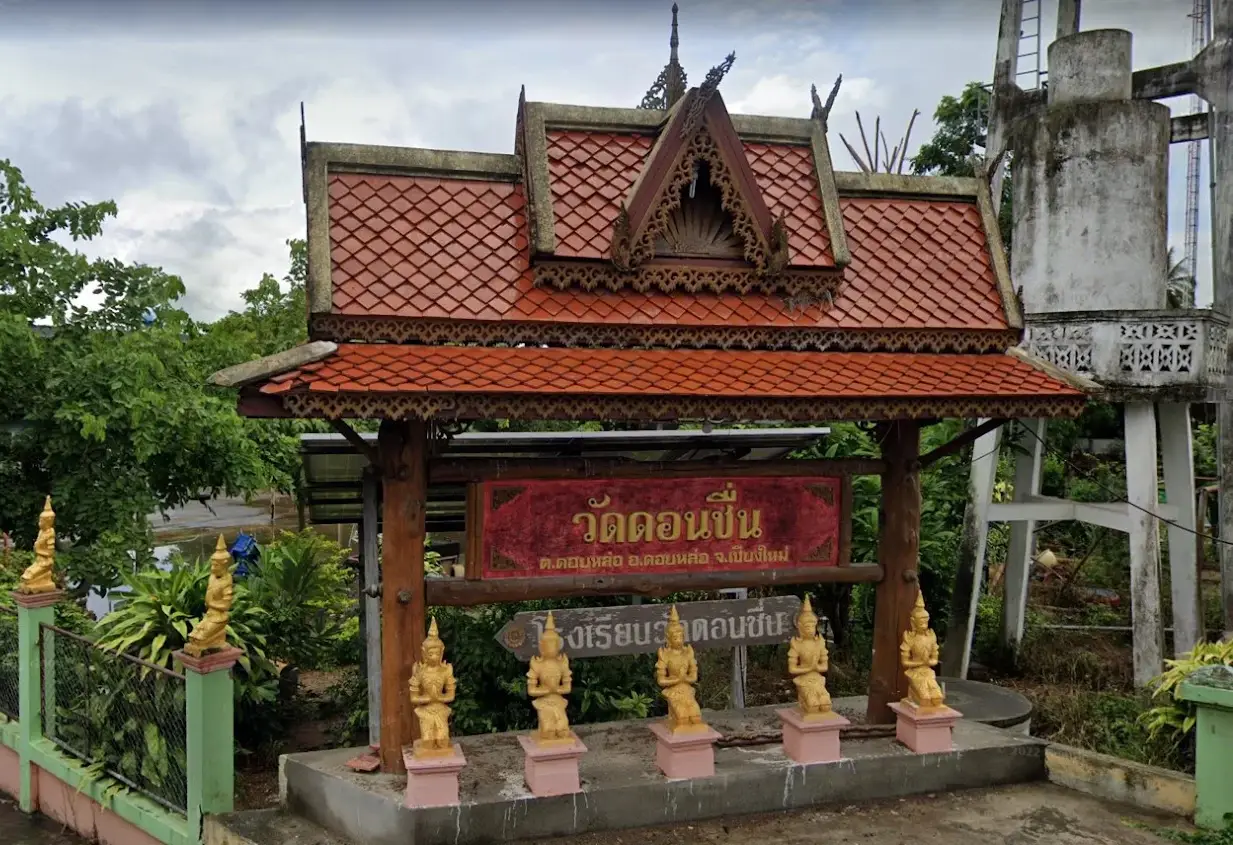
Wat Don Chuen
Operating day: Daily
Operating time: 08.00 - 17.00
Wat Don Chuen is located at 229 Ban Lao Puai, Moo 2, Doi Lo Subdistrict, Doi Lo District, Chiang Mai Province. It is an active public Buddhist temple under the Maha Nikaya order, registered under temple code 350240101. The temple was formally established in 1908 and occupies approximately 4 rai of land, with a separate monastic landholding of 14 rai, 1 ngan and 40 square wah. Wat Don Chuen has remained closely connected with Ban Lao Puai and surrounding communities for more than a century, serving as a place of worship, a residence for monks and novices, and a spiritual institution closely linked with the neighboring Wat Don Chuen School.
From its formal establishment in 1908 to 2026, Wat Don Chuen has approximately 118 years of documented history. During this period, Doi Lo has changed from a predominantly traditional agricultural landscape into a district connected by modern roads and public education while remaining an important rural corridor between Chiang Mai, San Pa Tong, Chom Thong and the natural attractions of southern Chiang Mai. Throughout these changes, the temple has continued to function as a Buddhist institution for the local community.
The principal temple compound covers approximately 4 rai under Nor Sor 3 document No. 213/2503. Each side of the compound measures roughly 40 wa. The northern boundary adjoins private land, the southern boundary a public road, the eastern boundary a public irrigation channel and the western boundary Wat Don Chuen School. This setting illustrates the traditional structure of a northern Thai village, where a temple exists alongside homes, education, agriculture and water-management systems.
Wat Don Chuen also owns a separate parcel of monastic land covering 14 rai, 1 ngan and 40 square wah under Nor Sor 3 Kor document No. 3738. Such land forms part of the institutional foundation of a monastery and can support religious activities, temple maintenance and the long-term needs of the resident Sangha.
The public irrigation channel on the eastern boundary is significant within the agricultural landscape of Doi Lo. Traditional irrigation channels and weir systems have long been essential to farming communities in northern Thailand. The temple, school, homes, cultivated land and water channels therefore form parts of the same rural cultural landscape.
Immediately west of the temple is Wat Don Chuen School, which remains an active educational institution under Chiang Mai Primary Educational Service Area Office 4. The school stands in Ban Lao Puai, Moo 2, and serves children from surrounding communities. Its location beside the temple reflects the long historical relationship between Buddhist monasteries and education in Thai society.
Wat Don Chuen School was established on 28 October 1953 and provides education from kindergarten through primary level. Its service area includes Ban San Hin, Ban Lao Puai and Ban Don Chuen. The shared landscape of monastery and school brings monks, novices, students, parents and older residents into the same community environment.
The relationship between Buddhism and education also continues through Buddhist studies. Local students have opportunities to study Buddhist principles, the life of the Buddha, religious practice and ethics. Wat Don Chuen therefore remains connected with the education of younger generations in addition to serving the adult Buddhist community.
The temple contains a number of important monastic structures, including a vihara, a khru ba hermitage, a bowl pavilion, dining hall, monks’ residences, novice monks’ residences and toilets. Each structure serves a particular role within a functioning monastery. The vihara is used for worship and religious activities, residences provide accommodation for monks and novices, and the dining hall supports their daily meals.
The vihara is one of the most important religious spaces at Wat Don Chuen. In Lanna Buddhist culture, a vihara traditionally serves as the main devotional hall where lay Buddhists pay respect to Buddha images, listen to sermons and participate in merit-making activities. Visitors can begin their visit here before exploring the chedi and other parts of the compound.
Important sacred objects include Buddha images, a Singha 2-style Buddha image and a chedi. Together these features give the temple both devotional and artistic importance and connect Wat Don Chuen with the wider Buddhist artistic traditions of northern Thailand.
The Singha 2-style Buddha image is particularly notable. The Singha 2 classification is associated with later developments in Lanna and Chiang Saen Buddhist sculpture. It represents an important stage in northern Thai Buddhist art and reflects exchanges of artistic influence between Lanna and surrounding regions.
Visitors should approach the Buddha images as sacred objects. Modest dress, respectful behavior and removal of footwear where required are appropriate. Buddha images and their pedestals should not be touched or climbed upon.
The temple’s chedi forms another important element of the sacred landscape. In Buddhist tradition, stupas and chedis serve as powerful symbols of the Buddha, the Dharma and the continuity of Buddhist faith. Together with the vihara and Buddha images, the chedi helps define the religious core of Wat Don Chuen.
The khru ba hermitage reflects another aspect of northern Thai Buddhist culture. In the Lanna tradition, the title khru ba is associated with respected senior monks. The existence of a khru ba hermitage therefore contributes to the distinctly northern character of the monastery and reflects the close relationship between monastic teachers and local devotion.
The bowl pavilion and monastic dining hall reveal the practical daily life of the monastery. These spaces support food offerings and meals for monks and novices. Although they are less visually prominent than the vihara or chedi, they are essential to understanding how a living Buddhist monastery functions.
Separate residences are provided for monks and novices. Contemporary records confirm that Wat Don Chuen continues to have resident monks, so these areas should be treated as private monastic spaces and approached quietly and respectfully.
Phra Khru Manat Suthikon is identified as the abbot of Wat Don Chuen. Records for 2025 list five monks residing at the temple during the Buddhist rains retreat. The abbot oversees the monastery, religious activities, temple buildings and the temple’s relationship with local residents.
Kathin is one of the temple’s documented contemporary traditions. In 2025 the Kathin ceremony was held on 18 October at 10:00. The ceremony takes place after the Buddhist rains retreat, when lay Buddhists present robes and other necessities to monks who have completed the retreat.
In a village temple, Kathin is also a major community occasion. Local residents cooperate in preparing food, arranging the temple grounds, welcoming visitors and supporting temple maintenance. The ceremony therefore strengthens both Buddhist faith and relationships among families in the community.
Wat Don Chuen functions as a spiritual center for Ban Lao Puai and surrounding villages. Buddhist holy days, merit-making, Kathin and family religious ceremonies bring residents together throughout the year. The resident Sangha provides an important source of spiritual guidance and continuity for the community.
Doi Lo Subdistrict contains numerous Buddhist monasteries, including Wat Phra That Doi Lo, Wat Phra That Doi Noi, Wat Doi Lo, Wat Pak Thang Samakkhi, Wat Fa Lang, Wat Mon Huai Kaeo, Wat Wang Kham Pom and other local temples. This network reflects the traditional northern Thai settlement pattern in which individual villages maintain their own religious centers.
Wat Don Chuen is best understood as an active lowland community monastery rather than a major tourist temple. Its appeal lies in its quiet atmosphere, its close relationship with the school and surrounding village, and the opportunity to see religious structures that remain part of everyday Buddhist life.
Travelers interested in Lanna culture can use Wat Don Chuen to understand the connection between religion, education and agriculture. A public irrigation channel runs along one side of the temple, the local school stands on another, and the monastery itself contains the religious and residential buildings used by monks and novices.
The temple is particularly suitable for quiet morning visits. Visitors can pay respect in the vihara, observe the Singha 2-style Buddha image and chedi, and explore the general temple environment without rushing. When community ceremonies are taking place, local worshippers and participants should be given priority.
Photography should focus on the temple architecture, chedi and overall village atmosphere. Close photographs of monks, novices, schoolchildren or local residents should be taken only with appropriate permission.
Getting There is easiest by private car or rental vehicle. From central Chiang Mai, follow Highway 108 south through Hang Dong and San Pa Tong toward Doi Lo, then continue to Ban Lao Puai, Moo 2. Wat Don Chuen School, which stands beside the monastery, is a useful local landmark.
When using navigation services, search specifically for “Wat Don Chuen, Doi Lo, Chiang Mai”. Another temple with the same name exists in Saraphi District, so including Doi Lo in the search helps prevent navigation to the wrong location.
Wat Don Chuen can be combined with Wat Phra That Doi Lo, another important temple in the subdistrict, and Wat Phra That Doi Noi, which occupies elevated terrain. Visiting the three temples provides contrasting perspectives on the Buddhist landscape of Doi Lo.
Another worthwhile stop is the Ganesha Museum in Yang Kram Subdistrict, which presents art and cultural material associated with Ganesha. It adds an art and belief-related dimension to a wider Doi Lo itinerary.
For nature, Pha Chor in Mae Wang National Park is one of Doi Lo’s most important attractions. Its dramatic cliffs and earth pillars were created through long-term sediment deposition and erosion. Some formations reach approximately 30 meters in height, creating one of the district’s most recognizable landscapes.
Near Pha Chor is Kio Suea Ten, another erosional landscape formed through related geological processes. Combining temples with Pha Chor and Kio Suea Ten creates a day trip that includes Buddhism, local culture and natural history.
Food and café options are distributed through Doi Lo and along Highway 108. Current choices with contact information include Suan Ahan Krua Doi Lo, Tel. 081-026-4699; Rin Coffee at Doi Lo, Tel. 089-953-8276; DOK JIK Coffee Homemade, Tel. 080-945-3376; PHANSA COFFEE, Tel. 099-272-9849; and Rin Gi Coffee Bar, Tel. 092-797-9479.
Accommodation in and around Doi Lo includes De Aerng Boutique Hotel, Tel. 061-316-0822; Green Tree Resort, Tel. 063-383-3183; Pimprajan Homestay, Tel. 090-885-1545; Chiang Mai Inthanon Golf and Natural Resort, Tel. 052-001-645; and Bandin Resort, Tel. 053-360-189. Staying in the area is useful for travelers continuing toward Chom Thong, Doi Inthanon or Mae Wang.
A practical half-day itinerary begins at Wat Don Chuen, followed by Wat Phra That Doi Lo and Wat Phra That Doi Noi. A full-day route can add the Ganesha Museum, Pha Chor and Kio Suea Ten, creating a varied journey through religion, local culture and nature.
Wat Don Chuen’s importance extends beyond its religious buildings. The relationship between the temple, school, irrigation channel, homes and village demonstrates the integrated character of a traditional Lanna community, where Buddhism remains closely connected with education, agriculture and everyday social life.
With its establishment dating to 1908, a 4-rai principal compound, more than 14 rai of additional monastic land, a vihara, Singha 2-style Buddha image, chedi, resident Sangha and close relationship with Wat Don Chuen School, the monastery continues to play a significant role in Ban Lao Puai and the wider Doi Lo community.
Wat Don Chuen is therefore particularly suitable for travelers interested in community-based Lanna Buddhism rather than monumental tourist temples. Paying respect to the Buddha images, observing the vihara and chedi, and understanding the temple’s relationship with the neighboring school and agricultural landscape provides a clear picture of how a northern Thai village monastery continues to function in contemporary community life.
| Name | Wat Don Chuen |
| Type | Public Buddhist Temple, Maha Nikaya Order |
| Temple Code | 350240101 |
| Location | 229 Ban Lao Puai, Moo 2, Doi Lo Subdistrict, Doi Lo District, Chiang Mai 50160, Thailand |
| Established | 1908 |
| Temple Area | 4 rai, Nor Sor 3 No. 213/2503 |
| Temple Boundaries | North: approximately 40 wa adjoining private land; South: approximately 40 wa adjoining a public road; East: approximately 40 wa adjoining a public irrigation channel; West: approximately 40 wa adjoining Wat Don Chuen School |
| Monastic Land | 1 parcel covering 14 rai, 1 ngan and 40 square wah, Nor Sor 3 Kor No. 3738 |
| Abbot | Phra Khru Manat Suthikon |
| Resident Monks | 5 monks during the 2025 rains retreat |
| Main Structures | Vihara, khru ba hermitage, bowl pavilion, dining hall, monks’ residences, novice monks’ residences and toilets |
| Sacred Objects | Buddha images, Singha 2-style Buddha image and chedi |
| Adjacent Community Sites | Wat Don Chuen School and a public irrigation channel |
| Community Role | Spiritual center for Ban Lao Puai and surrounding communities, with connections to Wat Don Chuen School and Buddhist education for local children |
| 2025 Kathin | 18 October 2025 at 10:00 |
| Current Status | Active Buddhist monastery with resident monks and continuing religious activities |
| Getting There | Take Highway 108 south from Chiang Mai through Hang Dong and San Pa Tong to Doi Lo, then continue to Ban Lao Puai, Moo 2. Search for “Wat Don Chuen Doi Lo Chiang Mai” to avoid confusion with the temple of the same name in Saraphi District. |
| Nearby Attractions | 1. Wat Phra That Doi Lo 2. Wat Phra That Doi Noi 3. Ganesha Museum, Yang Kram, Tel. 053-024-287 4. Pha Chor, Mae Wang National Park 5. Kio Suea Ten |
| Restaurants And Cafés In Doi Lo | 1. Suan Ahan Krua Doi Lo, Tel. 081-026-4699 2. Rin Coffee at Doi Lo, Tel. 089-953-8276 3. DOK JIK Coffee Homemade, Tel. 080-945-3376 4. PHANSA COFFEE, Tel. 099-272-9849 5. Rin Gi Coffee Bar, Tel. 092-797-9479 |
| Accommodation In And Around Doi Lo | 1. De Aerng Boutique Hotel, Tel. 061-316-0822 2. Green Tree Resort, Tel. 063-383-3183 3. Pimprajan Homestay, Tel. 090-885-1545 4. Chiang Mai Inthanon Golf and Natural Resort, Tel. 052-001-645 5. Bandin Resort, Tel. 053-360-189 |
Frequently Asked Questions (FAQ)
Q: Where is Wat Don Chuen located?
A: Wat Don Chuen is located at 229 Ban Lao Puai, Moo 2, Doi Lo Subdistrict, Doi Lo District, Chiang Mai 50160. Wat Don Chuen School directly adjoins the western side of the temple.
Q: When was Wat Don Chuen established?
A: Wat Don Chuen was formally established in 1908, giving it approximately 118 years of documented history by 2026.
Q: Which Buddhist order does Wat Don Chuen belong to?
A: Wat Don Chuen is a public Buddhist temple under the Maha Nikaya order and is registered under temple code 350240101.
Q: Who is the abbot of Wat Don Chuen?
A: Phra Khru Manat Suthikon is the abbot. Five monks were recorded at the temple during the 2025 Buddhist rains retreat.
Q: What are the main features of Wat Don Chuen?
A: Important structures include the vihara, khru ba hermitage, bowl pavilion, dining hall, monks’ and novices’ residences. Sacred objects include Buddha images, a Singha 2-style Buddha image and a chedi.
Q: Why is Wat Don Chuen important to the local community?
A: The temple is a spiritual center for Ban Lao Puai and neighboring communities and is closely connected with Wat Don Chuen School and Buddhist education for local children.
Q: What important Buddhist tradition is documented at Wat Don Chuen?
A: Kathin is one of the temple’s documented traditions. In 2025 the ceremony was held on 18 October at 10:00, with five monks residing at the temple during the rains retreat.
Q: What attractions can be visited after Wat Don Chuen?
A: Nearby itinerary options include Wat Phra That Doi Lo, Wat Phra That Doi Noi, the Ganesha Museum, Pha Chor and Kio Suea Ten, allowing travelers to combine temples, culture and natural landscapes in a half-day or full-day Doi Lo trip.
 Category: ●Places of Worship
 Group: ●Temple
Last Update : 1 WeekAgo
 Last Update : 1 WeekAgo
 Click to Access the Navigation Map GPS
 Muang Chiang Mai(121)Chom Thong(47)Mae Chaem(25)Chiang Dao(33)Doi Saket(68)Mae Taeng(85)Mae Rim(69)Samoeng(29)Fang(71)Mae Ai(59)Phrao(70)San Pa Tong(103)San Kamphaeng(66)San Sai(73)Hang Dong(73)Hot(32)Doi Tao(22)Omkoi(11)Saraphi(74)Wiang Haeng(15)Chai Prakan(28)Mae Wang(32)Mae On(22)Doi Lo(33)Galyani Vadhana(1)


