
lovethailand home >North Travel Attractions >Chiang Mai Travel Attractions >Fang >San Sai > Wat Si Thoi
TL;DR: Wat Si Thoi is located at Moo 4, Tambon San Sai, Fang District, Chiang Mai Province, open Daily, hours Daytime Visits Are Recommended.

Wat Si Thoi
Open Days: Daily
Opening Hours: Daytime Visits Are Recommended
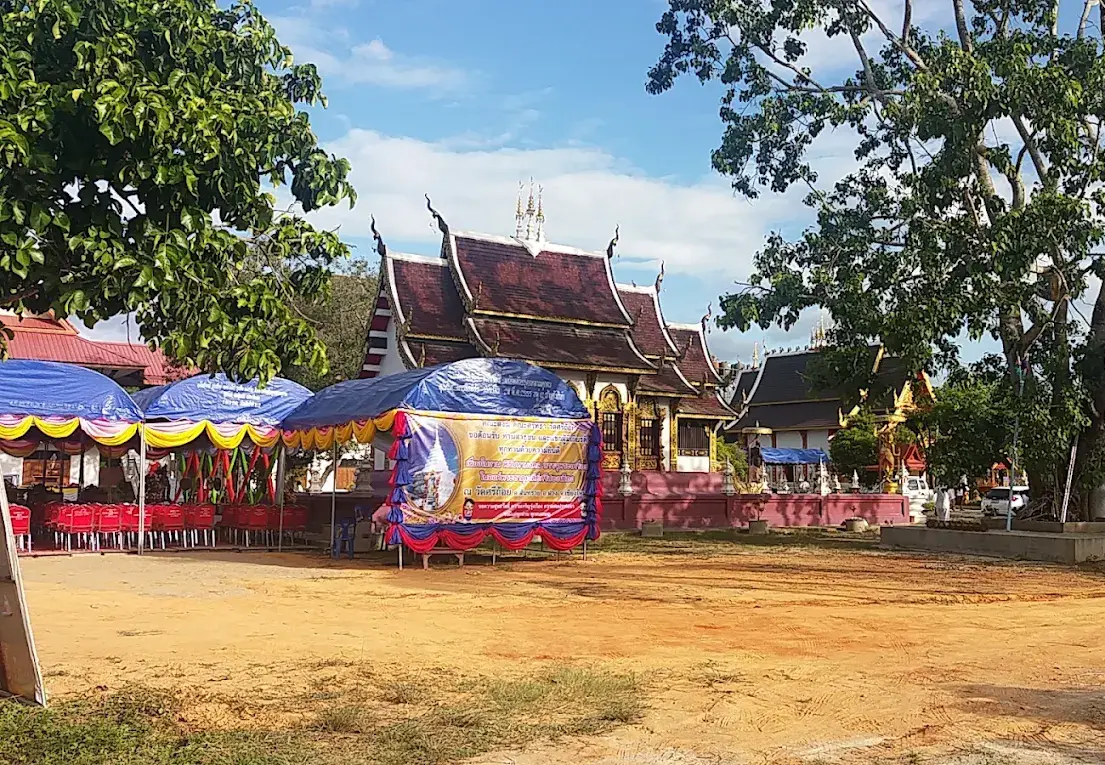
Wat Si Thoi in San Sai Subdistrict, Fang District, Chiang Mai Province, is a local Buddhist temple under the Maha Nikaya order. It was officially permitted as a temple in 1937 and continues to serve as a community temple for Buddhist worship, merit-making, religious gatherings, and local ceremonies. Its value lies not in large-scale tourism, but in its role as a living Lanna community temple closely connected with village life in northern Chiang Mai.
Wat Si Thoi is located in Moo 4, Tambon San Sai, Fang District, Chiang Mai 50110. San Sai is a community area connected with local roads, farming settlements, and temples that support the religious life of villagers. In this context, Wat Si Thoi is more than a place for occasional worship. It is part of the social and spiritual structure of the village, where people gather for Buddhist holy days, merit-making, annual ceremonies, and community-based religious activities.
The temple’s formal history begins in 1937, when it received official permission to be established as a temple. During that period, many northern Thai communities organized their village temples more clearly as centers of Buddhist life. A temple such as Wat Si Thoi was important because it gave local residents a nearby place to make merit, listen to sermons, observe Buddhist holy days, and preserve seasonal traditions. The temple therefore reflects the development of the San Sai community and the continuing importance of Buddhism in everyday village life.
As a community temple, Wat Si Thoi is supported by local devotees and villagers. This type of temple is an essential part of Lanna society because it connects Buddhism with the ordinary rhythm of local life. People come to the temple for merit-making, memorial rituals, community events, Buddhist Lent activities, and important ceremonies such as Kathin. Wat Si Thoi therefore represents the close bond between monks, laypeople, and the local community.
Wat Si Thoi is part of a cluster of temples in San Sai Subdistrict and nearby areas of Fang District. Other temples in the wider local route include Wat Nantararam, Wat Si Bun Rueang, Wat Si Mongkhon, Wat San Ton Du, Wat Sunthonaram, and Wat Sotayaram. This concentration of temples shows how strongly the San Sai area is connected with Buddhist culture. Travelers who visit Wat Si Thoi can understand it as part of a broader local temple network rather than as an isolated attraction.
Recent religious activity records show that Wat Si Thoi has resident monks and participates in Kathin merit-making after Buddhist Lent. Kathin is one of the most important annual Buddhist ceremonies in Thailand, during which lay supporters offer robes and requisites to monks. For a community temple, Kathin is also a social gathering that brings local residents, relatives, former villagers, and supporters back together around the temple. This confirms Wat Si Thoi’s continuing role as an active religious center for the San Sai community.
The abbot listed in recent temple activity information is Phra Samu Wutthinan Chai Atthayutto. In a village temple, the abbot plays an important role not only as a spiritual leader but also as a caretaker of temple grounds, a coordinator for ceremonies, and a religious guide for local residents. This makes the relationship between the abbot, monks, and the community especially important in maintaining the temple’s living role.
What visitors should appreciate at Wat Si Thoi is the quiet atmosphere of a Lanna community temple. This is not a site built mainly for mass tourism. It is a functioning religious space used by monks and villagers. Travelers should move slowly, dress modestly, keep their voices low, and respect any ceremonies or areas reserved for monks and local worshippers. A visit here is best understood as a cultural and spiritual experience rather than a quick photo stop.
Wat Si Thoi is suitable for travelers who want to make merit, visit local temples, and understand the cultural character of Fang District. Its location in San Sai makes it easy to combine with nearby temples, restaurants, accommodations, and natural attractions. Visitors can include Wat Si Thoi in a half-day or full-day route with Wat Nantararam, Wat Chedi Ngam, Fang Hot Spring, and Doi Pha Hom Pok National Park.
The temple’s historical importance comes from its official establishment in 1937. This makes Wat Si Thoi a long-standing religious institution in the area. Village temples founded in this period often became important anchors for community identity, merit-making, seasonal ceremonies, and the preservation of local Buddhist customs. Wat Si Thoi continues to represent that role for the people of Moo 4, Tambon San Sai.
Wat Si Thoi is also meaningful as part of the wider Buddhist landscape of Fang District. Fang is a northern Chiang Mai district that includes town areas, farming communities, mountain routes, and nature attractions. Temples in this district connect people from different communities through Buddhist practice, annual ceremonies, and Lanna traditions. Visiting Wat Si Thoi gives travelers a quieter and more grounded view of Fang beyond its well-known natural attractions.
Although detailed architectural information about Wat Si Thoi is not widely published, its importance is clear as an active community temple. Visitors should therefore focus on respectful observation: the temple grounds, the merit-making spaces, the courtyard atmosphere, and the role of the temple in daily community life. Travelers should avoid entering restricted areas and should not disturb monks or local people during ceremonies.
The most important annual religious activity connected with Wat Si Thoi is the Kathin ceremony after Buddhist Lent. Kathin is not only a robe-offering ceremony but also a collective expression of faith. It allows the local community to support the temple, maintain Buddhist practice, and strengthen relationships among villagers and supporters. For travelers interested in living Buddhist culture, understanding Kathin helps explain why village temples remain central to northern Thai communities.
For visitors, the appeal of Wat Si Thoi is its simplicity and authenticity. It is a place where Buddhist faith remains closely tied to local life. A visit here adds depth to a Fang itinerary because it shows how temples function within real communities, not only as sightseeing destinations. Travelers who enjoy local temples, quiet religious spaces, and Lanna culture will find Wat Si Thoi a meaningful stop.
Getting There is convenient by road. From Chiang Mai city, follow Highway 107 through Mae Rim, Mae Taeng, Chiang Dao, and Chai Prakan before entering Fang District. From Fang town, continue toward San Sai Subdistrict and Moo 4. The temple is best reached by private car, rental car, or local transport after arriving in Fang town.
Wat Si Thoi can be included in a wider Fang route with Wat Nantararam, Wat Si Bun Rueang, Wat Chedi Ngam, Fang Hot Spring, and Doi Pha Hom Pok National Park. This route works well for travelers who want to combine local temples, northern food, accommodation in Fang, and natural attractions in one trip.
The best time to visit is during the day, especially in the morning or early afternoon, when travel is easier and visitors can continue to other nearby attractions. If a ceremony is taking place, visitors should give space to monks and local worshippers. Modest clothing and quiet behavior are expected, as with all Thai temples.
Wat Si Thoi is therefore worth including in a Fang itinerary for travelers who want to understand the district through its community temples. The temple represents local Buddhist faith, village identity, and the continuing relationship between monks and residents in San Sai Subdistrict. It is a calm stop for merit-making, cultural observation, and a deeper appreciation of Lanna community life.
| Name | Wat Si Thoi |
| Location | Moo 4, Tambon San Sai, Fang District, Chiang Mai Province |
| Address | Moo 4, Tambon San Sai, Fang District, Chiang Mai 50110, Thailand |
| Temple Type | Community temple under the Maha Nikaya order |
| History | Officially permitted as a temple in 1937; a community temple of San Sai Subdistrict, Fang District |
| Distinctive Features | A quiet Lanna community temple suitable for merit-making, local temple visits, and learning about Buddhist village life in Fang District |
| Travel Information | Travel via Highway 107 from Chiang Mai to Fang District, then continue to Tambon San Sai, Moo 4. Best reached by private car, rental car, or local transport from Fang town |
| Current Status | Active community temple used for Buddhist worship, merit-making, and local religious activities |
| Open Days | Daily |
| Opening Hours | Daytime Visits Are Recommended |
| Main Areas / Zones | Religious activity areas, temple courtyard, temple hall area, and community merit-making spaces |
| Abbot / Caretaker | Phra Samu Wutthinan Chai Atthayutto |
| Main Contact Number | 09 0135 6806 |
| Related Religious Event | Kathin ceremony after Buddhist Lent; temple activity information listed a Kathin event on 15 November 2024 at 09.00 |
| Nearby Tourist Attractions | 1. Wat Nantararam, about 2 km 2. Wat Si Bun Rueang, about 3 km 3. Wat Chedi Ngam, about 6 km 4. Fang Hot Spring, about 12 km 5. Doi Pha Hom Pok National Park, about 14 km |
| Nearby Restaurants | 1. Khao Soi Parichat Fang, about 3 km, Tel. 053-451-164 2. PunThai Coffee Makro Fang, about 3 km, Tel. 062-197-0983 3. Oliang Roasted Duck Fang, about 4 km, Tel. 064-520-0241, 082-993-8124 4. Fang Cafe, about 5 km, Tel. 086-191-2101 5. Ban Rim Nam Garden Restaurant Fang, about 7 km, Tel. 053-382-174 |
| Nearby Accommodations | 1. Tangerine Ville Hotel, about 2 km, Tel. 053-452-114 2. Fang Modern Hotel, about 2 km, Tel. 086-439-1843 3. Khunyuw Place Fang, about 5 km, Tel. 053-453-319 4. Phumanee Lahu Home Hotel, about 6 km, Tel. 086-431-3564 5. Fang Villa Hotel, about 6 km, Tel. 086-451-7682, 053-452-448 |
Frequently Asked Questions (FAQ)
Q: Where is Wat Si Thoi located?
A: Wat Si Thoi is located in Moo 4, Tambon San Sai, Fang District, Chiang Mai 50110, Thailand.
Q: When was Wat Si Thoi officially established?
A: Wat Si Thoi was officially permitted as a temple in 1937.
Q: What type of temple is Wat Si Thoi?
A: Wat Si Thoi is a community temple under the Maha Nikaya order.
Q: Who is the abbot of Wat Si Thoi?
A: Recent temple activity information lists Phra Samu Wutthinan Chai Atthayutto as the abbot.
Q: Is there a contact number for Wat Si Thoi?
A: The listed main contact number is 09 0135 6806.
Q: What kind of travelers should visit Wat Si Thoi?
A: It is suitable for travelers who want to make merit, visit local Lanna temples, and explore community-based Buddhist culture in Fang District.
Q: What nearby places can be visited with Wat Si Thoi?
A: Nearby places include Wat Nantararam, Wat Si Bun Rueang, Wat Chedi Ngam, Fang Hot Spring, and Doi Pha Hom Pok National Park.
 Category: ●Places of Worship
 Group: ●Temple
Last Update : 18 HourAgo
 Last Update : 18 HourAgo
 Click to Access the Navigation Map GPS
 Muang Chiang Mai(121)Chom Thong(47)Mae Chaem(25)Chiang Dao(33)Doi Saket(68)Mae Taeng(85)Mae Rim(69)Samoeng(29)Fang(71)Mae Ai(59)Phrao(70)San Pa Tong(105)San Kamphaeng(66)San Sai(73)Hang Dong(74)Hot(32)Doi Tao(22)Omkoi(11)Saraphi(74)Wiang Haeng(15)Chai Prakan(28)Mae Wang(32)Mae On(22)Doi Lo(34)Galyani Vadhana(1)


