
lovethailand home >North Travel Attractions >Chiang Mai Travel Attractions >Fang >Wiang > Wat Pang Phueng (Suan Phutthangkun)
TL;DR: Wat Pang Phueng (Suan Phutthangkun) is located at Ban Pang Phueng, Moo 16, Wiang Subdistrict, Fang District, Chiang Mai Province, open Daily, hours 08.00 – 17.00.
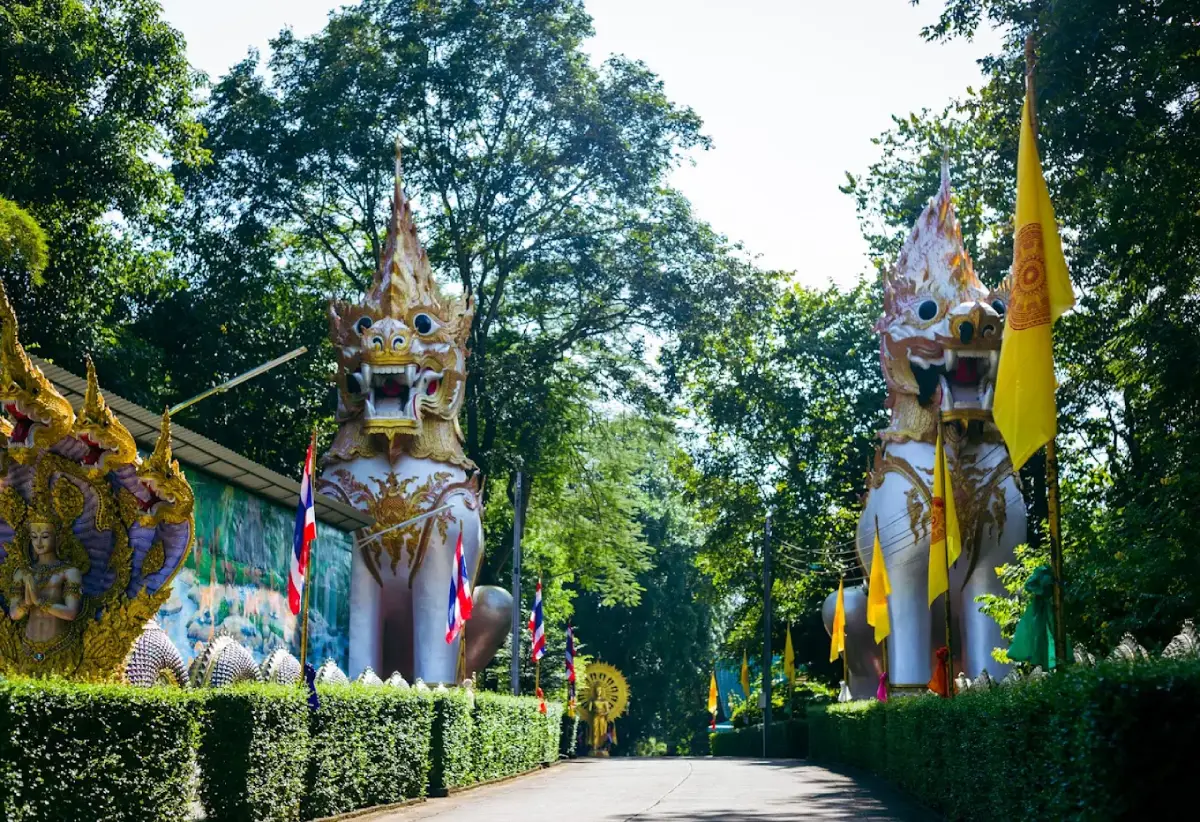
Wat Pang Phueng (Suan Phutthangkun)
Open Days: Daily
Opening Hours: 08.00 – 17.00
Wat Pang Phueng, also referred to in local tourism planning documents as Wat Pang Phueng (Suan Phutthangkun), is a private Buddhist temple under the Mahanikaya monastic order. It is located at 249 Moo 16, Ban Pang Phueng, Wiang Subdistrict, Fang District, Chiang Mai Province 50110. The temple covers an extensive area of 96 rai and is one of the distinctive community temples in Wiang Subdistrict because it combines Buddhist faith, local history, forest conservation, and a quiet natural setting.
Wat Pang Phueng is suitable for travelers looking for a peaceful temple in Fang District with a close relationship to nature. Its key features include a large temple area, an old-style wooden Thai ordination hall used for monastic ceremonies, religious structures and permanent temple buildings, and a strong emphasis on forest planting. A large part of the temple grounds is covered by forest, creating a calm environment for merit-making, reflection, and a slower form of travel in northern Thailand.
The history of Wat Pang Phueng began with the faith of the Ban Pang Phueng community. Local residents found traces of fired bricks scattered in several spots within the temple area. These traces led the community to believe that the place had once been an old temple or religious site. Such remains became important to local memory because they suggested that the land was not merely a forested or village area, but a place with an older Buddhist past. As a result, the local Buddhist community invited monks to reside there from 1975 to 1982.
The period from 1975 to 1982 was a turning point in the revival of Wat Pang Phueng. Inviting monks to stay during the rains retreat did more than provide the village with resident monks. It revived the site as a living Buddhist place. The community gained a temple for merit-making, monks became a spiritual focus for local residents, and the area began to function once again as a religious center for Ban Pang Phueng.
Wat Pang Phueng was officially permitted to be established as a temple on 15 August 2000. This formal recognition gave the local religious site a clearer position within the Thai Buddhist and administrative system. From traces of old fired bricks and an early period of monastic residence, Wat Pang Phueng developed into a recognized community temple serving Ban Pang Phueng and Wiang Subdistrict.
The name Pang Phueng is tied directly to Ban Pang Phueng, Moo 16. In northern Thai contexts, the word “pang” often suggests a settlement area, resting place, or landscape connected with forests and hills, while “phueng” means bee and evokes a natural environment rich enough to support local ecology. Because the temple and village share the same name, Wat Pang Phueng reflects the identity of its community. It grew from the landscape, faith, and memory of local residents rather than from outside development.
The most distinctive feature of Wat Pang Phueng is its 96-rai temple area and its forested character. About 70% of the temple grounds are forested. This gives the temple an environmental dimension in addition to its religious function. Wat Pang Phueng is not only a place for rituals and merit-making, but also a green space that helps the community preserve nature, promote calmness, and maintain a closer relationship between Buddhism and the local landscape.
The old-style wooden Thai ordination hall is one of the temple’s most important structures. It is used for monastic ceremonies and reflects a warm, traditional architectural style that harmonizes well with the natural surroundings. Unlike large concrete temple buildings, a wooden Thai-style ordination hall creates a modest and grounded atmosphere. Visitors should treat this area with particular respect because it is a sacred space for Buddhist ceremonies.
Besides the ordination hall, Wat Pang Phueng has religious structures and permanent temple buildings that support merit-making and local Buddhist activities. Specific details about the principal Buddha image, chedi, viharn, bell tower, or sermon hall should be added only when confirmed by reliable records or field inspection. What is clear is that Wat Pang Phueng functions as a complete community temple, with space for monks, villagers, religious ceremonies, and visitors seeking a peaceful atmosphere.
Phra Phayao Aphinchano appears in the older temple information as the abbot of Wat Pang Phueng. Later information related to the 2024 Kathin activity lists Phra Chakkrich Atithammo as the abbot at the time of that event. These records show that the temple continues to have resident monks and active Buddhist events. Travelers who plan to join a specific ceremony or coordinate religious activities should check with the local community or relevant local office before visiting.
Wat Pang Phueng plays several roles in the Ban Pang Phueng community. First, it is a spiritual center where villagers make merit, listen to teachings, and take part in Buddhist ceremonies. Second, it is a community gathering space for merit-making and shared activities. Third, it serves an environmental role because its forested grounds provide a green area for the community. This combination of religion, community life, and forest conservation makes Wat Pang Phueng especially meaningful in Fang District.
In the cultural context of northern Thailand, Wat Pang Phueng represents the role of a village temple in a rural and forested setting. Such temples act as both spiritual centers and social anchors. Merit-making activities such as Kathin, Pha Pa, Buddhist Lent, the end of Buddhist Lent, Visakha Bucha Day, Makha Bucha Day, and other Buddhist holy days bring villagers together and help maintain the relationship between Buddhism and local life.
Kathin is one of the important annual merit-making activities connected with Wat Pang Phueng. After the end of Buddhist Lent, lay supporters offer robes and donations to support the temple. Information from the 2024 Kathin activity recorded 8 resident monks at Wat Pang Phueng and listed the Kathin ceremony on 3 November 2024 at 10.30. This confirms the continuing religious activity of the temple and its role in the wider Buddhist merit-making calendar.
Visitors to Wat Pang Phueng should dress politely, speak quietly, avoid disturbing monks and local worshippers, and help keep the temple clean. Since the temple includes a large forested area, visitors should take special care not to leave litter or damage plants. A visit here should be approached not only as a photo stop, but as a chance to experience a living community temple where Buddhism, nature, and local life remain closely connected.
Wat Pang Phueng is suitable for travelers who are interested in community temples, nature, and a quieter route in Fang District. It is not a mainstream tourist temple, but that is part of its appeal. Visitors can experience a broad temple area, forested surroundings, the story of an old religious site revived by local faith, and a living Buddhist space that still serves Ban Pang Phueng.
Getting There is easiest by private car or rental car. From Chiang Mai city, take Highway 107 toward Fang District, passing Mae Rim, Mae Taeng, Chiang Dao, and Chai Prakan before entering Fang. The distance from Chiang Mai city to Fang is roughly 150–160 km and usually takes around 2.5–3.5 hours depending on traffic and road conditions. From Fang, continue into Wiang Subdistrict and Ban Pang Phueng, Moo 16, or search for “Wat Pang Phueng Fang Chiang Mai” in a navigation app.
Travelers using public transport can take a Chiang Mai–Fang bus or van, then continue from Fang town by local transport, songthaew, or hired vehicle to Ban Pang Phueng. A private vehicle is more convenient for connecting Wat Pang Phueng with nearby natural attractions such as Tham Huai Bon, Ban Huai Bon Reservoir, Huai Hian Waterfall, Fang Hot Spring, and other cultural sites in Wiang Subdistrict.
A practical route is to visit Wat Pang Phueng in the morning, then continue to Tham Huai Bon or Ban Huai Bon Reservoir for nature-based sightseeing. Travelers interested in local history and culture can also visit the King Fang Udomsin and Phra Nang Sam Phio Monument, Wat Chong Paen, or the Fang Cultural and Tourism Center. In the afternoon, Fang Hot Spring in Doi Pha Hom Pok National Park is a suitable place to relax.
The best time to visit Wat Pang Phueng is in the morning from about 08.00 to 10.00 or later in the afternoon when the sunlight is softer. During the cool season, Fang District is especially pleasant and can be combined with trips to Doi Pha Hom Pok or Fang Hot Spring. During the rainy season, travelers should allow extra travel time and check road conditions, especially when continuing toward natural attractions.
Wat Pang Phueng is best presented as a nature-oriented community temple in Wiang Subdistrict. It has a revival story rooted in local faith, a large temple area, an old-style wooden ordination hall, an emphasis on forest planting, and an ongoing role in the Buddhist life of Ban Pang Phueng. A visit here gives travelers more than a temple stop; it reveals the relationship between Buddhism, forest, and community life in Fang District.
| Name | Wat Pang Phueng, also known as Wat Pang Phueng (Suan Phutthangkun) |
| Location | Ban Pang Phueng, Moo 16, Wiang Subdistrict, Fang District, Chiang Mai Province |
| Address | 249 Moo 16, Ban Pang Phueng, Wiang Subdistrict, Fang District, Chiang Mai 50110, Thailand |
| Highlights | A 96-rai community temple with an old-style wooden Thai ordination hall and extensive forested grounds |
| History | Local residents found traces of fired bricks in the temple area, invited monks to reside there from 1975 to 1982, and the temple was officially established on 15 August 2000 |
| Name Origin | The temple name comes from Ban Pang Phueng, Moo 16, the village community that helped revive and maintain the temple |
| Distinctive Features | A Mahanikaya community temple combining Buddhist practice with forest conservation and a peaceful natural setting |
| Important Sacred Objects / Structures | Old-style wooden Thai ordination hall for monastic ceremonies, religious structures, permanent temple buildings, and forested temple grounds |
| Temple Area | 96 rai, with a large proportion of forest and green space |
| Travel Information | From Chiang Mai city, take Highway 107 toward Fang District, then continue to Wiang Subdistrict and Ban Pang Phueng, Moo 16. Private car or rental car is the most convenient option. |
| Current Status | Open as an active community temple in Wiang Subdistrict, Fang District, Chiang Mai Province |
| Open Days | Daily |
| Opening Hours | 08.00 – 17.00 |
| Abbot / Related Monk | Phra Phayao Aphinchano appears in older temple information, while Phra Chakkrich Atithammo appears in the 2024 Kathin activity information |
| Related Traditions | Kathin, Pha Pa, Buddhist Lent, the end of Buddhist Lent, Visakha Bucha Day, Makha Bucha Day, and community merit-making activities of Ban Pang Phueng |
| Nearby Tourist Attractions | 1. Tham Huai Bon, about 4 km 2. Ban Huai Bon Reservoir, about 6 km 3. Huai Hian Waterfall, about 7 km 4. Fang Hot Spring, Doi Pha Hom Pok National Park, about 8 km 5. King Fang Udomsin and Phra Nang Sam Phio Monument, about 10 km |
| Nearby Restaurants | 1. GREAT VIEW FANG, about 7 km, Tel. 062-048-4222 2. Ban Rim Nam Fang Restaurant, about 10 km, Tel. 053-382-174 3. Hong Nang Len Fang Chiang Mai, about 10 km, Tel. 083-201-8503, 095-134-6442 4. Add Line Shabu Fang, about 10 km, Tel. 061-127-3013 5. Fang Cafe, about 11 km, Tel. 087-301-6200 |
| Nearby Accommodations | 1. Fang Villa Hotel, about 10 km, Tel. 086-451-7682 2. Huen San Fang, about 10 km, Tel. 081-881-6430, 063-790-0666 3. Fang Modern Hotel, about 12 km, Tel. 086-439-1843 4. Fang Chayapa Hotel, about 12 km, Tel. 091-879-2664 5. Fak Fang Homestay, about 18 km, Tel. 086-117-6914 |
Frequently Asked Questions (FAQ)
Q: Where is Wat Pang Phueng located?
A: Wat Pang Phueng is located at 249 Moo 16, Ban Pang Phueng, Wiang Subdistrict, Fang District, Chiang Mai Province 50110.
Q: What are the opening days and opening hours of Wat Pang Phueng?
A: Wat Pang Phueng is open daily from 08.00 to 17.00.
Q: What is the history of Wat Pang Phueng?
A: Local residents found traces of fired bricks in the area and believed it was an old temple site. Monks were invited to reside there from 1975 to 1982, and the temple was officially established on 15 August 2000.
Q: What makes Wat Pang Phueng special?
A: The temple covers 96 rai, has an old-style wooden Thai ordination hall, and contains extensive forested grounds that create a calm and natural atmosphere.
Q: Who should visit Wat Pang Phueng?
A: It is suitable for travelers interested in peaceful community temples, nature-based temple visits, and cultural routes in Fang District.
Q: What should visitors see at Wat Pang Phueng?
A: Visitors should see the old-style wooden Thai ordination hall, the religious structures, and the forested temple grounds that define the temple’s character.
Q: How can travelers get from Chiang Mai city to Wat Pang Phueng?
A: Take Highway 107 from Chiang Mai city toward Fang District, then continue to Wiang Subdistrict and Ban Pang Phueng, Moo 16. A private car or rental car is recommended.
Q: Which nearby places can be visited with Wat Pang Phueng?
A: Nearby places include Tham Huai Bon, Ban Huai Bon Reservoir, Huai Hian Waterfall, Fang Hot Spring, and the King Fang Udomsin and Phra Nang Sam Phio Monument.
 Category: ●Places of Worship
 Group: ●Temple
Last Update : 2 WeekAgo
 Last Update : 2 WeekAgo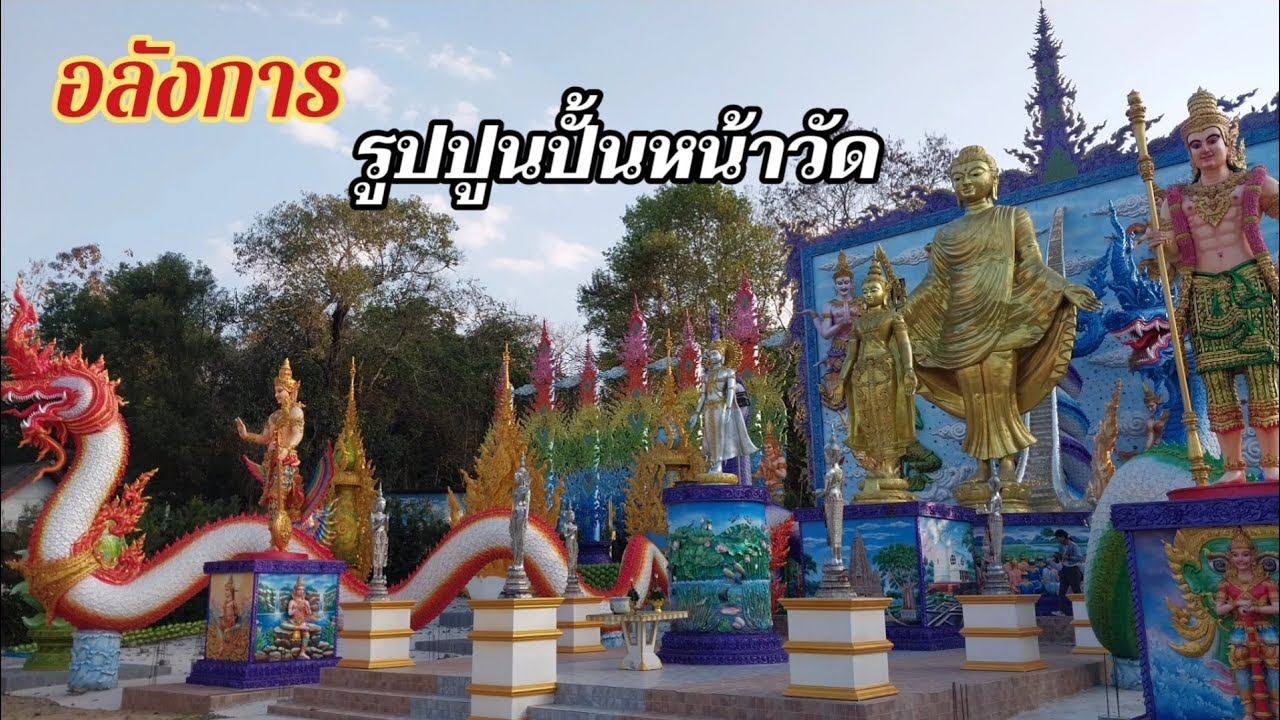
 Click to Access the Navigation Map GPS
Wat Pang Phueng (Suan Phutthangkun) Map
Recommend

 Muang Chiang Mai(121)Chom Thong(47)Mae Chaem(25)Chiang Dao(33)Doi Saket(68)Mae Taeng(85)Mae Rim(69)Samoeng(29)Fang(71)Mae Ai(59)Phrao(70)San Pa Tong(103)San Kamphaeng(66)San Sai(73)Hang Dong(73)Hot(32)Doi Tao(22)Omkoi(11)Saraphi(74)Wiang Haeng(15)Chai Prakan(28)Mae Wang(32)Mae On(22)Doi Lo(33)Galyani Vadhana(1)


