
lovethailand home >North Travel Attractions >Chiang Mai Travel Attractions >Fang >Wiang > Wat Tha Sa Lae
TL;DR: Wat Tha Sa Lae is located at Ban Tha Sa Lae, Moo 11, Wiang Subdistrict, Fang District, Chiang Mai 50110, Thailand, open Daily, hours 08.00 – 17.00.
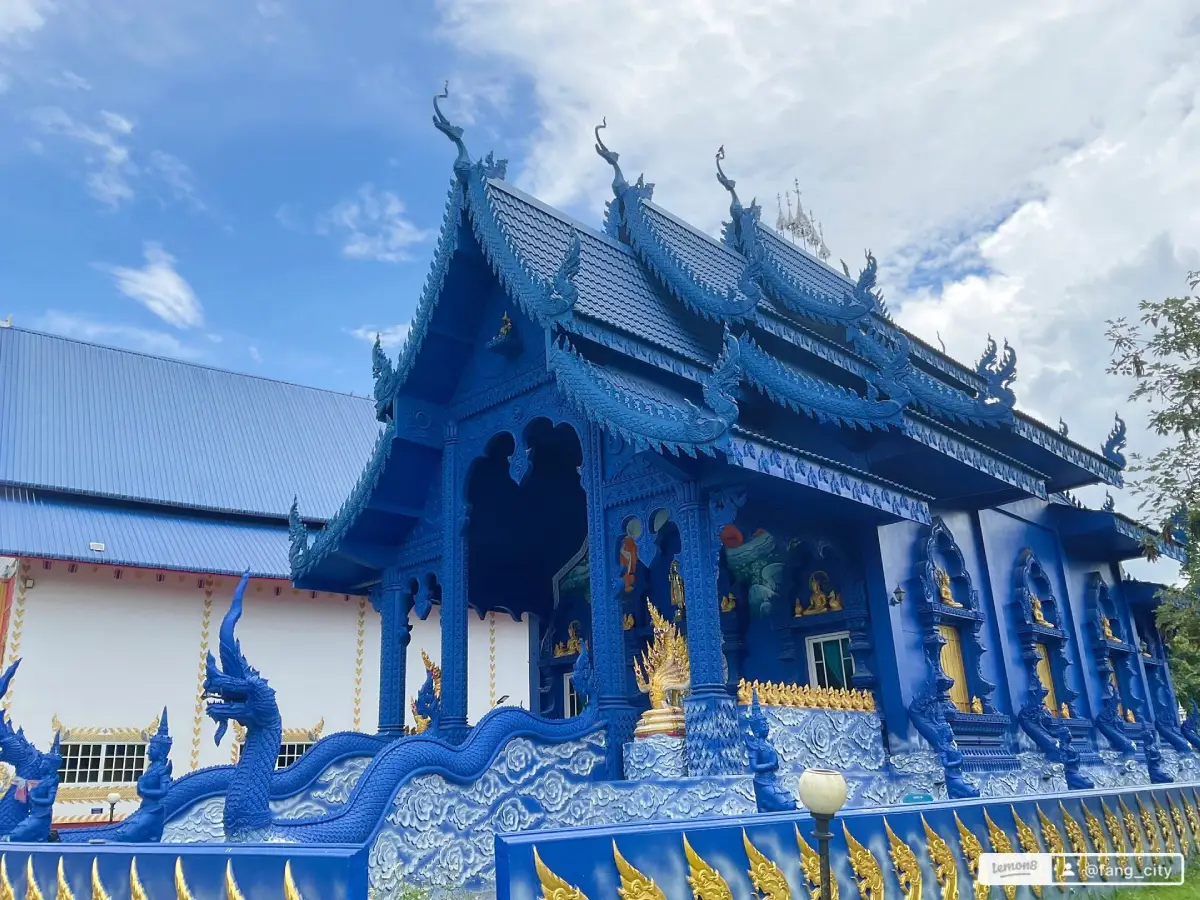
Wat Tha Sa Lae
Open Days: Daily
Opening Hours: 08.00 – 17.00
Wat Tha Sa Lae is located in Ban Tha Sa Lae, Moo 11, Wiang Subdistrict, Fang District, Chiang Mai Province 50110. It is a local Buddhist temple under the Mahanikaya order. The temple was officially permitted to be established in 1937. Phra Khru Sangharak Krisada Sumethee, also known by the ecclesiastical title Phra Khru Sumet Kittisunthon, serves as the abbot. Wat Tha Sa Lae is an important community temple of Ban Tha Sa Lae and remains part of the wider Buddhist landscape of Wiang Subdistrict in Fang District.
Wat Tha Sa Lae should be understood as a village community temple rather than only a name in the temple list of Fang District. Ban Tha Sa Lae is Moo 11 of Wiang Subdistrict, an area where village life, agriculture, local roads, streams, nearby forest areas, and Buddhist faith are closely connected. The temple functions as the spiritual center where local residents make merit, listen to Dhamma, join Buddhist ceremonies, and gather for important community occasions.
The temple’s official establishment in 1937 reflects the development of Ban Tha Sa Lae and the expansion of Buddhist village communities in Wiang Subdistrict. Local temples in northern Thailand often emerged because villagers needed a nearby place for worship, ceremonies, merit-making, and social gathering. Wat Tha Sa Lae reflects this pattern clearly. It was not built as a modern tourist attraction, but as a living religious space for the village.
The name “Tha Sa Lae” has a strong local character. The word “Tha” is often associated with a riverside landing, crossing point, or water-related place, while “Sa Lae” carries a northern Thai local sound that may relate to local plants or a place name preserved through village usage. As the name of both the village and the temple, Tha Sa Lae preserves community memory linked with landscape, settlement, and local identity.
Ban Tha Sa Lae differs from the central urban area of Fang town. It still retains a stronger village landscape, with local roads, farming areas, community networks, and nearby natural settings such as Huai Pa Sang. This gives Wat Tha Sa Lae a quieter community atmosphere. The temple is not a large tourist complex, but it is valuable for travelers who want to understand how Buddhist temples continue to support everyday village life in northern Thailand.
Wiang Subdistrict has many temples and monastic places, including Wat Phrabat Udom, Wat Chedi Udomsin, Wat Khlong Sila, Wat Khuha Wari Kasem, Wat Chayaram, Wat Tha Sa Lae, Wat Pannaram, Wat Pang Phueng, Wat Sao Hin, and several forest monastic residences. This pattern reflects Lanna community life, where each village often maintains its own Buddhist center. Wat Tha Sa Lae is part of this wider sacred landscape of Wiang and Fang.
Phra Khru Sangharak Krisada Sumethee, also known as Phra Khru Sumet Kittisunthon, plays an important role in maintaining the temple and supporting Buddhist practice in the community. In village temples, the abbot is not only responsible for temple buildings. He also helps organize religious activities, guide local faith, coordinate with the temple committee and community leaders, and keep the temple active as a place of worship and merit-making.
Publicly available details about the temple’s internal structures are limited, but as an active Mahanikaya community temple, Wat Tha Sa Lae includes worship areas, temple grounds, ceremonial space, and monastic areas. Visitors should approach the temple respectfully, pay respect to the Buddha, make merit according to personal faith, and avoid entering monastic areas without permission.
The main appeal of Wat Tha Sa Lae is its authentic village-temple character. It may not have the scale of a major tourist temple, but it offers a meaningful view of local Buddhist life in Ban Tha Sa Lae. A respectful visit allows travelers to see how the temple, village, farming landscape, and community traditions remain connected.
Annual Buddhist activities associated with community temples such as Wat Tha Sa Lae include Buddhist holy day merit-making, almsgiving, Dhamma listening, Buddhist Lent activities, forest robe offerings, Kathin, Salak Phat merit-making, and memorial merit-making. These activities are not only religious ceremonies. They also bring villagers together, strengthen relationships, and maintain the temple as a center of community life.
Wiang Subdistrict’s tourism and cultural information highlights important traditions such as Songkran, Salak Phat, Loy Krathong, Poi Luang, Poi To, and merit-making on Buddhist holy days. These traditions help explain the role of village temples like Wat Tha Sa Lae. The temple is part of a cultural system where Buddhism, village identity, community cooperation, and Lanna custom continue to shape local life.
Ban Tha Sa Lae is also connected with local products, including khanom wong, a local sweet noted among the community products of Wiang Subdistrict. This adds another dimension to the temple visit. Travelers who stop at a village temple can also understand local food, merit-making culture, and community identity more deeply.
Huai Pa Sang in Ban Tha Sa Lae is a nearby natural area where local water-conservation activities have taken place, including the construction of check dams to increase moisture, store groundwater, and reduce soil erosion. This shows that the village landscape around Wat Tha Sa Lae is connected not only with Buddhism, but also with local water, forest, agriculture, and environmental care.
Visitors to Wat Tha Sa Lae should begin by paying respect in the worship area and observing the peaceful atmosphere of the temple grounds. If visiting during a temple ceremony or community merit-making day, visitors should give priority to local worshippers and ceremonies. The best way to appreciate the temple is to visit slowly and respectfully, with attention to the local village setting.
Wat Tha Sa Lae can be included in a wider Fang cultural and nature route. Nearby places to combine with the temple include the Fang Cultural and Tourism Center, Wat Chedi Ngam, Wat Phra That Chaloem Phrakiat, Fang Hot Springs, Doi Pha Hom Pok National Park, and Huai Bon Cave. This route allows travelers to experience community temples, cultural learning, Lanna Buddhist art, hot springs, caves, and mountain nature in one itinerary.
The Fang Cultural and Tourism Center is a useful stop because it presents the wider story of Fang through old photographs, artworks, sculptures, community products, and local history. Visiting the center before or after Wat Tha Sa Lae helps travelers understand that Fang is not only a mountain and hot spring destination, but also a district with deep local culture and community memory.
Wat Chedi Ngam is another temple that can be combined with Wat Tha Sa Lae. It is known for Lanna Buddhist art, a significant chedi, and carved teak details. Wat Phra That Chaloem Phrakiat in Mon Pin Subdistrict can also be added for travelers who want a larger cultural temple with religious buildings, Buddha images, shrines, and viewpoints over Fang.
For nature-based travel, Wat Tha Sa Lae can be connected with Fang Hot Springs and Doi Pha Hom Pok National Park. Fang Hot Springs is located within the national park area and includes many natural hot spring pools. Doi Pha Hom Pok is one of Thailand’s important high mountain areas, known for cool weather, forest landscapes, and highland nature. Combining the temple with these natural attractions creates a balanced trip of faith, community, culture, and nature.
Huai Bon Cave is another natural attraction in Wiang Subdistrict that can be paired with a visit to Wat Tha Sa Lae. It is part of the broader tourism landscape connected with Doi Pha Hom Pok National Park and the natural routes of Fang. A route that begins with a community temple and continues to caves, hot springs, and mountain landscapes gives travelers a fuller understanding of the district.
Getting There is easiest by private car or rental car. From Fang town, drive toward Wiang Subdistrict and Ban Tha Sa Lae, Moo 11, then follow local roads into the village temple area. From Chiang Mai city, take Highway 107 through Mae Rim, Mae Taeng, and Chiang Dao toward Fang District, then continue into Wiang Subdistrict. Public transport can reach Fang town, but local transport is recommended for visiting the temple and nearby attractions conveniently.
The best time to visit is in the morning or late afternoon. Morning visits are suitable for worship and merit-making before starting a Fang itinerary. Afternoon visits work well before continuing to local restaurants, accommodations, Fang Hot Springs, or other attractions. During Buddhist holy days, robe offering, or Kathin periods, visitors should allow extra time and respect the temple’s ceremonial space.
Visitors should dress modestly, speak quietly, avoid disturbing monks or local worshippers, and remove shoes where required. Photography should be done respectfully, especially around worship areas, monks, local residents, and ceremonies. Wat Tha Sa Lae is a living community temple, so respectful behavior is essential.
Overall, Wat Tha Sa Lae is a meaningful Mahanikaya community temple in Ban Tha Sa Lae, Moo 11, Wiang Subdistrict, Fang District, Chiang Mai Province. Established as a temple in 1937 and currently led by Phra Khru Sangharak Krisada Sumethee, also known as Phra Khru Sumet Kittisunthon, it remains a spiritual center of Ban Tha Sa Lae. The temple is suitable for travelers who want to worship, make merit, understand a local Lanna community temple, and connect the visit with Fang’s cultural center, temples, hot springs, caves, national park routes, restaurants, and accommodations.
| Name | Wat Tha Sa Lae |
| Location | Ban Tha Sa Lae, Moo 11, Wiang Subdistrict, Fang District, Chiang Mai 50110, Thailand |
| Temple Type | Local Buddhist Temple Under The Mahanikaya Order |
| Highlights | A Ban Tha Sa Lae community temple in Wiang Subdistrict, established in 1937 and connected with Lanna village life, Buddhist merit-making, agriculture, and nearby Huai Pa Sang nature area |
| History | Permitted to be established as a temple in 1937 |
| Important Structures / Points | Worship Area, Temple Grounds, Ritual Area, And Monastic Area |
| Sacred Objects / Worship Points | Worship Area Within The Temple Used For Buddhist Devotion |
| Distinctive Features | A village Buddhist temple connecting faith, local agriculture, community merit-making, and the natural landscape around Ban Tha Sa Lae |
| Local Importance | A spiritual center for Ban Tha Sa Lae, supporting worship, Buddhist holy day merit-making, robe offerings, Kathin, Salak Phat, and local Buddhist activities |
| Travel Information | Best reached by private car or rental car from Fang town toward Wiang Subdistrict and Ban Tha Sa Lae, Moo 11; the temple can be combined with the Fang Cultural and Tourism Center, Wat Chedi Ngam, Fang Hot Springs, Doi Pha Hom Pok National Park, and Huai Bon Cave |
| Current Status | Still listed as a local Mahanikaya temple in Wiang Subdistrict, Fang District, Chiang Mai Province, Moo 11, and included in the temple list of Wiang Subdistrict |
| Open Days | Daily |
| Opening Hours | 08.00 – 17.00 |
| Main Areas / Zones | Worship Area, Temple Grounds, Ritual Area, And Monastic Area |
| Abbot | Phra Khru Sangharak Krisada Sumethee, Also Known As Phra Khru Sumet Kittisunthon |
| Nearby Tourist Attractions | 1. Huai Pa Sang, Ban Tha Sa Lae, about 2 km 2. Fang Cultural And Tourism Center, about 8 km 3. Wat Chedi Ngam, about 8 km 4. Huai Bon Cave, about 10 km 5. Fang Hot Springs, about 12 km 6. Doi Pha Hom Pok National Park, about 18 km 7. Doi Ang Khang, about 55 km |
| Nearby Restaurants | 1. Khao Soi Parichat Fang, about 8 km, Tel. 053-451-164 2. Khao Soi Mueang Fang, about 8 km, Tel. 063-159-9663, 096-683-7888, 094-493-1156 3. GREAT VIWE FANG, Fang Branch, about 9 km, Tel. 062-048-4222 4. Hong Nung Len Fang Chiang Mai, about 9 km, Tel. 083-201-8503, 095-134-6442 5. Ban Fang Coffee, about 11 km, Tel. 082-385-4599, 080-958-7918 6. Khao Soi Wan Rung, about 13 km, Tel. 099-292-8484 |
| Nearby Accommodations | 1. Phumanee Lahu Home Hotel, about 8 km, Tel. 086-431-3564 2. Fang Modern Hotel, about 9 km, Tel. 086-439-1843 3. TonFang Hotel, about 11 km, Tel. 063-781-5425 4. Huen San Fang, about 11 km, Tel. 081-881-6430, 063-790-0666 5. Ban Mueang Nuea Resort, about 16 km 6. Ban Phak Thanaphon, about 30 km, Tel. 090-672-7530 |
Frequently Asked Questions (FAQ)
Q: Where is Wat Tha Sa Lae located?
A: Wat Tha Sa Lae is located in Ban Tha Sa Lae, Moo 11, Wiang Subdistrict, Fang District, Chiang Mai Province 50110.
Q: What is the historical importance of Wat Tha Sa Lae?
A: Wat Tha Sa Lae was permitted to be established as a temple in 1937. It is a Mahanikaya community temple of Ban Tha Sa Lae in Wiang Subdistrict.
Q: What are the opening days and hours of Wat Tha Sa Lae?
A: The temple is open daily from 08.00 to 17.00.
Q: Who is the abbot of Wat Tha Sa Lae?
A: The abbot is Phra Khru Sangharak Krisada Sumethee, also known as Phra Khru Sumet Kittisunthon.
Q: Is Wat Tha Sa Lae suitable for travelers?
A: Yes. It is suitable for travelers who want to worship, make merit, visit a local Lanna community temple, and understand the village life of Ban Tha Sa Lae.
Q: How is Wat Tha Sa Lae connected with the local community?
A: Wat Tha Sa Lae is a spiritual center for Ban Tha Sa Lae, supporting Buddhist ceremonies, merit-making, robe offerings, Kathin, Salak Phat, and local community activities.
Q: How can travelers get to Wat Tha Sa Lae?
A: The most convenient way is by private car or rental car from Fang town toward Wiang Subdistrict and Ban Tha Sa Lae, Moo 11.
Q: What nearby places can be visited with Wat Tha Sa Lae?
A: Travelers can combine the visit with Huai Pa Sang, the Fang Cultural and Tourism Center, Wat Chedi Ngam, Huai Bon Cave, Fang Hot Springs, and Doi Pha Hom Pok National Park.
 Category: ●Places of Worship
 Group: ●Temple
Last Update : 5 DayAgo
 Last Update : 5 DayAgo
 Click to Access the Navigation Map GPS
 Muang Chiang Mai(121)Chom Thong(47)Mae Chaem(25)Chiang Dao(33)Doi Saket(68)Mae Taeng(85)Mae Rim(69)Samoeng(29)Fang(71)Mae Ai(59)Phrao(70)San Pa Tong(103)San Kamphaeng(66)San Sai(73)Hang Dong(73)Hot(32)Doi Tao(22)Omkoi(11)Saraphi(74)Wiang Haeng(15)Chai Prakan(28)Mae Wang(32)Mae On(22)Doi Lo(34)Galyani Vadhana(1)


