
lovethailand home >North Travel Attractions >Chiang Mai Travel Attractions >Fang >Wiang > Wat Klang Thung
TL;DR: Wat Klang Thung is located at Moo 9, Ban San Pa Mai / Ban San Pa Nai, Wiang Subdistrict, Fang District, Chiang Mai Province, open Daily, hours 08.00 – 17.00.
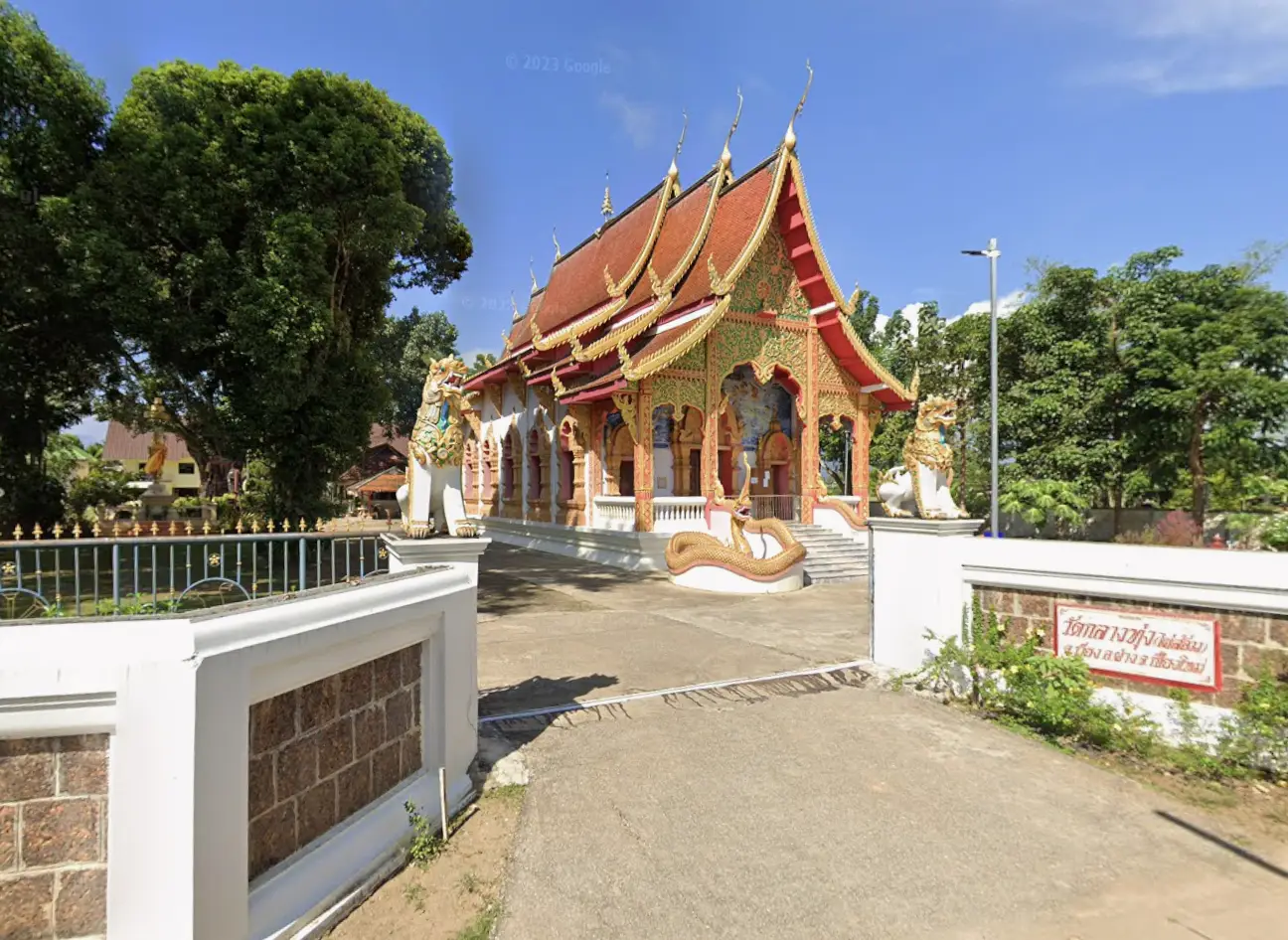
Wat Klang Thung
Open Days: Daily
Opening Hours: 08.00 – 17.00
Wat Klang Thung is located in Moo 9, Ban San Pa Mai, also written in some local records as Ban San Pa Nai, Wiang Subdistrict, Fang District, Chiang Mai Province. It is a local Buddhist temple under the Mahanikaya order. The temple was officially permitted to be established in 1988 and received its royal boundary for monastic rites in 1993. Phra Thanakrit Kitkiwuttho serves as the abbot. Wat Klang Thung is a community temple of Ban San Pa Mai and an accessible worship stop in the central Fang area, close to local temples, cultural sites, restaurants, accommodations, and major natural attractions of northern Chiang Mai.
Wat Klang Thung should be understood as a village community temple rather than a large commercial tourist attraction. Its name, meaning roughly a temple in the middle of the fields, reflects the older rural landscape of the area. Although Wiang and Fang have become more developed, with markets, schools, commercial buildings, and main roads, the temple name still preserves a memory of open fields, farming life, and local settlement.
Ban San Pa Mai, or Ban San Pa Nai in some records, is Moo 9 of Wiang Subdistrict in Fang District. This area belongs to the wider Wiang Fang community, where village life, market activity, local government, education, and travel routes all meet. Wat Klang Thung therefore stands within a living community landscape. It is connected with both rural memory and the modern growth of Fang town.
The temple’s official establishment in 1988 gave it clear status as a local Mahanikaya temple. Its royal boundary for monastic rites, granted in 1993, is significant in Thai Buddhism because it allows formal monastic ceremonies to be conducted according to Buddhist discipline and the Thai Sangha system. This makes Wat Klang Thung more than a general merit-making place. It is a recognized temple with a proper religious role in the local Buddhist structure.
Compared with older temples in Fang District, Wat Klang Thung is a relatively modern temple. Its value, however, does not depend only on age. It is important because it serves the people of Ban San Pa Mai as a place for worship, merit-making, Dhamma listening, ceremonies, and community gatherings. Many modern village temples developed because growing communities needed a nearby spiritual center, and Wat Klang Thung reflects this local need clearly.
Wiang Subdistrict is one of the most important areas of Fang District. It is connected with the town center, local markets, government services, schools, and cultural attractions. This location makes Wat Klang Thung easy to combine with other places in Fang. Travelers staying in Fang town can visit the temple in the morning or afternoon, then continue to Wat Chedi Ngam, the Fang Cultural and Tourism Center, Wat Phra That Chaloem Phrakiat, Fang Hot Springs, or Doi Pha Hom Pok National Park.
The main appeal of Wat Klang Thung is its quiet community character. It is not a temple designed for large tourist crowds. Visitors come here to pay respect to the Buddha, make merit, and experience a local Buddhist temple in the Wiang Fang area. A short, respectful visit is often enough to appreciate the temple’s role in the village and to understand how Buddhism continues to shape everyday community life in northern Thailand.
Phra Thanakrit Kitkiwuttho, the abbot of Wat Klang Thung, plays an important role in maintaining the temple and supporting local Buddhist life. Like many village temples, Wat Klang Thung depends on cooperation between the abbot, monks, temple committee, community leaders, and local residents. This cooperation helps preserve the temple, organize ceremonies, maintain order, and keep the temple active as a spiritual center.
Publicly available information about the temple does not provide a long list of specific buildings, but its status as a recognized temple and its royal boundary for monastic rites show that it supports Buddhist worship and monastic activities. Visitors should focus on the worship area, temple grounds, ritual area, and monastic area. They should move quietly, dress modestly, and avoid entering any monks’ area without permission.
Wat Klang Thung serves the community in the same way many Lanna village temples do. It supports Buddhist holy day merit-making, almsgiving, Dhamma listening, robe offerings, Kathin, Buddhist Lent activities, memorial merit-making, and other village ceremonies. These activities are not only religious rituals. They also help local residents gather, cooperate, and maintain community relationships through shared Buddhist practice.
For travelers interested in temples in Fang District, Wat Klang Thung can be included in a Wiang temple route. Nearby places include Wat Chedi Ngam, Wat Chong Paen, Wat Phrabat Udom, and Wat Phra That Chaloem Phrakiat. Wat Chedi Ngam is known for Lanna woodwork and Buddhist art, while Wat Phra That Chaloem Phrakiat is a cultural tourism temple with a large ordination hall, Buddha images, shrines, and views over Fang. Combining these temples helps visitors understand Fang through both community temples and larger cultural sites.
The Fang Cultural and Tourism Center is also a useful nearby stop. It presents stories of Fang town, old photographs, art, local products, and community identity. Visiting this center before or after Wat Klang Thung gives travelers a deeper understanding of the district beyond natural attractions. It shows that Fang is also a place of local history, art, trade, and community heritage.
Wat Klang Thung can also be connected with Fang Hot Springs and Doi Pha Hom Pok National Park. Fang Hot Springs is a natural hot spring area with geothermal pools and mineral bathing services. Doi Pha Hom Pok National Park is one of the major mountain destinations in northern Thailand, with highland scenery, cool weather, and a famous peak. Adding Wat Klang Thung to this route creates a balanced trip that combines worship, local culture, food, and nature.
Getting There is easiest by private car or rental car. From Fang town, drive toward Wiang Subdistrict and the Ban San Pa Mai area in Moo 9. From Chiang Mai city, take Highway 107 through Mae Rim, Mae Taeng, and Chiang Dao toward Fang District, then connect to the Wiang area. Public transport can reach Fang town, but local transport may be needed for visiting the temple and nearby attractions conveniently.
The best time to visit is in the morning or late afternoon. Morning visits are suitable for worship and merit-making before beginning a Fang itinerary. Afternoon visits work well before continuing to local restaurants, cafés, Fang Hot Springs, or accommodations in Fang District. During Buddhist holy days, Buddhist Lent, robe offering, or Kathin periods, visitors should allow extra time and respect the temple’s ceremonial space.
Visitors should dress modestly, speak quietly, avoid disturbing monks or local worshippers, and remove shoes where required. Photography should be done respectfully, especially when monks, villagers, or ceremonies are present. Wat Klang Thung is a living community temple, so respectful behavior is essential.
Overall, Wat Klang Thung is a Mahanikaya community temple in Ban San Pa Mai, Moo 9, Wiang Subdistrict, Fang District, Chiang Mai Province. It was established as a temple in 1988 and received its royal boundary for monastic rites in 1993. With Phra Thanakrit Kitkiwuttho as abbot, the temple remains a local spiritual center suitable for worship, merit-making, and a quiet community temple visit. It can be combined with Wat Chedi Ngam, the Fang Cultural and Tourism Center, Wat Phra That Chaloem Phrakiat, Fang Hot Springs, Doi Pha Hom Pok National Park, nearby restaurants, and accommodations in Fang.
| Name | Wat Klang Thung |
| Location | Moo 9, Ban San Pa Mai / Ban San Pa Nai, Wiang Subdistrict, Fang District, Chiang Mai Province |
| Temple Type | Local Buddhist Temple Under The Mahanikaya Order |
| Highlights | A Ban San Pa Mai community temple in Wiang Subdistrict, officially established in 1988 and granted a royal boundary for monastic rites in 1993 |
| History | Permitted to be established as a temple in 1988 and granted a royal boundary for monastic rites in 1993 |
| Local Importance | A spiritual center for Ban San Pa Mai, supporting worship, Buddhist holy day merit-making, robe offerings, Kathin, and local Buddhist activities |
| Distinctive Features | An accessible local temple in Wiang Fang, suitable for worship, merit-making, and a route linking temples and cultural attractions in Fang town |
| Main Areas / Zones | Worship Area, Temple Grounds, Ritual Area, Monastic Boundary Area, And Monastic Area |
| Sacred Objects / Worship Points | Worship areas and sacred objects within the temple used for Buddhist devotion |
| Travel Information | Best reached by private car or rental car from Fang town toward Wiang Subdistrict and Ban San Pa Mai, Moo 9; the temple can be combined with Wat Chedi Ngam, the Fang Cultural and Tourism Center, Fang Hot Springs, and Doi Pha Hom Pok National Park |
| Current Status | Still listed as a local Mahanikaya temple in Wiang Subdistrict, Fang District, Chiang Mai Province |
| Open Days | Daily |
| Opening Hours | 08.00 – 17.00 |
| Abbot | Phra Thanakrit Kitkiwuttho |
| Nearby Tourist Attractions | 1. Wat Chedi Ngam, about 4 km 2. Fang Cultural And Tourism Center, about 5 km 3. Wat Chong Paen, about 6 km 4. Wat Phra That Chaloem Phrakiat, Mon Pin Subdistrict, about 12 km 5. Fang Hot Springs, about 18 km 6. Doi Pha Hom Pok National Park, about 24 km 7. Doi Ang Khang, about 50 km |
| Nearby Restaurants | 1. Khao Soi Parichat Fang, about 5 km, Tel. 053-451-164 2. Khao Soi Mueang Fang, about 5 km, Tel. 063-159-9663, 096-683-7888, 094-493-1156 3. GREAT VIWE FANG, Fang Branch, about 6 km, Tel. 062-048-4222 4. Hong Nung Len Fang Chiang Mai, about 6 km, Tel. 083-201-8503, 095-134-6442 5. Ban Fang Coffee, about 8 km, Tel. 082-385-4599, 080-958-7918 6. Khao Soi Wan Rung, about 10 km, Tel. 099-292-8484 |
| Nearby Accommodations | 1. Phumanee Lahu Home Hotel, about 5 km, Tel. 086-431-3564 2. Fang Modern Hotel, about 6 km, Tel. 086-439-1843 3. TonFang Hotel, about 8 km, Tel. 063-781-5425 4. Huen San Fang, about 8 km, Tel. 081-881-6430, 063-790-0666 5. Ban Mueang Nuea Resort, about 13 km, Tel. 081-663-2569 6. Ban Phak Thanaphon, about 30 km, Tel. 090-672-7530 |
Frequently Asked Questions (FAQ)
Q: Where is Wat Klang Thung located?
A: Wat Klang Thung is located in Moo 9, Ban San Pa Mai or Ban San Pa Nai, Wiang Subdistrict, Fang District, Chiang Mai Province.
Q: What is the historical importance of Wat Klang Thung?
A: Wat Klang Thung was permitted to be established as a temple in 1988 and received its royal boundary for monastic rites in 1993. It is a Mahanikaya community temple of Ban San Pa Mai.
Q: What are the opening days and hours of Wat Klang Thung?
A: The temple is open daily from 08.00 to 17.00.
Q: Who is the abbot of Wat Klang Thung?
A: The abbot is Phra Thanakrit Kitkiwuttho.
Q: Is Wat Klang Thung suitable for travelers?
A: Yes. It is suitable for travelers who want to worship, make merit, and visit a quiet local Buddhist temple in the Wiang Fang area.
Q: How can travelers get to Wat Klang Thung?
A: The most convenient way is by private car or rental car from Fang town toward Wiang Subdistrict and Ban San Pa Mai, Moo 9.
Q: What nearby places can be visited with Wat Klang Thung?
A: Travelers can combine the visit with Wat Chedi Ngam, the Fang Cultural and Tourism Center, Wat Chong Paen, Wat Phra That Chaloem Phrakiat, Fang Hot Springs, and Doi Pha Hom Pok National Park.
Q: Is there an entrance fee for Wat Klang Thung?
A: There is no confirmed public information about an entrance fee for normal worship and merit-making. Visitors may make donations according to personal faith.
 Category: ●Places of Worship
 Group: ●Temple
Last Update : 2 DayAgo
 Last Update : 2 DayAgo
 Click to Access the Navigation Map GPS
 Muang Chiang Mai(121)Chom Thong(47)Mae Chaem(25)Chiang Dao(33)Doi Saket(68)Mae Taeng(85)Mae Rim(69)Samoeng(29)Fang(71)Mae Ai(59)Phrao(70)San Pa Tong(105)San Kamphaeng(66)San Sai(73)Hang Dong(74)Hot(32)Doi Tao(22)Omkoi(11)Saraphi(74)Wiang Haeng(15)Chai Prakan(28)Mae Wang(32)Mae On(22)Doi Lo(34)Galyani Vadhana(1)


