
lovethailand home >North Travel Attractions >Chiang Mai Travel Attractions >Fang >Mae Kha > Wat Santi Wanaram (Wat Nong Phak Nam)
TL;DR: Wat Santi Wanaram (Wat Nong Phak Nam) is located at Ban San Pa Ko, Fang Oilfield Area, Moo 2, Mae Kha Subdistrict, Fang District, Chiang Mai Province, open Daily, hours 08.00 – 17.00.

Wat Santi Wanaram (Wat Nong Phak Nam)
Open Days: Daily
Opening Hours: 08.00 – 17.00
Wat Santi Wanaram is located in Ban San Pa Ko, also associated with the Fang Oilfield area, Moo 2, Mae Kha Subdistrict, Fang District, Chiang Mai Province. It is a local Buddhist temple under the Dhammayut order. The temple was formerly known as Wat Nong Phak Nam, an abandoned temple site with no surviving permanent structures and no clearly recorded original founding year. In 1970, Buddhist residents of Ban San Pa Ko wished to have a temple for their village, so they invited Phra Ratchawinayaphon (Chan Kusalo) to preside over the opening of a monastic residence. The site was then called Santi Wanaram Monastic Residence.
Wat Santi Wanaram is significant because it grew from the faith of the local community. It was not created as a tourist attraction. It was revived from an abandoned religious site because local Buddhists needed a place for worship, merit-making, Dhamma listening, and Buddhist ceremonies. Phra Ratchawinayaphon assigned Phra Achan Sri Kui Nathakaro to serve as the presiding monk, and the residence became known as Santi Wanaram in 1970.
On 26 November 1976, Somdet Phra Ariyavongsagatayana, the Supreme Patriarch of Thailand (Wat Ratchabophit Sathit Maha Simaram), visited the monastic residence and bestowed the name “Wat Santi Wanaram.” This event is one of the most important moments in the temple’s history because the temple name was not simply a local name. It was a name bestowed by the Supreme Patriarch and later became the temple’s official name.
The temple received land from the people of Ban San Pa Ko and later expanded through additional land purchases. Today, the temple area is about 47 rai, with formal land title documentation. Phra Khru Sumet Panyakhun (Sumet Sumetho), the abbot and ecclesiastical district head for Fang, Phrao, and Chiang Dao in the Dhammayut order, coordinated with government offices regarding the temple land. The large temple area gives Wat Santi Wanaram a spacious and peaceful atmosphere suitable for worship, monastic practice, and community merit-making.
Santi Wanaram Monastic Residence was elevated from an abandoned temple site to an active temple with resident monks on 9 November 1987. At that time, the temple used the old abandoned-temple name, Wat Nong Phak Nam. Later, a request was made to change the official name to match the name bestowed by the Supreme Patriarch. With approval from the Sangha Supreme Council, the National Office of Buddhism issued resolution 386/2545 dated 20 September 2002, changing the name from Wat Nong Phak Nam to Wat Santi Wanaram.
The temple’s abbot lineage reflects continuous care from the monastic residence period to the present. The abbots include Phra Achan Sri Kui Nathakaro from 1970 to 1982, Phra Achan Saksit Dhammarakkhito from 1982 to 1987, Phra Achan Thongkham Techapanyo from 1987 to 1988, Phra Achan Niphon Chitangaro from 1988 to 1992, and Phra Khru Sumet Panyakhun (Sumet Sumetho) from 1992 to the present. This continuity shows the temple’s steady development in religious practice, temple maintenance, and community support.
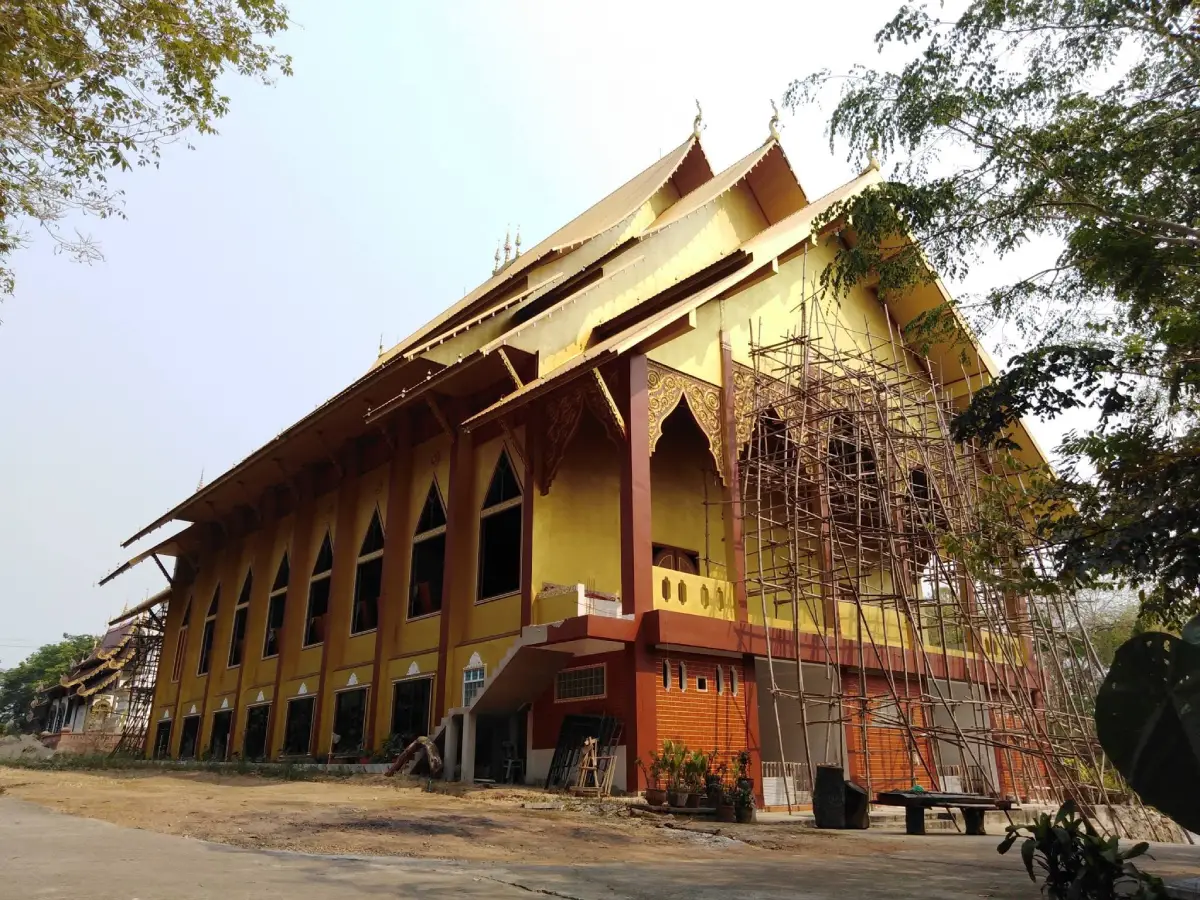
One of the main highlights of Wat Santi Wanaram is its Lanna-style ordination hall and the Santi Chedi, a stupa built behind the ordination hall according to Lanna Buddhist tradition. The ordination hall was built through public faith and reflects northern Thai religious architecture. The Santi Chedi was designed in a style that combines Chiang Saen and Chiang Mai artistic influences, giving the temple an architectural identity that connects Dhammayut monastic practice with Lanna Buddhist heritage.
The Santi Chedi is especially important because Somdet Phra Nyanasamvara, the Supreme Patriarch of Thailand, granted Buddha relics to be enshrined in the chedi. For visitors, this makes the chedi a sacred focal point of the temple. Worshippers should approach the area respectfully, pay homage quietly, and understand the chedi as a living object of Buddhist devotion rather than only an architectural feature.
The name “Santi Wanaram” reflects the temple’s character. “Santi” means peace, calmness, and serenity, while “Wanaram” suggests a forest monastery or a temple surrounded by a natural setting. Together, the name expresses the character of a peaceful Buddhist sanctuary. This makes the temple especially suitable for quiet worship, meditation, and reflection.
The temple’s location in Ban San Pa Ko gives it an unusual local context. The village is associated with the Fang Oilfield, Thailand’s first onshore crude oil field. Oil naturally seeping from the ground was known in the area before the site was later developed into the Northern Petroleum Development Center under the Defence Energy Department. This means the area around Wat Santi Wanaram combines Buddhist faith, rural community life, and the history of Thailand’s early petroleum development.
Mae Kha Subdistrict is part of Fang District and includes lowland and hilly areas, local streams, farming communities, and important travel routes. Nearby places include the Fang Oilfield, Fang Hot Springs, Doi Pha Hom Pok National Park, and Doi Ang Khang. Wat Santi Wanaram therefore stands in a landscape where temple life, village history, energy heritage, and natural attractions are closely connected.
The role of Wat Santi Wanaram in the community is rooted in the intention of Ban San Pa Ko residents to have a temple for merit-making. The temple functions as a spiritual center for worship, Dhamma listening, Buddhist holy days, robe offerings, Kathin, and other community religious events. As a Dhammayut temple, it also carries a strong atmosphere of simplicity, discipline, and quiet practice.
Annual Buddhist traditions associated with temples such as Wat Santi Wanaram include Buddhist holy day merit-making, almsgiving, Dhamma listening, forest robe offerings, Kathin after the rains retreat, and community merit-making. These activities are not only religious ceremonies. They also strengthen relationships between monks, families, village elders, and local residents.
Important places to see at Wat Santi Wanaram include the Lanna-style ordination hall, the Santi Chedi, the Buddha relics, the worship area, the temple grounds, and the peaceful forest-monastery atmosphere. Visitors should dress modestly, speak quietly, avoid entering monastic areas without permission, and respect any religious ceremonies taking place. The temple should be approached as a living Buddhist place, not only as a sightseeing stop.
A recommended route pairs Wat Santi Wanaram with the Fang Oilfield and the Northern Petroleum Development Center. Travelers can begin with worship at the temple, pay respect at the Santi Chedi, then continue to learn about the Fang Oilfield, Thailand’s first onshore crude oil field. This route gives visitors both spiritual and historical perspectives on the Ban San Pa Ko and Mae Kha area.
Other nearby temples in Mae Kha can also be added to the route, including Wat Pa Kio Du, Wat Pa Nong Bua Kham, Wat Doi Wiang Noi, Wat Chiang Yuen, Wat Khayanusit, Wat Pa Thep Nimit, and Wat Pong Sai Kham. This route is suitable for travelers interested in both Dhammayut forest temples and Mahanikaya community temples in the same subdistrict.
For nature-based travel, Wat Santi Wanaram can be combined with Fang Hot Springs and Doi Pha Hom Pok National Park. Fang Hot Springs is known for its natural hot springs, while Doi Pha Hom Pok National Park includes mountain landscapes and one of Thailand’s highest peaks. Adding the temple to this route creates a balanced itinerary of faith, community, local history, food, and nature.
Getting There is easiest by private car or rental car. From Fang town, drive toward Mae Kha Subdistrict and Ban San Pa Ko in the Fang Oilfield area. From Chiang Mai city, take Highway 107 through Mae Rim, Mae Taeng, and Chiang Dao toward Fang District, then connect to Mae Kha. Public transport can reach Fang District, but local transport may be needed to reach the temple and nearby attractions.
The best time to visit is in the morning or late afternoon. Morning visits are suitable for worship and quiet reflection, while afternoon visits work well before continuing to the Fang Oilfield, local restaurants, or Fang Hot Springs. During Buddhist holy days or community merit-making events, visitors should allow extra time and respect the temple’s religious space.
Overall, Wat Santi Wanaram is an important Dhammayut temple in Ban San Pa Ko, Mae Kha Subdistrict, Fang District, Chiang Mai Province. Formerly known as Wat Nong Phak Nam, it was revived as Santi Wanaram Monastic Residence in 1970, received the name Wat Santi Wanaram in 1976, was elevated to an active temple with monks in 1987, and officially changed its name to Wat Santi Wanaram in 2002. With its Lanna-style ordination hall, Santi Chedi, Buddha relics, peaceful forest-monastery atmosphere, and location near the Fang Oilfield, the temple is suitable for travelers who want to worship, learn local history, and explore Fang District through faith, community, and nature.
| Name | Wat Santi Wanaram |
| Former Name | Wat Nong Phak Nam |
| Location | Ban San Pa Ko, Fang Oilfield Area, Moo 2, Mae Kha Subdistrict, Fang District, Chiang Mai Province |
| Temple Type | Local Buddhist Temple Under The Dhammayut Order |
| Highlights | A Dhammayut forest-style temple revived from an abandoned temple site, with a Lanna-style ordination hall, Santi Chedi, Buddha relics, and a peaceful monastic atmosphere |
| History | Established as Santi Wanaram Monastic Residence in 1970, named Wat Santi Wanaram on 26 November 1976, elevated from an abandoned temple to an active temple with resident monks on 9 November 1987, and officially renamed Wat Santi Wanaram by Sangha Supreme Council resolution dated 20 September 2002 |
| Temple Area | About 47 Rai |
| Important Structures | Lanna-Style Ordination Hall, Santi Chedi, Temple Grounds, Worship Area, And Meditation Area |
| Sacred Objects | Buddha Relics Enshrined In Santi Chedi And Buddha Images Within The Temple |
| Distinctive Features | A peaceful Dhammayut forest temple connected with Ban San Pa Ko and the historic Fang Oilfield area |
| Local Importance | A spiritual center for Ban San Pa Ko, supporting worship, Dhamma listening, robe offerings, Kathin, and local Buddhist activities |
| Travel Information | Best reached by private car or rental car from Fang town toward Mae Kha Subdistrict and Ban San Pa Ko; the temple can be combined with the Fang Oilfield, Fang Hot Springs, and Doi Pha Hom Pok National Park |
| Current Status | Still listed as a local Dhammayut temple in Mae Kha Subdistrict, Fang District, Chiang Mai Province |
| Open Days | Daily |
| Opening Hours | 08.00 – 17.00 |
| Main Areas / Zones | Worship Area, Ordination Hall, Santi Chedi, Temple Grounds, Meditation Area, And Monastic Area |
| Abbot | Phra Khru Sumet Panyakhun (Sumet Sumetho) |
| Abbot Lineage | 1. Phra Achan Sri Kui Nathakaro, 1970–1982 2. Phra Achan Saksit Dhammarakkhito, 1982–1987 3. Phra Achan Thongkham Techapanyo, 1987–1988 4. Phra Achan Niphon Chitangaro, 1988–1992 5. Phra Khru Sumet Panyakhun (Sumet Sumetho), 1992–Present |
| Nearby Tourist Attractions | 1. Fang Oilfield / Northern Petroleum Development Center, about 3 km 2. Wat Pa Kio Du, about 8 km 3. Wat Pa Nong Bua Kham, about 9 km 4. Wat Doi Wiang Noi, about 10 km 5. Wat Pa Thep Nimit, about 11 km 6. Fang Hot Springs, about 24 km 7. Doi Pha Hom Pok National Park, about 30 km 8. Doi Ang Khang, about 45 km |
| Nearby Restaurants | 1. GREAT VIWE FANG, Fang Branch, about 12 km, Tel. 062-048-4222 2. Hong Nung Len Fang Chiang Mai, about 13 km, Tel. 083-201-8503, 095-134-6442 3. Naha Restaurant, about 15 km, Tel. 053-450-008 4. Khao Soi Parichat Fang, about 16 km, Tel. 053-451-164 5. Ban Fang Coffee, about 18 km, Tel. 082-385-4599, 080-958-7918 6. Khao Soi Wan Rung, about 20 km, Tel. 099-292-8484 |
| Nearby Accommodations | 1. Hotel Fang / Ban Mueang Nuea Resort, about 7 km 2. Fang Modern Hotel, about 15 km, Tel. 086-439-1843 3. TonFang Hotel, about 17 km, Tel. 063-781-5425 4. Huen San Fang, about 18 km, Tel. 081-881-6430, 063-790-0666 5. Ban Phak Thanaphon, about 30 km, Tel. 090-672-7530 6. Doi Pha Hom Pok National Park Guesthouse Area, about 30 km |
Frequently Asked Questions (FAQ)
Q: Where is Wat Santi Wanaram located?
A: Wat Santi Wanaram is located in Ban San Pa Ko, also associated with the Fang Oilfield area, Moo 2, Mae Kha Subdistrict, Fang District, Chiang Mai Province.
Q: What was the former name of Wat Santi Wanaram?
A: The former name was Wat Nong Phak Nam. The name Wat Santi Wanaram was bestowed by Somdet Phra Ariyavongsagatayana, the Supreme Patriarch of Thailand.
Q: What is the historical importance of Wat Santi Wanaram?
A: The temple was revived from an abandoned temple site. It became Santi Wanaram Monastic Residence in 1970, received the name Wat Santi Wanaram in 1976, was elevated to an active temple with monks in 1987, and officially changed its name to Wat Santi Wanaram in 2002.
Q: What are the opening days and hours of Wat Santi Wanaram?
A: The temple is open daily from 08.00 to 17.00.
Q: Who is the abbot of Wat Santi Wanaram?
A: The abbot is Phra Khru Sumet Panyakhun (Sumet Sumetho).
Q: What can visitors see at Wat Santi Wanaram?
A: Visitors can see the Lanna-style ordination hall, Santi Chedi, Buddha relics, worship area, temple grounds, and the peaceful Dhammayut forest-monastery atmosphere.
Q: Is Wat Santi Wanaram suitable for travelers?
A: Yes. It is suitable for travelers who want to worship, practice quietly, learn about a Dhammayut temple revived from an abandoned temple site, and connect the visit with the Fang Oilfield route.
Q: What nearby places can be visited with Wat Santi Wanaram?
A: Travelers can combine the visit with the Fang Oilfield, Wat Pa Kio Du, Wat Pa Nong Bua Kham, Wat Doi Wiang Noi, Fang Hot Springs, Doi Pha Hom Pok National Park, and Doi Ang Khang.
 Category: ●Places of Worship
 Group: ●Temple
Last Update : 1 DayAgo
 Last Update : 1 DayAgo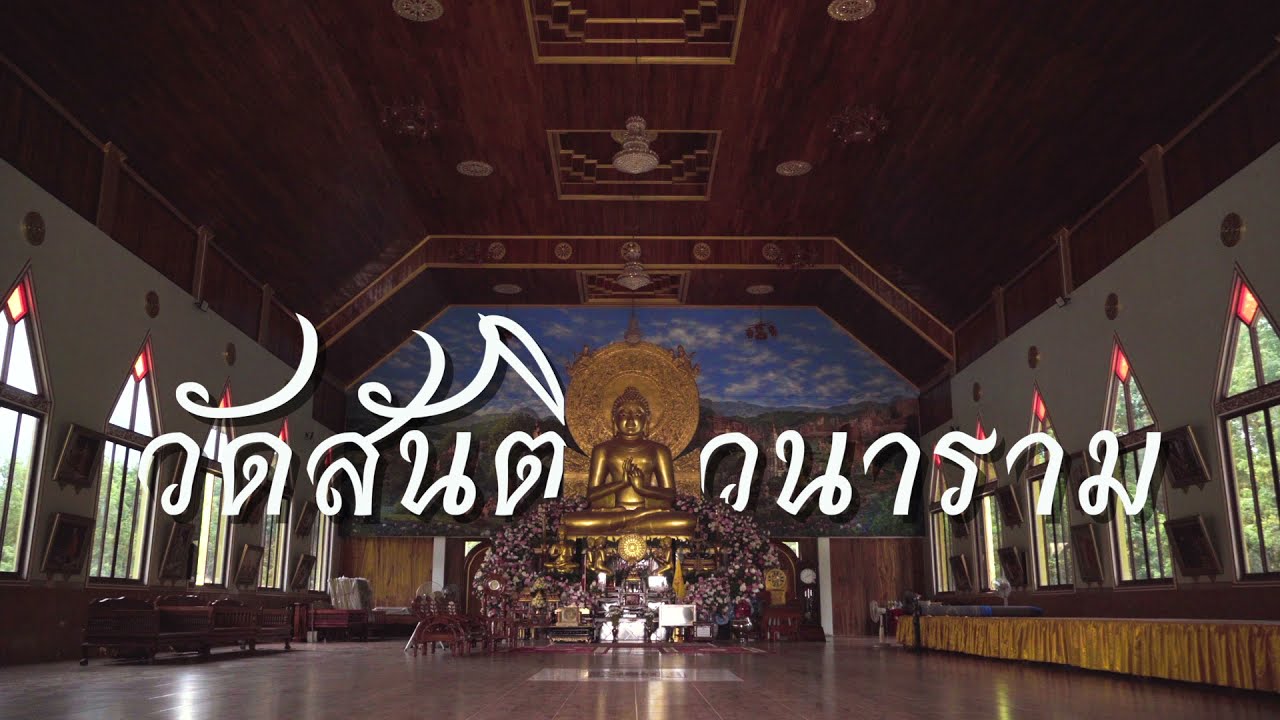
 Click to Access the Navigation Map GPS
Wat Santi Wanaram (Wat Nong Phak Nam) Map
Recommend

 Muang Chiang Mai(121)Chom Thong(47)Mae Chaem(25)Chiang Dao(33)Doi Saket(68)Mae Taeng(85)Mae Rim(69)Samoeng(29)Fang(71)Mae Ai(60)Phrao(70)San Pa Tong(105)San Kamphaeng(66)San Sai(73)Hang Dong(74)Hot(32)Doi Tao(22)Omkoi(11)Saraphi(74)Wiang Haeng(15)Chai Prakan(28)Mae Wang(32)Mae On(22)Doi Lo(34)Galyani Vadhana(1)


