
lovethailand home >North Travel Attractions >Chiang Mai Travel Attractions >Fang >Mae Sun > Wat Thep Prasit
TL;DR: Wat Thep Prasit is located at Ban Pang Sak, Moo 2, Mae Sun Subdistrict, Fang District, Chiang Mai Province, open Daily, hours 08.00 – 17.00.

Wat Thep Prasit
Open Days: Daily
Opening Hours: 08.00 – 17.00
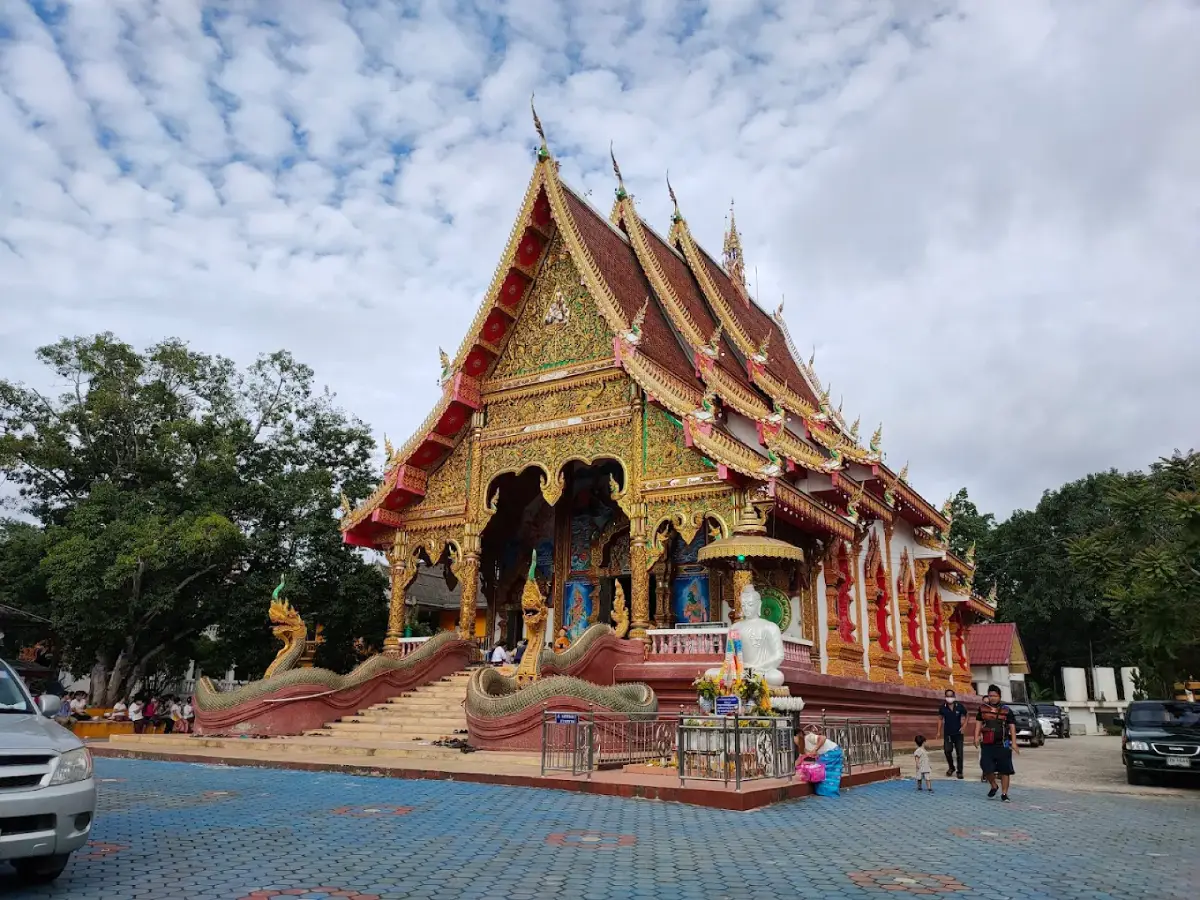
Wat Thep Prasit is a local Buddhist temple in Ban Pang Sak, Moo 2, Mae Sun Subdistrict, Fang District, Chiang Mai Province. It is a private-sector temple under the Mahanikaya monastic order. The temple covers 6 rai, 3 ngan, and 40 square wah of land. It was built in 1931 and received its royal boundary for monastic rites on 12 March 1965. Phra Samu Charoen Panyawaro serves as the abbot. Wat Thep Prasit is a meaningful stop for travelers who want to worship, make merit, and explore the cultural route of Mae Sun, Fang Hot Springs, and Doi Pha Hom Pok National Park.
Wat Thep Prasit should be understood as a community temple of Ban Pang Sak rather than a large commercial tourist attraction. The temple developed from the religious needs of the local village. In rural northern Thailand, Buddhist temples often grew together with settlement, farming life, local roads, family networks, and village merit-making traditions. Wat Thep Prasit reflects this pattern as a place for worship, Dhamma listening, community ceremonies, and local Buddhist life.
Ban Pang Sak is Moo 2 of Mae Sun Subdistrict in Fang District. Mae Sun is a rural area connected with agricultural communities, the Fang River, local roads, and natural attractions in northern Chiang Mai. Wat Thep Prasit is located in a setting that links the village, the main road, nearby learning sites, and surrounding temples. This makes the temple both a spiritual center for local residents and a useful stop for travelers exploring the northern part of Fang.
The name “Thep Prasit” has an auspicious meaning. “Thep” suggests a sacred or elevated quality, while “Prasit” relates to success or fulfillment. Together, the name gives the sense of a place associated with blessing, spiritual success, and peace. Although no detailed public legend explains the naming history, the meaning fits the temple’s role as a place of worship and merit-making for Ban Pang Sak.
The temple’s history is important because it was built in 1931 and later received its royal boundary in 1965. In Thai Buddhism, a royal boundary for monastic rites is significant because it allows formal monastic ceremonies to be conducted according to Buddhist discipline and the Thai Sangha system. This gives Wat Thep Prasit clear religious status within the local Buddhist structure of Mae Sun and Fang District.
The temple grounds include worship areas, a viharn, a hall, a stupa, and spaces used for Buddhist and community activities. The viharn is an important place for paying respect to the Buddha and making merit. The hall supports community gatherings and religious activities. The stupa adds a sacred focal point to the temple, and recent local activity has included cleaning the stupa and temple hall, showing that the temple remains cared for as an active community religious place.
One of the most distinctive sacred objects associated with Wat Thep Prasit is the golden teak Buddha image known as Phra Phuttha Kantharach. Teakwood gives the image a warm and natural character, with the grain of the wood creating a different visual feeling from stone, metal, or concrete Buddha images. Visitors should approach the image with respect, make merit according to personal faith, and appreciate it as part of the temple’s living Buddhist environment.
Phra Samu Charoen Panyawaro, the abbot of Wat Thep Prasit, plays an important role in maintaining the temple and supporting local religious life. Like many village temples in northern Thailand, Wat Thep Prasit depends on cooperation between monks, temple committees, village leaders, and lay supporters. This cooperation helps maintain the temple, organize ceremonies, and preserve Buddhist traditions within the community.
The temple remains connected with local Buddhist traditions. Wat Thep Prasit is included in Mae Sun’s candle-casting and Buddhist Lent candle offering activity. This reflects the temple’s role within the wider religious network of Mae Sun Subdistrict. During Buddhist Lent, temples become important gathering places where local residents offer candles, make merit, and support the monastic community.
Other annual Buddhist activities associated with community temples include Buddhist holy day merit-making, robe offerings, forest robe offerings, Kathin after the rains retreat, memorial merit-making, and local village ceremonies. These activities are not only religious rituals. They also strengthen village relationships, support the temple, and help pass Buddhist values from one generation to the next.
Wat Thep Prasit is also important because of its location near the Mae Sun Oil Production Site, one of the historical learning places in Fang District. The site is located near the side road by Wat Thep Prasit and is connected with the early history of petroleum exploration in Thailand. A route that combines Wat Thep Prasit with the Mae Sun Oil Production Site gives travelers both a spiritual and historical view of Mae Sun.
Mae Sun Subdistrict also has several nearby community temples, including Wat Chai Kasem, Wat Mae Sun, Wat San Pu Loei, Wat Long O, Wat Nong Yao, and Wat Wiwek Karam. Travelers interested in local temples can use Wat Thep Prasit as part of a wider temple route through Mae Sun. This route helps visitors understand how village temples shape the Buddhist landscape of Fang District.
The temple can also be combined with natural attractions such as Fang Hot Springs and Doi Pha Hom Pok National Park. Fang Hot Springs is one of the best-known natural attractions in the district, while Doi Pha Hom Pok National Park is known for its mountain landscape, cool climate, and highland nature. Adding Wat Thep Prasit to the route creates a balanced trip that includes faith, community, local history, food, and nature.
Getting There is easiest by private car or rental car. From Fang town, drive toward Mae Sun Subdistrict and continue to Ban Pang Sak, Moo 2. From Chiang Mai city, take Highway 107 toward Fang District, then connect to the Mae Sun area. The temple can also be used as a reference point for visiting the Mae Sun Oil Production Site, which is reached by turning into the side road near the temple and continuing along the local community route.
Travelers without a private vehicle should plan ahead. Long-distance transport can reach Fang District, but reaching village temples and nearby learning sites may require a local vehicle from Fang town. Hiring a car or local transport is more convenient for a multi-stop route that includes Wat Thep Prasit, the Mae Sun Oil Production Site, Fang Hot Springs, and Doi Pha Hom Pok National Park.
The best time to visit is in the morning or late afternoon. Morning visits are suitable for worship and merit-making, while afternoon visits work well before continuing to local restaurants, the Mae Sun Oil Production Site, Fang Hot Springs, or the national park route. Visitors should dress modestly, speak quietly, avoid disturbing monks or local residents, and ask permission before photographing people or religious activities.
A recommended route begins with Wat Thep Prasit for worship and a quiet temple visit, then continues to the Mae Sun Oil Production Site for local historical learning. Travelers can then visit Wat Chai Kasem, Wat Mae Sun, or Wat San Pu Loei before continuing to Fang Hot Springs or Doi Pha Hom Pok National Park. This route combines Buddhism, village history, energy heritage, local food, and northern mountain nature in one journey.
Overall, Wat Thep Prasit is a valuable stop for travelers who want to explore Fang District in greater depth. The temple combines a clear founding history, Mahanikaya status, royal boundary for monastic rites, a golden teak Buddha image, a stupa, community religious activities, and a strategic location near the Mae Sun Oil Production Site. It adds a meaningful spiritual and cultural dimension to a northern Chiang Mai itinerary.
| Name | Wat Thep Prasit |
| Location | Ban Pang Sak, Moo 2, Mae Sun Subdistrict, Fang District, Chiang Mai Province |
| Address | Ban Pang Sak, Moo 2, Mae Sun Subdistrict, Fang District, Chiang Mai 50110, Thailand |
| Navigation Code | R5VF+222, Mae Sun, Fang District, Chiang Mai, Thailand |
| Temple Type | Local Buddhist Temple Under The Mahanikaya Order |
| Highlights | A Ban Pang Sak community temple with Phra Phuttha Kantharach, a golden teak Buddha image, a stupa, temple hall, and easy access to the Mae Sun Oil Production Site |
| History | Built in 1931 and granted a royal boundary for monastic rites on 12 March 1965 |
| Temple Area | 6 Rai, 3 Ngan, 40 Square Wah |
| Important Structures | Viharn, Stupa, Hall, Temple Grounds, And Community Religious Activity Areas |
| Sacred Objects | Phra Phuttha Kantharach Golden Teak Buddha Image And Buddha Images Within The Temple |
| Distinctive Features | A local Mahanikaya temple in Mae Sun, suitable for worship, merit-making, and a route linking the Mae Sun Oil Production Site and Fang natural attractions |
| Local Importance | A spiritual center for Ban Pang Sak, supporting worship, merit-making, Buddhist Lent candle offerings, robe offerings, Kathin, and local Buddhist activities |
| Travel Information | Best reached by private car or rental car from Fang town toward Mae Sun Subdistrict and Ban Pang Sak, Moo 2; the temple can be used as a reference point for the Mae Sun Oil Production Site |
| Current Status | Still listed as a local Mahanikaya temple in Mae Sun and included in Mae Sun Buddhist Lent candle offering activities |
| Open Days | Daily |
| Opening Hours | 08.00 – 17.00 |
| Main Areas / Zones | Worship Area, Viharn, Stupa, Hall, Temple Grounds, And Community Activity Areas |
| Abbot | Phra Samu Charoen Panyawaro |
| Nearby Tourist Attractions | 1. Mae Sun Oil Production Site, about 0.5 km 2. Wat Chai Kasem, about 5 km 3. Wat Mae Sun, about 6 km 4. Wat San Pu Loei, about 7 km 5. Old Wiang Fang Area, about 8 km 6. Fang Hot Springs, about 15 km 7. Doi Pha Hom Pok National Park, about 22 km |
| Nearby Restaurants | 1. Khao Soi Wan Rung, about 4 km, Tel. 099-292-8484 2. Ban Fang Coffee, about 5 km, Tel. 082-385-4599, 080-958-7918 3. Harmony Homecafe, about 5 km, Tel. 065-562-9249 4. Prakhun, about 6 km, Tel. 065-404-2143 5. Kha Mu Krop Kai Yang San Ma Fueang, about 8 km, Tel. 081-882-5589, 081-467-3624 6. Khao Soi Parichat Fang, about 14 km, Tel. 053-451-164 |
| Nearby Accommodations | 1. TonFang Hotel, about 7 km, Tel. 063-781-5425 2. Ban Luang Homestay, about 8 km 3. Fak Fang Homestay, about 9 km 4. Ban Phak Thanaphon, about 9 km 5. Fang Modern Hotel, about 15 km, Tel. 086-439-1843 6. Huen San Fang, about 16 km, Tel. 081-881-6430, 063-790-0666 |
Frequently Asked Questions (FAQ)
Q: Where is Wat Thep Prasit located?
A: Wat Thep Prasit is located in Ban Pang Sak, Moo 2, Mae Sun Subdistrict, Fang District, Chiang Mai Province.
Q: What is the historical importance of Wat Thep Prasit?
A: Wat Thep Prasit was built in 1931 and received its royal boundary for monastic rites on 12 March 1965. It is a Mahanikaya community temple serving Ban Pang Sak in Mae Sun.
Q: What are the opening days and hours of Wat Thep Prasit?
A: The temple is open daily from 08.00 to 17.00.
Q: Who is the abbot of Wat Thep Prasit?
A: The abbot is Phra Samu Charoen Panyawaro.
Q: What can visitors see at Wat Thep Prasit?
A: Visitors can worship Phra Phuttha Kantharach, the golden teak Buddha image, and see the viharn, stupa, hall, temple grounds, and community religious spaces.
Q: Is Wat Thep Prasit suitable for travelers?
A: Yes. It is suitable for travelers who want to worship, make merit, visit a peaceful local Buddhist temple, and connect the visit with the Mae Sun Oil Production Site, Fang Hot Springs, and Doi Pha Hom Pok National Park.
Q: How can travelers get to Wat Thep Prasit?
A: The most convenient way is by private car or rental car from Fang town toward Mae Sun Subdistrict and Ban Pang Sak, Moo 2.
Q: What nearby places can be visited with Wat Thep Prasit?
A: Travelers can combine the visit with the Mae Sun Oil Production Site, Wat Chai Kasem, Wat Mae Sun, Wat San Pu Loei, Old Wiang Fang, Fang Hot Springs, and Doi Pha Hom Pok National Park.
 Category: ●Places of Worship
 Group: ●Temple
Last Update : 2 DayAgo
 Last Update : 2 DayAgo
 Click to Access the Navigation Map GPS
 Muang Chiang Mai(121)Chom Thong(47)Mae Chaem(25)Chiang Dao(33)Doi Saket(68)Mae Taeng(85)Mae Rim(69)Samoeng(29)Fang(71)Mae Ai(59)Phrao(70)San Pa Tong(105)San Kamphaeng(66)San Sai(73)Hang Dong(74)Hot(32)Doi Tao(22)Omkoi(11)Saraphi(74)Wiang Haeng(15)Chai Prakan(28)Mae Wang(32)Mae On(22)Doi Lo(34)Galyani Vadhana(1)


