
lovethailand home >North Travel Attractions >Chiang Mai Travel Attractions >Fang >Mae Ngon > Wat Huai Hom
TL;DR: Wat Huai Hom is located at Moo 1, Ban Huai Hom, Mae Ngon Subdistrict, Fang District, Chiang Mai Province, open Daily, hours 08.00 – 17.00.
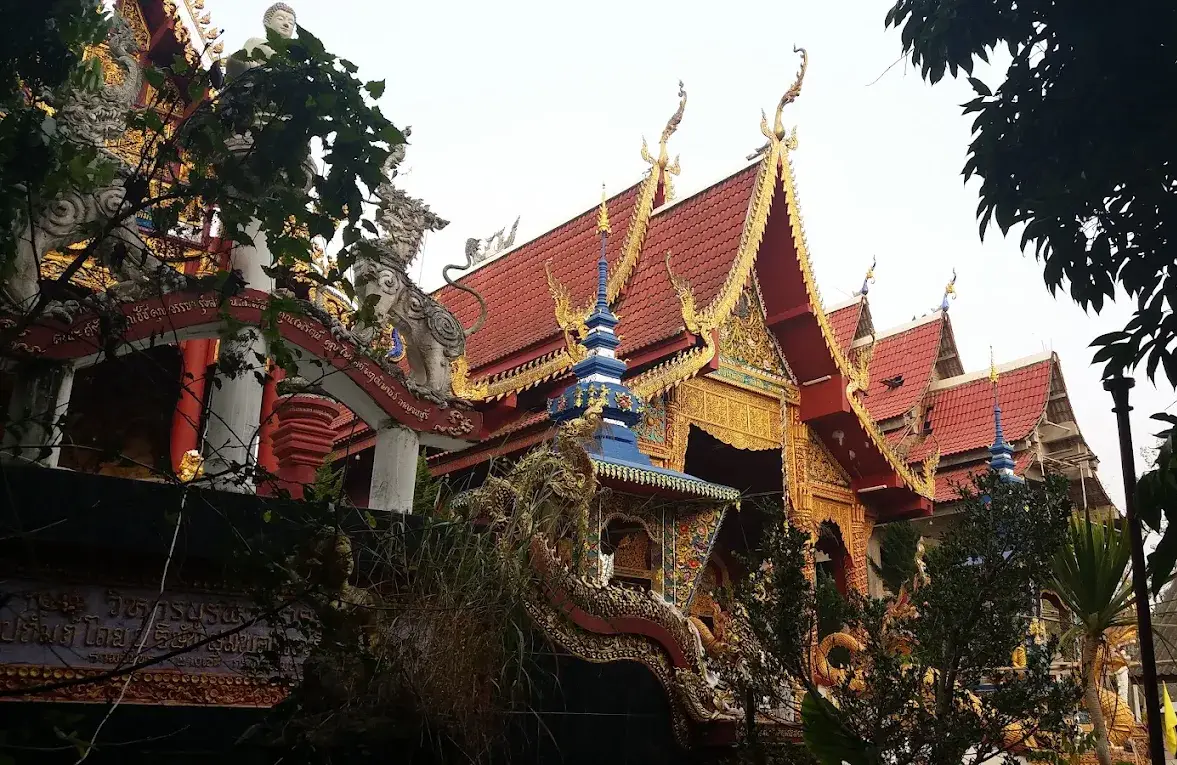
Wat Huai Hom
Open Days: Daily
Opening Hours: 08.00 – 17.00
Wat Huai Hom is a local Buddhist temple in Moo 1, Ban Huai Hom, Mae Ngon Subdistrict, Fang District, Chiang Mai Province. It is a private-sector community temple under the Mahanikaya monastic order. The temple was officially established in 1939, and Phra Athikan Methee Somjitto serves as the abbot. Wat Huai Hom is a meaningful stop for travelers who want to worship, make merit, and experience a peaceful Lanna community temple along the Fang – Mae Ngon – Ban Yang – Doi Ang Khang route.
Wat Huai Hom is best understood as a village temple closely connected with Ban Huai Hom and Mae Ngon. Mae Ngon is a subdistrict with foothill terrain, mountains, forested areas, agricultural villages, and cultural routes leading toward Ban Yang and Doi Ang Khang. Since Ban Huai Hom is Moo 1 of the subdistrict, the temple has a strong sense of local identity. It is not an isolated religious site. It is part of the village landscape, local roads, farming life, and the Buddhist faith of the community.
The temple was officially established in 1939. This historical point places Wat Huai Hom within the development of Mae Ngon communities before the mid-twentieth century. In northern Thailand, village temples often grew together with settlement, agriculture, family networks, and local merit-making traditions. Wat Huai Hom reflects this pattern as a Buddhist place created for worship, Dhamma listening, religious ceremonies, and community gatherings.
The name “Huai Hom” evokes a landscape connected with streams, hills, and rural northern geography. The word “Huai” is commonly used in northern place names for areas associated with small waterways or valleys. Although no detailed public legend explains the temple’s name, the name itself shows a strong connection with the natural setting of Ban Huai Hom.
Wat Huai Hom has the calm atmosphere of a rural Lanna temple. The temple area includes worship spaces, a viharn, a Lanna-style ordination hall, a pagoda, Buddha images, outdoor sacred images, temple grounds, and monastic living areas. The ordination hall is one of the notable features. Its northern Thai architectural details, decorative elements, and naga forms around the entrance reflect the visual language of Lanna Buddhist art.
The viharn and worship area are the best places to begin a visit. Travelers can pay respect to the Buddha, make merit, and walk quietly around the temple grounds. Wat Huai Hom is not a large commercial attraction designed for crowds. Its value lies in its quiet village setting, religious role, and local Lanna character. Visitors who appreciate small community temples will find the atmosphere especially meaningful.
The ordination hall is important both religiously and architecturally. In Thai Buddhism, an ordination hall is a sacred space used for important monastic ceremonies. At Wat Huai Hom, the Lanna-style building and naga details make it one of the temple’s strongest visual features. Visitors should view the building respectfully, avoid touching religious structures unnecessarily, and give space to monks or local residents if ceremonies are taking place.
The pagoda, Buddha images, and outdoor sacred figures add to the temple’s role as a place of faith. These elements are not only decorative. For the local community, they are part of the living religious environment used for worship, merit-making, and reflection. A visit to Wat Huai Hom is therefore most meaningful when approached as a respectful spiritual stop rather than only as a photo location.
Wat Huai Hom serves the Ban Huai Hom community as a center for Buddhist practice and local gatherings. Village temples in Lanna culture support Buddhist holy days, merit-making, Dhamma listening, robe offerings, Kathin ceremonies, Buddhist Lent activities, Songkran, Yi Peng, and village merit-making events. These activities help maintain the relationship between monks, families, village elders, community leaders, and local residents.
Phra Athikan Methee Somjitto, the abbot of Wat Huai Hom, is responsible for maintaining the temple’s religious life and supporting local Buddhist activities. Like many rural temples in northern Thailand, Wat Huai Hom depends on cooperation between monks, temple committees, local leaders, and villagers. This cooperation keeps the temple active as a spiritual center and community space.
Mae Ngon gives Wat Huai Hom additional travel value. The subdistrict includes several Buddhist temples, Ban Yang Chinese-Yunnanese community, the First Royal Factory Museum (Fang), and the route to Doi Ang Khang. Ban Yang is known for its Chinese-Yunnanese culture, local food, and multicultural identity. The First Royal Factory Museum presents the story of royal development work, agricultural processing, and the relationship between the museum and Ban Yang community. Combining Wat Huai Hom with these places gives travelers a fuller understanding of Mae Ngon.
Wat Sukhanthawari, located nearby in Ban Nong Khwang, is another community temple that pairs well with Wat Huai Hom. Travelers interested in local temples can continue to Wat Mae Ngon, Wat Phra That Doi Kaeo, Wat Phrom Chariyawat, and Wat Thung Chamlong. This route shows how several Mahanikaya community temples shape the religious landscape of Mae Ngon.
Doi Ang Khang is another major destination that can be connected with Wat Huai Hom. The mountain is known for cool weather, highland agriculture, scenic landscapes, and northern border atmosphere. Adding Wat Huai Hom to the route creates a more balanced trip by combining worship, village culture, local food, museum learning, and mountain scenery in one journey.
Getting There is easiest by private car or rental car. From Fang town, drive toward Mae Ngon Subdistrict and continue to Ban Huai Hom, Moo 1. From Chiang Mai city, take Highway 107 toward Fang District, then connect to Mae Ngon. Public transport may not stop directly at the temple throughout the day, so travelers without their own vehicle should arrange local transport from Fang town or hire a vehicle for a multi-stop Mae Ngon itinerary.
The best time to visit is in the morning or late afternoon. Morning visits are suitable for worship and merit-making, while afternoon visits work well before continuing to Ban Yang, the First Royal Factory Museum (Fang), or Doi Ang Khang. Visitors should dress modestly, speak quietly, avoid disturbing monks and worshippers, and ask permission before photographing people or religious activities.
A recommended route begins with Wat Huai Hom for worship and a quiet temple visit, then continues to Wat Sukhanthawari, Ban Yang, and the First Royal Factory Museum (Fang). With more time, travelers can continue to Wat Mae Ngon, Wat Phra That Doi Kaeo, Wat Phrom Chariyawat, Wat Thung Chamlong, or Doi Ang Khang. This route combines local Buddhism, village history, Chinese-Yunnanese culture, food, museum learning, and mountain scenery.
Overall, Wat Huai Hom is a valuable stop for travelers who want to explore Fang District in greater depth. The temple combines a clear founding year, Mahanikaya community temple status, a peaceful village setting, Lanna-style religious architecture, Buddha images, a pagoda, and a strong connection with Ban Huai Hom and Mae Ngon. It adds a meaningful spiritual and cultural dimension to a northern Chiang Mai itinerary.
| Name | Wat Huai Hom |
| Location | Moo 1, Ban Huai Hom, Mae Ngon Subdistrict, Fang District, Chiang Mai Province |
| Address | Ban Huai Hom, Moo 1, Mae Ngon Subdistrict, Fang District, Chiang Mai 50320, Thailand |
| Coordinates | 19.81217, 99.13178 |
| Temple Type | Local Buddhist Temple Under The Mahanikaya Order |
| Highlights | A peaceful Ban Huai Hom community temple with Lanna-style religious architecture, suitable for worship, merit-making, and a Mae Ngon cultural route |
| History | Officially established as a temple in 1939 |
| Community Context | Located in Ban Huai Hom, Moo 1 of Mae Ngon Subdistrict, a foothill area with mountains, forested landscapes, agricultural villages, and local Buddhist communities |
| Important Structures | Viharn, Lanna-Style Ordination Hall, Pagoda, Worship Area, Temple Grounds, And Monastic Living Area |
| Sacred Objects | Buddha Images And Sacred Figures Within The Temple |
| Distinctive Features | A quiet rural temple with Lanna-style architecture, naga details, outdoor Buddha images, and a calm community atmosphere |
| Local Importance | A spiritual center for Ban Huai Hom, supporting worship, merit-making, robe offerings, Kathin, and local Buddhist activities |
| Travel Information | Best reached by private car or rental car from Fang town toward Mae Ngon Subdistrict and Ban Huai Hom, Moo 1; it can be combined with Ban Yang, the First Royal Factory Museum (Fang), and Doi Ang Khang |
| Current Status | Still listed as a Mahanikaya community temple in Mae Ngon, Fang District, Chiang Mai Province |
| Open Days | Daily |
| Opening Hours | 08.00 – 17.00 |
| Main Areas / Zones | Worship Area, Viharn, Ordination Hall, Temple Grounds, Pagoda, Outdoor Buddha Images, And Monastic Living Area |
| Abbot | Phra Athikan Methee Somjitto |
| Nearby Tourist Attractions | 1. Wat Sukhanthawari, about 1 km 2. Ban Yang Chinese-Yunnanese Community, about 6 km 3. First Royal Factory Museum (Fang), about 7 km 4. Wat Mae Ngon, about 7 km 5. Wat Phra That Doi Kaeo, about 8 km 6. Doi Ang Khang, about 31 km 7. Fang Hot Springs, about 36 km |
| Nearby Restaurants | 1. Je Mei Chinese Yunnan Suki, about 6 km, Tel. 081-366-3010 2. Naha Restaurant, about 10 km, Tel. 053-450-008 3. GREAT VIWE FANG, Fang Branch, about 23 km, Tel. 062-048-4222 4. Hong Nung Len Fang Chiang Mai, about 24 km, Tel. 083-201-8503, 095-134-6442 5. Khao Soi Parichat Fang, about 25 km, Tel. 053-451-164 6. Cafe’ de fang, about 26 km, Tel. 093-614-6697 |
| Nearby Accommodations | 1. Ban Yang Guesthouse, about 6 km, Tel. 081-035-0690 2. Ban Din Lao Zhang Resort, about 6 km, Tel. 087-124-8060 3. Ban Luang Resort, about 10 km, Tel. 081-881-7002 4. Ban Phak Thanaphon, about 12 km, Tel. 090-672-7530 5. Fang Modern Hotel, about 25 km, Tel. 086-439-1843 6. Huen San Fang, about 26 km, Tel. 081-881-6430, 063-790-0666 |
Frequently Asked Questions (FAQ)
Q: Where is Wat Huai Hom located?
A: Wat Huai Hom is located in Moo 1, Ban Huai Hom, Mae Ngon Subdistrict, Fang District, Chiang Mai Province.
Q: What is the historical importance of Wat Huai Hom?
A: Wat Huai Hom was officially established in 1939 and is a Mahanikaya community temple serving Ban Huai Hom and Mae Ngon.
Q: What are the opening days and hours of Wat Huai Hom?
A: The temple is open daily from 08.00 to 17.00.
Q: Who is the abbot of Wat Huai Hom?
A: The abbot is Phra Athikan Methee Somjitto.
Q: What can visitors see at Wat Huai Hom?
A: Visitors can see the viharn, Lanna-style ordination hall, pagoda, Buddha images, sacred figures, temple grounds, and a peaceful rural temple atmosphere.
Q: Is Wat Huai Hom suitable for travelers?
A: Yes. It is suitable for travelers who want to worship, make merit, visit a quiet Lanna community temple, and explore the Mae Ngon cultural route.
Q: How can travelers get to Wat Huai Hom?
A: The most convenient way is by private car or rental car from Fang town toward Mae Ngon Subdistrict and Ban Huai Hom, Moo 1.
Q: What nearby places can be visited with Wat Huai Hom?
A: Travelers can combine the visit with Wat Sukhanthawari, Ban Yang, the First Royal Factory Museum (Fang), Wat Mae Ngon, Wat Phra That Doi Kaeo, Doi Ang Khang, and Fang Hot Springs.
 Category: ●Places of Worship
 Group: ●Temple
Last Update : 22 HourAgo
 Last Update : 22 HourAgo
 Click to Access the Navigation Map GPS
 Muang Chiang Mai(121)Chom Thong(47)Mae Chaem(25)Chiang Dao(33)Doi Saket(68)Mae Taeng(85)Mae Rim(69)Samoeng(29)Fang(71)Mae Ai(61)Phrao(70)San Pa Tong(105)San Kamphaeng(66)San Sai(73)Hang Dong(74)Hot(32)Doi Tao(22)Omkoi(11)Saraphi(74)Wiang Haeng(15)Chai Prakan(28)Mae Wang(32)Mae On(22)Doi Lo(34)Galyani Vadhana(1)


