
lovethailand home >North Travel Attractions >Chiang Mai Travel Attractions >Fang >Mae Kha > Wat Pong Sai Kham
TL;DR: Wat Pong Sai Kham is located at No. 26, Moo 7, Ban Pong Nok, Mae Kha Subdistrict, Fang District, Chiang Mai Province, open Daily, hours 08.00 - 17.00.

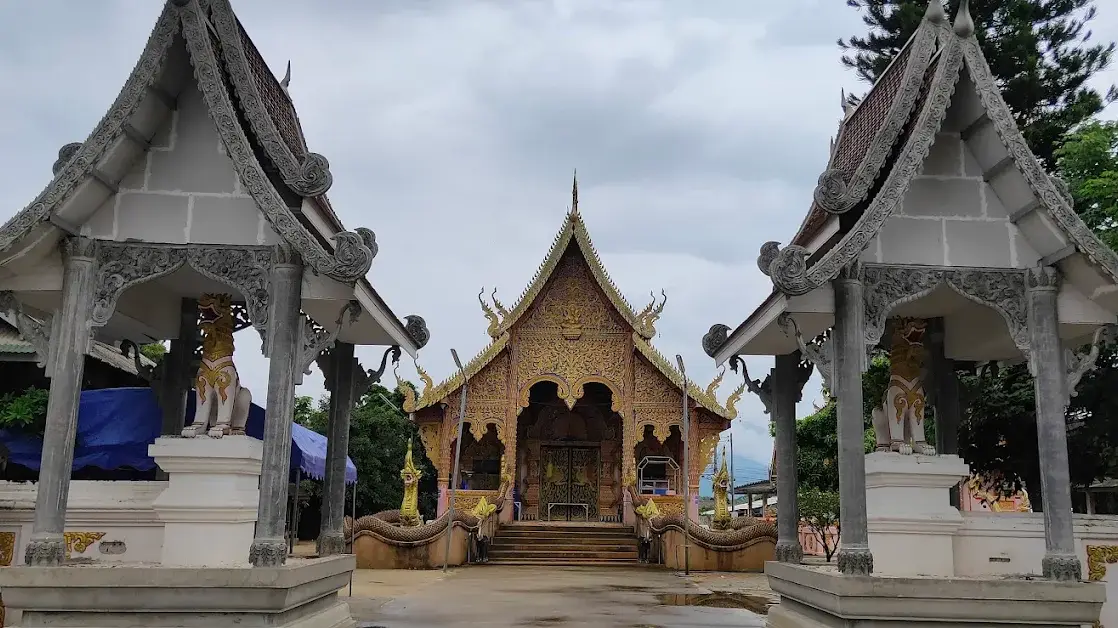
Wat Pong Sai Kham
Open Days: Daily
Opening Hours: 08.00 - 17.00
Wat Pong Sai Kham is located at No. 26, Moo 7, Ban Pong Nok, Mae Kha Subdistrict, Fang District, Chiang Mai Province 50110. It is a local Buddhist temple under the Mahanikaya order and an important religious center for the Ban Pong Nok community. The temple was built in 1927 by villagers who had migrated from Phrao District, San Pa Tong District, and parts of Lamphun Province. When the settlers arrived in this area, they found a natural mineral lick where many birds and other animals came to feed. This landscape became closely connected with the origin of the village and later with the identity of Wat Pong Sai Kham.
The name “Pong Sai Kham” is tied to the local landscape. “Pong” refers to a natural mineral lick, a place where birds and animals come to consume mineral-rich soil. The community story links the village’s beginning with this natural feature, where many birds gathered. “Sai Kham” adds a sense of auspiciousness and value to the place name. The temple’s name therefore preserves the memory of nature, settlement, and community faith in Ban Pong Nok.
Wat Pong Sai Kham was created because the growing village needed a local place for Buddhist ceremonies. In Lanna village life, a temple is not only a religious building. It is a place for merit-making, sermons, Buddhist festivals, education, and community gathering. The establishment of the temple in 1927 shows that Ban Pong Nok had developed into a stable community with enough collective faith to build its own religious center.
The temple received its royal consecrated boundary on October 8, 2005. The boundary measures 20 meters wide and 40 meters long. In Thai Buddhism, a consecrated boundary is required for important monastic ceremonies. This status confirms the temple’s formal religious role and allows it to support important Buddhist rites for monks and local residents. For a community temple, this milestone reflects religious stability and continued support from the village.
Mae Kha Subdistrict has a varied landscape that includes hills, lowland areas, agricultural land, waterways, and several villages with strong local identities. Ban Pong Nok is Moo 7 of Mae Kha. Its origin story is closely linked with the natural mineral lick, birds, wildlife, migration, and settlement. Wat Pong Sai Kham stands within this local context as a temple that connects Buddhism with the memory of the land and the people who built the community.
Mae Kha has 15 villages, and several community temples serve as spiritual centers for their respective villages. Wat Khayanusit serves Ban Mae Kha, Wat Chiang Yuen serves Ban Huai Khrai, Wat Pa Thep Nimit serves Ban Pa Ngae, and Wat Pong Sai Kham serves Ban Pong Nok. Together, these temples show the structure of local Lanna communities, where each village has a temple as a center of merit-making, Buddhist education, and social life.
Wat Pong Sai Kham is located in the middle of the village, making it easy for local residents to access. Because of this central location, the temple area can be active during the day, with passing vehicles and village movement around it. At the same time, the temple grounds have been improved with trees, flower gardens, and landscaping. This greenery helps create a calmer and more pleasant atmosphere for worship, merit-making, and community activities.
Important areas at Wat Pong Sai Kham include the consecrated boundary area, worship space, temple grounds, ceremonial areas, Buddhist study areas, and the Sunday Buddhist Study Center. The temple has a role in Buddhist education through Pali and Buddhist scripture learning as well as Sunday Buddhist education. This makes the temple not only a place for ceremonies, but also a learning space for children, youth, and local residents.
The temple’s most distinctive appeal is its clear community origin. It began with a village shaped by migration and a natural mineral lick where birds and animals gathered. Visitors who come to Wat Pong Sai Kham can pay respect, make merit, walk through the temple grounds, observe the trees and flower gardens, and understand how a local temple supports the identity of Ban Pong Nok. The temple is not designed as a large tourist attraction, but its authenticity makes it meaningful for travelers interested in community temples and local history.
The current abbot of Wat Pong Sai Kham is Phra Khru Phaisan Thammakit. In a local temple, the abbot plays a central role in maintaining the temple grounds, supporting monks and novices, guiding religious activities, coordinating with villagers, and keeping the temple active throughout the year. This leadership helps the temple continue to serve as a spiritual and educational center for Ban Pong Nok.
Wat Pong Sai Kham has an important educational role through Buddhist scripture study and the Sunday Buddhist Study Center. These activities help younger generations learn Buddhist teachings, religious manners, and moral principles. In a community temple, education is part of religious life. The temple therefore supports both formal ceremonies and the long-term cultivation of values within the village.
The temple’s religious life follows the Buddhist calendar and Lanna community traditions. Common activities include Buddhist holy days, food offerings to monks, sermons, candlelight ceremonies on major Buddhist festivals, Buddhist Lent, the end of Buddhist Lent, Kathin, Pha Pa, and community merit-making events. These activities bring elders, families, children, and local residents together in the same religious space.
Kathin is an important annual merit-making activity for Wat Pong Sai Kham. The temple appears in Kathin project information, with five monks in residence and Phra Khru Phaisan Thammakit listed as the abbot. Kathin reflects the relationship between monks, lay supporters, and the community. It helps support the temple and maintains the connection between the temple and its network of devotees.
Wat Pong Sai Kham’s role in Ban Pong Nok is strengthened by its location in the village center. The temple is accessible to residents and functions as a place for ceremonies, Buddhist education, and social gathering. Its busier daytime atmosphere reflects its position within a living community. Rather than being separated from village life, the temple remains closely embedded in daily local activity.
For visitors, Wat Pong Sai Kham is suitable for a quiet and respectful cultural stop. It is best appreciated as a real village temple with a strong local story, not as a staged tourist site. Visitors can make merit, observe the temple environment, and learn about the origin of Ban Pong Nok. The temple is especially meaningful for travelers interested in local Buddhist culture, village history, and Lanna community life in Fang District.
Getting There from Chiang Mai city is straightforward but takes time. Travelers can take Highway 107 north toward Fang District, passing Mae Taeng, Chiang Dao, and Chai Prakan. From Fang, continue to Mae Kha Subdistrict and Ban Pong Nok in Moo 7. Mae Kha is also connected with Highway 109, the Fang-Mae Suai route, making the temple suitable for travelers continuing toward Chiang Rai Province.
When using a map application, search specifically for “Wat Pong Sai Kham Mae Kha Fang Chiang Mai” or “Wat Pong Sai Kham Ban Pong Nok.” This helps avoid confusion with similar place names in other areas. Adding Ban Pong Nok, Mae Kha, and Fang helps ensure the correct temple, especially for travelers planning a multi-temple route in Mae Kha and Fang District.
A short itinerary can begin with merit-making at Wat Pong Sai Kham and continue to Wat Chiang Yuen, Wat Khayanusit, Wat Pa Thep Nimit, Wat Santi Wanaram, or the Northern Petroleum Development Center. A full-day itinerary can continue to Fang Hot Springs, Doi Pha Hom Pok National Park, or the First Royal Factory Museum Fang. This route combines community temples, local history, energy learning, nature, and regional heritage.
The best time to visit Wat Pong Sai Kham is in the morning or late afternoon, when the weather is more comfortable and the temple atmosphere is calmer. During the day, the temple may feel active because it is located in the center of the village. Visitors should dress modestly, speak softly, respect monks and worshippers, avoid disturbing Buddhist study activities, and avoid touching sacred objects unnecessarily.
In summary, Wat Pong Sai Kham is a local Mahanikaya temple in Ban Pong Nok, Moo 7, Mae Kha Subdistrict, Fang District, Chiang Mai. Built in 1927 by settlers from Phrao, San Pa Tong, and parts of Lamphun, the temple grew from a community shaped by a natural mineral lick where birds and animals gathered. It received its royal consecrated boundary on October 8, 2005, with a boundary measuring 20 by 40 meters. Today, the temple remains a spiritual, educational, and cultural center for Ban Pong Nok and a meaningful stop for travelers interested in Lanna community temples.
| Name | Wat Pong Sai Kham |
| Location | No. 26, Moo 7, Ban Pong Nok, Mae Kha Subdistrict, Fang District, Chiang Mai Province |
| Address | 26 Moo 7, Ban Pong Nok, Mae Kha Subdistrict, Fang District, Chiang Mai 50110, Thailand |
| Type | Local Buddhist temple under the Mahanikaya order |
| Highlights | A community temple of Ban Pong Nok with an origin story linked to a natural mineral lick where birds and wildlife gathered |
| History | Built in 1927 by villagers who migrated from Phrao, San Pa Tong, and parts of Lamphun; the temple was later developed as the village’s Buddhist ceremonial center |
| Consecrated Boundary | Granted on October 8, 2005; the boundary measures 20 meters wide and 40 meters long |
| Name Origin | The name is linked to a natural mineral lick where birds and animals gathered, as well as the local identity of Ban Pong Nok |
| Distinctive Features | Located in the village center, with trees, flower gardens, Buddhist study activities, and a strong community role |
| Main Areas / Sacred Spaces | Consecrated boundary area, worship space, temple grounds, ceremonial area, Buddhist scripture study area, and Sunday Buddhist Study Center |
| Buddhist Education | Buddhist scripture study and Sunday Buddhist Study Center |
| Traditions / Merit-Making | Buddhist holy days, major Buddhist festivals, Buddhist Lent, end of Buddhist Lent, Kathin, Pha Pa, and Ban Pong Nok community merit-making activities |
| Community Role | A spiritual center for Ban Pong Nok, supporting Buddhist ceremonies, Buddhist education, merit-making, and community activities |
| Abbot / Caretaker | Phra Khru Phaisan Thammakit |
| Contact Number | 087-184-5302 |
| Travel Information | From Chiang Mai city, take Highway 107 toward Fang District, then continue to Mae Kha Subdistrict and Ban Pong Nok in Moo 7. Search for “Wat Pong Sai Kham Mae Kha Fang Chiang Mai” |
| Current Status | Open as a community Buddhist temple and religious site in Mae Kha, Fang District, Chiang Mai Province |
| Open Days | Daily |
| Opening Hours | 08.00 - 17.00 |
| Facilities | Temple grounds, worship area, ceremonial space, Buddhist study area, flower gardens, shaded trees, and parking area within the temple compound |
| Nearby Tourist Attractions | 1. Wat Chiang Yuen Mae Kha, about 3 km 2. Wat Khayanusit Mae Kha, about 5 km 3. Wat Pa Thep Nimit Ban Pa Ngae, about 6 km 4. Wat Santi Wanaram Mae Kha, about 7 km 5. Northern Petroleum Development Center / Petroleum Learning Area, about 7 km 6. Wat Ketukalong Mae Kha, about 8 km 7. Fang Hot Springs, about 24 km 8. Doi Pha Hom Pok National Park, about 30 km 9. First Royal Factory Museum Fang, about 34 km |
| Nearby Restaurants | 1. GREAT VIEW FANG Branch, about 5 km 2. Kafae Ban Lung Ma, about 7 km, Tel. 095-690-1751 3. Khrua Mae Khaning, about 9 km 4. Bamee Je Hua Fang Branch, about 12 km, Tel. 064-721-8851 5. Oliang Ped Yang Fang, about 12 km, Tel. 064-520-0241, 082-993-8124 |
| Nearby Accommodations | 1. Ban Mueang Nuea Resort, about 6 km, Tel. 081-663-2569, 084-674-2014 2. Fang Modern Hotel, about 13 km, Tel. 086-439-1843 3. Fang Villa Hotel, about 14 km 4. Ban Sathitphon Hotel, about 15 km 5. Huen San Fang Hotel, about 17 km |
Frequently Asked Questions (FAQ)
Q: Where is Wat Pong Sai Kham located?
A: Wat Pong Sai Kham is located at No. 26, Moo 7, Ban Pong Nok, Mae Kha Subdistrict, Fang District, Chiang Mai Province 50110, Thailand.
Q: When was Wat Pong Sai Kham built?
A: Wat Pong Sai Kham was built in 1927 by villagers who migrated from Phrao, San Pa Tong, and parts of Lamphun.
Q: What is the origin of the name Wat Pong Sai Kham?
A: The name is linked to a natural mineral lick where birds and animals gathered, which became part of the origin story of Ban Pong Nok.
Q: When did Wat Pong Sai Kham receive its royal consecrated boundary?
A: The temple received its royal consecrated boundary on October 8, 2005, with a boundary measuring 20 meters wide and 40 meters long.
Q: Who is the abbot of Wat Pong Sai Kham?
A: The abbot is Phra Khru Phaisan Thammakit.
Q: What is special about Wat Pong Sai Kham?
A: It is a community temple in the center of Ban Pong Nok, with a village origin story linked to a mineral lick, Buddhist education activities, trees, flower gardens, and an active community role.
Q: What kind of travelers will enjoy Wat Pong Sai Kham?
A: It is suitable for travelers who enjoy quiet temple visits, merit-making, local Lanna history, and community-based Buddhist culture in Fang District.
Q: What nearby places can be combined with Wat Pong Sai Kham?
A: Nearby places include Wat Chiang Yuen, Wat Khayanusit, Wat Pa Thep Nimit, Wat Santi Wanaram, the Northern Petroleum Development Center, Fang Hot Springs, Doi Pha Hom Pok National Park, and the First Royal Factory Museum Fang.
 Category: ●Places of Worship
 Group: ●Temple
Last Update : 1 WeekAgo
 Last Update : 1 WeekAgo
 Click to Access the Navigation Map GPS
 Muang Chiang Mai(121)Chom Thong(47)Mae Chaem(25)Chiang Dao(33)Doi Saket(68)Mae Taeng(85)Mae Rim(69)Samoeng(29)Fang(71)Mae Ai(59)Phrao(70)San Pa Tong(103)San Kamphaeng(66)San Sai(73)Hang Dong(73)Hot(32)Doi Tao(22)Omkoi(11)Saraphi(74)Wiang Haeng(15)Chai Prakan(28)Mae Wang(32)Mae On(22)Doi Lo(34)Galyani Vadhana(1)


