
lovethailand home >North Travel Attractions >Chiang Mai Travel Attractions >Fang >Mae Kha > Wat Hat Samran
TL;DR: Wat Hat Samran is located at Moo 1, Mae Kha Subdistrict, Fang District, Chiang Mai Province, open Daily, hours 08.00 - 17.00.

Wat Hat Samran
Open Days: Daily
Opening Hours: 08.00 - 17.00
Wat Hat Samran is located in Moo 1, Mae Kha Subdistrict, Fang District, Chiang Mai Province. It is a local Buddhist temple under the Mahanikaya order and one of the long-established community temples in Mae Kha. The temple was officially permitted as a Buddhist temple in 1897 and received its royal consecrated boundary in 1973. With more than a century of history, Wat Hat Samran remains a meaningful religious site for the local community and an important landmark near the route from Fang to Doi Ang Khang.
Wat Hat Samran is suitable for travelers who want to make merit, pay respect, and experience the atmosphere of a local Lanna temple in northern Chiang Mai. It is not a large commercial tourist attraction, but it has cultural value as a community temple that continues to support Buddhist ceremonies, village merit-making, and local religious life. The temple also has practical importance for travelers because the area near Wat Hat Samran is widely used as a reference point for the route up to Doi Ang Khang from the Fang side.
The name “Hat Samran” combines a local landscape term with an auspicious feeling. “Hat” can refer to a riverside or flat sandy area, while “Samran” suggests happiness, ease, and peacefulness. The name gives the temple a calm and pleasant identity, matching its role as a spiritual place for the Mae Kha community. Like many village temples in northern Thailand, the temple name is closely tied to the local area and community identity.
Historically, Wat Hat Samran was officially established in 1897. This places the temple among the older community temples in Mae Kha and Fang District. In the late nineteenth century, rural temples in northern Thailand functioned as more than worship sites. They were places of moral learning, community gathering, merit-making, and cultural continuity. Wat Hat Samran has continued this role for generations, serving local residents through Buddhist ceremonies and village activities.
The temple received its royal consecrated boundary in 1973. In Thai Buddhism, a consecrated boundary is important for formal monastic ceremonies. This status shows that Wat Hat Samran developed from a local place of faith into a recognized Buddhist temple with a formal role in the Sangha system. For a community temple, this milestone reflects stability, religious continuity, and strong local support.
Mae Kha Subdistrict has several local temples spread across its villages, including Wat Huai Cho, Wat Udom Mongkhon, Wat Sri Bua Ngoen, Wat San Ton Pao, Wat Khongkha Ram, and Wat Hat Samran. Together, these temples form a local Buddhist network that reflects the cultural structure of Mae Kha. Wat Hat Samran is one part of this network and helps visitors understand Fang District through its temples, not only through mountains, hot springs, and scenic routes.
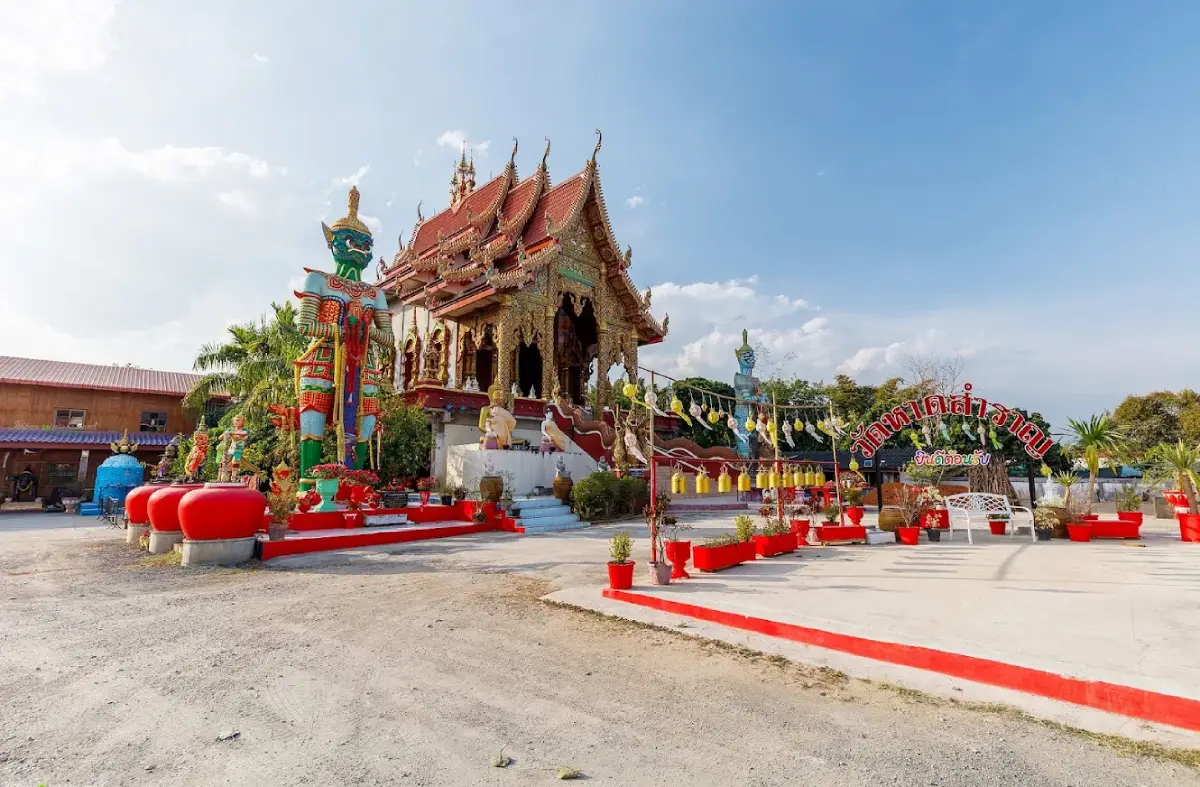
Inside the temple compound, visitors can pay respect, make merit, and observe the quiet atmosphere of a local temple. Important areas include the worship space, main religious area, temple grounds, ceremonial areas, and spaces used by the community. Wat Hat Samran is also known for various sculptures around the temple compound, including giant figures, Rahu figures, and other sculptural works. These elements add character to the temple and give visitors points of interest while walking respectfully through the grounds.
The sculptures at Wat Hat Samran should be viewed with respect. In Thai temple culture, sculptures and symbolic figures often carry religious, protective, or moral meanings. Giant figures are commonly associated with protection of sacred spaces, while Rahu is connected with beliefs about fate, transition, and the removal of misfortune. Visitors should not climb on sculptures, touch sacred objects unnecessarily, or disturb worshippers.
The abbot of Wat Hat Samran is Phra Athikan Chan Kaeo Khantitharo. In a community temple, the abbot plays a central role in maintaining the temple compound, guiding religious activities, supporting monks, and coordinating with local residents. This leadership allows the temple to remain active and accessible for merit-making and Buddhist ceremonies throughout the year.
Wat Hat Samran is closely connected with Buddhist holy days and seasonal merit-making. Typical activities at a community temple include making merit on Buddhist holy days, offering food to monks, listening to sermons, candlelight ceremonies on major Buddhist festivals, Buddhist Lent, the end of Buddhist Lent, Kathin, Pha Pa, and village merit-making events. These activities keep the temple connected with local residents across generations and preserve Lanna Buddhist customs in Mae Kha.
In Lanna community life, a temple is more than a religious building. It is a shared space where elders make merit, families gather, children learn religious etiquette, and the village maintains cultural memory. Wat Hat Samran reflects this function. It supports both religious practice and social continuity, making it an important part of local life in Mae Kha.
Wat Hat Samran is also important as a travel landmark. The temple area is located near the reference point for the road up to Doi Ang Khang from Fang. Travelers heading to Doi Ang Khang often recognize the area near Wat Hat Samran as the turn-off zone from Highway 107 around kilometer marker 137. The road toward Doi Ang Khang is steep and winding, so travelers should prepare their vehicle carefully, check the brakes and tires, and drive with caution, especially during rain or fog.
For visitors using public transport, routes between Chiang Mai and Fang or Chiang Mai and Tha Ton can be used to reach the Fang area, and Wat Hat Samran is often used as a reference point for onward travel to Doi Ang Khang. This practical travel role makes the temple more than a local religious site. It is also a familiar landmark for people planning mountain travel in northern Chiang Mai.
The best time to visit Wat Hat Samran is in the morning or late afternoon, when the weather is more comfortable and the temple atmosphere is calm. Buddhist holy days and major Buddhist festivals may bring more local activity, while ordinary weekdays are suitable for a quieter visit. Visitors should dress modestly, speak softly, respect monks and worshippers, and avoid touching sacred objects unnecessarily.
Getting There from Chiang Mai city is straightforward but takes time. Travelers can take Highway 107 north toward Fang District, passing Mae Taeng, Chiang Dao, and Chai Prakan before continuing to Mae Kha Subdistrict and Moo 1. The temple is located near the route reference point for Doi Ang Khang around kilometer marker 137. If traveling onward to Doi Ang Khang, visitors should check road and weather conditions before taking the mountain road.
When using a map application, search specifically for “Wat Hat Samran, Mae Kha, Fang, Chiang Mai” to avoid confusion with places of similar names elsewhere in Thailand. The temple is located in Moo 1, Mae Kha Subdistrict, Fang District, Chiang Mai 50320. Adding Mae Kha and Fang helps ensure the correct destination, especially for travelers using the temple as a starting point or landmark for Doi Ang Khang.
Wat Hat Samran can be included in a Mae Kha temple route with Wat Udom Mongkhon Mae Kha, Wat Huai Cho, Wat San Ton Pao, Wat Sri Bua Ngoen, and Wat Khongkha Ram. Travelers who want a fuller Fang itinerary can continue to Fang Hot Springs, Doi Pha Hom Pok National Park, or the First Royal Factory Museum Fang. This creates a balanced route combining Buddhist culture, local community life, nature, and regional history.
In summary, Wat Hat Samran is a long-established community temple in Mae Kha, Fang District. It was officially permitted in 1897, received its royal consecrated boundary in 1973, and remains an active Buddhist site for the local community. Its value comes from its long history, community role, temple sculptures, and its location near the well-known route toward Doi Ang Khang. It is a meaningful stop for travelers interested in quiet temple visits, Lanna culture, and the local Buddhist heritage of northern Chiang Mai.
| Name | Wat Hat Samran |
| Location | Moo 1, Mae Kha Subdistrict, Fang District, Chiang Mai Province |
| Address | Moo 1, Mae Kha Subdistrict, Fang District, Chiang Mai 50320, Thailand |
| Type | Local Buddhist temple under the Mahanikaya order |
| Highlights | A long-established Mae Kha community temple founded in 1897 and located near the main route reference point for Doi Ang Khang |
| History | Officially permitted as a temple in 1897 and granted its royal consecrated boundary in 1973 |
| Name Origin | “Hat” suggests a riverside or flat sandy area, while “Samran” conveys happiness, ease, and peacefulness |
| Distinctive Features | A peaceful Lanna community temple connected with local faith, merit-making, village Buddhist life, and the route to Doi Ang Khang |
| Main Areas / Zones | Worship area, main religious space, temple grounds, ceremonial area, sculptures including giant figures and Rahu figures |
| Traditions / Merit-Making | Buddhist holy days, major Buddhist festivals, Buddhist Lent, end of Buddhist Lent, Kathin, Pha Pa, and local Lanna merit-making activities |
| Community Role | A spiritual center for Mae Kha residents, supporting Buddhist ceremonies and village merit-making |
| Abbot / Caretaker | Phra Athikan Chan Kaeo Khantitharo |
| Travel Information | From Chiang Mai city, take Highway 107 toward Fang District through Mae Taeng, Chiang Dao, and Chai Prakan, then continue to Mae Kha Subdistrict and Moo 1. The temple is near the Doi Ang Khang route reference point around kilometer marker 137 |
| Current Status | Open as a community Buddhist temple and religious site in Mae Kha, Fang District, Chiang Mai Province |
| Open Days | Daily |
| Opening Hours | 08.00 - 17.00 |
| Fees | No admission fee |
| Facilities | Temple grounds, ceremonial area, and parking area within the temple compound |
| Nearby Tourist Attractions | 1. Wat Udom Mongkhon Mae Kha, about 2 km 2. Wat Huai Cho, about 2 km 3. Wat San Ton Pao, about 5 km 4. Wat Sri Bua Ngoen Mae Kha, about 5 km 5. Wat Khongkha Ram, about 6 km 6. Fang Hot Springs, about 24 km 7. Doi Pha Hom Pok National Park, about 29 km 8. First Royal Factory Museum Fang, about 32 km |
| Nearby Restaurants | 1. PunThai Coffee Fang 2, about 2 km, Tel. 062-593-0154 2. Bamee Je Hua Fang Branch, about 8 km, Tel. 064-721-8851 3. Ahan Ran Mai, about 9 km, Tel. 086-114-6858 4. Hong Nung Len Fang, about 10 km 5. Kha Mu Krop Kai Yang San Ma Fueang, about 11 km, Tel. 081-882-5589, 081-467-3624 |
| Nearby Accommodations | 1. Fang Modern Hotel, about 10 km, Tel. 086-439-1843 2. Fang Villa Hotel, about 10 km, Tel. 086-451-7682 3. Ban Sathitphon Hotel, about 12 km 4. Huen San Fang Hotel, about 14 km, Tel. 081-881-6430, 063-790-0666 5. Fak Fang Homestay, about 15 km |
Frequently Asked Questions (FAQ)
Q: Where is Wat Hat Samran located?
A: Wat Hat Samran is located in Moo 1, Mae Kha Subdistrict, Fang District, Chiang Mai Province, Thailand.
Q: What type of temple is Wat Hat Samran?
A: It is a local Buddhist temple under the Mahanikaya order and serves as a community temple for Mae Kha.
Q: Why is Wat Hat Samran historically important?
A: The temple was officially permitted in 1897 and received its royal consecrated boundary in 1973, making it one of the long-established temples in Mae Kha.
Q: Who is the abbot of Wat Hat Samran?
A: The abbot is Phra Athikan Chan Kaeo Khantitharo.
Q: What is special about Wat Hat Samran?
A: It is a historic Mae Kha community temple with temple sculptures such as giant figures and Rahu figures, and it is located near the route reference point for Doi Ang Khang.
Q: How do travelers get to Wat Hat Samran from Chiang Mai city?
A: Travelers can take Highway 107 toward Fang District through Mae Taeng, Chiang Dao, and Chai Prakan, then continue to Mae Kha Subdistrict and Moo 1 near the Doi Ang Khang route reference point around kilometer marker 137.
Q: What kind of travelers will enjoy Wat Hat Samran?
A: It is suitable for travelers who enjoy peaceful temple visits, merit-making, Lanna community culture, and a meaningful stop before continuing to Doi Ang Khang or other attractions in Fang.
Q: What nearby places can be combined with Wat Hat Samran?
A: Nearby places include Wat Udom Mongkhon Mae Kha, Wat Huai Cho, Wat San Ton Pao, Wat Sri Bua Ngoen, Fang Hot Springs, Doi Pha Hom Pok National Park, and the First Royal Factory Museum Fang.
 Category: ●Places of Worship
 Group: ●Temple
Last Update : 2 DayAgo
 Last Update : 2 DayAgo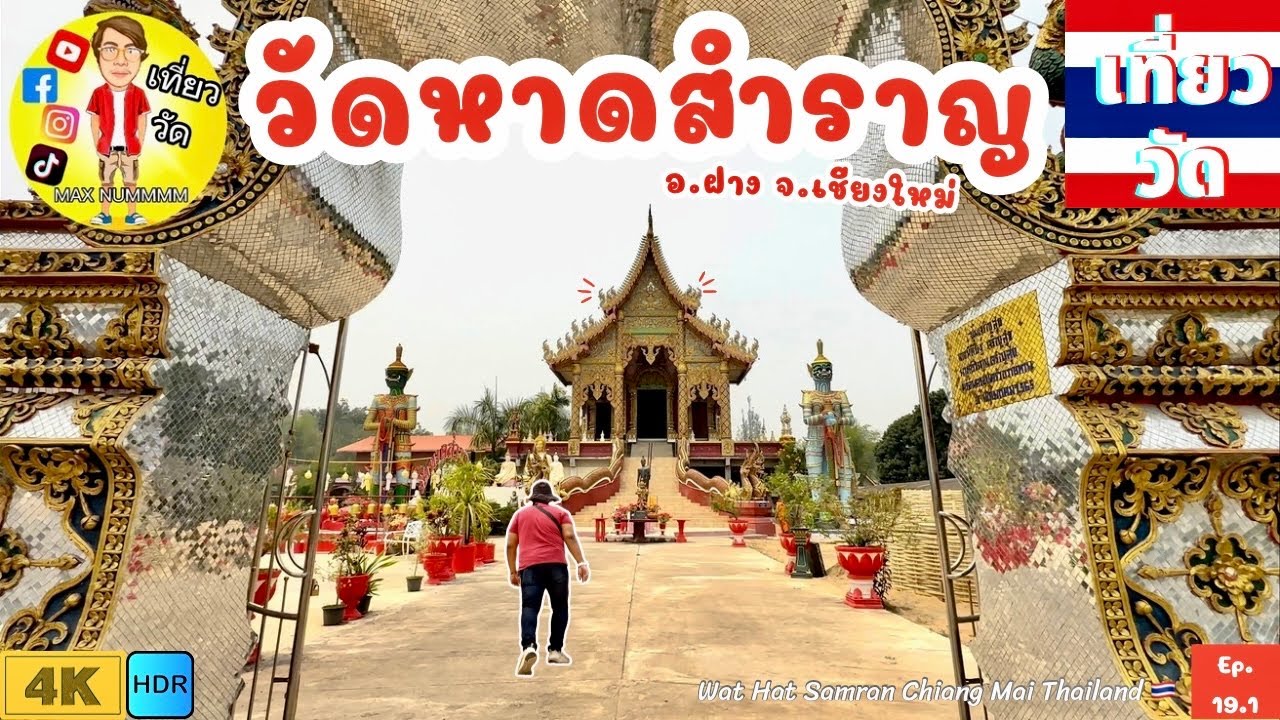
 Click to Access the Navigation Map GPS
Wat Hat Samran Map
Recommend

 Muang Chiang Mai(121)Chom Thong(47)Mae Chaem(25)Chiang Dao(33)Doi Saket(68)Mae Taeng(85)Mae Rim(69)Samoeng(29)Fang(71)Mae Ai(59)Phrao(70)San Pa Tong(105)San Kamphaeng(66)San Sai(73)Hang Dong(74)Hot(32)Doi Tao(22)Omkoi(11)Saraphi(74)Wiang Haeng(15)Chai Prakan(28)Mae Wang(32)Mae On(22)Doi Lo(34)Galyani Vadhana(1)


