
lovethailand home >North Travel Attractions >Chiang Mai Travel Attractions >Fang >Mon Pin > Wat Hua Na
TL;DR: Wat Hua Na is located at Moo 6, Mon Pin Subdistrict, Fang District, Chiang Mai Province, open Daily, hours 08.00 - 17.00. Highlights include A quiet community temple of Ban Hua Na, suitable for merit-making and learning about rural temple life in Mon Pin.
Wat Hua Na
Open Days: Daily
Opening Hours: 08.00 - 17.00
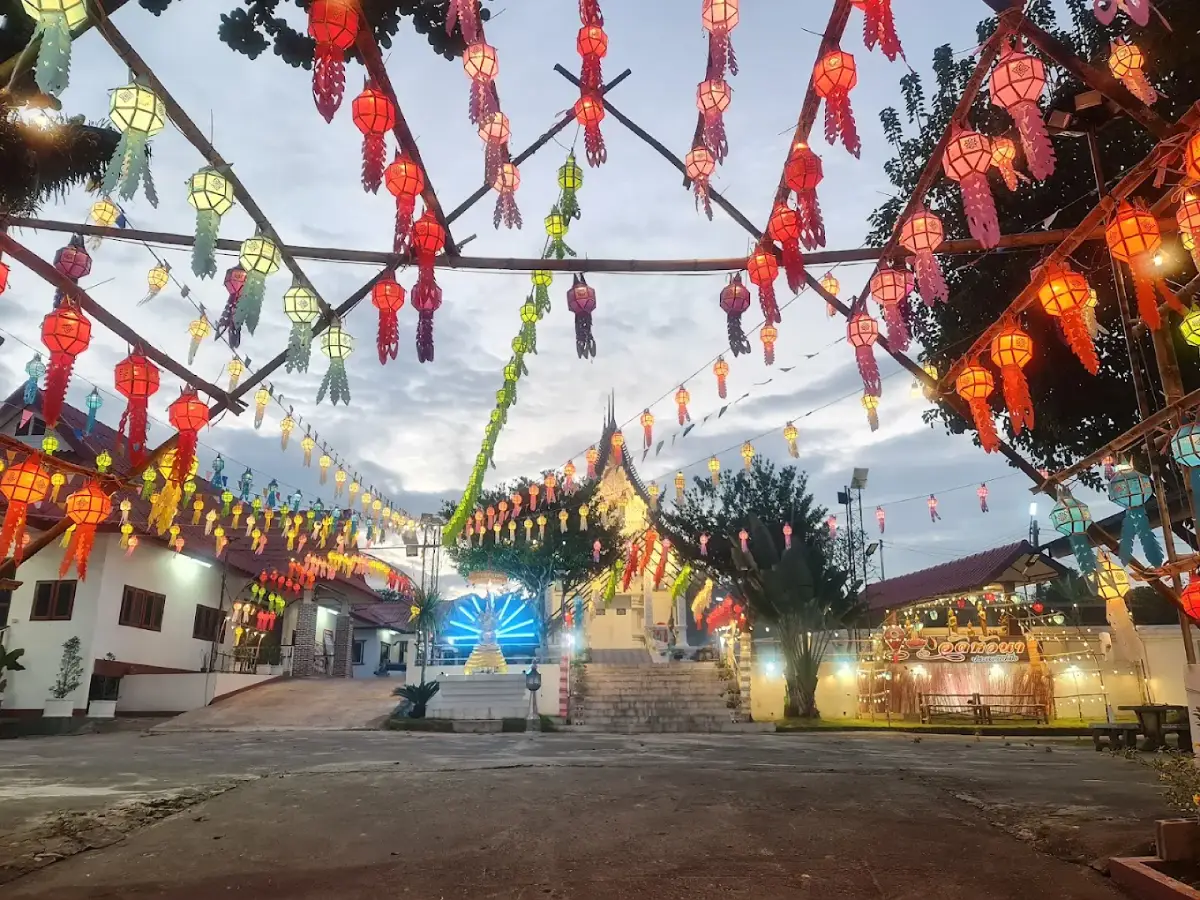
Wat Hua Na is a local Buddhist temple in Moo 6, Mon Pin Subdistrict, Fang District, Chiang Mai Province. It is a community temple under the Mahanikaya order and has long served the Ban Hua Na community. The temple is suitable for travelers who want to make merit, pay respect, and experience a quiet rural temple in northern Chiang Mai. Its importance lies in its role as a living religious site for the local community rather than as a large commercial tourist attraction.
Wat Hua Na is open daily from 08.00 to 17.00. It is located in Moo 6, Mon Pin Subdistrict, Fang District, Chiang Mai 50110. The surrounding area is a rural community with villages, agricultural land, schools, local temples, and routes leading to natural attractions in Fang District. This setting gives the temple a calm and local atmosphere. Visitors can stop here for merit-making or include it in a cultural route through Mon Pin.
The temple was officially permitted as a Buddhist temple in 1940. This establishment year reflects the growth of Ban Hua Na as a settled community with enough collective faith and organization to support its own temple. In rural northern Thailand, a village temple is more than a place of worship. It is a spiritual center, a venue for ceremonies, and a shared space that helps hold the community together.
The name “Hua Na” is closely tied to the local landscape and community identity. It evokes the image of village life, rice fields, and rural settlement. Like many temple names in northern Thailand, it is connected to the surrounding locality rather than being detached from it. Wat Hua Na should therefore be understood as the temple of Ban Hua Na, rooted in the history and daily life of the village.
As a Wat Rat, or community-supported temple, Wat Hua Na depends on the faith and support of local residents. It is not a royal monastery. Its role is close to everyday life. Local people may come here for Buddhist holy days, Kathin, robe-offering ceremonies, ordination-related events, merit-making for ancestors, funeral rites, and other family or community ceremonies. This makes the temple an important part of the social and religious structure of Mon Pin.
Phra Nikhom Paphakaro is the abbot of Wat Hua Na. In a rural temple, the abbot’s role is central because he helps maintain monastic discipline, temple facilities, religious ceremonies, and relationships with lay supporters. The continuity of a temple like Wat Hua Na depends on monks, temple committees, villagers, and supporters working together to preserve the temple’s religious and community functions.
The appeal of Wat Hua Na is its quiet community character. Visitors can make merit, pay respect, and walk calmly around the temple grounds. The temple is not defined by crowds or major landmark architecture. Its value is found in simplicity, local faith, and its role as an active Buddhist site for the people of Ban Hua Na. On ordinary days, visitors will experience a peaceful atmosphere; during ceremonies, the temple becomes a center of community activity.
Important areas of Wat Hua Na are associated with religious practice, the temple courtyard, and community merit-making. Publicly available information about specific architectural details is limited, but the temple’s confirmed status as a functioning community temple makes its role clear. It remains a place where Buddhist activities and local gatherings continue to take place.
Wat Hua Na also serves as a shared community space. Local activities and village-level meetings may take place at the temple, reflecting the long-standing role of Buddhist temples as public spaces in rural Thailand. In many northern communities, temples are used not only for worship but also for communication, cooperation, and village affairs. Wat Hua Na reflects this practical and social role.
Merit-making traditions at Wat Hua Na can be understood within the wider Buddhist calendar. These may include Buddhist holy days, Makha Bucha, Visakha Bucha, Asalha Bucha, Buddhist Lent, the end of Buddhist Lent, Kathin, robe-offering ceremonies, and other community merit-making events. Such activities help maintain local Buddhist practice and strengthen relationships among villagers.
For cultural travelers, Wat Hua Na is a meaningful stop for understanding rural temple life in Mon Pin. It is not only a place to visit briefly but also a site that reflects how Buddhism supports village identity, local ceremonies, and community continuity. Travelers interested in lesser-known temples, cultural routes, and local life in Fang District will find the temple especially relevant.
Getting There is easiest from Fang town. Travelers can drive toward Mon Pin Subdistrict and continue to Ban Hua Na in Moo 6. A private car, rental car, or local hired vehicle is the most practical option. Those using public transportation should first reach Fang town and then arrange local transport to Mon Pin. A private vehicle also makes it easier to continue to nearby temples and natural attractions in the same trip.
A suitable travel route is to begin with merit-making at Wat Hua Na, then continue to Wat Phra That Chaloem Phrakiat, Nam Ru Suan Cha, Mae Mao Hydropower Dam, Fang Hot Spring, Doi Pha Hom Pok National Park, or Doi Ang Khang. This route combines local temple culture, water resources, hot springs, mountain scenery, and rural northern Chiang Mai in one itinerary.
Visitors should dress modestly, speak quietly, avoid entering monastic areas without permission, and take photographs respectfully. If a ceremony, funeral, or community event is taking place, visitors should give space to local participants. Wat Hua Na is an active religious site, so the visit should be approached with calmness and respect for the local community.
In summary, Wat Hua Na is a Mahanikaya community temple in Moo 6, Mon Pin Subdistrict, Fang District, Chiang Mai. It was officially permitted as a temple in 1940 and is led by Phra Nikhom Paphakaro. The temple remains a spiritual and community center for Ban Hua Na, suitable for merit-making, quiet cultural visits, and travel routes around Mon Pin and Fang District.
| Name | Wat Hua Na |
| Location | Moo 6, Mon Pin Subdistrict, Fang District, Chiang Mai Province |
| Address | Moo 6, Mon Pin Subdistrict, Fang District, Chiang Mai 50110, Thailand |
| Temple Type | Community Temple Under The Mahanikaya Order |
| History | Officially permitted as a temple in 1940; a local temple of Ban Hua Na community in Mon Pin Subdistrict |
| Abbot / Caretaker | Phra Nikhom Paphakaro |
| Highlights | A quiet community temple of Ban Hua Na, suitable for merit-making and learning about rural temple life in Mon Pin |
| Distinctive Features | A local Lanna temple reflecting the relationship between Buddhism, village life, and community identity in Fang District |
| Main Areas / Zones | Religious activity areas, temple courtyard, and community merit-making space |
| Traditions / Merit-Making Events | Buddhist holy days, Buddhist Lent, the end of Buddhist Lent, Kathin, robe-offering ceremonies, and community merit-making events |
| Travel Information | Travel from Fang town toward Mon Pin Subdistrict and Ban Hua Na; private car, rental car, or local hired transport is recommended |
| Current Status | Open as an active Buddhist temple and community religious site in Ban Hua Na, Mon Pin Subdistrict |
| Open Days | Daily |
| Opening Hours | 08.00 - 17.00 |
| Nearby Tourist Attractions | 1. Wat Phra That Chaloem Phrakiat, Mon Pin, About 8 km 2. Nam Ru Suan Cha, About 9 km 3. Mae Mao Hydropower Dam, About 13 km 4. Fang Hot Spring / Doi Pha Hom Pok National Park, About 20 km 5. Doi Ang Khang / Royal Agricultural Station Angkhang, About 44 km |
| Nearby Restaurants | 1. Parichat Khao Soi Fang, About 15 km, Tel. 053-451-164 2. Banrimnum Fang Restaurant, About 14 km, Tel. 053-382-174 3. Wiang Fang Wang Kung Restaurant, About 15 km, Tel. 053-451-492, 086-180-8927 4. Krua Sabai Sabai, About 15 km, Tel. 053-451-707 5. Chill Café Fang, About 15 km, Tel. 081-811-6455 |
| Nearby Accommodations | 1. Aumhum Homestay And Organic Farm, About 7 km, Tel. 095-453-5293 2. Baan Innto Resort, About 12 km, Tel. 087-906-7084, 098-919-3454 3. Baan Sathitporn Hotel, About 15 km, Tel. 081-113-8882 4. Huen San Fang Hotel, About 16 km, Tel. 081-881-6430, 063-790-0666 5. Fang Modern Hotel, About 17 km, Tel. 086-439-1843 |
Frequently Asked Questions (FAQ)
Q: Where is Wat Hua Na located?
A: Wat Hua Na is located in Moo 6, Mon Pin Subdistrict, Fang District, Chiang Mai 50110, Thailand.
Q: What type of temple is Wat Hua Na?
A: Wat Hua Na is a local community temple under the Mahanikaya order.
Q: When was Wat Hua Na officially established?
A: Wat Hua Na was officially permitted as a temple in 1940.
Q: Who is the abbot of Wat Hua Na?
A: The abbot of Wat Hua Na is Phra Nikhom Paphakaro.
Q: What kind of travelers is Wat Hua Na suitable for?
A: It is suitable for travelers who want a quiet temple visit, merit-making, and a local cultural experience in rural Fang District.
Q: How can travelers get to Wat Hua Na?
A: Travelers can start from Fang town and continue toward Mon Pin Subdistrict and Ban Hua Na. A private car, rental car, or local hired transport is the most practical option.
Q: What nearby places can be combined with Wat Hua Na?
A: Nearby places include Wat Phra That Chaloem Phrakiat, Nam Ru Suan Cha, Mae Mao Hydropower Dam, Fang Hot Spring, Doi Pha Hom Pok National Park, and Doi Ang Khang.
 Category: ●Places of Worship
 Group: ●Temple
Last Update : 2 DayAgo
 Last Update : 2 DayAgo
 Click to Access the Navigation Map GPS
 Muang Chiang Mai(121)Chom Thong(47)Mae Chaem(25)Chiang Dao(33)Doi Saket(68)Mae Taeng(85)Mae Rim(69)Samoeng(29)Fang(71)Mae Ai(59)Phrao(70)San Pa Tong(105)San Kamphaeng(66)San Sai(73)Hang Dong(74)Hot(32)Doi Tao(22)Omkoi(11)Saraphi(74)Wiang Haeng(15)Chai Prakan(28)Mae Wang(32)Mae On(22)Doi Lo(34)Galyani Vadhana(1)


