
lovethailand home >North Travel Attractions >Chiang Mai Travel Attractions >Fang >Mon Pin > Wat Suan Cha
TL;DR: Wat Suan Cha is located at Moo 8, Mon Pin Subdistrict, Fang District, Chiang Mai Province, open Daily, hours 08.00 - 17.00.
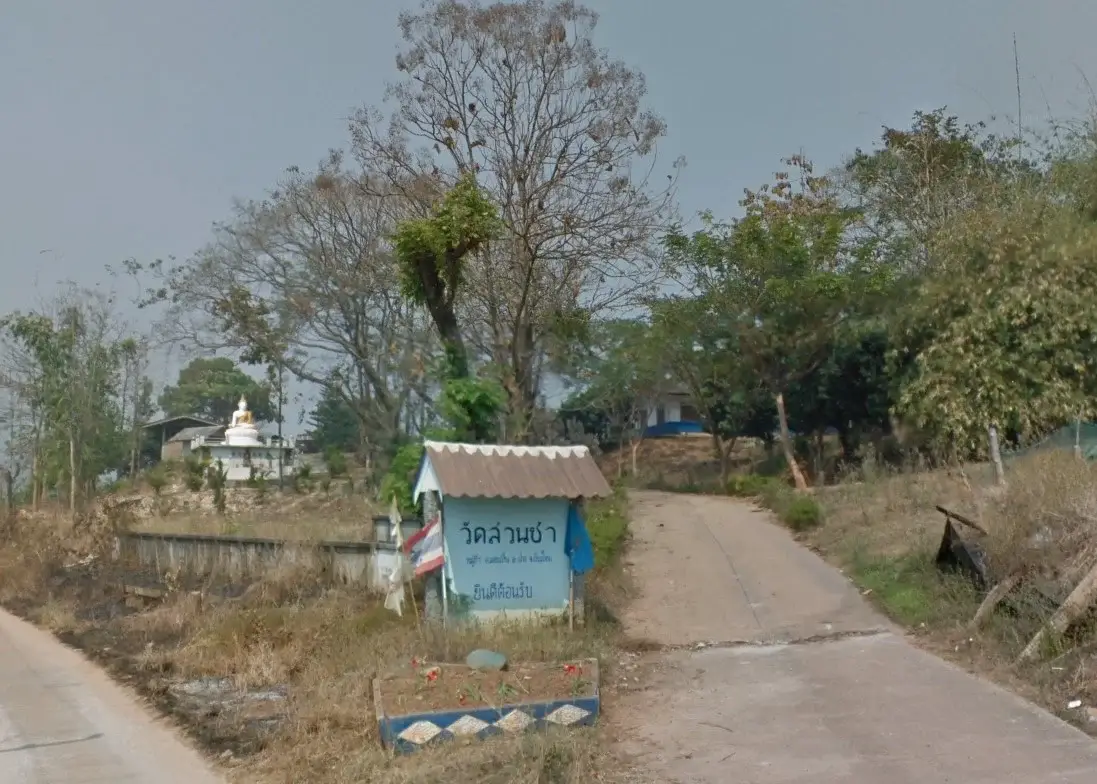
Wat Suan Cha
Open Days: Daily
Opening Hours: 08.00 - 17.00
Wat Suan Cha in Mon Pin Subdistrict, Fang District, Chiang Mai Province, is a local Buddhist temple under the Mahanikaya order. It is a community temple rather than a large mainstream tourist attraction, making it suitable for travelers who want to experience a quiet rural temple, make merit, pay respect to Buddhist traditions, and understand the role of temples in northern Thai village life. Its value lies in its calm atmosphere, its connection with Ban Suan Cha community, and its long-standing religious role since it was officially permitted as a temple in 1937.
Wat Suan Cha is located in Moo 8, Mon Pin Subdistrict, Fang District, Chiang Mai 50110. The surrounding area is a rural part of northern Chiang Mai, with agricultural communities, small villages, local temples, and natural attractions nearby. This setting gives the temple a peaceful character. Visitors who come here will not find the atmosphere of a crowded landmark temple. Instead, they will see a working village temple that remains closely connected to the everyday life of the local community.
The history of Wat Suan Cha is anchored by its official establishment as a temple in 1937. In the context of rural northern Thailand, the formal establishment of a village temple reflects the growth and stability of a local community. It shows that the people in the Ban Suan Cha area had enough collective faith, organization, and social continuity to support a temple as a shared spiritual center. For this reason, Wat Suan Cha is more than a religious site. It is also a marker of local settlement, community identity, and Buddhist continuity in Fang District.
The name “Suan Cha” connects the temple directly with the surrounding locality. In many northern Thai communities, temple names are linked to village names, landscapes, plants, occupations, or local memory. Wat Suan Cha follows this pattern. Its name makes clear that the temple belongs to the Ban Suan Cha area and that its identity is inseparable from the local community. This is one of the reasons the temple is meaningful for travelers interested in cultural geography and the relationship between temples and village life.
As a local temple, Wat Suan Cha is a Wat Rat, or community-supported temple, under the Mahanikaya order. A Wat Rat is not a royal monastery. It is maintained through the faith and support of local residents. This makes the temple’s role especially close to daily life. It can serve as a place for merit-making, Buddhist ceremonies, community gatherings, ordination-related events, funeral rites, Kathin offerings, robe-offering ceremonies, and other local Buddhist activities. This practical community role is one of the most important ways to understand Wat Suan Cha.
Phra Somboon Kantasilo is identified as the abbot of Wat Suan Cha in the available information used for this article. In a rural temple, the abbot plays a central role not only in managing monastic life and temple grounds but also in maintaining relationships with lay supporters, guiding religious ceremonies, and preserving the rhythm of Buddhist activities in the community. The continued presence of the temple depends on the connection between monks, villagers, and local faith networks.
The atmosphere of Wat Suan Cha is best suited to slow and respectful travel. Visitors can make merit, pay respect, walk quietly around the temple grounds, and observe the character of a northern Thai village temple. The temple is not presented as a major sightseeing complex, and that is part of its appeal. It allows travelers to see a more modest and authentic side of Fang District, where temples are still woven into the social and spiritual fabric of local communities.
Mon Pin Subdistrict is an interesting area for travelers who want to combine cultural stops with natural attractions. Wat Suan Cha can be included in a route with Nam Ru Suan Cha, Mae Mao Hydropower Dam, Wat Phra That Chaloem Phrakiat, Fang Hot Spring, Doi Pha Hom Pok National Park, and Doi Ang Khang. This makes the temple a useful stop for travelers exploring rural Fang by private car or rental car. The route is especially suitable for visitors who prefer local scenery, quiet villages, temples, agricultural landscapes, and mountain destinations.
Public information about the temple’s individual structures, such as the exact construction year of specific halls or detailed information about principal Buddha images, remains limited. For this reason, the most reliable way to present Wat Suan Cha is to focus on its confirmed identity as a community temple, its location, its Mahanikaya affiliation, its official establishment year, its abbot, and its role in the local Buddhist community. This avoids overstating unverified architectural details while still giving travelers a useful and accurate cultural guide.
For visitors interested in Lanna culture, Wat Suan Cha offers a clear example of how temples function in northern Thai villages. Temples are not only places of worship. They are also spaces for moral education, community merit-making, seasonal Buddhist ceremonies, social support, and rites connected to different stages of life. Even when a temple is small and quiet, it may carry deep importance for the people who live around it. Wat Suan Cha should therefore be understood as a living community temple rather than only a point on a travel map.
Religious activities at Wat Suan Cha follow the broader pattern of Thai Buddhist temple life. Important occasions may include Buddhist holy days, Makha Bucha, Visakha Bucha, Asalha Bucha, Buddhist Lent, the end of Buddhist Lent, Kathin, robe-offering ceremonies, and community merit-making events. Travelers who visit on an ordinary day will experience a calm temple atmosphere. Those who visit during a ceremony should be especially respectful, dress modestly, keep noise low, and give priority to local participants and the host community.
Getting There is easiest from Fang town. Travelers can drive toward Mon Pin Subdistrict and continue to the Ban Suan Cha area in Moo 8. A private car, rental car, or local hired vehicle is the most practical option because it allows visitors to continue to nearby attractions in the same trip. Travelers using public transportation should first reach Fang town and then arrange local transport to Mon Pin. The temple can be combined with a half-day or full-day route around Mon Pin and Fang District.
Visitors should dress modestly, speak quietly, avoid entering monastic areas without permission, and take photographs respectfully. If a ceremony, funeral, or community event is taking place, visitors should keep a respectful distance and avoid disrupting local participants. Wat Suan Cha is an active village temple, so the visit should be approached with calmness and courtesy rather than treated as a casual photo stop.
In summary, Wat Suan Cha is a Mahanikaya community temple in Mon Pin Subdistrict, Fang District, Chiang Mai. It was officially permitted as a temple in 1937 and remains connected to Ban Suan Cha and the surrounding local community. Its main appeal is its peaceful rural atmosphere and its role as a living Buddhist center for local people. For travelers exploring Fang, it is a meaningful stop that can be combined with nearby temples, natural attractions, hot springs, and mountain routes.
| Name | Wat Suan Cha |
| Location | Moo 8, Mon Pin Subdistrict, Fang District, Chiang Mai Province |
| Address | Moo 8, Mon Pin Subdistrict, Fang District, Chiang Mai 50110, Thailand |
| Coordinates | 19.92603, 99.11419 |
| Temple Type | Community temple under the Mahanikaya order |
| History | Officially permitted as a temple in 1937; a local community temple of the Ban Suan Cha area in Mon Pin Subdistrict |
| Abbot / Caretaker | Phra Somboon Kantasilo |
| Highlights | A peaceful rural community temple connected with Ban Suan Cha and suitable for merit-making, quiet visits, and cultural travel in Mon Pin |
| Distinctive Features | A modest Lanna village temple reflecting local Buddhist faith and community life in Fang District |
| Main Areas / Zones | Religious activity areas, temple hall areas, and community merit-making space |
| Traditions / Merit-Making Events | Connected with regular Buddhist holy days and community merit-making events such as Buddhist Lent, the end of Buddhist Lent, Kathin, and robe-offering ceremonies |
| Travel Information | Travel from Fang town toward Mon Pin Subdistrict and Ban Suan Cha; private car, rental car, or local hired transport is recommended |
| Current Status | Open as an active Buddhist temple and community religious site in Mon Pin Subdistrict |
| Open Days | Daily |
| Opening Hours | 08.00 - 17.00 |
| Nearby Tourist Attractions | 1. Nam Ru Suan Cha, about 4 km 2. Wat Phra That Chaloem Phrakiat, Mon Pin, about 10 km 3. Mae Mao Hydropower Dam, about 12 km 4. Fang Hot Spring / Doi Pha Hom Pok National Park, about 22 km 5. Doi Ang Khang / Royal Agricultural Station Angkhang, about 45 km |
| Nearby Restaurants | 1. Parichat Khao Soi Fang, about 16 km, Tel. 053-451-164 2. Banrimnum Fang Restaurant, about 14 km, Tel. 053-382-174 3. Wiang Fang Wang Kung Restaurant, about 16 km, Tel. 053-452-811, 053-451-492 4. Krua Sabai Sabai, about 15 km, Tel. 053-451-707 5. Chill Café Fang, about 15 km, Tel. 081-811-6455 |
| Nearby Accommodations | 1. Aumhum Homestay and Organic Farm, about 8 km, Tel. 095-453-5293 2. Baan Innto Resort, about 11 km, Tel. 087-906-7084, 098-919-3454 3. Baan Sathitporn Hotel, about 15 km, Tel. 081-113-8882 4. Huen San Fang Hotel, about 16 km, Tel. 081-881-6430, 063-790-0666 5. Fang Modern Hotel, about 17 km, Tel. 086-439-1843 |
Frequently Asked Questions (FAQ)
Q: Where is Wat Suan Cha located?
A: Wat Suan Cha is located in Moo 8, Mon Pin Subdistrict, Fang District, Chiang Mai 50110, Thailand.
Q: What type of temple is Wat Suan Cha?
A: Wat Suan Cha is a local community temple under the Mahanikaya order.
Q: When was Wat Suan Cha officially established?
A: Wat Suan Cha was officially permitted as a temple in 1937.
Q: Who is the abbot of Wat Suan Cha?
A: The abbot of Wat Suan Cha is Phra Somboon Kantasilo.
Q: What kind of travelers is Wat Suan Cha suitable for?
A: It is suitable for travelers who want a quiet temple visit, merit-making, and a local cultural experience in rural Fang District.
Q: How can travelers get to Wat Suan Cha?
A: Travelers can start from Fang town and continue toward Mon Pin Subdistrict and Ban Suan Cha. A private car, rental car, or local hired transport is the most practical option.
Q: What nearby places can be combined with Wat Suan Cha?
A: Nearby places include Nam Ru Suan Cha, Wat Phra That Chaloem Phrakiat, Mae Mao Hydropower Dam, Fang Hot Spring, and Doi Ang Khang.
 Category: ●Places of Worship
 Group: ●Temple
Last Update : 3 DayAgo
 Last Update : 3 DayAgo
 Click to Access the Navigation Map GPS
 Muang Chiang Mai(121)Chom Thong(47)Mae Chaem(25)Chiang Dao(33)Doi Saket(68)Mae Taeng(85)Mae Rim(69)Samoeng(29)Fang(71)Mae Ai(59)Phrao(70)San Pa Tong(105)San Kamphaeng(66)San Sai(73)Hang Dong(74)Hot(32)Doi Tao(22)Omkoi(11)Saraphi(74)Wiang Haeng(15)Chai Prakan(28)Mae Wang(32)Mae On(22)Doi Lo(34)Galyani Vadhana(1)


