
lovethailand home >North Travel Attractions >Chiang Mai Travel Attractions >Fang >Mon Pin > Wat Pho Thong
TL;DR: Wat Pho Thong is located at Moo 5, Ban Lan, Mon Pin Subdistrict, Fang District, Chiang Mai Province. Highlights include A Maha Nikaya community temple of Ban Lan, officially established in 1940 and connected with the Poi Thian end-of-Lent tradition.
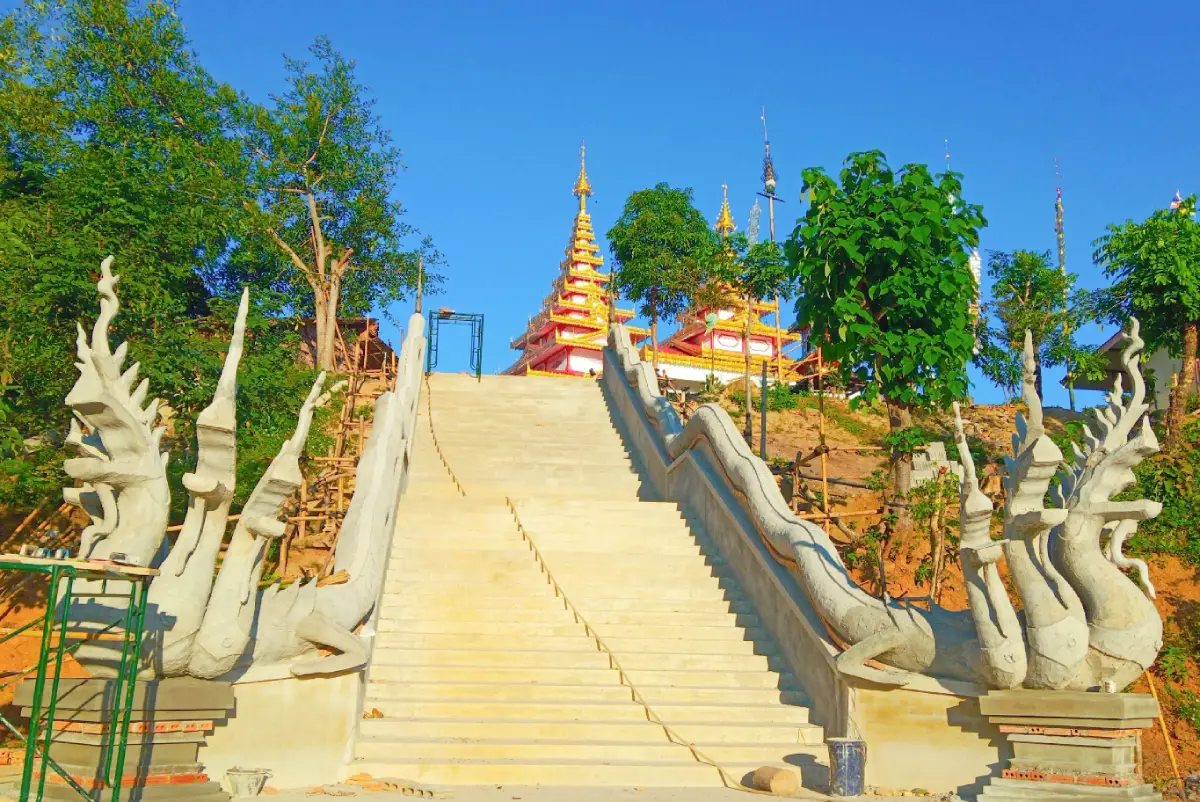
Wat Pho Thong
Operating day: Daily
Operating time: 08.00 - 17.00
Wat Pho Thong is a local Buddhist temple in Moo 5, Mon Pin Subdistrict, Fang District, Chiang Mai Province. The temple belongs to the Maha Nikaya order and was officially established in 1940. The available temple information names Phra Inson Inthawiro as the abbot. Wat Pho Thong is a meaningful community temple connected with Ban Lan, local agriculture, water-resource communities, Lanna Buddhist life, and Tai Yai cultural tradition in northern Fang. Its value lies not in large-scale tourism, but in its role as a living village temple and a venue for community merit-making and cultural preservation.
Mon Pin Subdistrict is an important community area in Fang District. It includes agricultural villages, the Mae Mao water system, local temples, highland ethnic communities, and cultural-natural travel routes. Temples in Mon Pin, including Wat Pho Thong, Wat Prathummawas, Wat Kongkhanimit, Wat Ban Lan, Wat Muang Chum, and Wat Hua Na, form a network of community Buddhist sites that reflect the close relationship between religion, village life, and landscape.
The name “Wat Pho Thong” has strong Buddhist meaning. “Pho” refers to the Bodhi tree associated with the Buddha’s enlightenment, while “Thong” means gold and suggests auspiciousness, brightness, and sacred value. As a temple name, it evokes a place of calm faith and spiritual reflection.
Wat Pho Thong is connected with Ban Lan, a community shaped by water systems, agriculture, and local development. The Ban Lan area is associated with irrigation, water management, and Mae Mao Hydropower Dam or Ban Lan Dam. This context helps visitors understand the temple not as an isolated religious site, but as part of a living village system that includes homes, fields, water, roads, and local Buddhist practice.
The temple’s official establishment in 1940 places Wat Pho Thong among the community temples with a clear modern history in Mon Pin. In rural northern Thailand, village temples served as centers of merit-making, moral education, ceremonies, and community gatherings. Wat Pho Thong continues this role as a sacred and social space for local people.
Local temple history records that Nai Lu Chong Kawin and the villagers joined together to build the temple. This reflects an important pattern of Lanna community temples: temples are formed through collective faith. They are not simply religious buildings, but shared spiritual projects created and maintained by villagers, elders, and local supporters.
The main religious buildings recorded for Wat Pho Thong are a viharn and a merit-making hall. The viharn is used for worship and Buddhist activities, while the merit-making hall supports Dhamma listening, community ceremonies, and village religious events. These structures show the temple’s practical role as a working community temple.
The important sacred objects of the temple include various Buddha images. In a village temple, Buddha images are not only religious art. They are the center of local faith, used in Buddhist holy day worship, annual ceremonies, family merit-making, and community rituals. Visitors should pay respect quietly and behave with modesty inside temple areas.
The temple land and boundary are connected with private land, public roads, the village area, and public space. This shows that the temple is located within the everyday geography of the community. Wat Pho Thong functions as a shared sacred space in the middle of village life, rather than a temple separated from local use.
Phra Inson Inthawiro is named in the available information as the abbot of Wat Pho Thong. In a community temple, an abbot’s role includes maintaining the temple, leading religious activities, guiding local merit-making, and helping the temple remain a calm and respectful place for villagers and visitors.
Wat Pho Thong serves as a spiritual center of Ban Lan. Local people can come to the temple for Buddhist holy days, merit-making, Dhamma listening, and annual ceremonies. A village temple of this type helps connect elders, children, families, farmers, and local devotees through shared Buddhist activity.
One of the most important cultural traditions connected with Wat Pho Thong is the Poi Thian ceremony after the end of Buddhist Lent. The ceremony was held at Wat Pho Thong, Moo 5, Ban Lan, Mon Pin Subdistrict. Poi Thian, also known as Poi Loen Sip Et or Poi Ok Wa, is a Tai Yai tradition associated with the end of Buddhist Lent and the celebration of the Buddha’s return to the human world after teaching his mother in Tavatimsa heaven.
A key feature of the Poi Thian tradition is the making of Chong Phara, or a ceremonial castle-like structure made with bamboo, mulberry paper, colored paper, silver and gold paper, and decorative lights. Villagers bring the Chong Phara to the temple or display it in front of their homes as an act of Buddhist devotion. This tradition expresses community faith, beauty, and the preservation of Tai Yai cultural identity.
The fact that Wat Pho Thong serves as a venue for Poi Thian shows the temple’s wider importance. It is not only a place for ordinary merit-making, but also a cultural stage where local leaders, villagers, and devotees come together to preserve tradition. The temple therefore functions as both a Buddhist sacred space and a community cultural space.
Other religious activities at Wat Pho Thong can be understood within the normal rhythm of Lanna Buddhist life. These include Buddhist holy day merit-making, Buddhist Lent, the end of Buddhist Lent, Kathin, forest-robe offerings, Salak Phat, northern Thai New Year, and Yi Peng. These events help maintain the social and religious life of the village across generations.
For visitors, the main appeal of Wat Pho Thong is its authenticity as a village temple. The temple has a documented history, a viharn, a merit-making hall, Buddha images, and a meaningful connection with the Poi Thian tradition. It is not a large commercial tourist attraction, but a real community temple where local faith remains active.
Wat Pho Thong is suitable for cultural travelers, temple visitors, people interested in Tai Yai traditions, and those who want to understand Mon Pin through local community life. During the Poi Thian period, visitors may see decorative Chong Phara structures, lights, community participation, and the cultural color of the end-of-Lent celebration. At other times, the temple remains suitable for quiet worship and local cultural learning.
Getting There is most convenient by private car or rental car. From Chiang Mai city, take Highway 107 north toward Fang, passing Mae Rim, Mae Taeng, Chiang Dao, and Chai Prakan before entering Fang District. From there, continue toward Mon Pin Subdistrict and Ban Lan, Moo 5. Travelers should allow enough time because Fang is far north of Chiang Mai city and the route includes long road sections.
Travelers staying in Fang District can visit Wat Pho Thong as part of a half-day or full-day Mon Pin route. A practical itinerary is to begin at Wat Pho Thong for worship and community history, continue to Mae Mao Hydropower Dam or Ban Lan Dam, and then visit Wat Phra That Chaloem Phrakiat, Nam Ru, Tha Nam Phae Piak, or the Ban Pa Kha ethnic community route.
Wat Phra That Chaloem Phrakiat or Phra That Wiang Wai is one of the most suitable nearby cultural sites. It is an important religious and cultural attraction in Mon Pin, with historical associations, viewpoint areas, and community learning value. Combining this site with Wat Pho Thong creates a balanced temple route with both village and cultural-landmark elements.
Mae Mao Hydropower Dam or Ban Lan Dam adds a water-resource dimension to the route. The reservoir and hydropower setting reflect the role of water in agriculture, local livelihood, and community development. Combining the dam with Wat Pho Thong helps travelers understand how religion, water, and farming are linked in Ban Lan.
Nam Ru and Tha Nam Phae Piak offer natural and riverside experiences in Mon Pin. These places can be added after a temple visit for travelers who want a relaxed route combining worship, local history, and natural surroundings.
Travelers interested in ethnic culture can continue toward Ban Doi Pa Kha and the Lahu ethnic tourism service center. This area reflects the cultural diversity of northern Fang, where Lanna, Tai Yai, and highland ethnic communities share the wider Mon Pin landscape.
Visitors should dress modestly, speak quietly, avoid disturbing monks or local worshippers, and ask permission before photographing ritual areas. During Poi Thian or other community ceremonies, visitors should respect the procession, Chong Phara structures, temple space, and local participants. Wat Pho Thong is a living sacred space used by the community.
Wat Pho Thong has value on several levels. Religiously, it is a Maha Nikaya temple established in 1940. Socially, it serves as a spiritual center of Ban Lan. Culturally, it preserves the Poi Thian end-of-Lent tradition with Tai Yai identity. For travel, it connects well with Ban Lan Dam, Phra That Wiang Wai, Nam Ru, Tha Nam Phae Piak, and Mon Pin’s ethnic community routes.
In summary, Wat Pho Thong is an important community temple of Mon Pin Subdistrict, Fang District, Chiang Mai Province. Its establishment in 1940, Maha Nikaya status, association with Phra Inson Inthawiro, viharn and merit-making hall, Buddha images, and role in the Poi Thian tradition make it a meaningful stop for travelers who want to understand Fang through local faith, Tai Yai culture, and village life.
| Name | Wat Pho Thong |
| Location | Moo 5, Ban Lan, Mon Pin Subdistrict, Fang District, Chiang Mai Province |
| Address | Moo 5, Mon Pin Subdistrict, Fang District, Chiang Mai 50110 |
| Highlights | A Maha Nikaya community temple of Ban Lan, officially established in 1940 and connected with the Poi Thian end-of-Lent tradition |
| History | Officially established as a temple in 1940; local temple history says Nai Lu Chong Kawin and the villagers joined together to build the temple |
| Name Origin | The name Pho Thong refers to the Bodhi tree and auspicious golden value in Buddhist symbolism |
| Distinctive Features | A Ban Lan community temple with a viharn, merit-making hall, Buddha images, and an important role in the local Poi Thian ceremony |
| Travel Information | Accessible by private car or rental car via Highway 107 on the Chiang Mai–Fang route, then continue to Mon Pin Subdistrict and Ban Lan, Moo 5 |
| Current Status | Active local Buddhist temple under the Maha Nikaya order in Mon Pin Subdistrict, Fang District, Chiang Mai Province |
| Abbot / Caretaker | Phra Inson Inthawiro |
| Religious Buildings | Viharn Merit-Making Hall |
| Important Sacred Objects | Various Buddha images within the temple |
| Community Role | Spiritual center of Ban Lan, merit-making place, Dhamma listening space, and a venue for preserving the Poi Thian end-of-Lent tradition |
| Related Traditions | Poi Thian end-of-Lent ceremony, Buddhist holy day merit-making, Buddhist Lent, end of Buddhist Lent, Kathin, forest-robe offerings, Salak Phat, northern Thai New Year, and Yi Peng in the Lanna–Tai Yai community context |
| Nearby Tourist Attractions | 1. Mae Mao Hydropower Dam / Ban Lan Dam, about 6 km 2. Wat Phra That Chaloem Phrakiat / Phra That Wiang Wai, about 8 km 3. Nam Ru, Mon Pin Subdistrict, about 10 km 4. Tha Nam Phae Piak, Mon Pin Subdistrict, about 12 km 5. Lahu Ethnic Tourism Service Center, Ban Pa Kha, about 25 km |
| Nearby Restaurants | 1. Baan Fang Coffee, about 10 km, Tel. 082-385-4599, 080-958-7918 2. PunThai Coffee Fang 2, about 12 km, Tel. 062-593-0154 3. Kha Mu Krob Kai Yang San Ma Fueang, about 14 km, Tel. 081-882-5589, 081-467-3624 4. Fang Cafe, about 16 km, Tel. 086-191-2101 5. Say Mink Cafe, about 20 km, Tel. 099-634-9797 |
| Nearby Accommodations | 1. Mon Mueang Ngam Resort, about 8 km, Tel. 082-895-3433 2. Fang Modern Hotel, about 15 km 3. Phumanee Lahu Home Hotel, about 17 km, Tel. 053-452-875 4. TonFang Hotel, about 17 km, Tel. 063-781-5425 5. Doi Pha Hom Pok National Park Guesthouse Area, about 24 km |
Frequently Asked Questions (FAQ)
Q: Where is Wat Pho Thong located?
A: Wat Pho Thong is located in Moo 5, Ban Lan, Mon Pin Subdistrict, Fang District, Chiang Mai Province 50110.
Q: What is the historical importance of Wat Pho Thong?
A: Wat Pho Thong was officially established as a temple in 1940. Local history records that Nai Lu Chong Kawin and the villagers joined together to build it.
Q: Who is the abbot of Wat Pho Thong?
A: The abbot named in the available temple information is Phra Inson Inthawiro.
Q: What should visitors see at Wat Pho Thong?
A: Visitors should see the viharn, the merit-making hall, the Buddha images, and the quiet village temple atmosphere of Ban Lan.
Q: What important tradition is connected with Wat Pho Thong?
A: Wat Pho Thong is connected with the Poi Thian end-of-Lent ceremony, a Tai Yai-influenced tradition involving decorated Chong Phara structures offered in Buddhist devotion.
Q: Who should visit Wat Pho Thong?
A: The temple is suitable for cultural travelers, temple visitors, people interested in Tai Yai tradition, and travelers who want to understand Mon Pin through local community life.
Q: What nearby places can be combined with Wat Pho Thong?
A: Nearby places include Mae Mao Hydropower Dam, Wat Phra That Chaloem Phrakiat, Nam Ru, Tha Nam Phae Piak, and the Ban Pa Kha ethnic community route.
 Category: ●Places of Worship
 Group: ●Temple
Last Update : 7 DayAgo
 Last Update : 7 DayAgo
 Click to Access the Navigation Map GPS
 Muang Chiang Mai(121)Chom Thong(47)Mae Chaem(25)Chiang Dao(33)Doi Saket(68)Mae Taeng(85)Mae Rim(69)Samoeng(29)Fang(71)Mae Ai(59)Phrao(70)San Pa Tong(103)San Kamphaeng(66)San Sai(73)Hang Dong(73)Hot(32)Doi Tao(22)Omkoi(11)Saraphi(74)Wiang Haeng(15)Chai Prakan(28)Mae Wang(32)Mae On(22)Doi Lo(34)Galyani Vadhana(1)


