
lovethailand home >North Travel Attractions >Chiang Mai Travel Attractions >Fang >Pong Nam Ron > Wat Walukaram
TL;DR: Wat Walukaram is located at Moo 3, Ban Hua Fai, Pong Nam Ron Subdistrict, Fang District, Chiang Mai Province. Highlights include A Maha Nikaya community temple of Ban Hua Fai, connected with Lanna and Tai Yai cultural layers in Pong Nam Ron Subdistrict.

Wat Walukaram
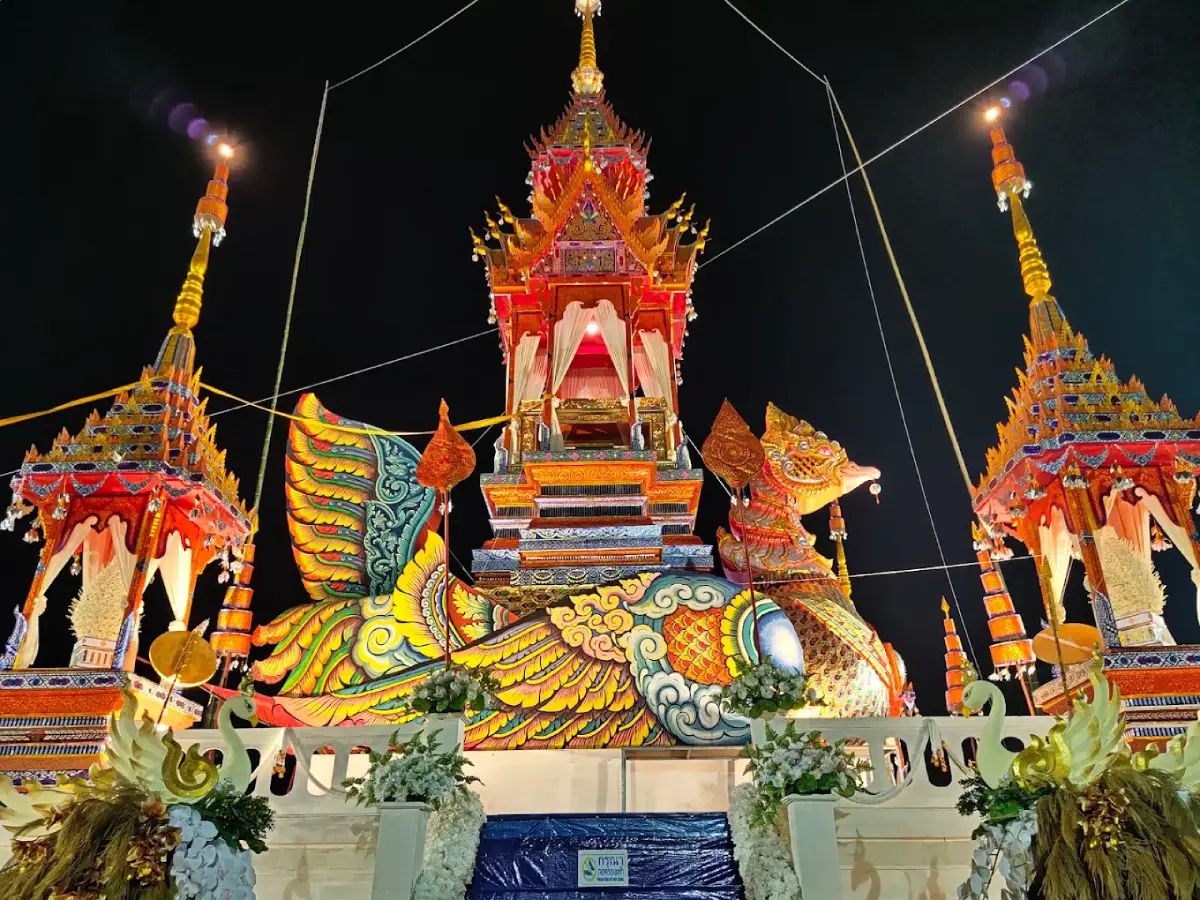
Operating day: Daily
Operating time: 08.00 - 17.00
Wat Walukaram, also known locally as Wat Hua Fai, is a community Buddhist temple in Moo 3, Ban Hua Fai, Pong Nam Ron Subdistrict, Fang District, Chiang Mai Province. The temple belongs to the Maha Nikaya order and serves as an important spiritual center for the Buddhist community of Ban Hua Fai. Wat Walukaram was officially established as a temple in 1932 and received its royal grant of Wisungkhamsima in 1998. The temple is also associated with Phra Athikan Kowito Kowito, a monk remembered in local sources for his connection with Wat Hua Fai and the cultural landscape of the Tai Yai community in northern Fang.
Wat Walukaram is located in Ban Hua Fai, Moo 3 of Pong Nam Ron Subdistrict. This village is part of a culturally layered area where Buddhist temples, Muslim religious institutions, Tai Yai heritage, Lanna traditions, agriculture, hot springs, and mountain landscapes exist close to one another. For this reason, the temple should be understood not only as a Buddhist site, but also as part of the community history of Ban Hua Fai.
The formal name of the temple is Wat Walukaram, while the local name Wat Hua Fai comes from the village where it is located. This relationship between temple name and village name is common in northern Thai communities. A village temple is usually not separate from the settlement around it. It functions as a sacred center where villagers make merit, listen to Dhamma, attend ceremonies, and maintain social ties across generations.
The community history of Wat Hua Fai traces the temple’s origins back to 1880, on the 13th waxing moon day of the 12th lunar month. The early history of the temple is linked with local settlement and relocation before the present temple site developed. In the official temple registry, Wat Walukaram was permitted as a temple in 1932. These two layers of history show that the temple has both an older community memory and an official status within the Thai monastic system.
The royal grant of Wisungkhamsima in 1998 is an important milestone. In Thai Buddhism, Wisungkhamsima is the formally granted sacred boundary used for important Sangha acts, including ordination and monastic ceremonies. This status confirms Wat Walukaram as a recognized Buddhist temple with a proper ceremonial boundary for formal religious functions.
Local temple history mentions that the building and development of Wat Hua Fai involved Phra Achan Cha Ling Ta, local elders, and the faith of the households of Ban Hua Fai. This reflects a key feature of Lanna village temples: temples are built and maintained through collective merit-making. They are not only monastic spaces, but also community projects shaped by monks, elders, householders, and generations of local supporters.
Wat Walukaram is associated with Phra Athikan Kowito Kowito, also known in local references as Khru Ba Ko Kowito. He is remembered in connection with Wat Hua Fai and Tai Yai cultural knowledge, especially the old tradition of body tattooing among Tai Yai men. This association gives the temple an added cultural dimension, linking it with living memory, ethnic identity, and local religious respect.
Ban Hua Fai and Moo 3 of Pong Nam Ron Subdistrict are culturally significant because the area includes both the northern Thai language and Tai Yai language in the local setting. Wat Walukaram therefore stands within a cultural landscape shaped by Lanna Buddhism, Tai Yai heritage, village agriculture, and community religious practice. This makes the temple more meaningful than a basic location entry in a temple list.
Pong Nam Ron Subdistrict is one of the distinctive areas of Fang District. It includes several religious sites, such as Wat Chai Mongkhon, Wat Thammikawat, Wat Walukaram, Wat Mathurawat, Wat Pityaram, and Phra That Si Maha Pho Taphotharam. The subdistrict is also known for Fang Hot Springs, Huai Mae Jai, and access to Doi Pha Hom Pok National Park. Wat Walukaram is therefore part of a wider cultural and natural travel route in northern Fang.
The role of Wat Walukaram in Ban Hua Fai is that of a spiritual and community center. Villagers use the temple for merit-making, Buddhist holy days, annual ceremonies, and community gatherings. In rural northern Thailand, a village temple often serves as a shared space for elders, families, children, farmers, and local devotees. Wat Walukaram reflects this traditional role clearly.
Visitors to Wat Walukaram should focus on its character as a working community temple. Important areas include the Wisungkhamsima boundary and ceremony area, community halls or spaces used for merit-making, and the peaceful atmosphere of Ban Hua Fai. The temple is best appreciated slowly and respectfully, with attention to how it functions in the real religious life of the village.
Wat Walukaram is not a large commercial tourist attraction. Its value lies in continuity, local memory, and community faith. Travelers interested in cultural depth will find it meaningful because the temple represents the everyday form of Lanna Buddhism at the village level. It is a place where the relationship between temple, village, and local identity can still be observed.
For travelers interested in Tai Yai heritage, Wat Walukaram and Ban Hua Fai are especially relevant. Pong Nam Ron has traces of Tai Yai language, ritual life, and cultural identity. Wat Hua Fai stands in this layered environment, where Lanna and Tai Yai traditions meet within the broader Buddhist life of northern Chiang Mai.
Important local traditions in Pong Nam Ron include the northern Thai New Year, new rice merit-making, Buddhist Lent candle offerings, Salak Phat merit-making, Yi Peng, Poi Luang, and the Poi Thian tradition of Thai people of Tai Yai descent. As the Buddhist temple of Moo 3, Wat Walukaram belongs to this broader cycle of community merit-making and religious observance.
Wat Walukaram has also served as a venue for the Tang Tham Luang Thet Mahachat tradition of Pong Nam Ron. The Mahachat sermon tradition is important in Lanna and Thai Buddhist culture because it centers on the Vessantara Jataka, a story of generosity, compassion, and moral perfection. Hosting such an event shows that Wat Walukaram functions not only as a village temple, but also as a religious gathering place for the wider subdistrict community.
The atmosphere of Wat Walukaram is calm and local. Visitors should dress modestly, speak quietly, avoid disturbing monks or villagers, and ask for permission before photographing ritual areas. The temple should be approached as a living sacred space used by the community, not as a simple photo stop.
Getting There is most convenient by private car or rental car. From Chiang Mai city, take Highway 107 north toward Fang, passing Mae Rim, Mae Taeng, Chiang Dao, and Chai Prakan before entering Fang District. From there, continue toward Pong Nam Ron Subdistrict and Ban Hua Fai, Moo 3. The route can be combined with Fang Hot Springs, Huai Mae Jai, Doi Pha Hom Pok National Park, Wat Thammikawat, Wat Mathurawat, Wat Pityaram, and Phra That Si Maha Pho Taphotharam.
Travelers starting from Chiang Mai city should leave early because Fang is far north of the provincial capital and the route includes mountain sections. Those already staying in Fang or near Fang Hot Springs can visit Wat Walukaram as part of a half-day cultural route.
A practical itinerary is to begin at Wat Walukaram for worship and community history, then continue to Fang Hot Springs for a natural hot spring experience, visit Huai Mae Jai for a cool stream setting, and continue to Doi Pha Hom Pok National Park or nearby community temples. This route combines village Buddhism, Tai Yai cultural context, and natural attractions in one day.
Fang Hot Springs is one of the most important nearby attractions. The area has natural hot spring pools and mineral bathing facilities within the Doi Pha Hom Pok National Park setting. Combining Wat Walukaram with Fang Hot Springs creates a balanced route of religion, community history, and nature.
Huai Mae Jai is another nearby natural stop. The stream is known for its cool, clear water and shaded natural atmosphere near the hot spring area. The contrast between hot spring water and a cool forest stream adds another layer to a trip that begins with a visit to Wat Walukaram.
Doi Pha Hom Pok National Park is a major natural destination in northern Fang, known for its mountainous landscape, forests, streams, and cool climate. Visiting Wat Walukaram before continuing to the national park gives travelers a broader understanding of Pong Nam Ron as both a cultural and natural landscape.
Wat Walukaram is suitable for cultural travelers, temple visitors, local history enthusiasts, and people interested in Lanna and Tai Yai cultural connections. It is not a place for rushed sightseeing. It is best visited with time to understand the temple’s relationship with Ban Hua Fai and the wider Pong Nam Ron community.
The temple has value on several levels. Religiously, it is a Maha Nikaya temple with Wisungkhamsima. Historically, it has an official establishment date in 1932 and a deeper community memory linked to 1880. Socially, it is a spiritual center of Ban Hua Fai. Culturally, it stands in an area where Lanna and Tai Yai traditions meet. For tourism, it connects well with Fang Hot Springs, Huai Mae Jai, and Doi Pha Hom Pok National Park.
In summary, Wat Walukaram or Wat Hua Fai is an important community temple of Moo 3, Pong Nam Ron Subdistrict, Fang District, Chiang Mai Province. Its official establishment in 1932, royal grant of Wisungkhamsima in 1998, community history connected with Ban Hua Fai, association with Phra Athikan Kowito Kowito, and location within a Lanna–Tai Yai cultural landscape make it a meaningful stop for travelers who want to understand Fang beyond its natural attractions.
| Name | Wat Walukaram / Wat Hua Fai |
| Location | Moo 3, Ban Hua Fai, Pong Nam Ron Subdistrict, Fang District, Chiang Mai Province |
| Address | Moo 3, Pong Nam Ron Subdistrict, Fang District, Chiang Mai 50110 |
| Highlights | A Maha Nikaya community temple of Ban Hua Fai, connected with Lanna and Tai Yai cultural layers in Pong Nam Ron Subdistrict |
| History | Community history traces Wat Hua Fai back to 1880, while the official temple registry records its establishment in 1932 and royal grant of Wisungkhamsima in 1998 |
| Name Origin | Wat Walukaram is the formal temple name, while Wat Hua Fai is the local name connected with Ban Hua Fai, Moo 3 |
| Distinctive Features | A community temple in an area shaped by Lanna and Tai Yai heritage, suitable for worship, local history learning, and cultural travel in Pong Nam Ron |
| Travel Information | Accessible by private car or rental car via Highway 107 on the Chiang Mai–Fang route, then continue to Pong Nam Ron Subdistrict and Ban Hua Fai, Moo 3 |
| Current Status | Active local Buddhist temple under the Maha Nikaya order in Pong Nam Ron Subdistrict, Fang District, Chiang Mai Province |
| Abbot / Caretaker | Phra Athikan Kowito Kowito |
| Main Areas / Things To See | Wisungkhamsima and ceremony area Community hall or merit-making area Village temple atmosphere of Ban Hua Fai Lanna and Tai Yai cultural context of Moo 3 |
| Community Role | Spiritual center of the Buddhist community in Ban Hua Fai, merit-making space for villagers, and a cultural link between Lanna and Tai Yai community life |
| Related Traditions | Community Buddhist events including northern Thai New Year, new rice merit-making, Buddhist Lent candle offerings, Salak Phat, Yi Peng, Poi Luang, and the Tai Yai Poi Thian tradition in the Pong Nam Ron context |
| Local Information Contact | Pong Nam Ron Subdistrict Administrative Organization, Tel. 053-451234, 053-451213, 053-451595 |
| Nearby Tourist Attractions | 1. Fang Hot Springs, about 8 km 2. Huai Mae Jai, about 8 km 3. Doi Pha Hom Pok National Park, about 9 km 4. Phra That Si Maha Pho Taphotharam Monastic Site, about 4 km 5. Wat Thammikawat / Ban Don, about 6 km |
| Nearby Restaurants | 1. Say Mink Cafe, about 6 km, Tel. 099-634-9797 2. PunThai Coffee Fang 2, about 12 km, Tel. 062-593-0154 3. Baan Fang Coffee, about 14 km, Tel. 082-385-4599, 080-958-7918 4. Kha Mu Krob Kai Yang San Ma Fueang, about 16 km, Tel. 081-882-5589, 081-467-3624 5. Fang Cafe, about 18 km, Tel. 086-191-2101 |
| Nearby Accommodations | 1. Doi Pha Hom Pok National Park Guesthouse Area, about 9 km 2. SD Guest House, about 12 km, Tel. 081-784-8510 3. Fang Modern Hotel, about 20 km, Tel. 086-439-1843 4. Phumanee Lahu Home Hotel, about 22 km, Tel. 053-452-875 5. TonFang Hotel, about 22 km, Tel. 063-781-5425 |
Frequently Asked Questions (FAQ)
Q: Where is Wat Walukaram located?
A: Wat Walukaram is located in Moo 3, Ban Hua Fai, Pong Nam Ron Subdistrict, Fang District, Chiang Mai Province.
Q: What is another name for Wat Walukaram?
A: Wat Walukaram is also locally known as Wat Hua Fai because it is located in Ban Hua Fai.
Q: What is the historical importance of Wat Walukaram?
A: Community history traces Wat Hua Fai back to 1880, while the official temple registry records Wat Walukaram as established in 1932 and granted Wisungkhamsima in 1998.
Q: Which Buddhist order does Wat Walukaram belong to?
A: Wat Walukaram is a local Buddhist temple under the Maha Nikaya order.
Q: Who is the abbot of Wat Walukaram?
A: The abbot associated with Wat Walukaram in the checked temple information is Phra Athikan Kowito Kowito.
Q: Who should visit Wat Walukaram?
A: The temple is suitable for cultural travelers, temple visitors, local history enthusiasts, and travelers interested in Lanna and Tai Yai community heritage.
Q: What nearby places can be combined with Wat Walukaram?
A: Nearby places include Fang Hot Springs, Huai Mae Jai, Doi Pha Hom Pok National Park, Phra That Si Maha Pho Taphotharam, and Wat Thammikawat.
 Category: ●Places of Worship
 Group: ●Temple
Last Update : 7 HourAgo
 Last Update : 7 HourAgo
 Click to Access the Navigation Map GPS
 Muang Chiang Mai(121)Chom Thong(47)Mae Chaem(25)Chiang Dao(33)Doi Saket(68)Mae Taeng(85)Mae Rim(69)Samoeng(29)Fang(71)Mae Ai(62)Phrao(70)San Pa Tong(105)San Kamphaeng(66)San Sai(73)Hang Dong(74)Hot(32)Doi Tao(22)Omkoi(11)Saraphi(74)Wiang Haeng(15)Chai Prakan(28)Mae Wang(32)Mae On(22)Doi Lo(34)Galyani Vadhana(1)


