
lovethailand home >North Travel Attractions >Chiang Mai Travel Attractions >Doi Saket >Samran Rat > Wat San Pong
TL;DR: Wat San Pong is located at Ban San Pong, Moo 8, Samran Rat Subdistrict, Doi Saket District, Chiang Mai Province, open Daily, hours 08.00 – 17.00.

Wat San Pong
Open Days: Daily
Opening Hours: 08.00 – 17.00
Wat San Pong is a Mahanikaya community temple in Ban San Pong, Moo 8, Samran Rat Subdistrict, Doi Saket District, Chiang Mai. It was officially established in 1779 and received its royal consecrated boundary in 2009. The abbot is Phra Khru Winai Thon Chalermphon Sutthamedhi. The temple is a spiritual center of Ban San Pong and a quiet stop for visitors interested in local Lanna village temples.
Wat San Pong is located in Ban San Pong, Moo 8, Samran Rat Subdistrict, Doi Saket District, Chiang Mai Province. It is a local Buddhist temple under the Mahanikaya order. The temple was officially established in 1779 and received its royal consecrated boundary in 2009. The abbot is Phra Khru Winai Thon Chalermphon Sutthamedhi. Wat San Pong is an important spiritual center of Ban San Pong and one of the long-standing community temples in Samran Rat.
Ban San Pong is one of the eight villages in Samran Rat Subdistrict, Doi Saket District. The subdistrict includes Ban Rong Ton Kham, Ban San Ton Muang Nuea, Ban Pa Sak Luang, Ban Phan Lang, Ban Pa Mueat, Ban San Makiang, Ban Ton Phueng, and Ban San Pong. This area lies in the southern part of Doi Saket and still retains a semi-rural atmosphere, with local homes, agricultural land, community roads, temples, restaurants, and routes connecting Chiang Mai city, Doi Saket, San Kamphaeng, and San Sai.
The name “San Pong” is connected with Lanna-style local geography. “San” often refers to a raised ridge or local landform, while “Pong” can refer to a mineral soil area or distinctive natural ground. As a temple name, Wat San Pong reflects both the landscape and the village identity of Ban San Pong.
The temple’s establishment in 1779 gives it more than two centuries of local history. A temple with this depth of history is not only a religious site but also a witness to settlement, community development, and the continuity of Buddhist life in Doi Saket. Wat San Pong should therefore be understood as a historic community temple rather than only a simple map destination.
The temple received its royal consecrated boundary in 2009. In Thai Buddhist practice, a consecrated boundary is important for formal monastic acts that must be performed within a properly defined sacred area. This confirms the temple’s religious status and its ability to support important Sangha activities in the community.
Phra Khru Winai Thon Chalermphon Sutthamedhi serves as the abbot of Wat San Pong. In a local community temple, the abbot’s role is essential for maintaining religious activities, caring for the temple grounds, guiding devotees, and preserving the relationship between monks and villagers. This helps the temple remain a living spiritual center rather than only a historical site.
Wat San Pong is part of the wider network of Samran Rat community temples. Nearby temples include Wat San Ton Muang Nuea, Wat Pa Sak Luang, Wat Phan Lang, Wat Pa Mueat, and Wat San Pong. Together, these temples support Buddhist ceremonies, merit-making, annual traditions, and community gatherings across the subdistrict.
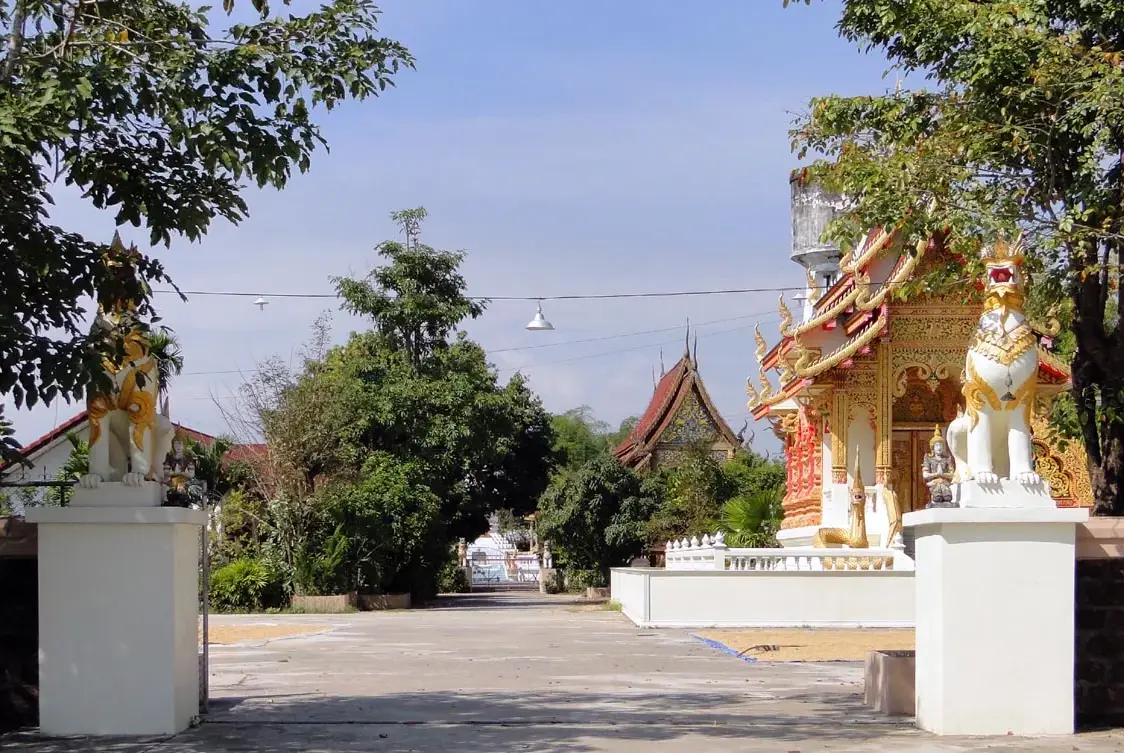
Publicly available details about specific buildings inside Wat San Pong are limited, but the temple continues to function as an active community Buddhist site. The temple grounds, courtyard, worship areas, and community activity areas are important parts of its religious role. Visitors should approach the temple as a living village temple, not merely as a sightseeing location.
Wat San Pong serves the Ban San Pong community on several levels. Religiously, it is a place for worship, offerings to monks, sermons, and Buddhist holy day observances. Socially, it is a gathering place for villagers during merit-making, family rites, and community occasions. Culturally, it helps preserve the northern Thai relationship between home, temple, elders, youth, and annual Buddhist traditions.
Annual traditions connected with community temples in Samran Rat and Doi Saket include Buddhist holy day merit-making, offerings to monks, Kathin ceremonies, forest robe offerings, Buddhist Lent, Ok Phansa, Yi Peng, Tan Kuai Salak, Lanna New Year, elder water-pouring ceremonies, and other Buddhist calendar activities. These events allow villagers to support the temple, gather as a community, and pass Buddhist values to younger generations.
The main appeal of Wat San Pong is its identity as a quiet village temple with a long local history. It is not a large commercial tourist attraction. Its value lies in its simplicity, community role, local faith, and connection with the everyday life of Ban San Pong.
Important things to appreciate at Wat San Pong include the temple grounds, courtyard, worship areas, and the surrounding community atmosphere of Ban San Pong. Visitors should approach the temple calmly, respect local worshippers, and understand the temple as a living part of the village.
Wat San Pong is suitable for travelers interested in Lanna community temples, old temples in Doi Saket, quiet village settings, and temple routes in Samran Rat. It offers a calm and authentic view of how local temples continue to serve Buddhist communities around Chiang Mai.
Travel to Wat San Pong is most convenient by private car, rental car, or local hired transport. From Chiang Mai city, use the Chiang Mai–Doi Saket route or connecting roads through Doi Saket and San Kamphaeng, then continue into Ban San Pong, Moo 8, Samran Rat. A private vehicle makes it easier to combine the temple with nearby temples, restaurants, accommodations, and natural attractions.
A practical route can begin at Wat San Pong for worship and a quiet village temple visit. From there, visitors can continue to Wat Pa Sak Luang, Wat San Ton Muang Nuea, Wat Phan Lang, Wat Pa Mueat, or Wat Phra That Doi Saket. For a broader nature-oriented route, Huai Hong Khrai Royal Development Study Center and Mae Kuang Udom Thara Reservoir can also be included.
Nearby dining options include local restaurants, cafés, steak houses, and Thai food shops in Samran Rat and nearby Doi Saket areas. Useful choices include Tam Sang Ai Fiw, No.1 Steak House, 19 cha&cof, Khao Ka Pao by sasipawee, and Chom Phan Pla Restaurant. These stops make it easy to combine the temple with a practical half-day food-and-temple route.
Nearby accommodation options include Smile Homna Resthouse, Ratchawang Inn Art Village, Enchanted Garden Bungalows, Baan Chai Thung Resort, and Tao Garden Health Spa & Resort. Travelers who want easy access to Samran Rat may prefer accommodation near the main road, while those seeking a quieter setting may choose lodging deeper in Doi Saket.
Visitors should follow normal Thai temple etiquette. Dress modestly, keep voices low, remove shoes where required, respect monks and local worshippers, avoid disturbing ceremonies, and do not enter private monastic areas without permission. If visiting during a local merit-making event, follow the temple’s space arrangements and help keep the temple clean.
In summary, Wat San Pong is a historic Mahanikaya community temple in Ban San Pong, Moo 8, Samran Rat Subdistrict, Doi Saket District, Chiang Mai. Established in 1779 and granted its royal consecrated boundary in 2009, the temple is important for its long village history, local Buddhist role, and continuing connection with the Ban San Pong community. It is a valuable stop for travelers who want to understand Doi Saket through quiet village temples and Lanna faith.
| Name | Wat San Pong |
| Thai Name | วัดสันโป่ง |
| Location | Ban San Pong, Moo 8, Samran Rat Subdistrict, Doi Saket District, Chiang Mai Province |
| Address | Moo 8, Samran Rat Subdistrict, Doi Saket District, Chiang Mai 50220, Thailand |
| Temple Type | Local Buddhist temple under the Mahanikaya order |
| History | Officially established as a temple in 1779 and granted its royal consecrated boundary in 2009 |
| Abbot / Caretaker | Phra Khru Winai Thon Chalermphon Sutthamedhi |
| Highlights | A historic community temple of Ban San Pong with more than 200 years of local Buddhist history and a quiet Samran Rat village setting |
| Local Importance | A spiritual center of Ban San Pong, supporting worship, sermons, merit-making, family rites, and annual Buddhist activities |
| Community Role | A place of faith for Ban San Pong villagers, used for Buddhist ceremonies, community merit-making, and local religious gatherings |
| Traditions / Merit-Making | Buddhist holy day merit-making, offerings to monks, Kathin ceremonies, forest robe offerings, Buddhist Lent, Ok Phansa, Yi Peng, Tan Kuai Salak, Lanna New Year, elder water-pouring ceremonies, and annual Buddhist activities in the community context |
| Main Areas / Zones | Temple grounds, courtyard, worship areas, and community religious activity spaces |
| Travel Information | From Chiang Mai city, use the Chiang Mai–Doi Saket route or connecting roads through Doi Saket and San Kamphaeng, then continue into Ban San Pong, Moo 8, Samran Rat. Private car, rental car, or local hired transport is recommended. |
| Current Status | An active community Buddhist temple listed in temple references, travel sources, map sources, and current local information sources |
| Open Days | Daily |
| Opening Hours | 08.00 – 17.00 |
| Nearby Tourist Attractions | 1. Wat Pa Sak Luang, about 4 km 2. Wat San Ton Muang Nuea, about 5 km 3. Wat Phan Lang, about 5 km 4. Wat Pa Mueat, about 6 km 5. Wat Phra That Doi Saket, about 8 km 6. Huai Hong Khrai Royal Development Study Center, about 13 km 7. Mae Kuang Udom Thara Reservoir, about 15 km |
| Nearby Restaurants | 1. Tam Sang Ai Fiw, about 3 km 2. No.1 Steak House, about 4 km 3. 19 cha&cof, about 5 km, Tel. 089-854-9603, 094-297-9205 4. Khao Ka Pao by sasipawee, about 5 km, Tel. 094-803-6617 5. Chom Phan Pla Restaurant, about 6 km, Tel. 085-547-1027, 086-435-5572 |
| Nearby Accommodations | 1. Smile Homna Resthouse, about 1 km 2. Ratchawang Inn Art Village, about 5 km 3. Enchanted Garden Bungalows, about 8 km, Tel. 088-251-3121 4. Baan Chai Thung Resort, about 10 km, Tel. 098-014-3383 5. Tao Garden Health Spa & Resort, about 12 km, Tel. 084-028-0230 |
Frequently Asked Questions (FAQ)
Q: Where is Wat San Pong located?
A: Wat San Pong is located in Ban San Pong, Moo 8, Samran Rat Subdistrict, Doi Saket District, Chiang Mai Province.
Q: What type of temple is Wat San Pong?
A: Wat San Pong is a local Buddhist temple under the Mahanikaya order.
Q: What is historically important about Wat San Pong?
A: The temple was officially established in 1779 and received its royal consecrated boundary in 2009, making it a long-standing community temple of Ban San Pong and Samran Rat.
Q: Who is the abbot of Wat San Pong?
A: The abbot of Wat San Pong is Phra Khru Winai Thon Chalermphon Sutthamedhi.
Q: Who should visit Wat San Pong?
A: The temple is suitable for travelers interested in quiet Lanna community temples, old temples in Doi Saket, village Buddhist life, and Samran Rat temple routes.
Q: What nearby places can be visited with Wat San Pong?
A: Nearby places include Wat Pa Sak Luang, Wat San Ton Muang Nuea, Wat Phan Lang, Wat Pa Mueat, Wat Phra That Doi Saket, Huai Hong Khrai Royal Development Study Center, and Mae Kuang Udom Thara Reservoir.
Q: What are the opening days and hours of Wat San Pong?
A: Wat San Pong is listed as open daily from 08.00 to 17.00.
 Category: ●Places of Worship
 Group: ●Temple
Last Update : 2 DayAgo
 Last Update : 2 DayAgo
 Click to Access the Navigation Map GPS
 Muang Chiang Mai(121)Chom Thong(47)Mae Chaem(25)Chiang Dao(33)Doi Saket(68)Mae Taeng(85)Mae Rim(69)Samoeng(29)Fang(71)Mae Ai(62)Phrao(70)San Pa Tong(105)San Kamphaeng(66)San Sai(73)Hang Dong(74)Hot(32)Doi Tao(22)Omkoi(11)Saraphi(74)Wiang Haeng(15)Chai Prakan(28)Mae Wang(32)Mae On(22)Doi Lo(34)Galyani Vadhana(1)


