
lovethailand home >North Travel Attractions >Chiang Mai Travel Attractions >Doi Saket >San Pu Loei > Wat Chai Sathan (Wat Pa Sao Noi)
TL;DR: Wat Chai Sathan (Wat Pa Sao Noi) is located at Ban Pa Sao Noi, Moo 12, San Pu Loei Subdistrict, Doi Saket District, Chiang Mai Province.
Wat Chai Sathan (Wat Pa Sao Noi)
Operating day: Daily
Operating time: 08.00 - 17.00
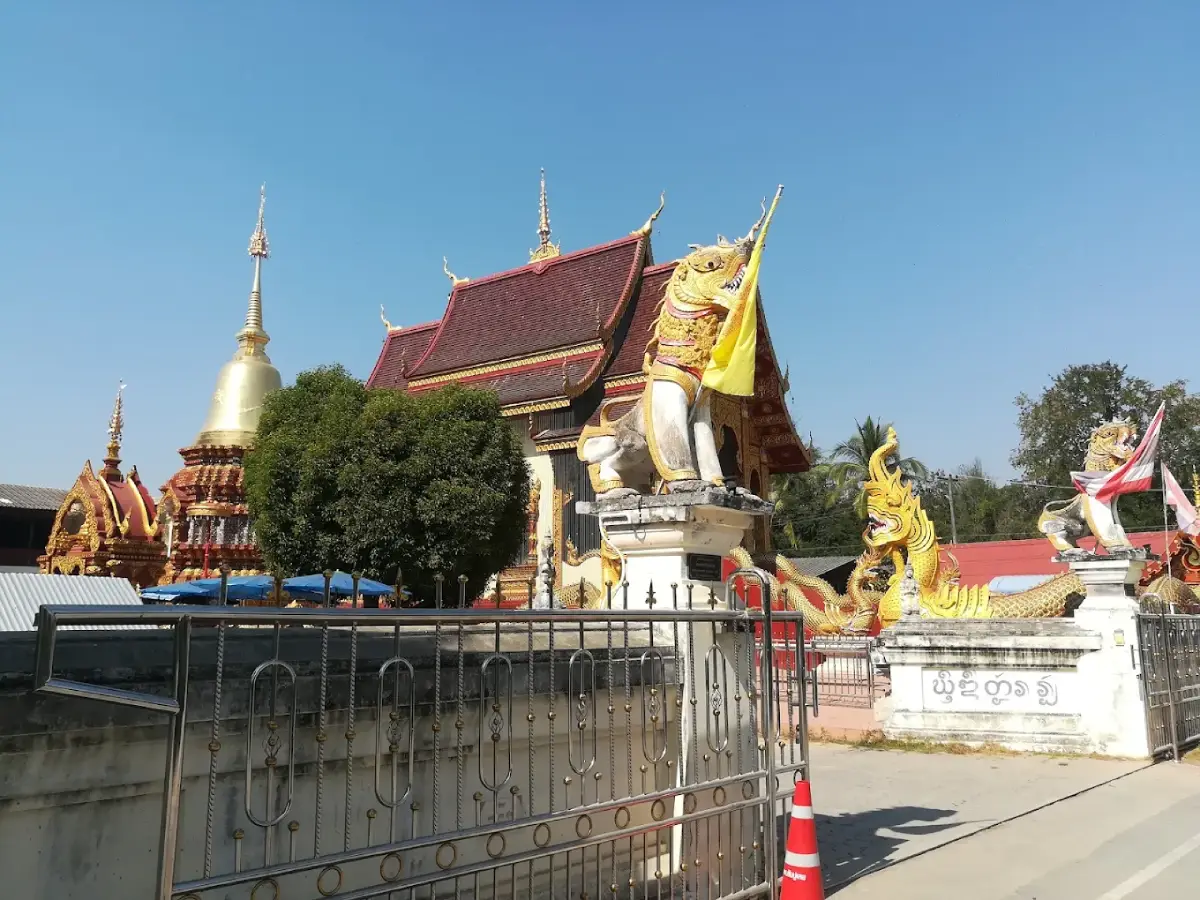
Wat Chai Sathan, also known as Wat Pa Sao Noi, is located at No. 65, Ban Pa Sao Noi, Moo 12, San Pu Loei Subdistrict, Doi Saket District, Chiang Mai Province. It is a local Buddhist temple under the Mahanikaya order and one of the important spiritual and cultural centers of the San Pu Loei community. The temple was established in 1897 after being restored from an ancient abandoned temple formerly known as Wat Pa Sao. Its history, Buddhist buildings, sacred images, Sunday Buddhist study center, and Lanna cultural activities make it a meaningful community temple in Doi Saket.
The name Pa Sao is closely connected with the local landscape and community memory. In the past, the area was covered with pa sao trees and was known as a shaded resting place for travelers. Before modern roads, people traveled by foot and by ox cart, and this wooded area served as a resting point before continuing toward Chiang Mai. The temple’s identity therefore comes not only from religious history but also from the village’s landscape, routes, and local memory.
Wat Chai Sathan is also part of a naming tradition that distinguishes two closely related Pa Sao temples. The temple located to the north was once called Wat Nuea, or the northern temple. Later, because it had a smaller group of devotees than the nearby temple, it became known as Wat Noi, and eventually Wat Pa Sao Noi. This local naming history shows how temple identity in northern Thai villages is tied to geography, community participation, and the everyday language of local people.
The temple land covers 4 rai and 75 square wah. Its northern boundary adjoins Ban Pa Sao School, the southern boundary adjoins rice fields, the eastern boundary adjoins a public road, and the western boundary adjoins Ban Pa Sao School. This location places the temple at the center of village life, between school, farmland, local roads, and residential areas. Wat Chai Sathan therefore functions as a shared space for religion, learning, community gathering, and cultural activities.
The temple received its royal consecrated boundary around 1937. The boundary measures 9.90 meters wide and 17 meters long. In Thai Buddhist practice, a consecrated boundary is essential for formal monastic acts that must be conducted in a properly defined sacred area. This confirms the temple’s religious status and its ability to serve both Sangha and community functions.
Important buildings at Wat Chai Sathan include the ubosot, sermon hall, chanting hall, monks’ residences, viharn, and multipurpose pavilion. These buildings show the full working structure of a village temple. The ubosot supports formal monastic ceremonies. The sermon hall and multipurpose pavilion support merit-making and community events. The chanting hall and viharn serve religious practice, while the monks’ residences support monastic life.
Important sacred objects include a gilded stucco Buddha image and a bronze Buddha image in the Mara Vijaya posture. The Mara Vijaya posture represents the Buddha’s victory over obstacles and defilements, making it especially meaningful in a temple named Chai Sathan, a name associated with victory and auspiciousness. Visitors should pay respect to these Buddha images before spending time around the temple grounds.
The temple’s abbot lineage reflects continuity between monastic leadership and village faith. The first known abbot was Phra Athikan Kling, who restored the abandoned temple and invited villagers to re-establish it. He was followed by several abbots, including Phra Athikan Dee, Phra Boonsom, Phra Ai, Phra Khammun, Phra Boonmee, Phra Boontham, Phra Athikan Duangta, Phra Samak, Phra Inpan, Phra Sawat, and Phra Athikan Niwet Paphangkaro. The current abbot is Phra Khru Praphat Chaiyakhun, who has served since 1980.
Phra Khru Praphat Chaiyakhun is an important religious figure in San Pu Loei. He is the abbot of Wat Chai Sathan, the ecclesiastical chief of San Pu Loei Zone 2, and the chair of the Wat Chai Sathan moral community. He is also recognized locally for Buddhist ritual knowledge and religious leadership. His role has helped the temple become not only a place of worship but also a center for moral education, Lanna culture, and community development.
One of the temple’s most important roles is its Sunday Buddhist study center. The center was created to teach Buddhism, ethics, discipline, and moral values to local youth. This makes Wat Chai Sathan more than a place for occasional merit-making. It is also a learning space where children and young people can develop responsibility, respect, gratitude, and understanding of Buddhist principles.
Wat Chai Sathan is also connected with Lanna cultural transmission, especially through youth groups practicing the Sabad Chai drum tradition. The Sabad Chai drum is a powerful northern Thai performing art associated with rhythm, ceremony, and communal identity. By supporting youth learning in this field, the temple helps preserve Lanna cultural heritage and passes it from one generation to the next.
Annual merit-making and local traditions associated with the temple include Buddhist holy day observances, offerings to monks, Kathin ceremonies, forest robe offerings, Buddhist Lent, Ok Phansa, Tan Kuai Salak, Yi Peng, Lanna New Year, water-pouring ceremonies for elders, and Poi Luang. Poi Luang is particularly important in Lanna culture because it is a major celebration held to mark the completion of temple buildings or religious structures.
Wat Chai Sathan serves the Pa Sao Noi community on several levels. Religiously, it is a place for worship, merit-making, sermons, and monastic ceremonies. Socially, it is a gathering point for villagers during temple events. Culturally, it preserves Lanna performing arts, Buddhist education, and local traditions. These roles make the temple a living community institution rather than a simple sightseeing location.
Visitors should observe the temple’s ubosot, viharn, sermon hall, chanting hall, multipurpose pavilion, sacred Buddha images, temple courtyard, and the atmosphere of the surrounding village. The temple is especially suitable for travelers who are interested in local community temples, Lanna culture, Buddhist education, village history, and traditional northern Thai festivals such as Poi Luang.
Travel to Wat Chai Sathan is most convenient by private car, rental car, or local hired transport. From Chiang Mai city, visitors can use Highway 121 or local routes toward San Pu Loei and Tha Rua, then continue to Ban Pa Sao Noi, Moo 12. The temple is near Ban Pa Sao School and not far from Wat Pa Sao Luang. A private vehicle makes it easier to combine the temple with nearby attractions, restaurants, and accommodation in one trip.
A practical half-day route can begin at Wat Chai Sathan for worship and local history, then continue to Wat San Pu Loei Sali Wiang Kaeo, Wat Don Chai or Wat Tha Rua, and Tha Rua Market. Travelers interested in crafts can continue to Bo Sang Umbrella Village or the umbrella-making center. With more time, the route can extend to Wat Phra That Doi Saket or Mae Kuang Udom Thara Dam.
Nearby dining options include local restaurants and cafés around Pa Sao, Tha Rua, and San Pu Loei. Useful nearby choices include Lung Boon Thai Steak, Som Tam Muen Kham Nua Tha Rua, Som Tam Kai Yang Khon Kaen Tha Rua, Tokyo Homemade Tha Rua, and Khrua Ton Som at Wan Thong Tha Rua. Nearby accommodation options include Ouychai Resort/Home Stay, Cool Vintage Doisaket, Baan Chai Thung Resort, Villa Albizia, and Tao Garden Health Spa & Resort.
Visitors should follow normal Thai temple etiquette. Dress modestly, keep voices low, remove shoes where required, respect monks and local worshippers, avoid disturbing ceremonies, and do not enter private monastic areas without permission. If visiting during a major merit-making event or Poi Luang festival, follow the temple’s space arrangements and help keep the temple clean.
In summary, Wat Chai Sathan, or Wat Pa Sao Noi, is a historic Mahanikaya community temple in Ban Pa Sao Noi, San Pu Loei, Doi Saket, Chiang Mai. Established in 1897 and granted its royal consecrated boundary around 1937, the temple has important Buddhist buildings, sacred Buddha images, an active abbot, a Sunday Buddhist study center, and strong connections with Lanna cultural preservation. It is a valuable destination for travelers who want to understand Doi Saket through living village temples, local faith, and northern Thai culture.
| Name | Wat Chai Sathan |
| Former / Local Names | Wat Pa Sao, Wat Nuea, Wat Noi, Wat Pa Sao Noi |
| Thai Name | วัดชัยสถาน |
| Location | Ban Pa Sao Noi, Moo 12, San Pu Loei Subdistrict, Doi Saket District, Chiang Mai Province |
| Address | No. 65, Ban Pa Sao Noi, Moo 12, San Pu Loei Subdistrict, Doi Saket District, Chiang Mai 50220, Thailand |
| Coordinates | Plus Code: R35H+4J2 / Ban Pa Sao Noi area approx. 18.80714, 99.07920 |
| Temple Type | Local Buddhist temple under the Mahanikaya order |
| Land Area | 4 rai, 75 square wah |
| Boundaries | North and west adjoin Ban Pa Sao School, south adjoins rice fields, and east adjoins a public road |
| History | Established in 1897 after an ancient abandoned temple named Wat Pa Sao was restored by Phra Athikan Kling and local villagers |
| Consecrated Boundary | Granted around 1937; the boundary measures 9.90 meters wide and 17 meters long |
| Abbot / Caretaker | Phra Khru Praphat Chaiyakhun |
| Ecclesiastical Role | Abbot of Wat Chai Sathan, ecclesiastical chief of San Pu Loei Zone 2, and chair of the Wat Chai Sathan moral community |
| Former Abbots In Temple Records | 1. Phra Athikan Kling 2. Phra Athikan Dee 3. Phra Boonsom 4. Phra Ai 5. Phra Khammun 6. Phra Boonmee 7. Phra Boontham 8. Phra Athikan Duangta 9. Phra Samak 10. Phra Inpan 11. Phra Sawat 12. Phra Athikan Niwet Paphangkaro |
| Important Buildings | Ubosot, sermon hall, chanting hall, monks’ residences, viharn, and multipurpose pavilion |
| Sacred Objects / Worship Points | Gilded stucco Buddha image and bronze Buddha image in the Mara Vijaya posture |
| Distinctive Features | A historic Lanna community temple with Buddhist education, Lanna cultural preservation, Sunday Buddhist study center, and Sabad Chai drum youth activities |
| Community Role | A spiritual center of Ban Pa Sao Noi, supporting worship, sermons, moral education, local culture, and village activities |
| Traditions / Merit-Making | Buddhist holy day merit-making, offerings to monks, Kathin ceremonies, forest robe offerings, Buddhist Lent, Ok Phansa, Tan Kuai Salak, Yi Peng, Lanna New Year, elder water-pouring ceremonies, and Poi Luang |
| Learning Role | Sunday Buddhist study center and moral learning space for youth and the local community |
| Main Areas / Zones | Ubosot, viharn, sermon hall, chanting hall, monks’ residences, multipurpose pavilion, courtyard, worship areas, and community activity spaces |
| Travel Information | From Chiang Mai city, use Highway 121 or the San Pu Loei–Tha Rua route, then continue to Ban Pa Sao Noi, Moo 12. Private car, rental car, or local hired transport is recommended. |
| Current Status | An active community Buddhist temple with current visitor information, Poi Luang activity records, Sunday Buddhist study center, and local cultural activities |
| Open Days | Daily |
| Opening Hours | 08.00 – 17.00 |
| Main Contact Number | 053-114-332 |
| Nearby Tourist Attractions | 1. Tha Rua Market, about 2 km 2. Phu An Ma, about 2 km 3. Baan Pla Koi Chiang Mai, about 2 km 4. Wat San Pu Loei Sali Wiang Kaeo, about 3 km 5. Chiangmai WaterSports Club, about 3 km 6. Bo Sang Umbrella Village, about 4 km 7. Chamcha Market, about 4 km |
| Nearby Restaurants | 1. Lung Boon Thai Steak, about 1 km, Tel. 089-432-1775 2. Som Tam Muen Kham Nua Tha Rua, about 2 km 3. Som Tam Kai Yang Khon Kaen Tha Rua, about 2 km, Tel. 093-172-1141 4. Tokyo Homemade Tha Rua, about 2 km, Tel. 082-635-2195 5. Khrua Ton Som at Wan Thong Tha Rua, about 2 km, Tel. 063-750-8781, 098-749-9882 |
| Nearby Accommodations | 1. Ouychai Resort/Home Stay, about 3 km, Tel. 098-074-1374 2. Cool Vintage Doisaket, about 6 km, Tel. 086-654-4566 3. Baan Chai Thung Resort, about 8 km, Tel. 098-014-3383 4. Villa Albizia, about 9 km 5. Tao Garden Health Spa & Resort, about 10 km, Tel. 084-028-0230 |
Frequently Asked Questions (FAQ)
Q: Where is Wat Chai Sathan located?
A: Wat Chai Sathan is located at No. 65, Ban Pa Sao Noi, Moo 12, San Pu Loei Subdistrict, Doi Saket District, Chiang Mai Province.
Q: Does Wat Chai Sathan have another name?
A: Yes. The temple was formerly known as Wat Pa Sao and is commonly known as Wat Pa Sao Noi. Local names also included Wat Nuea and Wat Noi.
Q: What is historically important about Wat Chai Sathan?
A: The temple was established in 1897 after Phra Athikan Kling restored an ancient abandoned temple and encouraged local villagers to re-establish it. It received its royal consecrated boundary around 1937.
Q: What important buildings are found at Wat Chai Sathan?
A: Important buildings include the ubosot, sermon hall, chanting hall, monks’ residences, viharn, and multipurpose pavilion.
Q: What sacred objects are important at Wat Chai Sathan?
A: Important sacred objects include a gilded stucco Buddha image and a bronze Buddha image in the Mara Vijaya posture.
Q: Who is the abbot of Wat Chai Sathan?
A: The abbot is Phra Khru Praphat Chaiyakhun, who has served since 1980 and also has important religious and community roles in San Pu Loei.
Q: Who should visit Wat Chai Sathan?
A: The temple is suitable for travelers interested in Lanna community temples, old temple history, Ban Pa Sao Noi, Sabad Chai drumming, Poi Luang festivals, and San Pu Loei cultural routes.
Q: What nearby places can be visited with Wat Chai Sathan?
A: Nearby places include Tha Rua Market, Wat San Pu Loei Sali Wiang Kaeo, Wat Don Chai, Bo Sang Umbrella Village, Chamcha Market, and Wat Phra That Doi Saket.
 Category: ●Places of Worship
 Group: ●Temple
Last Update : 20 HourAgo
 Last Update : 20 HourAgo
 Click to Access the Navigation Map GPS
Wat Chai Sathan (Wat Pa Sao Noi) Map
Recommend

 Muang Chiang Mai(121)Chom Thong(47)Mae Chaem(25)Chiang Dao(33)Doi Saket(68)Mae Taeng(85)Mae Rim(69)Samoeng(29)Fang(71)Mae Ai(62)Phrao(70)San Pa Tong(105)San Kamphaeng(66)San Sai(73)Hang Dong(74)Hot(32)Doi Tao(22)Omkoi(11)Saraphi(74)Wiang Haeng(15)Chai Prakan(28)Mae Wang(32)Mae On(22)Doi Lo(34)Galyani Vadhana(1)


