
lovethailand home >North Travel Attractions >Chiang Mai Travel Attractions >Doi Saket >Sanga Ban > Wat Dok Daeng
TL;DR: Wat Dok Daeng is located at Ban Dok Daeng, Moo 1, Sanga Ban Subdistrict, Doi Saket District, Chiang Mai Province, open Daily, hours 08.00 – 17.00.

Wat Dok Daeng
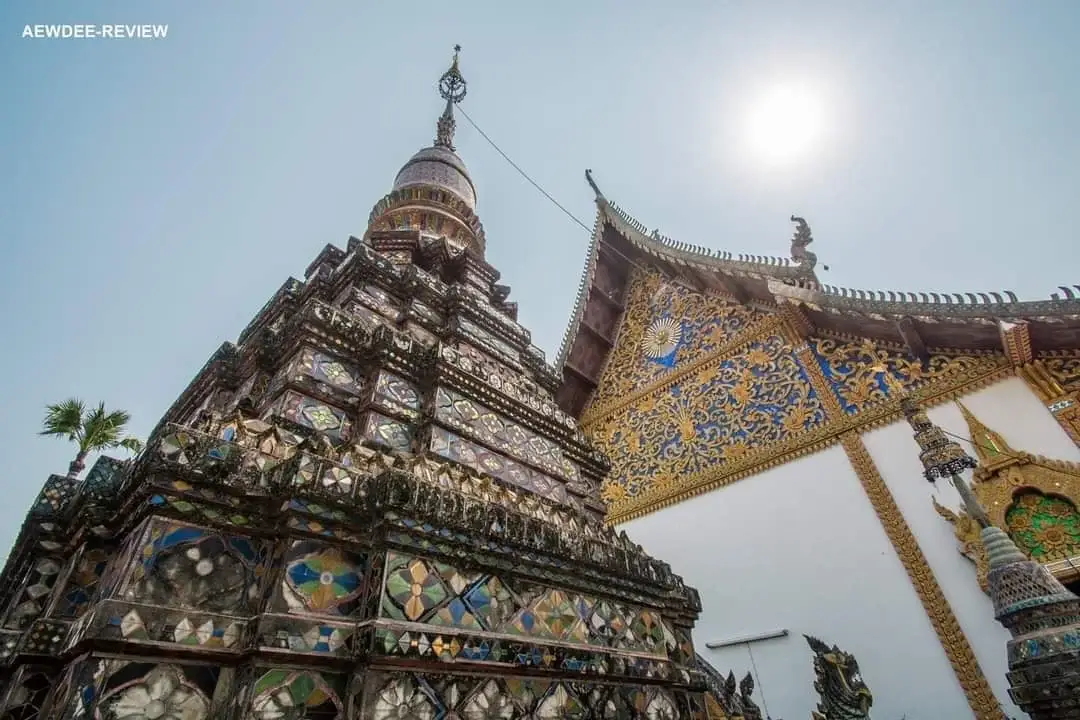
Open Days: Daily
Opening Hours: 08.00 – 17.00
Wat Dok Daeng is located at No. 71, Moo 1, Ban Dok Daeng, Sanga Ban Subdistrict, Doi Saket District, Chiang Mai Province 50220. It is a local Buddhist temple under the Mahanikaya order and an important spiritual center for the Ban Dok Daeng community. The temple was officially established in 1727 and received its royal consecrated boundary on 23 December 1968, making it one of the long-standing community temples in Doi Saket.
The temple was formerly known as Wat Mae Dok Daeng. Its name is closely connected with Ban Dok Daeng, the village where the temple is located. Although the name is now shortened to Wat Dok Daeng, it still preserves the local identity of the village. The name is simple, memorable, and strongly rooted in the local geography of Sanga Ban Subdistrict.
Wat Dok Daeng developed within a rural Lanna community. Sanga Ban Subdistrict has an agricultural background, with local livelihoods connected to rice farming, vegetable growing, and village-based rural life. In this setting, the temple has served not only as a place of worship, but also as a community center where villagers gather for ceremonies, merit-making, Buddhist teachings, and social activities.
The establishment year of 1727 gives Wat Dok Daeng strong historical significance. A temple with such a long history reflects the continuity of Buddhism in the community over many generations. It has stood through changes in village life, agricultural patterns, local transportation, and the development of Doi Saket as a district connected to Chiang Mai city and surrounding rural communities.
The temple land covers 2 rai and 2 ngan, with land title deed No. 15842. The northern and western boundaries adjoin public irrigation canals, while the southern and eastern boundaries adjoin public roads. These details show that the temple is closely embedded in the village landscape, connected with both water systems and local routes used by the community.
The royal consecrated boundary granted on 23 December 1968 is an important milestone. The boundary is 40 meters wide and 50 meters long. In Thai Buddhist practice, a consecrated boundary is required for formal monastic acts, especially those that must be performed within a properly defined sacred boundary. This confirms the temple’s religious completeness and its ability to support formal Buddhist ceremonies.
The abbot of Wat Dok Daeng is Phra Athikan Kamphon Kunwaro. In a community temple, the abbot’s role is not limited to managing the temple grounds. The abbot also leads religious activities, supports merit-making traditions, maintains the relationship between monks and villagers, and helps keep the temple functioning as a spiritual center for the local community.
The temple’s historical records also mention several former abbots, including Phra Athikan Insom Khantharoso, Phra Athikan Duangdi Inthasumo, and Phra Athikan Prasert Charuwanno. These names reflect the continuity of temple administration and the ongoing role of monks in sustaining Buddhist life in Ban Dok Daeng.
Important monastic buildings at Wat Dok Daeng include a sermon hall, a multipurpose hall, a monks’ dining hall, and a Tipitaka hall. These buildings represent the practical life of a village temple. The sermon hall and multipurpose hall support religious and community events. The dining hall supports monastic daily life. The Tipitaka hall reflects the importance of preserving Buddhist teachings.
Wat Dok Daeng also has a history of educational and community reading activities. The temple had a preschool training center that opened in 1983, as well as a newspaper reading area. This shows that the temple once played a broader role in local learning and public information, consistent with the traditional role of Thai temples as centers of religion, education, and community life.
Sanga Ban Subdistrict has several temples, and Wat Dok Daeng is part of this local Buddhist network. Temples in rural communities do not function only on Buddhist holy days. They support merit-making, annual traditions, public gatherings, and the social rhythm of village life. As the temple of Ban Dok Daeng, Wat Dok Daeng has its own role in serving the religious and social needs of Moo 1.
The main appeal of Wat Dok Daeng is its quiet community atmosphere. Visitors can experience a local temple that remains close to the daily life of villagers. The temple is not a large tourist landmark, but it is meaningful for those who want to understand local Buddhist life in Doi Saket beyond the better-known attractions.
Important things to observe at the temple include the temple grounds, courtyard, sermon hall, multipurpose hall, monks’ dining hall, Tipitaka hall, and the village setting around the temple. Visitors should take time to pay respect, make merit, and appreciate the connection between the temple and Ban Dok Daeng.
Merit-making activities associated with community temples in Doi Saket include Buddhist holy day observances, offerings to monks, Kathin ceremonies, forest robe offerings, Lanna New Year activities, and other Buddhist calendar events. These traditions bring villagers together, support the temple, and help pass Buddhist values to younger generations.
Wat Dok Daeng serves the community on several levels. Religiously, it is a place for worship, sermons, moral practice, and merit-making. Socially, it is a gathering place for villagers during temple events. Culturally, it helps maintain the rhythm of Lanna Buddhist life within an agricultural community.
For travelers, Wat Dok Daeng is suitable for those interested in quiet local temples, rural Lanna communities, and cultural routes around Doi Saket. It can be visited as part of a route that includes Wat Phra That Doi Saket, Tweechol Botanical Garden, Mae Kuang Udom Thara Dam, Doi Saket Hot Spring, and Huai Hong Khrai Royal Development Study Centre.
Wat Phra That Doi Saket is one of the most important nearby religious sites. It is a major temple of Doi Saket District and is associated with local legends about the Buddha’s hair relic and naga devotion. Combining Wat Dok Daeng with Wat Phra That Doi Saket allows travelers to experience both a village temple and a major district temple in the same trip.
Tweechol Botanical Garden is another nearby stop suitable for visitors who want greenery, gardens, and a relaxed family-friendly atmosphere. Mae Kuang Udom Thara Dam offers reservoir scenery and natural views, while Huai Hong Khrai Royal Development Study Centre provides learning opportunities related to forest, water, and sustainable development. These places make the route around Wat Dok Daeng more complete.
Getting There is most convenient by private car, rental car, or local hired transport. From Chiang Mai city, travel toward Doi Saket District via the Chiang Mai–Doi Saket road or Highway 118. Then continue into Sanga Ban Subdistrict and Ban Dok Daeng, Moo 1. The temple is located within the local community and can be combined with nearby temples, restaurants, and accommodations.
A practical half-day route can begin at Wat Dok Daeng for a quiet temple visit and merit-making. From there, continue to Wat Phra That Doi Saket for panoramic views and religious significance, then stop for food in the Doi Saket or Choeng Doi area. Travelers with more time can continue to Tweechol Botanical Garden, Mae Kuang Udom Thara Dam, or Huai Hong Khrai Royal Development Study Centre.
Visitors should follow normal Thai temple etiquette. Dress modestly, keep voices low, remove shoes where required, respect monks and local worshippers, avoid disturbing ceremonies, and do not enter private monastic areas without permission. Because Wat Dok Daeng is a community temple, respectful behavior helps preserve the sacred atmosphere of the temple and supports positive interaction with the local community.
In summary, Wat Dok Daeng is a historic local Buddhist temple in Ban Dok Daeng, Sanga Ban Subdistrict, Doi Saket District, Chiang Mai. Established in 1727 and granted its royal consecrated boundary in 1968, the temple has long served as a spiritual and social center for the community. Its sermon hall, multipurpose hall, monks’ dining hall, Tipitaka hall, and former preschool training center reflect the temple’s broader role in religion, education, and village life. It is a meaningful stop for travelers who want to understand Doi Saket through local temples and rural Lanna culture.
| Name | Wat Dok Daeng |
| Former Name | Wat Mae Dok Daeng |
| Thai Name | วัดดอกแดง |
| Location | Ban Dok Daeng, Moo 1, Sanga Ban Subdistrict, Doi Saket District, Chiang Mai Province |
| Address | No. 71, Moo 1, Sanga Ban Subdistrict, Doi Saket District, Chiang Mai 50220, Thailand |
| Temple Type | Local Buddhist temple under the Mahanikaya order |
| Land Area | 2 rai, 2 ngan |
| Land Title Deed | No. 15842 |
| Highlights | A historic community temple of Ban Dok Daeng, established in 1727, serving as a spiritual center for Sanga Ban and a cultural stop on Doi Saket travel routes |
| History | Established in 1727, formerly known as Wat Mae Dok Daeng, and granted its royal consecrated boundary on 23 December 1968 |
| Consecrated Boundary | 40 meters wide and 50 meters long |
| Abbot / Caretaker | Phra Athikan Kamphon Kunwaro |
| Former Abbots In Temple Records | Phra Athikan Insom Khantharoso, Phra Athikan Duangdi Inthasumo, and Phra Athikan Prasert Charuwanno |
| Important Buildings | Sermon hall, multipurpose hall, monks’ dining hall, and Tipitaka hall |
| Educational Role | The temple had a preschool training center opened in 1983 and a newspaper reading area |
| Distinctive Features | A peaceful Lanna community temple in Sanga Ban, suitable for worship, merit-making, and learning about village Buddhist life |
| Traditions / Merit-Making | Buddhist holy day merit-making, offerings to monks, Kathin ceremonies, forest robe offerings, Lanna New Year activities, and Buddhist calendar events |
| Community Role | A spiritual center of Ban Dok Daeng, supporting worship, sermons, village gatherings, and the continuation of Lanna Buddhist life |
| Travel Information | From Chiang Mai city, travel toward Doi Saket via the Chiang Mai–Doi Saket road or Highway 118, then continue into Sanga Ban Subdistrict and Ban Dok Daeng, Moo 1. Private car or rental car is recommended. |
| Current Status | An active community Buddhist temple listed in temple databases, travel sources, and current business directory sources |
| Open Days | Daily |
| Opening Hours | 08.00 – 17.00 |
| Main Contact Number | 053-495-437 |
| Main Areas / Zones | Temple grounds, courtyard, sermon hall, multipurpose hall, monks’ dining hall, Tipitaka hall, and community worship areas |
| Nearby Tourist Attractions | 1. Wat Phra That Doi Saket, about 5 km 2. Wat Doi Ku or Wat Phra That Doi Ku, about 6 km 3. Tweechol Botanical Garden, about 7 km 4. Mae Kuang Udom Thara Dam, about 10 km 5. Doi Saket Hot Spring, about 15 km 6. Huai Hong Khrai Royal Development Study Centre, about 17 km |
| Nearby Restaurants | 1. Tee Noy Oh Cha, about 5 km, Tel. 085-107-4687 2. Doi Saket Steakhouse, about 6 km, Tel. 064-110-4778, 095-391-9457 3. Mininim Store Coffee Luang Nuea, about 7 km, Tel. 093-737-4105 4. Lue Yang Luang Nuea, about 8 km, Tel. 098-779-0333 5. Arbusto Italian House & Thai Kitchen, about 9 km, Tel. 089-758-4197 |
| Nearby Accommodations | 1. Srida Resort Lanna & Cafe, about 7 km, Tel. 094-431-1431 2. The Palm Village, about 8 km 3. Sak Homestay, about 9 km, Tel. 081-884-0093 4. Wang Tarn Resort, about 10 km, Tel. 081-021-8080 5. Tao Garden Health Spa & Resort, about 11 km, Tel. 084-028-0230 |
Frequently Asked Questions (FAQ)
Q: Where is Wat Dok Daeng located?
A: Wat Dok Daeng is located at No. 71, Moo 1, Ban Dok Daeng, Sanga Ban Subdistrict, Doi Saket District, Chiang Mai Province.
Q: What is historically important about Wat Dok Daeng?
A: The temple was established in 1727, was formerly known as Wat Mae Dok Daeng, and received its royal consecrated boundary on 23 December 1968.
Q: What type of temple is Wat Dok Daeng?
A: Wat Dok Daeng is a local Buddhist temple under the Mahanikaya order.
Q: What important buildings are found at Wat Dok Daeng?
A: Important buildings include the sermon hall, multipurpose hall, monks’ dining hall, and Tipitaka hall.
Q: Who should visit Wat Dok Daeng?
A: The temple is suitable for travelers interested in quiet community temples, historic local temples in Doi Saket, and rural Lanna Buddhist culture.
Q: What nearby places can be visited with Wat Dok Daeng?
A: Nearby places include Wat Phra That Doi Saket, Wat Doi Ku, Tweechol Botanical Garden, Mae Kuang Udom Thara Dam, Doi Saket Hot Spring, and Huai Hong Khrai Royal Development Study Centre.
Q: What are the opening days and hours of Wat Dok Daeng?
A: The temple is listed as open daily from 08.00 to 17.00.
 Category: ●Places of Worship
 Group: ●Temple
Last Update : 3 WeekAgo
 Last Update : 3 WeekAgo
 Click to Access the Navigation Map GPS
 Muang Chiang Mai(121)Chom Thong(47)Mae Chaem(25)Chiang Dao(33)Doi Saket(68)Mae Taeng(85)Mae Rim(69)Samoeng(29)Fang(71)Mae Ai(59)Phrao(70)San Pa Tong(103)San Kamphaeng(66)San Sai(73)Hang Dong(73)Hot(32)Doi Tao(22)Omkoi(11)Saraphi(74)Wiang Haeng(15)Chai Prakan(28)Mae Wang(32)Mae On(22)Doi Lo(33)Galyani Vadhana(1)


