
lovethailand home >North Travel Attractions >Chiang Mai Travel Attractions >Doi Saket >Luang Nuea > Wat Si Mung Mueang
TL;DR: Wat Si Mung Mueang is located at Ban Luang Nuea, Moo 4, Luang Nuea Subdistrict, Doi Saket District, Chiang Mai Province, open Daily, hours 06.00 – 16.00.
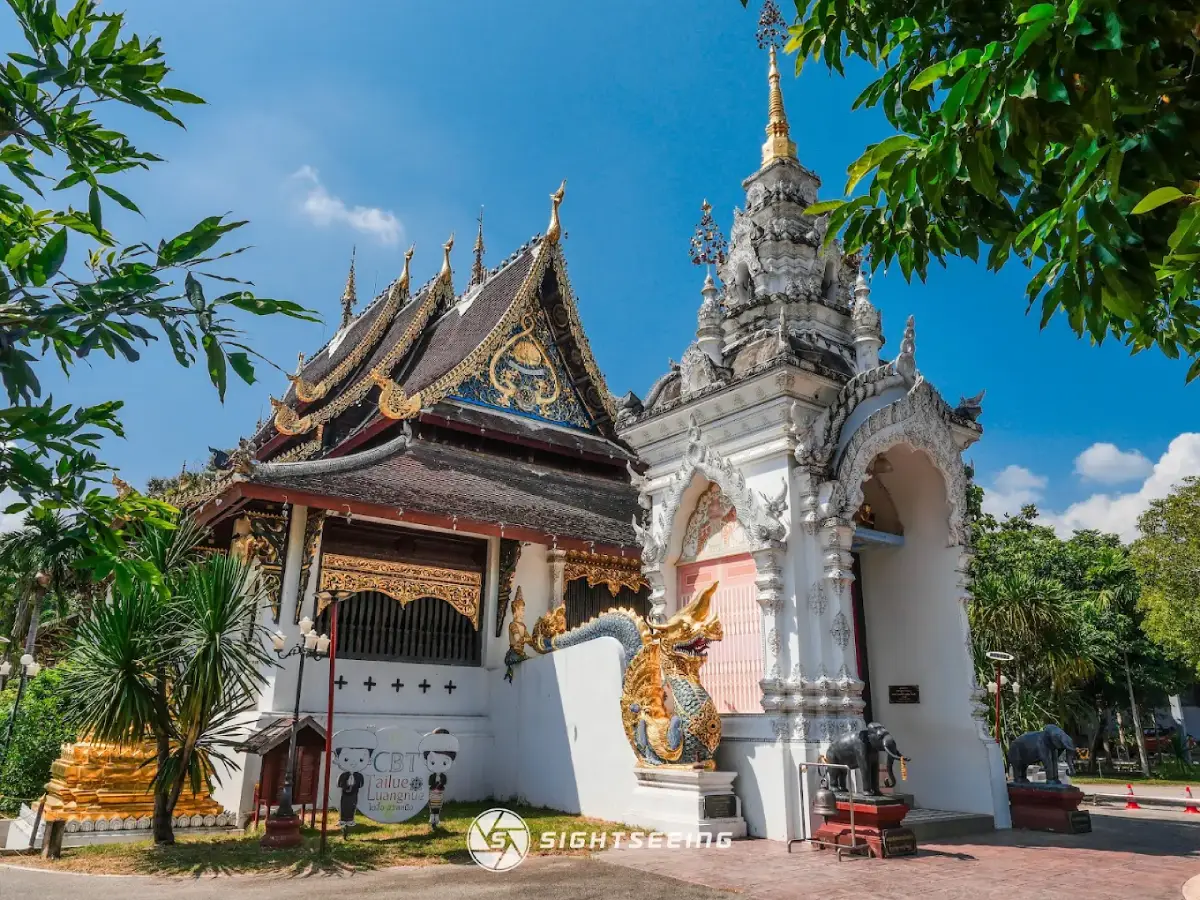
Wat Si Mung Mueang
Open Days: Daily
Opening Hours: 06.00 – 16.00
Wat Si Mung Mueang, also written as Wat Sri Mung Mueang, is located at No. 157, Moo 4, Ban Luang Nuea, Luang Nuea Subdistrict, Doi Saket District, Chiang Mai Province 50220. It is a private Buddhist temple under the Dhammayut order and one of the most historically important temples in Luang Nuea. The temple was officially established in 1401 according to the Buddhist Era year 1944, covers about 13 rai and 1 ngan of land, and received its royal consecrated boundary in 1906. Its importance lies in its connection with King Sam Fang Kaen, the Tai Lue community of Ban Luang Nuea, its Burmese–Tai Lue style chedi, its Tai Lue grand viharn, and its status as the first Dhammayut temple in Chiang Mai Province.
Wat Si Mung Mueang stands in Ban Luang Nuea, one of the most culturally significant Tai Lue communities in Chiang Mai. Luang Nuea is not just a village area; it is a living cultural landscape where temples, language, local food, merit-making, village organization, and community memory remain closely connected. The temple functions as a spiritual, social, and cultural center for the community, making it a key destination for travelers who want to understand Doi Saket beyond ordinary sightseeing.
The temple’s origin is linked with King Sam Fang Kaen of the Mangrai dynasty. Local tradition and historical references connect the temple with the Phan Na Fang Kaen area, associated with the king’s birthplace. After ascending the throne, King Sam Fang Kaen is believed to have had a temple built in this area as an act of Buddhist merit and royal remembrance. The temple was originally known as “Puranachan,” a name later connected with the meaning of “Mung Mueang.” A large Bodhi tree in the middle of the village became associated with auspiciousness, leading to the present name “Si Mung Mueang,” meaning a sacred and auspicious presence for the community.
The establishment year of 1401 makes Wat Si Mung Mueang one of the historic temples of Doi Saket. A temple of this age normally carries more than religious meaning. It serves as a place where local people make merit, listen to Buddhist teachings, organize ceremonies, preserve village memory, and continue a relationship between the temple and the community across generations.
Another important milestone occurred in 1906, when the temple became associated with the Dhammayut order. The temple’s royal consecrated boundary was granted during the reign of King Chulalongkorn on 30 July 1906, during the time of Phra Napisi Phisanakhun, also known as Maha Kham Ping Khanthasaro, as abbot. This makes Wat Si Mung Mueang important in the history of Chiang Mai Buddhism, because it is recognized as the first Dhammayut temple in Chiang Mai Province.
The royal consecrated boundary granted in 1906 is also important in Buddhist practice. A consecrated boundary is necessary for formal monastic acts, especially ordination and certain Sangha ceremonies. This confirms the temple’s complete religious status and shows that Wat Si Mung Mueang was not merely a local shrine, but a formally recognized Buddhist temple with long-standing community support.
The temple land covers about 13 rai, 1 ngan, and 7 square wah. Important buildings and areas include the viharn, monks’ residences, multipurpose hall, Buddha image pavilion, bell tower, dining hall, temple courtyard, sacred worship areas, Phra That Chedi Napisi Phisanamongkhon, and the Tai Lue Grand Viharn Punyamakaro. These areas allow the temple to support monastic activities, village merit-making, community events, and cultural tourism.
Important sacred objects at Wat Si Mung Mueang include bronze Buddha images, stucco Buddha images, and its distinctive chedi. The most prominent sacred monument is Phra That Chedi Napisi Phisanamongkhon, a Burmese–Tai Lue style chedi with a bell-shaped form and metal umbrella finial. The chedi and its surrounding elements reflect artistic influences from Burmese, Tai Lue, and Lanna traditions, giving the temple a distinctive appearance unlike many other temples in northern Thailand.
The chedi is especially important for visitors interested in Buddhist art. Studies of the temple describe the main chedi as a Burmese–Tai Lue style structure with surrounding smaller chedis. Its composition, form, and finial details make it a strong example of cross-cultural religious architecture in northern Thailand. Visitors should take time to observe the chedi carefully, not only as a sacred monument, but also as evidence of cultural exchange within the Lanna region.
The Tai Lue Grand Viharn Punyamakaro is another important feature of the temple. It reflects the pride of the Luang Nuea community and expresses Tai Lue identity through religious architecture. The viharn is not only a worship space, but also a cultural statement showing how local wisdom, faith, and artistic identity can be carried into a contemporary Buddhist building.
The atmosphere of Wat Si Mung Mueang is peaceful, sacred, and community-based. Visitors can pay respect to the Buddha images, walk around the chedi, observe the Tai Lue architectural details, and learn about the temple’s role in the village. The temple has visitor facilities such as restrooms, wheelchair service, Wi-Fi, a courtyard, and worship areas. It is suitable for a slow and respectful visit rather than a brief photo stop.
For travelers interested in Lanna history, Wat Si Mung Mueang is especially meaningful because of its connection with King Sam Fang Kaen and the Phan Na Fang Kaen area. The term “phan na” reflects an older Lanna system of territorial and labor organization. The temple’s location in this historical landscape shows that Ban Luang Nuea was not an isolated village, but part of a broader political, religious, and cultural structure of the Lanna kingdom.
The temple plays an important role in Ban Luang Nuea on several levels. Religiously, it is a place for worship, merit-making, sermons, and Buddhist ceremonies. Socially, it is a gathering place for villagers during important events. Culturally, it helps preserve Tai Lue identity through ceremonies, language, local customs, and the continuous relationship between home and temple.
Community organization around Wat Si Mung Mueang reflects the close relationship between the temple and village life. Local groups help with temple cleaning, merit-making, ceremony preparation, food preparation, and support for major festivals. The temple is therefore not only a religious site but also a social institution that keeps the community connected and active.
Merit-making traditions associated with Wat Si Mung Mueang include Buddhist holy day activities, offerings to monks, Kathin ceremonies, forest robe offerings, Poi Luang festivals, Lanna New Year merit-making, and the ceremonial bathing of the sacred chedi. These activities bring villagers together and help pass Buddhist values and Tai Lue cultural identity from one generation to the next.
Important things to see at Wat Si Mung Mueang include the temple entrance, the Burmese–Tai Lue style chedi, Phra That Chedi Napisi Phisanamongkhon, the Tai Lue Grand Viharn Punyamakaro, important Buddha images, the temple courtyard, and artistic details reflecting Tai Lue identity. Visitors should allow at least 30 minutes to experience the temple properly.
Wat Si Mung Mueang is suitable for travelers interested in historic temples, Tai Lue architecture, Dhammayut Buddhist history in Chiang Mai, King Sam Fang Kaen, and community-based cultural tourism. It is also suitable for families, students, local history researchers, and travelers who prefer quiet cultural routes outside Chiang Mai’s main tourist areas.
Getting There is easiest by private car, rental car, or local hired transport. From Chiang Mai city, travel toward Doi Saket via the Chiang Mai–Doi Saket road or Highway 118, then continue into Luang Nuea Subdistrict and Ban Luang Nuea, Moo 4. The temple can be reached by using map coordinates and can easily be combined with nearby temples and attractions.
A good cultural route can begin at Wat Si Mung Mueang for worship, chedi viewing, and Tai Lue cultural learning. From there, continue to the Tai Lue Mueang Luang Nuea community, Wat Sarakham Rangsan, Wat Sukhwiwekaram, or Mae Kuang Udom Thara Dam. Travelers with more time can continue to Wat Phra That Doi Saket or Huai Hong Khrai Royal Development Study Centre.
Visitors should follow normal Thai temple etiquette. Dress modestly, keep voices low, remove shoes where required, respect monks and local worshippers, avoid touching sacred objects unnecessarily, and do not disturb religious ceremonies. Respectful behavior helps preserve both the sacred atmosphere of the temple and the cultural dignity of the Luang Nuea community.
In summary, Wat Si Mung Mueang is one of the most important temples in Luang Nuea and Doi Saket. Established in 1401, connected with King Sam Fang Kaen, granted its royal consecrated boundary in 1906, and recognized as the first Dhammayut temple in Chiang Mai, it remains a living spiritual and cultural center for the Tai Lue community of Ban Luang Nuea. Its chedi, Tai Lue grand viharn, community role, and deep historical background make it a highly meaningful destination for cultural travel in Chiang Mai.
| Name | Wat Si Mung Mueang / Wat Sri Mung Mueang |
| Local Name | Wat Luang Nuea |
| Thai Name | วัดศรีมุงเมือง |
| Location | Ban Luang Nuea, Moo 4, Luang Nuea Subdistrict, Doi Saket District, Chiang Mai Province |
| Address | No. 157, Moo 4, Ban Luang Nuea, Luang Nuea Subdistrict, Doi Saket District, Chiang Mai 50220, Thailand |
| Coordinates | 18.87950, 99.12439 |
| Temple Type | Private Buddhist temple under the Dhammayut order |
| Land Area | 13 rai, 1 ngan, 7 square wah |
| Highlights | A historic Tai Lue community temple, the first Dhammayut temple in Chiang Mai, with a Burmese–Tai Lue style chedi and the Tai Lue Grand Viharn Punyamakaro |
| History | Officially established in 1401, linked with King Sam Fang Kaen and Phan Na Fang Kaen, and granted its royal consecrated boundary in 1906 |
| Name Origin | Originally known as Puranachan, later associated with the meaning of “Mung Mueang.” A large Bodhi tree in the village helped shape the present name, Si Mung Mueang. |
| Important Abbot In History | Phra Napisi Phisanakhun, also known as Maha Kham Ping Khanthasaro, was abbot when the temple received its royal consecrated boundary in 1906 |
| Important Structures | Viharn, monks’ residences, multipurpose hall, Buddha image pavilion, bell tower, dining hall, Phra That Chedi Napisi Phisanamongkhon, and Tai Lue Grand Viharn Punyamakaro |
| Sacred Objects | Bronze Buddha images, stucco Buddha images, and a Burmese–Tai Lue style chedi |
| Distinctive Features | Burmese–Tai Lue Buddhist art, Tai Lue community identity, first Dhammayut temple in Chiang Mai, and strong community-centered Buddhist role |
| Traditions / Merit-Making | Buddhist holy day merit-making, offerings to monks, Kathin ceremonies, forest robe offerings, Poi Luang festivals, Lanna New Year activities, and ceremonial bathing of the sacred chedi |
| Community Role | A spiritual and cultural center for the Tai Lue community of Ban Luang Nuea, supporting worship, sermons, village gatherings, and cultural continuity |
| Facilities | Restrooms, wheelchair service, Wi-Fi, temple courtyard, and visitor areas |
| Travel Information | From Chiang Mai city, travel toward Doi Saket via the Chiang Mai–Doi Saket road or Highway 118, then continue into Luang Nuea Subdistrict and Ban Luang Nuea, Moo 4. Private car or rental car is recommended. |
| Current Status | An active Buddhist temple and historical community-based attraction of the Tai Lue Mueang Luang Nuea community |
| Open Days | Daily |
| Opening Hours | 06.00 – 16.00 |
| Main Areas / Zones | Temple grounds, courtyard, viharn, Tai Lue grand viharn, sacred chedi, monks’ residences, multipurpose hall, bell tower, dining hall, and worship areas |
| Nearby Tourist Attractions | 1. Tai Lue Mueang Luang Nuea Community, about 1 km 2. Wat Sarakham Rangsan, about 3 km 3. Wat Sukhwiwekaram, about 3 km 4. Mae Kuang Udom Thara Dam, about 6 km 5. Wat Phra That Doi Saket, about 8 km 6. Huai Hong Khrai Royal Development Study Centre, about 13 km |
| Nearby Restaurants | 1. Lue Yang Luang Nuea, about 1 km, Tel. 098-779-0333 2. Luang Nuea Tam Sang, about 2 km, Tel. 083-259-8202 3. Arbusto Italian House & Thai Kitchen, about 4 km, Tel. 089-758-4197 4. Tha Ruea Lung Charoen Restaurant, about 6 km, Tel. 081-961-4627 5. Doi Saket Steakhouse, about 8 km, Tel. 064-110-4778, 095-391-9457 |
| Nearby Accommodations | 1. The Palm Village, about 2 km, Tel. 092-430-3850 2. Sak Homestay, about 3 km, Tel. 081-884-0093 3. Srida Resort Lanna & Cafe, about 3 km, Tel. 094-431-1431 4. Tao Garden Health Spa & Resort, about 4 km, Tel. 084-028-0230 5. Jamjuree Doisaket, about 5 km, Tel. 089-853-5359 |
Frequently Asked Questions (FAQ)
Q: Where is Wat Si Mung Mueang located?
A: Wat Si Mung Mueang is located at No. 157, Moo 4, Ban Luang Nuea, Luang Nuea Subdistrict, Doi Saket District, Chiang Mai Province.
Q: What is historically important about Wat Si Mung Mueang?
A: The temple was officially established in 1401, is linked with King Sam Fang Kaen and the Tai Lue community of Ban Luang Nuea, and received its royal consecrated boundary in 1906.
Q: Is Wat Si Mung Mueang the first Dhammayut temple in Chiang Mai?
A: Yes. Wat Si Mung Mueang is recognized as the first Dhammayut temple in Chiang Mai Province, with important evidence from the royal consecrated boundary granted in 1906 during the reign of King Chulalongkorn.
Q: What are the main highlights of Wat Si Mung Mueang?
A: The main highlights include the Burmese–Tai Lue style chedi, Phra That Chedi Napisi Phisanamongkhon, the Tai Lue Grand Viharn Punyamakaro, and the temple’s role as the spiritual center of the Tai Lue community.
Q: Who should visit Wat Si Mung Mueang?
A: The temple is suitable for travelers interested in historic temples, Lanna history, Tai Lue architecture, Dhammayut Buddhist history, and cultural routes in Doi Saket.
Q: What nearby places can be visited with Wat Si Mung Mueang?
A: Nearby places include the Tai Lue Mueang Luang Nuea Community, Wat Sarakham Rangsan, Wat Sukhwiwekaram, Mae Kuang Udom Thara Dam, Wat Phra That Doi Saket, and Huai Hong Khrai Royal Development Study Centre.
Q: What are the opening days and hours of Wat Si Mung Mueang?
A: The temple is listed as open daily from 06.00 to 16.00.
 Category: ●Places of Worship
 Group: ●Temple
Last Update : 1 WeekAgo
 Last Update : 1 WeekAgo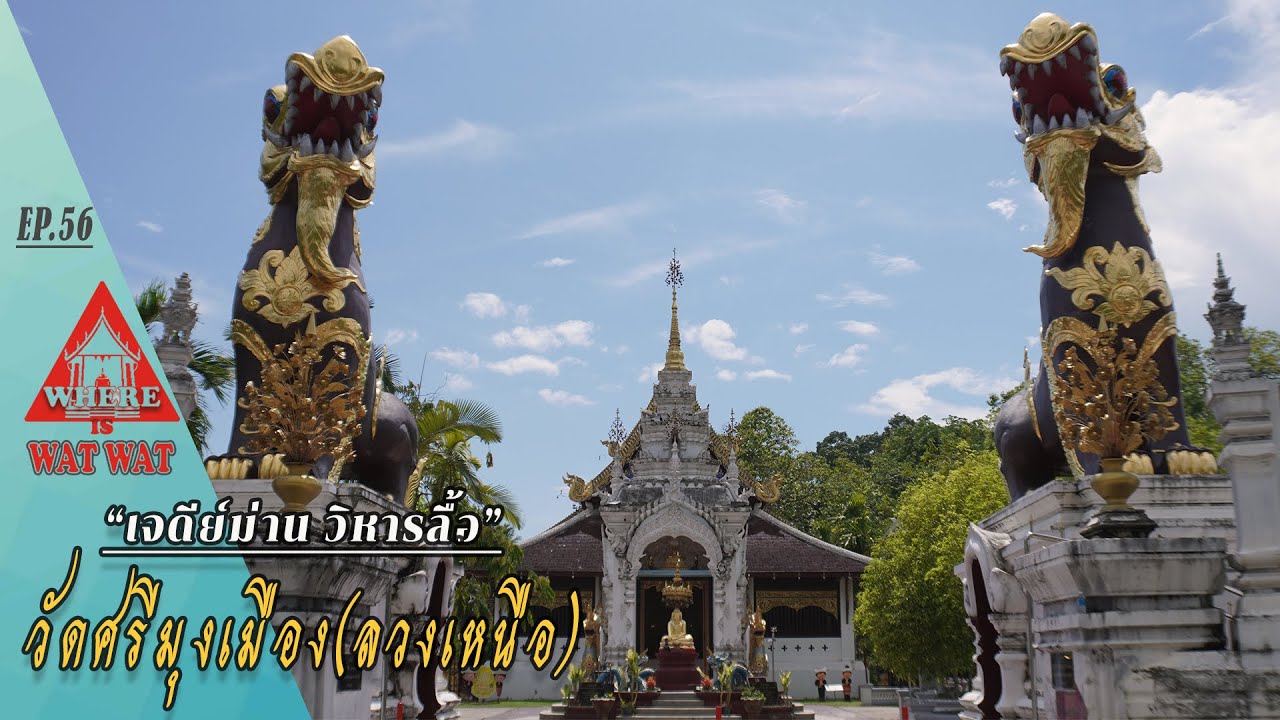
 Click to Access the Navigation Map GPS
Wat Si Mung Mueang Map
Recommend

 Muang Chiang Mai(121)Chom Thong(47)Mae Chaem(25)Chiang Dao(33)Doi Saket(68)Mae Taeng(85)Mae Rim(69)Samoeng(29)Fang(71)Mae Ai(59)Phrao(70)San Pa Tong(103)San Kamphaeng(66)San Sai(73)Hang Dong(73)Hot(32)Doi Tao(22)Omkoi(11)Saraphi(74)Wiang Haeng(15)Chai Prakan(28)Mae Wang(32)Mae On(22)Doi Lo(34)Galyani Vadhana(1)


