
lovethailand home >North Travel Attractions >Chiang Mai Travel Attractions >Doi Saket >Talat Yai > Wat Sunthon Siri
TL;DR: Wat Sunthon Siri is located at Ban Mae Ka Tai, Moo 3, Talat Yai Subdistrict, Doi Saket District, Chiang Mai Province, open Contact The Temple Directly Before Visiting, hours Contact The Temple Directly Before Visiting.
Wat Sunthon Siri
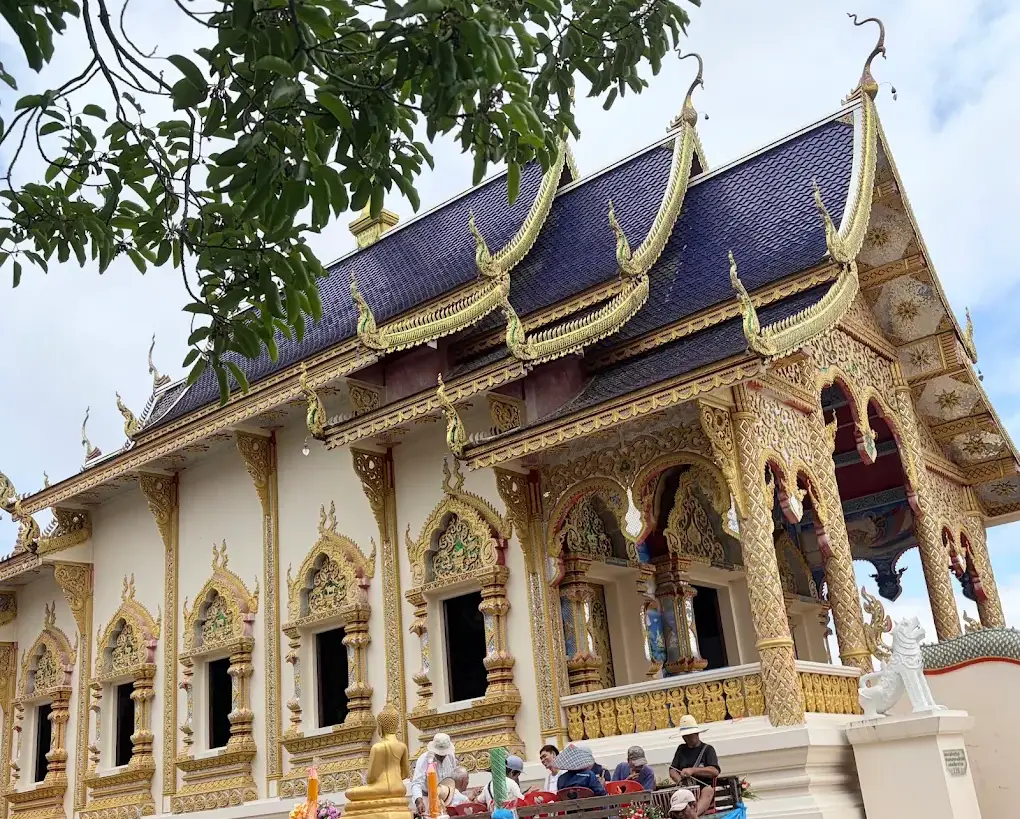
Open Days: Contact The Temple Directly Before Visiting
Opening Hours: Contact The Temple Directly Before Visiting
Wat Sunthon Siri, also known locally as Wat Mae Ka Tai, is a private Buddhist temple under the Mahanikaya order. It is located in Moo 3, Talat Yai Subdistrict, Doi Saket District, Chiang Mai Province. The temple’s history dates back to 1771, and it received its royal consecrated boundary on 10 August 1948. This makes Wat Sunthon Siri one of the old community temples of Mae Ka Tai, with a long-standing role in local Buddhist life, village memory, and cultural continuity.
Wat Sunthon Siri is a local Lanna community temple in Talat Yai Subdistrict, an important area of Doi Saket District. Doi Saket lies east of Chiang Mai city and includes old temples, agricultural villages, roads connecting to Bo Sang and San Kamphaeng, and natural sites around Mae Kuang Dam. Wat Sunthon Siri therefore represents Doi Saket as a cultural district, not merely a route between Chiang Mai city and surrounding countryside.
The value of Wat Sunthon Siri lies in its role as a community temple rather than as a large tourist landmark. A temple of this kind is where local residents make merit, pay respect, listen to sermons, join annual ceremonies, and gather for religious and community activities. The temple is more than a religious building. It connects people with Buddhism, family, ancestors, and village life in a direct and practical way.
Local people call the temple Wat Mae Ka Tai, and its former name was Wat Mae Ka Don Chai. These names help explain the temple’s deep connection with the Mae Ka Tai community. The official name, the old name, and the village name are all part of how local people remember and identify the temple. This layered naming is common among old temples in northern Thailand, where a temple may have a formal name as well as a local name used by villagers.
Since the temple was established in 1771, Wat Sunthon Siri has a history of more than 250 years. This places the temple within a long historical period of Lanna and northern Thai community development. Old village temples like this help show the continuity of settlement in Doi Saket. The presence of a temple beside a village is an important sign of faith, community organization, and local stability across generations.
The royal consecrated boundary granted on 10 August 1948 is an important part of the temple’s status. In Thai Buddhism, a consecrated boundary marks the area where monks can perform formal monastic acts, including certain ordination-related ceremonies. A temple with such a boundary has an established religious role and can support important monastic and community functions.
The temple grounds cover 3 rai, 1 ngan, and 2 square wah. The boundaries are connected with village areas and rice fields, showing the close relationship between the temple and the old agricultural landscape. Wat Sunthon Siri was not built apart from community life. It stood among homes, fields, local roads, and village activity. This setting is one of the defining qualities of a Lanna community temple.
The temple’s monastic buildings include a sermon hall, an ordination hall, monks’ residences, a viharn, and a multi-purpose pavilion. These structures allow the temple to support both monastic duties and community activities. The sermon hall is used for teachings and gatherings. The ordination hall supports formal religious acts. The monks’ residences support monastic life. The viharn is a worship space, and the multi-purpose pavilion supports merit-making events, ceremonies, and community functions.
The main sacred object of Wat Sunthon Siri is a Buddha image in the Mara Vichai posture. This posture represents the moment when the Buddha overcame Mara before enlightenment. The right hand reaches toward the earth, calling the earth goddess to witness his accumulated merit. This image symbolizes the victory of wisdom over temptation, mental steadiness, and spiritual determination. For visitors, it is an appropriate focus for worship and quiet reflection.
Wat Sunthon Siri also has a recorded educational role. Its Buddhist scripture school opened a Pali section in 1981 and a Dhamma section in 1982. This shows that the temple’s role extended beyond ceremonies. It also supported Buddhist learning, the study of monastic discipline, and the education of monks and novices in the local community.
The temple’s recorded line of abbots includes several monks from different periods, such as Phra Athikan Uen Kham, Phra Athikan Duang, Phra Samu Insom, Phra Athikan Buchuen Ratanasaro, Phra Athikan Sema Ariyawaso, Phra Infon Panyatharo, Phra Athikan Chamrat Issaro, Phra Maha Bunchuai Wijittadhammo, and Phra Athikan Sarinuan Attatanto. These names reflect the continuity of temple leadership and the long process of maintaining the temple through changing generations.
The current abbot of Wat Sunthon Siri is Phra Mongkhon Satisampanno. In a community temple, the abbot plays a central role as caretaker, spiritual leader, coordinator of Buddhist activities, and link between the monastic community and local residents. A private local temple continues to function through cooperation among monks, temple committees, community leaders, and lay supporters.
As a Mahanikaya Buddhist temple, Wat Sunthon Siri is connected with ordinary Buddhist activities and annual religious observances. These include Buddhist holy day merit-making, robe offerings, chanting, sermons, ordination-related activities, funeral rites, Kathin ceremonies, and major Buddhist days such as Makha Bucha, Visakha Bucha, Asalha Bucha, Buddhist Lent, and the end of Buddhist Lent. The temple has also been associated with meditation and forest-dwelling practice activities, reflecting its role in supporting both community merit-making and Buddhist practice.
Wat Sunthon Siri has also appeared as a community learning center in Talat Yai Subdistrict. This reflects the wider role of local temples in northern Thailand. Many community temples are not only religious sites but also places for meetings, learning, public activities, and connection between local residents and public programs. This makes the temple an active social space as well as a Buddhist place of worship.
Visitors to Wat Sunthon Siri can expect the quiet atmosphere of an old village temple. The temple is not designed as a large commercial attraction. Its charm lies in its history, simplicity, and continued use by the local community. Visitors can pay respect to the Buddha image, make merit, observe the temple buildings, and appreciate how a local Lanna temple remains part of everyday life.
Visitors should behave respectfully inside Wat Sunthon Siri. Modest clothing is recommended, with shoulders and knees covered. Shoes should be removed before entering sacred buildings. Visitors should keep their voices low, avoid entering monastic areas without permission, and ask before photographing monks, novices, local residents, or ceremonies. These practices help protect the dignity of the temple and avoid disturbing the community.
When walking through the temple, visitors can begin at the main worship area, such as the viharn or ordination hall, then observe the sermon hall and the multi-purpose pavilion where appropriate. Each building has a specific function. If a ceremony or community event is taking place, visitors should give priority to local participants and avoid walking through the ceremonial space unnecessarily.
Getting There is most convenient by private car, rental car, or hired vehicle. From Chiang Mai city, travel toward Doi Saket District, then continue to Talat Yai Subdistrict and Ban Mae Ka Tai. Visitors using a map application can search for “Wat Sunthon Siri” or “Wat Mae Ka Tai” and confirm that the location is in Moo 3, Talat Yai Subdistrict, Doi Saket District, Chiang Mai Province.
Travelers without a private vehicle can first travel from Chiang Mai city to Doi Saket, then continue by local transport, taxi, or ride-hailing service to Talat Yai Subdistrict and Ban Mae Ka Tai. This option requires extra planning because Wat Sunthon Siri is a local community temple rather than a major tourist stop with frequent public transportation. A private vehicle is more practical for visitors who plan to combine several Doi Saket attractions in one day.
Wat Sunthon Siri fits well into a Doi Saket cultural route. Visitors can begin with a quiet worship visit at Wat Sunthon Siri, then continue to Wat Phra That Doi Saket, a royal temple and important hilltop temple of the district. The route can then include Mae Kuang Udom Thara Dam, the suspension bridge near the dam, Huai Hong Khrai Royal Development Study Centre, or Doi Saket Hot Spring. This gives the trip a balance of old temples, local community history, nature, and learning sites.
The best time to visit Wat Sunthon Siri is in the morning or late afternoon, when the weather is more comfortable. Morning is suitable for worship and merit-making, while late afternoon works well for a stop before continuing to nearby attractions. Visitors who wish to attend a ceremony, merit-making event, or community activity should contact the temple or local residents in advance to confirm the schedule and appropriate conduct.
For cultural travelers, Wat Sunthon Siri is suitable for those interested in old Chiang Mai temples, Doi Saket community history, village-based Lanna Buddhism, and the educational role of temples. Its key points include its long history, the former name Wat Mae Ka Don Chai, its consecrated boundary, its complete set of monastic buildings, its Buddha image in the Mara Vichai posture, and its connection with the Mae Ka Tai community.
In summary, Wat Sunthon Siri is an old private Mahanikaya temple in Ban Mae Ka Tai, Talat Yai Subdistrict, Doi Saket District, Chiang Mai Province. It was established in 1771 and received its royal consecrated boundary on 10 August 1948. The temple remains a religious and community center for the area. Visitors looking for a quiet, culturally meaningful stop in Chiang Mai can include Wat Sunthon Siri in a Doi Saket route with nearby temples, reservoirs, learning centers, and local attractions.
| Name | Wat Sunthon Siri / Wat Mae Ka Tai |
| Place Type | Private Buddhist Temple Under The Mahanikaya Order |
| Location | Ban Mae Ka Tai, Moo 3, Talat Yai Subdistrict, Doi Saket District, Chiang Mai Province |
| Address | 196 Moo 3, Talat Yai Subdistrict, Doi Saket District, Chiang Mai 50220, Thailand |
| Highlights | Old community temple of Mae Ka Tai, established in 1771 and granted a royal consecrated boundary on 10 August 1948 |
| History | Established in 1771; formerly known as Wat Mae Ka Don Chai and locally known as Wat Mae Ka Tai |
| Temple Area | 3 rai, 1 ngan, and 2 square wah |
| Important Sacred Object | Buddha image in the Mara Vichai posture |
| Main Buildings / Zones | Sermon hall, ordination hall, monks’ residences, viharn, and multi-purpose pavilion |
| Educational Role | Recorded Buddhist scripture school, with Pali studies opened in 1981 and Dhamma studies opened in 1982 |
| Abbot / Caretaker | Phra Mongkhon Satisampanno |
| Travel Information | From Chiang Mai city, travel toward Doi Saket District, then continue to Talat Yai Subdistrict and Ban Mae Ka Tai. Search for “Wat Sunthon Siri” or “Wat Mae Ka Tai” and confirm the Moo 3 Talat Yai location |
| Current Status | Listed as a Mahanikaya temple in Talat Yai Subdistrict, Doi Saket District, Chiang Mai Province, and also appears as a community learning center site |
| Open Days | Contact The Temple Directly Before Visiting |
| Opening Hours | Contact The Temple Directly Before Visiting |
| Nearby Tourist Attractions | 1. Wat Phra That Doi Saket Royal Temple, about 8 km 2. Bo Sang Umbrella Village, about 8 km 3. Mae Kuang Udom Thara Dam, about 15 km 4. Suspension Bridge Near Mae Kuang Dam, about 16 km 5. Huai Hong Khrai Royal Development Study Centre, about 20 km 6. Doi Saket Hot Spring, about 24 km |
| Nearby Restaurants | 1. Mae Ka Coffee, about 2 km, Tel. 084-611-8766 2. COCOA DOI, about 10 km, Tel. 088-310-9894 3. The LemonTree Garden & Restaurant, about 10 km, Tel. 093-415-0544 4. 882kitchen, about 10 km, Tel. 063-412-5683 5. Ban Ton Palm Coffee & Food/Bakery, about 12 km, Tel. 094-293-6323 |
| Nearby Accommodations | 1. Him Doi House @ Doisaket, about 10 km, Tel. 089-656-4959 2. Chiang Mai Skyline Resort, about 13 km, Tel. 053-868-891 3. Is Am O Chiangmai Resort, about 15 km, Tel. 053-867-284, 083-885-4747, 083-885-5757 4. Secret Garden Chiang Mai, about 16 km, Tel. 053-339-502 5. Monn Phu Phrai Resort, about 30 km, Tel. 053-389-036 |
Frequently Asked Questions (FAQ)
Q: Where is Wat Sunthon Siri located?
A: Wat Sunthon Siri is located in Ban Mae Ka Tai, Moo 3, Talat Yai Subdistrict, Doi Saket District, Chiang Mai Province.
Q: Does Wat Sunthon Siri have another name?
A: Yes. Wat Sunthon Siri is also known locally as Wat Mae Ka Tai, and its former name was Wat Mae Ka Don Chai.
Q: Why is Wat Sunthon Siri historically important?
A: The temple was established in 1771 and received its royal consecrated boundary on 10 August 1948, making it an old community temple of Mae Ka Tai.
Q: What important sacred object is found at Wat Sunthon Siri?
A: The temple’s important sacred object is a Buddha image in the Mara Vichai posture. The temple also has key monastic buildings such as a sermon hall, ordination hall, monks’ residences, viharn, and multi-purpose pavilion.
Q: Who is the abbot of Wat Sunthon Siri?
A: The abbot of Wat Sunthon Siri is Phra Mongkhon Satisampanno.
Q: How can visitors get to Wat Sunthon Siri?
A: From Chiang Mai city, travel toward Doi Saket District, then continue to Talat Yai Subdistrict and Ban Mae Ka Tai. Use “Wat Sunthon Siri” or “Wat Mae Ka Tai” in a map application and confirm the Moo 3 Talat Yai location.
Q: What nearby attractions can be combined with Wat Sunthon Siri?
A: Nearby attractions include Wat Phra That Doi Saket, Bo Sang Umbrella Village, Mae Kuang Udom Thara Dam, the suspension bridge near the dam, Huai Hong Khrai Royal Development Study Centre, and Doi Saket Hot Spring.
Q: What should visitors wear when visiting Wat Sunthon Siri?
A: Visitors should dress modestly, cover shoulders and knees, remove shoes before entering sacred buildings, keep quiet, and avoid entering monastic areas without permission.
 Category: ●Places of Worship
 Group: ●Temple
Last Update : 20 HourAgo
 Last Update : 20 HourAgo
 Click to Access the Navigation Map GPS
 Muang Chiang Mai(121)Chom Thong(47)Mae Chaem(25)Chiang Dao(33)Doi Saket(68)Mae Taeng(85)Mae Rim(69)Samoeng(29)Fang(71)Mae Ai(62)Phrao(70)San Pa Tong(105)San Kamphaeng(66)San Sai(73)Hang Dong(74)Hot(32)Doi Tao(22)Omkoi(11)Saraphi(74)Wiang Haeng(15)Chai Prakan(28)Mae Wang(32)Mae On(22)Doi Lo(34)Galyani Vadhana(1)


