
lovethailand home >North Travel Attractions >Chiang Mai Travel Attractions >Doi Saket >Talat Yai > Wat Si Chayaram
TL;DR: Wat Si Chayaram is located at Moo 1, Talat Yai Subdistrict, Doi Saket District, Chiang Mai Province, open Daily, hours 08.00 - 17.00.

Wat Si Chayaram
Open Days: Daily
Opening Hours: 08.00 - 17.00
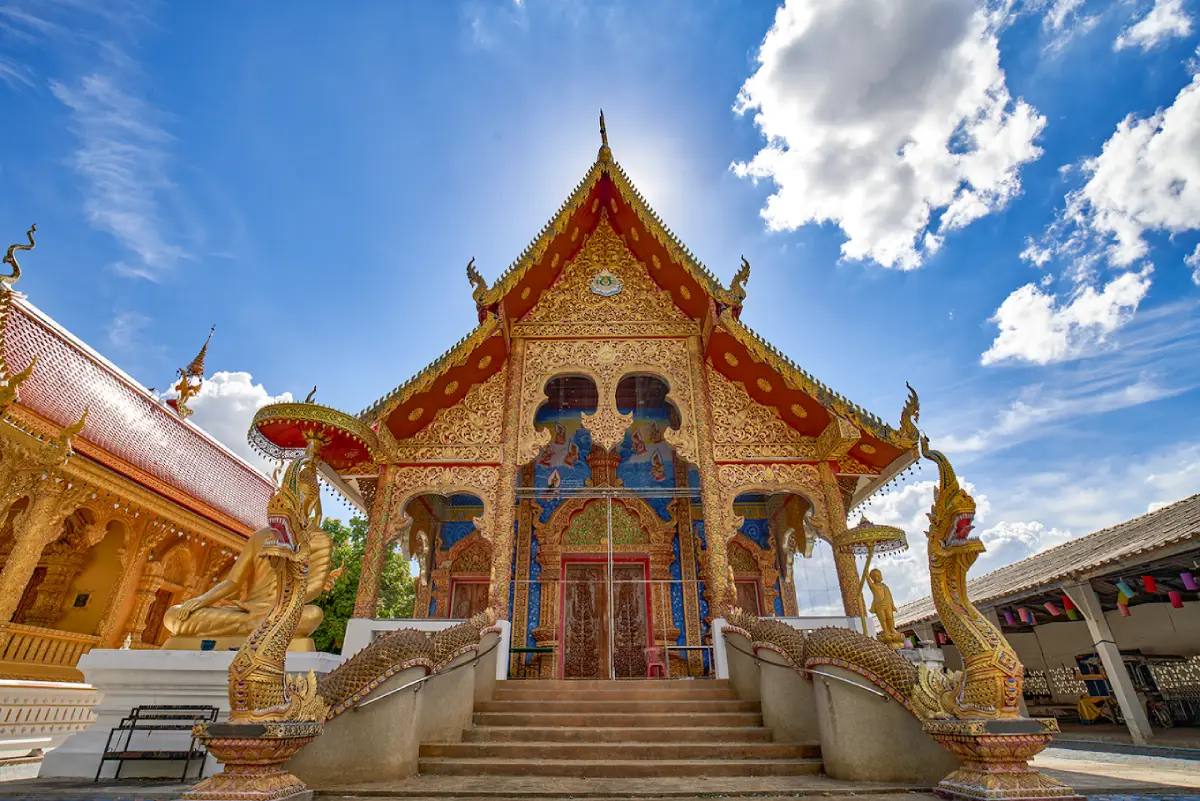
Wat Si Chayaram, also known locally as Wat Si Chayaram Mae Ka Nuea, is a community Buddhist temple in Moo 1, Talat Yai Subdistrict, Doi Saket District, Chiang Mai Province. It is a private temple under the Mahanikaya order. The temple was officially established in 1812 and received its royal consecrated boundary in 1948. Today, Wat Si Chayaram is open daily from 08.00 to 17.00 and is suitable for visitors who want to make merit, pay respect, and experience a quieter local temple outside the main tourist routes of Chiang Mai.
The value of Wat Si Chayaram lies in its calm local character rather than grand-scale tourism. This is the kind of temple that continues to serve its surrounding community in everyday life. It is a place for Buddhist ceremonies, merit-making, chanting, religious gatherings, family rites, and community events. For travelers interested in Thai culture and northern Buddhist life, Wat Si Chayaram offers a useful glimpse into how a local temple functions as a spiritual and social center.
The name Wat Si Chayaram has an auspicious meaning. “Si” suggests prosperity, grace, and good fortune. “Chaya” is associated with victory or success, while “aram” means a Buddhist monastery or peaceful religious place. Together, the name gives the sense of a blessed temple and a place of spiritual calm. Thai temple names often carry this kind of meaningful language, reflecting the hopes and faith of the local community that supports the temple.
Wat Si Chayaram is located in Talat Yai Subdistrict, part of Doi Saket District on the eastern side of Chiang Mai. Doi Saket is known for its mix of old communities, temples, reservoirs, hills, agricultural areas, and routes leading toward Chiang Rai. The district is close enough to Chiang Mai city for a day trip, yet it still preserves a slower local atmosphere. Visiting Wat Si Chayaram therefore helps travelers see Doi Saket not only as a transit area, but also as a cultural district with long-established Buddhist communities.
The temple’s known historical record states that Wat Si Chayaram was officially established in 1812 and received its royal consecrated boundary in 1948. This makes the temple more than 200 years old from the date of formal establishment. In Thai Buddhism, a royal consecrated boundary is important because it marks the area where monks can perform certain formal monastic acts, including ordination-related ceremonies. This detail confirms the temple’s religious status and its long-standing role in the local Buddhist community.
The year 1812 places the establishment of Wat Si Chayaram in the early Rattanakosin period. In northern Thailand, this was a time when many Lanna communities were rebuilding settlements, restoring religious life, and strengthening local identity. Temples played a central role in that process. They were not only religious places but also centers for learning, community organization, seasonal ceremonies, and social continuity. Even though detailed public records about the temple’s founders are limited, the establishment year confirms Wat Si Chayaram as one of the older temples in the Talat Yai and Mae Ka Nuea area.
The local name “Mae Ka Nuea” is important because it helps identify this specific temple among other temples with similar names elsewhere in Thailand. In northern communities, temples are often identified by both their formal name and the village or neighborhood name attached to them. This makes the temple easier to locate and connects it directly to its community. Wat Si Chayaram Mae Ka Nuea is therefore not just a religious name; it also identifies the temple’s relationship with the people of Moo 1 in Talat Yai Subdistrict.
Inside Wat Si Chayaram, visitors can expect the atmosphere of a local northern Thai temple. A temple of this kind usually includes sacred areas for worship and monastic areas for the daily life of monks. The worship area may include the main hall, Buddha images, shrine spaces, and ceremonial grounds, while the monastic area supports the monks’ daily routine. Because full architectural details of every building at Wat Si Chayaram are not widely published in reliable public sources, the most accurate way to present the temple is as a functioning local Buddhist temple with a confirmed historical and community role.
The best way to experience Wat Si Chayaram is to visit respectfully and slowly. This is not a commercial attraction. It remains an active religious place for monks and local residents. Visitors should keep their voices low, dress modestly, avoid entering monastic areas without permission, and be careful when taking photographs during ceremonies. This kind of respectful travel helps preserve the dignity of the temple and creates a better experience for both visitors and the local community.
Phra Khamnueng Khanisaro is identified as the abbot of Wat Si Chayaram based on the information provided for this article. In a local temple, the abbot’s role is central. The abbot oversees the temple, guides monastic practice, supports religious activities, and often acts as a spiritual figure for the surrounding community. Many private temples in Thailand continue to function through the cooperation between the abbot, monks, lay supporters, and local residents. Mentioning the abbot therefore helps complete the temple’s identity as a living religious institution.
Wat Si Chayaram is useful for several types of visitors. Local residents may search for the temple for merit-making, ceremonies, or contact information. Cultural travelers may be interested in a quieter temple outside central Chiang Mai. Readers interested in Lanna history may find value in a temple with more than two centuries of recorded establishment. The temple gives context to how Buddhism, village life, and local identity remain connected in Doi Saket District.
Wat Si Chayaram can also be included in a broader Doi Saket travel route. Visitors can begin with a quiet merit-making visit at Wat Si Chayaram, then continue to Wat Phra That Doi Saket, a major temple on a hill with a viewpoint. From there, the trip can continue to Mae Kuang Udom Thara Dam, the suspension bridge near the dam, Huai Hong Khrai Royal Development Study Centre, or Doi Saket Hot Spring. This route combines Buddhist heritage, local community life, water landscapes, and natural attractions within one district.
One of the main things to observe at Wat Si Chayaram is the relationship between the temple and the surrounding village. In northern Thailand, a temple is rarely separate from community life. It is where people make merit on Buddhist holy days, join seasonal ceremonies, offer robes, attend funeral rites, listen to sermons, and gather for community events. The simplicity of Wat Si Chayaram is therefore part of its importance. It shows how Buddhist faith continues in ordinary local life, not only in famous tourist temples.
As a Mahanikaya Buddhist temple, Wat Si Chayaram is connected with common Buddhist observances in Thailand, including Makha Bucha Day, Visakha Bucha Day, Asalha Bucha Day, Buddhist Lent, the end of Buddhist Lent, Kathin ceremonies, robe-offering ceremonies, merit-making on Buddhist holy days, and memorial rites. Specific annual schedules should be checked directly with the temple before traveling, but the temple can be understood as an active religious site serving the Talat Yai and Mae Ka Nuea community.
For trip planning, morning visits are usually the most comfortable, especially for travelers who want a peaceful atmosphere and cooler weather. Late afternoon can also be suitable if the temple is included as part of a Doi Saket route. Since the temple is open daily from 08.00 to 17.00, it can be arranged flexibly within a day trip. Visitors who plan to make offerings, join a ceremony, or arrange family religious activities should contact the temple in advance using the publicly listed phone number.
Getting There is most convenient by private car, rental car, or hired vehicle. From Chiang Mai city, travel east toward Doi Saket District, then continue to Talat Yai Subdistrict and the Mae Ka Nuea community. Visitors can search for “Wat Si Chayaram Mae Ka Nuea” or use the Plus Code R498+HCQ on a map application. Roads in the district are generally convenient, but visitors should drive carefully when entering village areas and around the temple.
Travelers using public transportation can first reach Doi Saket District from Chiang Mai city, then continue by local transport, taxi, or ride-hailing service to Talat Yai Subdistrict. This option requires extra time because the temple is a community temple rather than a major tourist stop with frequent public transport throughout the day. For travelers planning to visit several places in Doi Saket, a private car or hired driver is the most practical option.
Visitors should dress modestly when entering Wat Si Chayaram. Shoulders and knees should be covered, shoes should be removed before entering sacred buildings, and visitors should avoid touching sacred objects unnecessarily. Drones should not be used without permission. If visitors want to photograph monks, novices, or local people, they should ask first. These simple practices help make the visit respectful and appropriate for an active Buddhist temple.
Wat Si Chayaram is also a useful article topic within a Chiang Mai temple and Doi Saket travel cluster. It answers practical visitor questions clearly: where the temple is, when it opens, how to get there, who the abbot is, and what nearby places can be combined in the same route. For travelers who prefer quieter cultural stops, the temple provides a grounded local experience rather than a crowded sightseeing attraction.
In summary, Wat Si Chayaram is an old community temple in Talat Yai Subdistrict, Doi Saket District, Chiang Mai Province. It is a private Mahanikaya temple established in 1812 and granted a royal consecrated boundary in 1948. It remains open for worship, merit-making, and local Buddhist life. Visitors looking for a calm cultural stop in Doi Saket can include Wat Si Chayaram in a route with Wat Phra That Doi Saket, Mae Kuang Dam, Huai Hong Khrai Royal Development Study Centre, and Doi Saket Hot Spring.
| Name | Wat Si Chayaram / Wat Si Chayaram Mae Ka Nuea |
| Place Type | Private Buddhist Temple Under The Mahanikaya Order |
| Location | Moo 1, Talat Yai Subdistrict, Doi Saket District, Chiang Mai Province |
| Address | 76 Moo 1, Talat Yai Subdistrict, Doi Saket District, Chiang Mai 50220, Thailand |
| Coordinates | Plus Code: R498+HCQ, Talat Yai, Doi Saket District, Chiang Mai |
| Highlights | Historic community temple in Talat Yai Subdistrict, formally established in 1812 and closely connected with the Mae Ka Nuea community |
| History | Established in 1812 and granted a royal consecrated boundary in 1948 |
| Name Origin | The name combines auspicious Thai Buddhist terms: “Si” for prosperity and grace, “Chaya” for victory or success, and “Aram” for a peaceful Buddhist monastery |
| Distinctive Features | A quiet local temple suitable for merit-making, respectful worship, and learning about community-based Buddhist life in Doi Saket |
| Travel Information | Travel from Chiang Mai city toward Doi Saket District, then continue to Talat Yai Subdistrict and the Mae Ka Nuea community. Search for “Wat Si Chayaram Mae Ka Nuea” or Plus Code R498+HCQ |
| Current Status | Open for visitors and worship |
| Open Days | Daily |
| Opening Hours | 08.00 - 17.00 |
| Fees | No admission fee |
| Facilities | Areas for worship, merit-making, and local Buddhist ceremonies |
| Main Areas / Zones | Sacred worship area and monastic area used for the daily life and religious activities of monks |
| Abbot / Caretaker | Phra Khamnueng Khanisaro |
| Main Contact Number | 053-840-819 |
| Nearby Tourist Attractions | 1. Wat Phra That Doi Saket, about 9 km 2. Mae Kuang Udom Thara Dam, about 15 km 3. Suspension Bridge Near Mae Kuang Dam, about 16 km 4. Huai Hong Khrai Royal Development Study Centre, about 20 km 5. Doi Saket Hot Spring, about 24 km |
| Nearby Restaurants | 1. Sapatad Doi Saket, about 7 km, Tel. 090-264-9601 2. Ban Ton Palm Restaurant, about 8 km, Tel. 081-950-8559 3. The LemonTree Garden & Restaurant, about 10 km, Tel. 093-415-0544 4. 882kitchen, about 10 km, Tel. 063-412-5683 5. COCOA DOI, about 10 km, Tel. 088-310-9894 |
| Nearby Accommodations | 1. Him Doi House @ Doisaket, about 10 km, Tel. 089-656-4959 2. Chiang Mai Skyline Resort, about 13 km, Tel. 053-868-891 3. Is Am O Chiangmai Resort, about 15 km, Tel. 083-885-5757, 083-885-4747 4. Monn Phu Phrai, about 30 km, Tel. 053-389-036 5. Phurintara Resort & Cafe, about 31 km, Tel. 095-646-4963 |
Frequently Asked Questions (FAQ)
Q: Where is Wat Si Chayaram located?
A: Wat Si Chayaram is located in Moo 1, Talat Yai Subdistrict, Doi Saket District, Chiang Mai Province. It is also known as Wat Si Chayaram Mae Ka Nuea.
Q: What are the opening days and opening hours of Wat Si Chayaram?
A: Wat Si Chayaram is open daily from 08.00 to 17.00.
Q: Is there an admission fee at Wat Si Chayaram?
A: No. There is no admission fee. Visitors may make merit or donations according to their faith.
Q: Why is Wat Si Chayaram historically important?
A: The temple was officially established in 1812 and received its royal consecrated boundary in 1948, making it an old community temple in Talat Yai Subdistrict.
Q: Who is the abbot of Wat Si Chayaram?
A: The abbot of Wat Si Chayaram is Phra Khamnueng Khanisaro.
Q: How can visitors get to Wat Si Chayaram?
A: From Chiang Mai city, travel toward Doi Saket District, then continue to Talat Yai Subdistrict and the Mae Ka Nuea community. Visitors can use “Wat Si Chayaram Mae Ka Nuea” or Plus Code R498+HCQ in a map application.
Q: What nearby attractions can be combined with Wat Si Chayaram?
A: Nearby attractions include Wat Phra That Doi Saket, Mae Kuang Udom Thara Dam, the suspension bridge near Mae Kuang Dam, Huai Hong Khrai Royal Development Study Centre, and Doi Saket Hot Spring.
Q: What should visitors wear when visiting Wat Si Chayaram?
A: Visitors should dress modestly, cover shoulders and knees, remove shoes before entering sacred buildings, and keep quiet inside the temple area.
 Category: ●Places of Worship
 Group: ●Temple
Last Update : 2 WeekAgo
 Last Update : 2 WeekAgo
 Click to Access the Navigation Map GPS
 Muang Chiang Mai(121)Chom Thong(47)Mae Chaem(25)Chiang Dao(33)Doi Saket(68)Mae Taeng(85)Mae Rim(69)Samoeng(29)Fang(71)Mae Ai(59)Phrao(70)San Pa Tong(103)San Kamphaeng(66)San Sai(73)Hang Dong(73)Hot(32)Doi Tao(22)Omkoi(11)Saraphi(74)Wiang Haeng(15)Chai Prakan(28)Mae Wang(32)Mae On(22)Doi Lo(33)Galyani Vadhana(1)


