
lovethailand home >North Travel Attractions >Chiang Mai Travel Attractions >Doi Saket >Talat Khwan > Wat Ban Tham
TL;DR: Wat Ban Tham is located at Ban Tham, Village No. 3, Talat Khwan Subdistrict, Doi Saket District, Chiang Mai Province, open Daily, hours 08:00 - 17:00.
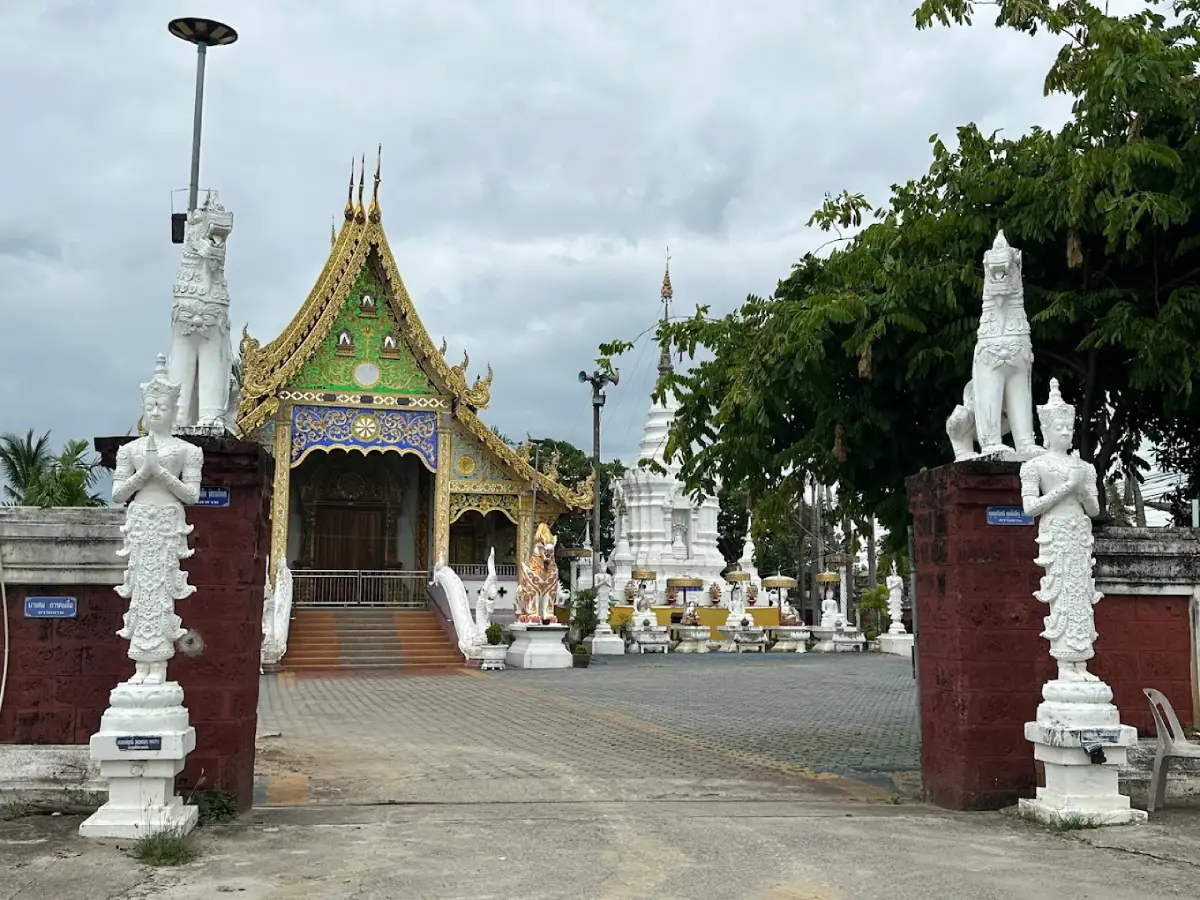
Wat Ban Tham
Open Days: Daily
Opening Hours: 08:00 - 17:00
Wat Ban Tham is located in Village No. 3, Talat Khwan Subdistrict, Doi Saket District, Chiang Mai Province. It is a local Buddhist temple under the Maha Nikaya order and an important community temple for Ban Tham. The temple was officially permitted to be established in B.E. 2371 (1828) and received Wisungkhamsima in B.E. 2432 (1889). Its abbot is Phra Athikan Patcharakorn Phatthajari. Wat Ban Tham serves as a place for worship, merit-making, Buddhist ceremonies, Dhamma listening, and community religious life in Talat Khwan.
Talat Khwan Subdistrict is an important area of Doi Saket District, Chiang Mai. In the past, the area was connected with the name Ban Tham before later becoming known as Talat Khwan. The name Talat Khwan is associated with a large local market in the Bo Hin area, which became a major place for buying and selling goods. Wat Ban Tham therefore stands in an area with a deep relationship between village life, local trade, agriculture, and Buddhist practice.
Ban Tham is Village No. 3 of Talat Khwan Subdistrict. The village name is connected with people who migrated from Tham Pu Tham Pla in Chiang Rai Province and settled in this area. Because of that origin, the village became known as Ban Tham. The name preserves a memory of migration, settlement, and community formation in Doi Saket.
The name “Wat Ban Tham” directly connects the temple with the village. It is not a name that separates the temple from the local community. Instead, it shows that the temple belongs to the village and functions as part of village life. Wat Ban Tham is therefore best understood as a community temple rather than only as a sightseeing point.
The temple’s official establishment in B.E. 2371 makes Wat Ban Tham one of the old temples in the Doi Saket area. A temple with this length of history has usually served many generations of villagers through changes in transport, agriculture, local economy, and social life. Its continuing presence reflects the long relationship between Buddhism and community life in Talat Khwan.
Wat Ban Tham received Wisungkhamsima in B.E. 2432. In Thai Buddhism, Wisungkhamsima is a designated sacred boundary for formal monastic acts, especially those connected with the ubosot. Receiving Wisungkhamsima confirms the temple’s formal religious role and its ability to support important Buddhist ceremonies.
The abbot of Wat Ban Tham is Phra Athikan Patcharakorn Phatthajari. In a community temple, the abbot plays an important role in maintaining the temple, leading ceremonies, teaching Dhamma, coordinating with local residents, and preserving the temple as a living spiritual center. A village temple remains active through the cooperation of monks and lay supporters.
As a Maha Nikaya community temple, Wat Ban Tham is closely connected with local residents. People support the temple through offerings, Buddhist holy day activities, food offerings, Kathin, merit-making, and community ceremonies. The temple is therefore both a religious place and a shared community space where village relationships are maintained.
Recent Kathin activity information shows that Wat Ban Tham continues to host Buddhist activities and remains active as a religious site. Kathin is an important post-rains-retreat ceremony in Thai Buddhism. It brings monks and laypeople together through offerings, merit-making, and support for the temple. This confirms the continuing relationship between the temple and the Ban Tham community.
Talat Khwan is a community with a strong agricultural base. Many residents work in agriculture, with rice and soybeans among the important crops. Other residents work in trade, services, wage labor, and local household industries. Village products in the area include pork cracklings in Village No. 3 Ban Tham, salted eggs in Village No. 4, and women’s clothing production in Village No. 2. This social and economic setting helps explain how the temple remains connected with everyday community life.
Wat Ban Tham should therefore be understood together with the local life of Ban Tham. The temple is a place where villagers make merit before and after agricultural seasons, hold ceremonies, gather for Buddhist occasions, and maintain shared spiritual memory. It is part of the village structure, not separate from it.
The charm of Wat Ban Tham lies in its quiet and simple character as a village temple. It is not a large commercial tourist attraction, and that is part of its value. Visitors can experience a calmer and more local side of Doi Saket, where temples remain part of everyday life rather than only sightseeing landmarks.
For cultural travelers, Wat Ban Tham is suitable for a slow visit focused on worship, local history, and community life. A visit here helps show another dimension of Doi Saket beyond major hill temples and popular attractions. It represents the village-temple network that has sustained Buddhist life in northern Thailand for generations.
Although Wat Ban Tham is not as widely known as some major temples in Doi Saket, its importance lies in its local role. Talat Khwan contains several community temples, including Wat Ban Tham, Wat Walukaram, and Wat Sirimangkhalaram. These temples support the religious life of different villages and together form the Buddhist landscape of the subdistrict.
Talat Khwan is connected with Highway 118, the Chiang Mai–Chiang Rai route. This makes the area accessible for travelers using private cars or rental vehicles. Wat Ban Tham can be included in a Doi Saket cultural route together with nearby temples, local markets, and natural attractions.
The temple is also meaningful for visitors interested in the relationship between place names and settlement history. The name Ban Tham connects the present community with earlier migration from Tham Pu Tham Pla in Chiang Rai Province. This gives the temple a deeper community context and helps visitors understand the village beyond its physical location.
Visitors should approach Wat Ban Tham as a living community temple. Dress politely, speak quietly, keep the temple grounds clean, and avoid entering monastic areas without permission. Photography should be done respectfully and should not disturb monks or local worshippers. The temple belongs to the local community, so respectful behavior is essential.
Nearby attractions, restaurants, and accommodations are arranged in the summary table below for convenient trip planning. Distances are approximate for general planning, and phone numbers are included only where public information could be verified.
Getting There is easiest by private car, rental car, or local transport. From Chiang Mai city, take Highway 118 toward Doi Saket, then continue into Talat Khwan Subdistrict and Village No. 3, Ban Tham. Visitors can use the name Wat Ban Tham, Talat Khwan, Doi Saket, Chiang Mai for navigation.
Travelers without a private vehicle can take public transport or a songthaew on the Chiang Mai–Doi Saket route and then continue with local transport to Village No. 3 Ban Tham. This requires planning because village transport may not be frequent throughout the day. For travelers who want to visit several nearby places, hiring a car with a driver is usually more convenient.
The best time to visit is in the morning or late afternoon, when the weather is more comfortable and the temple atmosphere is calm. During the cool season or after the rainy season, Doi Saket is especially pleasant for a combined temple and community route. During the rainy season, visitors should allow extra travel time because some village roads may be slower to navigate.
Overall, Wat Ban Tham is an old Maha Nikaya community temple in Village No. 3, Talat Khwan Subdistrict, Doi Saket District, Chiang Mai. Officially established in B.E. 2371, granted Wisungkhamsima in B.E. 2432, and led by Phra Athikan Patcharakorn Phatthajari, the temple remains a meaningful place for worship, merit-making, and understanding the village life of Talat Khwan.
| Name | Wat Ban Tham |
| Location | Ban Tham, Village No. 3, Talat Khwan Subdistrict, Doi Saket District, Chiang Mai Province |
| Address | Village No. 3, Talat Khwan Subdistrict, Doi Saket District, Chiang Mai 50220, Thailand |
| Temple Type | Community Buddhist Temple Under The Maha Nikaya Order |
| Temple Code | 350050701 |
| History | Officially permitted to be established as a temple in B.E. 2371 (1828) and granted Wisungkhamsima in B.E. 2432 (1889) |
| Abbot / Caretaker | Phra Athikan Patcharakorn Phatthajari |
| Open Days | Daily |
| Opening Hours | 08:00 - 17:00 |
| Community Context | Ban Tham is Village No. 3 of Talat Khwan Subdistrict. The village name is connected with migration from Tham Pu Tham Pla in Chiang Rai Province. |
| Highlights | Old community temple of Talat Khwan, serving as a spiritual center of Ban Tham and continuing to host Buddhist activities |
| Distinctive Features | Maha Nikaya village temple reflecting the relationship between Buddhism, village life, and the agricultural community of Talat Khwan |
| Travel Information | From Chiang Mai city, take Highway 118 toward Doi Saket, then continue into Talat Khwan Subdistrict and Village No. 3, Ban Tham. Best reached by private car, rental car, or local transport. |
| Current Status | Active Maha Nikaya community temple in Village No. 3, Talat Khwan Subdistrict, Doi Saket District, Chiang Mai Province, appearing in temple registry and recent Kathin activity information |
| Nearby Tourist Attractions | 1. Bo Hin Market, Talat Khwan Subdistrict, about 2 km 2. Wat Walukaram, Talat Khwan Subdistrict, about 3 km 3. Wat Sirimangkhalaram, Talat Khwan Subdistrict, about 3 km 4. Wat Phra That Doi Saket, about 7 km 5. Tweechol Botanical Garden, about 10 km |
| Nearby Restaurants | 1. Somjit Bar&Grill, about 1 km, Tel. 091-056-8283 2. JJ Home_Stw Talat Khwan Doi Saket, about 2 km, Tel. 095-363-3620 3. 882Kitchen, about 5 km, Tel. 063-412-5683 4. Pla San Khuean, about 8 km, Tel. 053-865-559, 081-882-9481 5. The Lemontree Garden & Restaurant Doi Saket, about 10 km, Tel. 093-415-0544 |
| Nearby Accommodations | 1. PoolVilla Chiangmai, about 2 km, Tel. 088-252-7070 2. Rabiang Dao Apartment, about 2 km 3. Him Doi House @ Doisaket, about 8 km, Tel. 089-656-4959 4. Horizon Village & Resort, about 10 km, Tel. 053-292-381 5. Suwanna Tara Resort & Spa, about 11 km |
Frequently Asked Questions (FAQ)
Q: Where is Wat Ban Tham located?
A: Wat Ban Tham is located in Village No. 3, Talat Khwan Subdistrict, Doi Saket District, Chiang Mai Province.
Q: When was Wat Ban Tham officially established?
A: Wat Ban Tham was officially permitted to be established as a temple in B.E. 2371 (1828).
Q: When did Wat Ban Tham receive Wisungkhamsima?
A: Wat Ban Tham received Wisungkhamsima in B.E. 2432 (1889).
Q: Who is the abbot of Wat Ban Tham?
A: The abbot of Wat Ban Tham is Phra Athikan Patcharakorn Phatthajari.
Q: What type of temple is Wat Ban Tham?
A: Wat Ban Tham is a local Buddhist temple under the Maha Nikaya order.
Q: What is the origin of the name Ban Tham?
A: The name Ban Tham is connected with people who migrated from Tham Pu Tham Pla in Chiang Rai Province and settled in this area.
Q: How can travelers get to Wat Ban Tham?
A: From Chiang Mai city, take Highway 118 toward Doi Saket, then continue into Talat Khwan Subdistrict and Village No. 3, Ban Tham.
Q: What nearby places can be visited with Wat Ban Tham?
A: Nearby places include Bo Hin Market, Wat Walukaram, Wat Sirimangkhalaram, Wat Phra That Doi Saket, and Tweechol Botanical Garden.
 Category: ●Places of Worship
 Group: ●Temple
Last Update : 1 HourAgo
 Last Update : 1 HourAgo
 Click to Access the Navigation Map GPS
 Muang Chiang Mai(121)Chom Thong(47)Mae Chaem(25)Chiang Dao(33)Doi Saket(68)Mae Taeng(85)Mae Rim(69)Samoeng(29)Fang(71)Mae Ai(62)Phrao(70)San Pa Tong(105)San Kamphaeng(66)San Sai(73)Hang Dong(74)Hot(32)Doi Tao(22)Omkoi(11)Saraphi(74)Wiang Haeng(15)Chai Prakan(28)Mae Wang(32)Mae On(22)Doi Lo(34)Galyani Vadhana(1)


