
lovethailand home >North Travel Attractions >Chiang Mai Travel Attractions >Doi Saket >Choeng Doi > Wat Amararam
TL;DR: Wat Amararam is located at Ban San Um, Village No. 6, Choeng Doi Subdistrict, Doi Saket District, Chiang Mai Province. Highlights include Old community temple of Ban San Um, founded in B.E. 2306 and closely tied to local Buddhist life in Choeng Doi.

Wat Amararam
Operating day: Daily
Operating time: 08.00 - 17.00
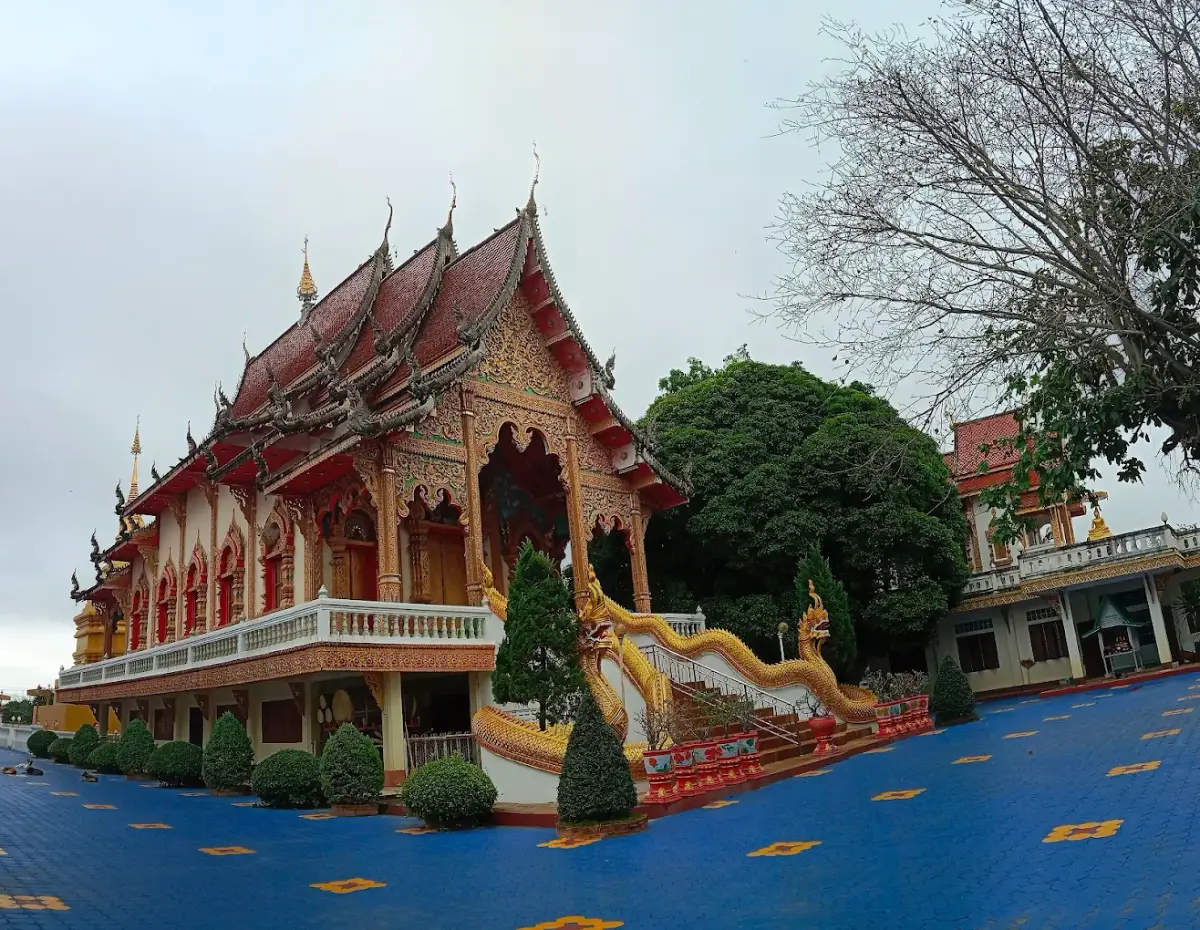
Wat Amararam, also known locally as Wat Amararam San Um or Wat San Um, is located at No. 122, Village No. 6, Ban San Um, Choeng Doi Subdistrict, Doi Saket District, Chiang Mai Province. It is a local Buddhist temple under the Maha Nikaya order and one of the old community temples in Choeng Doi. The temple was founded in B.E. 2306 (1763) and received Wisungkhamsima on February 24, B.E. 2498 (1955). Its abbot is Phra Khru Siri Amara Phirat Thanarato. Wat Amararam remains an important place for worship, merit-making, Buddhist ceremonies, and local community life in Ban San Um.
Ban San Um is Village No. 6 in Choeng Doi Subdistrict, Doi Saket District, Chiang Mai Province. Choeng Doi is an area known for old temples, community temples, agricultural surroundings, village roads, local irrigation channels, and cultural routes east of Chiang Mai city. Wat Amararam stands within this living community landscape. It is not only a place for rituals, but also a shared spiritual space where villagers gather for merit-making, Dhamma listening, and Buddhist occasions.
The name “Amararam” carries an auspicious meaning. “Amara” suggests lasting prosperity, stability, and sacred value, while “aram” means a temple or peaceful religious dwelling. Together, the name gives the sense of a serene temple of enduring faith. This meaning fits the temple’s role as a spiritual center for the Ban San Um community.
The temple’s history dates back to B.E. 2306. Local people also call it Wat San Um, after the village name. The temple was initiated by Nai Saen and Nang Tum, reflecting the strong role of local faith in its foundation. Like many community temples in northern Thailand, Wat Amararam grew from the need of villagers to have a nearby place for worship, merit-making, Buddhist ceremonies, and spiritual support.
The temple land covers 3 rai, 3 ngan, and 99 square wah, with title deed No. 22569. It also has one monastic land plot covering 2 rai, 2 ngan, and 12 square wah, with title deed No. 19326. The temple boundary reflects a typical village landscape: the north borders a public road, the south borders privately owned rice fields, the east borders a public irrigation channel, and the west borders privately owned rice fields. This setting places the temple within the everyday environment of roads, water, fields, and local homes.
The temple’s main structures include an ubosot, monks’ residences, viharn, Thai-style pavilion, and alms pavilion. These structures support both monastic life and community religious activities. The ubosot is used for formal monastic acts, the viharn serves as the main worship space, the monks’ residences support monastic life, and the pavilions serve merit-making and village gatherings.
The temple’s important sacred objects include the principal Buddha image in the viharn and a chedi. The principal Buddha image is the central focus for worship, prayer, and merit-making. The chedi represents Buddhist devotion and the continuity of faith in the community. Together, these sacred objects give Wat Amararam a complete religious character as a village temple.
Wat Amararam received Wisungkhamsima on February 24, B.E. 2498, with a sacred boundary measuring 4 meters wide and 10 meters long. In Thai Buddhism, Wisungkhamsima is a formally designated boundary for monastic acts, especially those connected with the ubosot. Receiving Wisungkhamsima marks an important stage in the temple’s religious development and confirms its formal role in Buddhist monastic practice.
The abbot of Wat Amararam is Phra Khru Siri Amara Phirat Thanarato. In a community temple, the abbot plays an important role in maintaining the temple, leading ceremonies, teaching Dhamma, coordinating with lay supporters, and keeping the temple active as a center of faith. A village temple remains alive through the cooperation of monks and local residents.
As a Maha Nikaya community temple, Wat Amararam is closely tied to the people of Ban San Um. Local residents support the temple through offerings, merit-making, food offerings, Buddhist holy day observances, and community events. The temple is therefore both a religious place and a social space where village relationships are maintained and strengthened.
The charm of Wat Amararam lies in its calm and simple character as a village temple. It is not a large commercial tourist attraction, and that is part of its value. Visitors can experience the local side of Buddhist life in Doi Saket, where temples continue to serve real communities rather than functioning only as sightseeing landmarks.
Ban San Um’s relationship with Wat Amararam shows how deeply village temples are woven into northern Thai life. The temple is used for ceremonies, worship, Dhamma activities, and communal occasions. It offers a shared spiritual center where residents can gather, make merit, and maintain Buddhist customs across generations.
Historically, Wat Amararam reflects the growth of a local community around faith. The fact that local founders initiated the temple shows that Buddhism in village life was sustained by ordinary people as much as by formal institutions. Over time, a place created through community devotion developed into a recognized temple with religious structures, sacred objects, and formal monastic boundaries.
Although the temple is modest in scale, its structures and sacred objects make it complete as a local Buddhist center. The ubosot, viharn, chedi, monks’ residences, and pavilions allow the temple to support worship, ceremonies, food offerings, Dhamma practice, and community gatherings. This makes Wat Amararam an essential part of the religious landscape of Choeng Doi.
For visitors, Wat Amararam is suitable for quiet worship, merit-making, and learning about a local community temple in Doi Saket. A visit should be approached slowly and respectfully. The value of the temple lies in its living connection with the community rather than in large-scale tourism. Visitors can observe the calm atmosphere of a working village temple and appreciate its long history.
Choeng Doi and Doi Saket contain several temples, natural attractions, restaurants, and accommodations that can be arranged into a slow cultural route. Nearby places are listed in the summary table below for convenient trip planning. Wat Amararam can be included as a meaningful stop for travelers interested in community Buddhism, local history, and quiet temple visits.
Getting There is easiest by private car, rental car, or local transport. From Chiang Mai city, travel toward Doi Saket District, then continue into Choeng Doi Subdistrict and Ban San Um, Village No. 6. Visitors can use the names Wat Amararam San Um or Wat Amararam, Choeng Doi, Doi Saket, Chiang Mai for navigation.
Travelers without a private vehicle can take public or hired transport from Chiang Mai to Doi Saket, then continue with local transport to Ban San Um. This requires planning because village transport may not be frequent throughout the day. For travelers who want to visit several nearby places, hiring a car with a driver is usually more convenient.
The best time to visit is in the morning or late afternoon, when the weather is more comfortable and the temple atmosphere is calm. During the cool season or after the rainy season, Doi Saket and Choeng Doi are especially pleasant, and the temple can be combined easily with nearby cultural and natural places.
Visitors should dress politely, speak quietly, keep the temple grounds clean, and avoid entering monastic areas without permission. Photography should be done respectfully and should not disturb monks or local worshippers. Wat Amararam is an active community temple, so respectful behavior toward monks, villagers, and sacred spaces is essential.
Overall, Wat Amararam is an old Maha Nikaya community temple in Ban San Um, Choeng Doi Subdistrict, Doi Saket District, Chiang Mai. Founded in B.E. 2306 by Nai Saen and Nang Tum, granted Wisungkhamsima on February 24, B.E. 2498, and currently led by Phra Khru Siri Amara Phirat Thanarato, the temple remains a meaningful place for worship, merit-making, and understanding village Buddhist life in Doi Saket.
| Name | Wat Amararam |
| Local Name | Wat Amararam San Um / Wat San Um |
| Location | Ban San Um, Village No. 6, Choeng Doi Subdistrict, Doi Saket District, Chiang Mai Province |
| Address | No. 122, Village No. 6, Ban San Um, Choeng Doi Subdistrict, Doi Saket District, Chiang Mai 50220, Thailand |
| Temple Type | Community Buddhist Temple Under The Maha Nikaya Order |
| Temple Code | 350050114 |
| History | Founded in B.E. 2306 (1763) by Nai Saen and Nang Tum |
| Wisungkhamsima | Granted on February 24, B.E. 2498 (1955), with a sacred boundary measuring 4 meters wide and 10 meters long |
| Temple Land | 3 rai, 3 ngan, and 99 square wah, title deed No. 22569; monastic land of 2 rai, 2 ngan, and 12 square wah, title deed No. 19326 |
| Boundary | North: public road; South: private rice field; East: public irrigation channel; West: private rice field |
| Abbot / Caretaker | Phra Khru Siri Amara Phirat Thanarato |
| Phone | 053-496-006 |
| Main Structures | Ubosot, monks’ residences, viharn, Thai-style pavilion, and alms pavilion |
| Sacred Objects | Principal Buddha image in the viharn and a chedi |
| Highlights | Old community temple of Ban San Um, founded in B.E. 2306 and closely tied to local Buddhist life in Choeng Doi |
| Distinctive Features | Maha Nikaya village temple serving as a spiritual center for Ban San Um, suitable for worship, merit-making, and quiet cultural travel |
| Travel Information | From Chiang Mai city, travel toward Doi Saket District, then continue into Choeng Doi Subdistrict and Ban San Um, Village No. 6. Best reached by private car, rental car, or local transport. |
| Current Status | Active Maha Nikaya community temple in Ban San Um, Choeng Doi Subdistrict, Doi Saket District, Chiang Mai Province |
| Nearby Tourist Attractions | 1. Tweechol Botanical Garden, about 2 km 2. Wat Phra That Doi Saket, about 5 km 3. Wat Doi Ku, about 6 km 4. Bo Sang Village, San Kamphaeng District, about 13 km 5. Mae Kuang Udom Thara Dam, about 14 km |
| Nearby Restaurants | 1. Cats Station Cafe, about 2 km 2. Plane House Coffee, about 2 km 3. Bualuang Terrasse, about 3 km 4. The Lemontree Garden & Restaurant Doi Saket, about 9 km, Tel. 093-415-0544 5. Sorn's Cafe, Restaurant And Bar, about 10 km, Tel. 053-291-162, 081-485-2801 |
| Nearby Accommodations | 1. Horizon Village & Resort, about 2 km, Tel. 053-292-381 2. Him Doi House @ Doisaket, about 7 km 3. Baan Chai Thung Resort, about 9 km 4. Suwanna Tara Resort & Spa, about 10 km 5. Lanna Inthan Hotel & Resort, about 11 km |
Frequently Asked Questions (FAQ)
Q: Where is Wat Amararam located?
A: Wat Amararam is located at No. 122, Village No. 6, Ban San Um, Choeng Doi Subdistrict, Doi Saket District, Chiang Mai Province.
Q: What local name is Wat Amararam known by?
A: Wat Amararam is locally known as Wat Amararam San Um or Wat San Um.
Q: When was Wat Amararam founded?
A: Wat Amararam was founded in B.E. 2306 (1763) by Nai Saen and Nang Tum.
Q: When did Wat Amararam receive Wisungkhamsima?
A: Wat Amararam received Wisungkhamsima on February 24, B.E. 2498 (1955).
Q: Who is the abbot of Wat Amararam?
A: The abbot of Wat Amararam is Phra Khru Siri Amara Phirat Thanarato.
Q: What important structures and sacred objects are found at Wat Amararam?
A: The temple includes an ubosot, monks’ residences, viharn, Thai-style pavilion, alms pavilion, the principal Buddha image in the viharn, and a chedi.
Q: What type of travelers should visit Wat Amararam?
A: The temple is suitable for travelers who want to worship, make merit, and learn about a quiet old community temple in Ban San Um and Doi Saket.
Q: How can travelers get to Wat Amararam?
A: From Chiang Mai city, travel toward Doi Saket District, then continue into Choeng Doi Subdistrict and Ban San Um, Village No. 6. A private car, rental car, or local transport is recommended.
 Category: ●Places of Worship
 Group: ●Temple
Last Update : 5 DayAgo
 Last Update : 5 DayAgo
 Click to Access the Navigation Map GPS
 Muang Chiang Mai(121)Chom Thong(47)Mae Chaem(25)Chiang Dao(33)Doi Saket(68)Mae Taeng(85)Mae Rim(69)Samoeng(29)Fang(71)Mae Ai(59)Phrao(70)San Pa Tong(105)San Kamphaeng(66)San Sai(73)Hang Dong(74)Hot(32)Doi Tao(22)Omkoi(11)Saraphi(74)Wiang Haeng(15)Chai Prakan(28)Mae Wang(32)Mae On(22)Doi Lo(34)Galyani Vadhana(1)


